- Home
- Vegetable Garden Soil
Vegetable Garden Soil — Your Complete Guide to Soil, Fertilizer and Composting

Great vegetable garden soil is the foundation of every productive home garden.
You can choose the best varieties, plant at the perfect time, and water faithfully — but if the soil is poor, compacted, or lacking in nutrients, your garden will always disappoint.
Good vegetable garden soil, on the other hand, makes almost everything else easier.
Plants root deeply, take up water efficiently, resist disease, and produce more abundantly in healthy, well-fed soil than they ever will in poor ground with supplemental watering and fertilizing.
This page is your hub for everything on this site related to building and maintaining excellent vegetable garden soil.
You will find guides to fertilizing, composting, mulching, making compost tea, using manure, and choosing the right compost bin — everything you need to build the rich, living soil that a productive vegetable garden depends on.
What Good Vegetable Garden Soil Looks Like
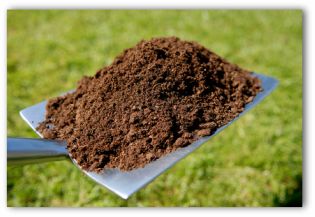 Healthy vegetable garden soil helps make a healthy vibrant garden.
Good vegetable garden soil is dark, loose, and crumbly — what experienced gardeners call loamy soil. It holds moisture without becoming waterlogged, drains freely after heavy rain, and crumbles in your hand rather than clumping into hard clods.
When you dig into good vegetable garden soil, you see earthworms. Lots of them. Earthworms are one of the best indicators of soil health because they thrive only in soil that is rich in organic matter and alive with microbial activity.
No earthworms usually means no organic matter — and soil without organic matter is difficult to improve quickly.
Most gardens do not start with perfect soil.
Heavy clay soil drains poorly, compacts easily, and can become rock-hard in dry weather — difficult for roots to penetrate and for gardeners to work.
Sandy soil, at the other extreme, drains too quickly, holds few nutrients, and dries out rapidly between waterings.
Both types of soil can be improved over time by adding organic matter — and both will reward the effort.
The same remedy — compost, aged manure, and organic mulch — works for both problems.
Compost added consistently year after year is the single most powerful tool for improving vegetable garden soil of any starting type.
Composting for the Vegetable Garden

Compost is the most important single thing you can add to your vegetable garden soil. It is the foundation of fertile, productive vegetable garden soil — improving structure, feeding soil organisms, adding nutrients, and helping with both drainage and moisture retention all at once.
No synthetic fertilizer does all of these things.
Compost does.
Making compost at home is straightforward.
- Alternate layers of carbon-rich brown materials — dried leaves, straw, cardboard, wood chips — with nitrogen-rich green materials — kitchen scraps, fresh grass clippings, fresh weeds before they set seed, coffee grounds.
- Keep the pile as moist as a wrung-out sponge, turn it every few weeks to add oxygen, and within a few months you have finished compost ready to work into your vegetable garden soil.
- A compost tumbler makes the turning easier and keeps the pile contained and tidy, which is especially useful in smaller gardens.

- Compost Bin Tumbler Designs — the best tumbler designs for making rich compost quickly from kitchen and yard waste
- How to Make Compost Tea — a simple liquid fertilizer made from compost and aged manure that feeds vegetable garden soil fast
- Organic Fertilizer Recipe — how to make your own compost-based organic fertilizer at home
If you are ready to start composting and want to build your own bin rather than buy a tumbler, a homemade compost bin is straightforward to construct from materials you may already have on hand.
Pallets, wire mesh, concrete blocks, or lumber can all make a functional compost bin for the vegetable garden soil.
Our compost bin guides cover designs, plans, and step-by-step building instructions so you can choose the approach that fits your space and budget.
- Compost Bin Designs — a range of compost bin designs suited to different garden sizes and budgets
- Compost Bin Plans — detailed plans for building your own compost bin to produce rich vegetable garden soil amendment
- Build a Compost Bin — step-by-step guide to building a simple, effective compost bin from common materials
Fertilizing Vegetable Garden Soil

Compost improves vegetable garden soil structure and feeds soil organisms, but it is relatively low in concentrated plant nutrients compared to fertilizers.
Heavy-feeding vegetable crops — tomatoes, corn, squash, peppers — often need supplemental fertilizer in addition to compost to reach their full yield potential.
Understanding the relationship between vegetable garden soil and fertilizer helps you apply the right material at the right time rather than guessing.
All vegetable garden fertilizers — organic or synthetic — supply three main nutrients: nitrogen (N), phosphorus (P), and potassium (K), listed on the package as three numbers such as 10-10-10 or 5-10-5.
- Nitrogen drives leafy growth and green color.
- Phosphorus supports root development and fruit and seed production.
- Potassium strengthens plants and improves their resistance to disease and stress.
Most vegetable garden soils benefit from all three, though the amounts needed vary depending on what crops you are growing and what your soil already contains.
A simple soil test every few years tells you exactly what your vegetable garden soil needs rather than leaving it to guesswork.
Organic fertilizers — blood meal, bone meal, fish emulsion, kelp meal, and aged manure — release nutrients slowly as soil organisms break them down, feeding the vegetable garden soil over weeks and months rather than all at once.
This slow release reduces the risk of burning plants and supports the living microbial community in the soil.
Our fertilizer guides cover both general fertilizing principles and the specifics of making your own organic fertilizer from ingredients you can source locally.
- Vegetable Garden Fertilizer Tips — best practices for fertilizing vegetable garden soil using organic and natural materials
- How to Fertilize a Vegetable Garden — step-by-step guide to fertilizing including NPK, timing, and application methods
- Ingredients for Organic Fertilizer — what each organic fertilizer ingredient contributes to vegetable garden soil
Manure — The Original Vegetable Garden Soil Builder

For centuries before synthetic fertilizers existed, manure was the primary way gardeners built fertile vegetable garden soil — and it remains one of the best.
Well-aged manure adds nitrogen, phosphorus, potassium, and a wide range of trace minerals to the vegetable garden soil, and unlike synthetic fertilizers, it also contributes organic matter that improves soil structure.
The key word is aged.
Fresh manure is too high in nitrogen and can burn plants and introduce pathogens and weed seeds.
Aged or composted manure — allowed to break down for at least six months to a year, or properly hot-composted — is safe, odor-free, and one of the best amendments available for vegetable garden soil.
Horse manure is among the most accessible for gardeners in rural and semi-rural areas, and when aged correctly, it is an excellent all-purpose soil builder.
Our horse manure composting guide covers the whole process from collection to application.
- Horse Manure Compost — how to age and use horse manure to build rich, productive vegetable garden soil
Mulching to Protect and Improve
Vegetable Garden Soil

Mulch is one of the hardest-working tools available for maintaining good vegetable garden soil between plantings and throughout the growing season.
A two-to-four inch layer of organic mulch — straw, shredded leaves, grass clippings, wood chips, or compost — laid over the vegetable garden soil surface does multiple jobs at once.
Mulch helps to:
- retain moisture
- suppress weeds
- moderate soil temperature
As it decomposes, it feeds the soil organisms that keep the vegetable garden soil alive and productive.
Un-mulched vegetable garden soil is exposed to the sun, rain, and wind in ways that degrade it over time.
Rain compacts bare soil, forms a surface crust that repels water rather than absorbing it, and causes erosion.
Summer sun dries out the top layer and stresses shallow roots.
Mulch prevents all of this at once. The best vegetable garden soils are rarely left bare for long — as one crop finishes and before the next goes in, a layer of compost or straw covers and protects the soil in between.
- Mulching a Vegetable Garden — types of mulch, how much to use, and how mulch improves vegetable garden soil over time
More Vegetable Garden Resources

Building excellent vegetable garden soil is a long-term project that pays off with better harvests every year.
Our organic gardening hub covers the wider picture of chemical-free growing, including organic pest control and organic seed sourcing.
Our planning hub has tools and layouts for getting the most from your garden space, whatever the soil type you are starting with.
- Organic Vegetable Garden — complete hub for growing vegetables organically, including organic fertilizers and no-dig methods
- Planning a Vegetable Garden — complete hub for garden planning layouts, tools, and worksheets
- Free Newsletter — seasonal vegetable garden soil tips and updates delivered to your inbox
Oregon State University Extension —
How to Use Compost
For authoritative, research-based guidance on applying compost to vegetable garden soil — including how much to add to new beds, how much to add each year to existing beds, and how to use compost as mulch. Torganhe Oregon State University Extension Service has an excellent practical guide at extension.oregonstate.edu that is particularly useful for gardeners in the Pacific Northwest and similar climates.
- Oregon State University Extension — How to Use Compost in Gardens — research-based guide to compost application rates and methods for vegetable garden soil
Recent Articles


-
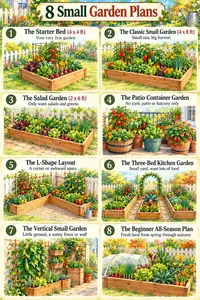
Small Vegetable Garden Plans: 8 Layouts That Maximise Space
Oct 08, 26 10:41 AM
 Small vegetable garden plans are some of the most searched and most valuable resources in home food growing.
 -
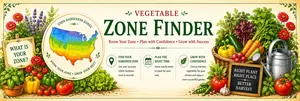
USDA Zone Finder - Find Your Vegetable Planting Dates | Vegetable-Gardening-Online.com
Oct 07, 26 03:53 PM
 Find your USDA hardiness zone, last spring frost date, and first fall frost date by state and region. Free interactive zone finder from Vegetable-Gardening-Online.com.
 -
Interactive Vegetable Garden Planner | Vegetable Gardening Online
Oct 07, 26 02:29 PM
Design a vegetable garden with correctly scaled plant spacing, companion flowers, drag-and-drop placement, and a printable plan. -
Free Printable Garden Stationery: Gardening Letter Paper & Note Cards
Oct 07, 26 12:48 PM
Free printable garden stationery: watercolor letter paper, lined and unlined, plus folded note cards with garden, fall, and Christmas scenes. Print at home. -
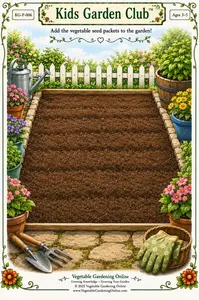
Free Preschool Vegetable Garden Cut and Paste Activities
Oct 07, 26 12:43 PM
 Free preschool vegetable garden cut and paste activities for ages 3-4. Build your own backyard, container, or seed packet garden scene, and sticker sheets.
 -
Planning a Vegetable Garden: Layouts, Raised Beds, Containers & More
Oct 06, 26 07:44 PM
 Planning a vegetable garden? Start here: layouts, raised beds, containers, square foot gardening, free planning tools, and tips to avoid beginner mistakes.
 -
How to Start a Vegetable Garden: 10 Easy Steps for Beginners
Oct 06, 26 04:38 PM
 How to start a vegetable garden in 10 easy steps: pick a sunny spot, choose raised beds or containers, prepare the soil, and grow easy vegetables.