What Can I Still Plant?
Enter your zip code and today's date. See what still has time before frost.
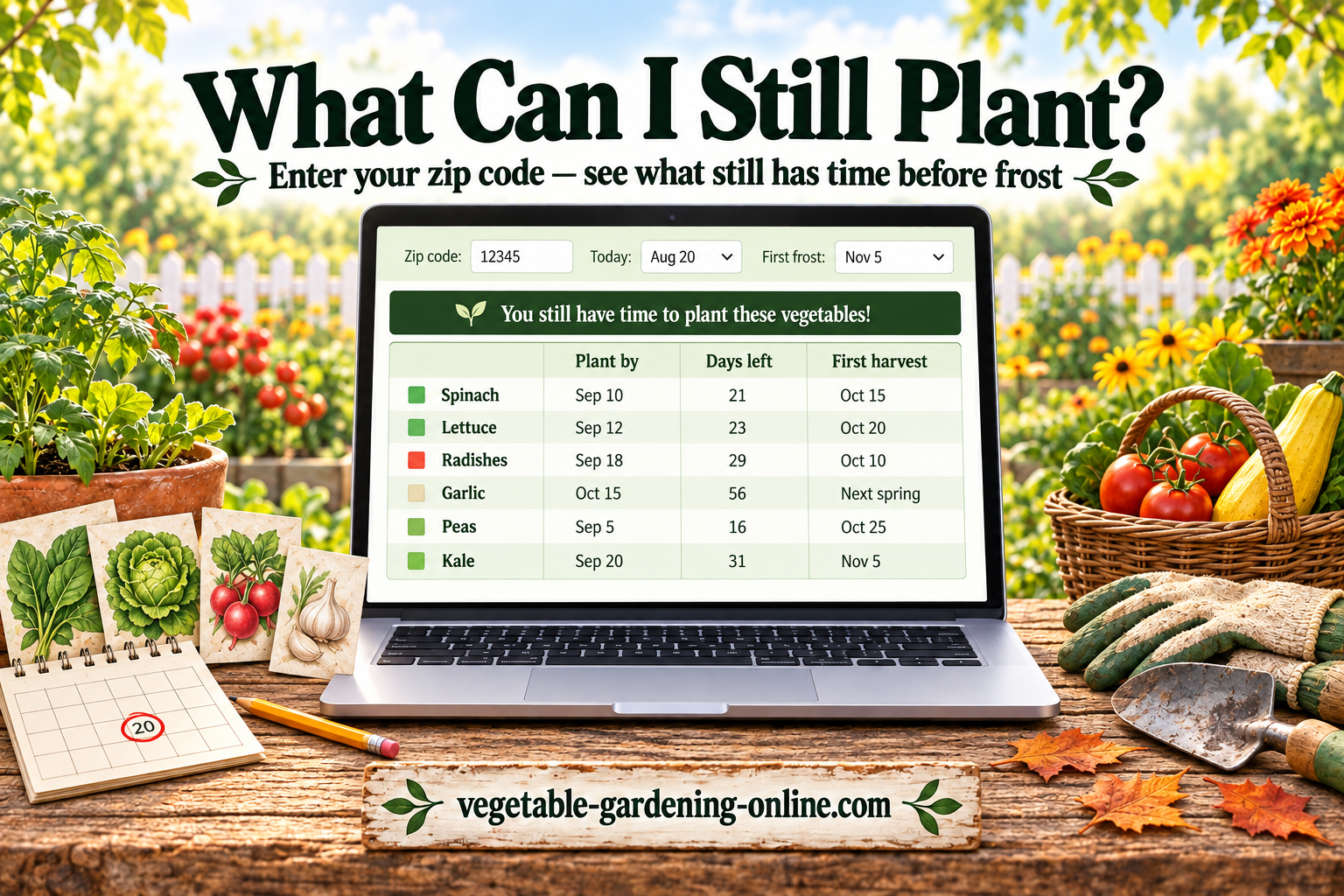
Every gardener asks it, usually standing in the garden in July or August with a packet of seed in hand: what can I still plant? The answer depends on three things: where you are, what day it is, and how long each crop takes. This tool does the arithmetic.
Type in your zip code and it finds your first frost date. From today's date the planner works out, for forty vegetables and herbs, whether there is still time to plant and get a harvest, the last date you can plant each one, and roughly when you would pick. Crops that need planting in the next two weeks are at the top.
I built it because it is time-consuming to do this by hand. Every August I would wonder if there was still time to plant anything, and then usually not do it because it was too much trouble to calculate. Here in the Willamette Valley our frost can land anywhere from the end of September to late December, so the answer to what can I still plant is never the same two years running. Now it takes a minute.
Where and when
Type your zip code and the tool finds your zone and typical frost dates. If you know your own frost dates, type them in; they are more accurate than any zone average. The planting date is today unless you change it. Zone lookup uses the 2023 USDA Plant Hardiness Zone Map (USDA-ARS and Oregon State University PRISM Climate Group).
From the free tool at vegetable-gardening-online.com
How to Use the What Can I Still Plant Tool
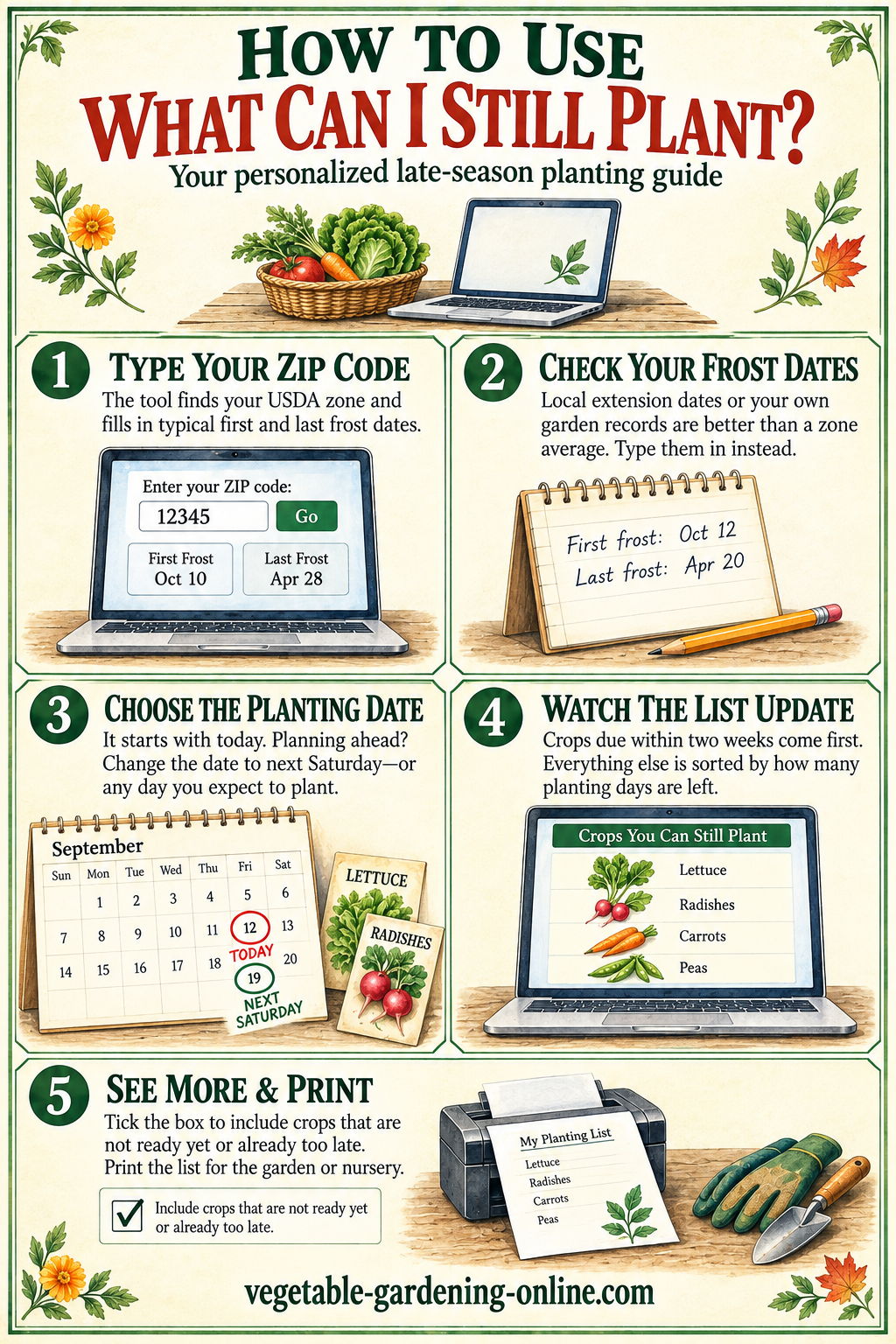
Type your zip code. The tool finds your USDA zone and fills in typical first and last frost dates for it. If you know your own frost dates from a local extension office or your own records, type them in instead; they beat any zone average.
The planting date is set to today. Change it if you are planning ahead: put in next Saturday and the answer to what can I still plant will be figured for next Saturday.
That is all. The list updates as you go. Crops you need to plant within two weeks come first, then everything else that still has time, sorted by how many days you have left. Tick the box to also see what is not ready yet and what is too late, and print the list to take to the garden or the nursery.
Reading the List
Plant by is the last date a planting has a fair chance of maturing before your first frost. Days left is the same thing counted from your planting date. First harvest is the earliest you can expect to pick if you plant today.
Under each crop is the method. Direct sow means seed in the ground. Transplants means you need started plants; when it is too late to start those from seed yourself, the note says to buy them. Slips are rooted sweet potato cuttings. Cloves are garlic.
"Takes light frost" marks the hardy crops: spinach, kale, chard, carrots, beets, peas, the cabbage family, and a few herbs. They keep growing after the first light frost, so the tool gives them about two extra weeks. Fruiting crops like beans, squash, and cucumbers get the opposite: they need warm days to finish, so their deadline is set two weeks before frost.
Why the Seed Packet Is Wrong in August
Days to maturity on a seed packet assume long, warm days. A bush bean listed at 55 days will make it in 55 days when you sow it in June. Sow the same bean in August and the days are shorter, the nights are cooler, and it may take 70 or 75. Every year someone writes to me asking what can I still plant in August, sows beans on the packet's promise, and picks a handful the week before frost.
So the tool stretches the maturity time for late plantings: about 20 percent longer for cool-season crops and 35 percent longer for warm-season crops, plus a margin. Those numbers come from my own records here in the Willamette Valley and from what extension offices publish about fall planting. They are deliberately a little cautious. If a crop shows as too late by a week and you have a warm, sheltered spot, go ahead and try it. Seed is cheap.
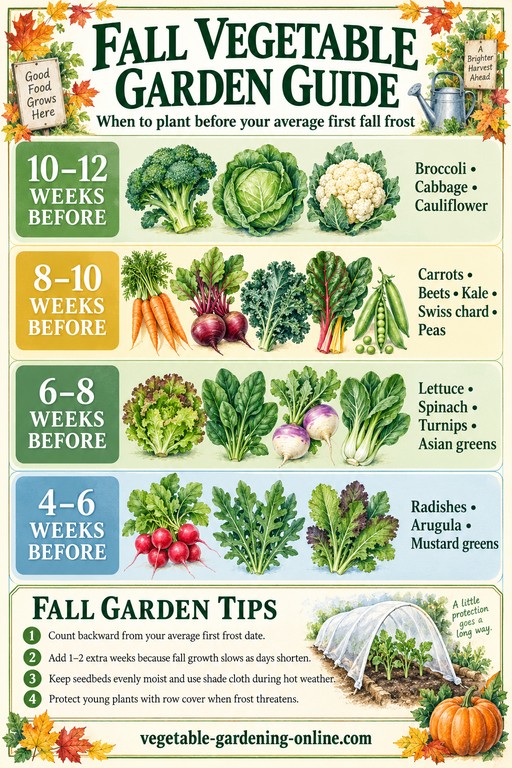
Fall Planting Tips That Make the Difference
When what can I still plant comes down to a few weeks of margin, the details decide it.
Water the seedbed first. Summer soil is dry and hot, and seeds sown into it sulk. Soak the row the evening before, sow in the morning, and keep it damp until the seedlings are up.
Shade the small stuff. Lettuce, spinach, and cilantro will not germinate in hot soil. A board laid over the row until the seeds sprout, or a bit of shade cloth, gets them started in August.
Buy transplants for the cabbage family. Broccoli, cabbage, and cauliflower for fall need to be started in June or July. If you missed that, nurseries sell fall starts for a reason. Six weeks is a lot to buy for a few dollars.
Have row cover ready. A floating row cover adds two to four degrees of frost protection. For a crop that is a week short, that is the week.
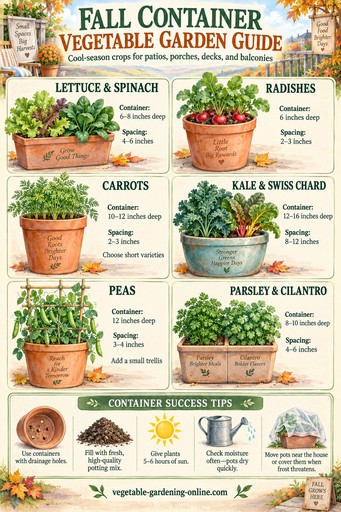
Use containers for the last crops. A pot on a porch or patio is a few degrees warmer than open ground, drains fast after fall rain, and can be moved under cover the night frost threatens. Lettuce, spinach, radishes, and carrots are all happy in a container six to twelve inches deep.
Do not skip garlic. When the answer to what can I still plant is "almost nothing," it is garlic season. Plant cloves in October, and you will be pulling heads next July while everyone else is still buying them.
Questions About What Can I Still Plant
Does it work for every zone? Yes. It runs on frost dates, so it works from zone 3 to zone 11. In frost-free zones the "first frost" date just marks the end of the planting year, and most crops show as plantable most of the year.
My zone's dates don't match my experience. Type your own frost dates in. The zone defaults are averages over big areas, and your garden may sit in a cold pocket or a warm one. Your records are the better source.
Why is a crop I planted last September listed as too late? The tool is cautious by design. If it worked for you, it will probably work again; use your own experience over the list. And if you want the whole year laid out rather than a snapshot of today, use the personalized vegetable planting calendar, which uses the same crop data.
Can I save the list? Print it, or use your browser's print-to-PDF option. The tool does not store anything.
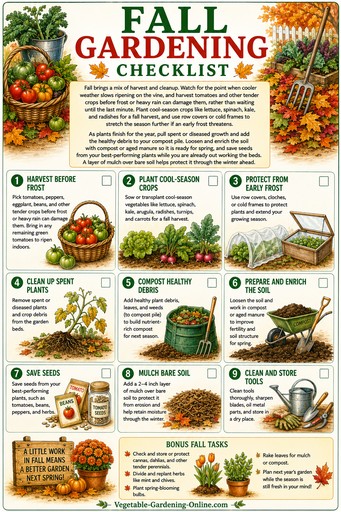
Once you know what can I still plant, the rest of fall is cleanup and preparation. This checklist covers it.
Related Reading
- Personalized Vegetable Planting Calendar — the whole year, month by month, for your zip code.
- Interactive Vegetable Garden Planner — lay out your beds with correct spacing, then print the plan.
- Fall Vegetable Garden Guide — what to grow for fall and how.
- Succession Planting Vegetables — keep the harvest coming.
- How to Grow Garlic — the crop for when everything else is too late.
- Zone Finder — look up your USDA zone.
Free garden planning tool from vegetable-gardening-online.com. Zone lookup uses the 2023 USDA Plant Hardiness Zone Map (USDA-ARS and Oregon State University PRISM Climate Group). Frost dates are averages; your own records beat any table.