- Home
- Seasonal Gardens
- Fall Vegetable Garden Guide
Fall Vegetable Garden Guide:
The Complete Guide to Autumn Growing
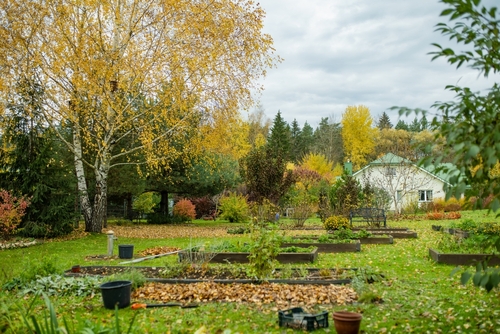
A fall vegetable garden is one of the best-kept secrets in home food growing. While most gardeners are winding down in late summer, experienced growers know that autumn is often the finest season for a vegetable garden. This fall vegetable garden guide will show you why.
Cooler temperatures. Fewer pest problems. Less watering. Some of the tastiest crops of the entire year.
This fall vegetable garden guide will help you keep harvesting fresh food from your own backyard well into November and beyond, long after most gardeners have cleared their beds and packed away their tools.
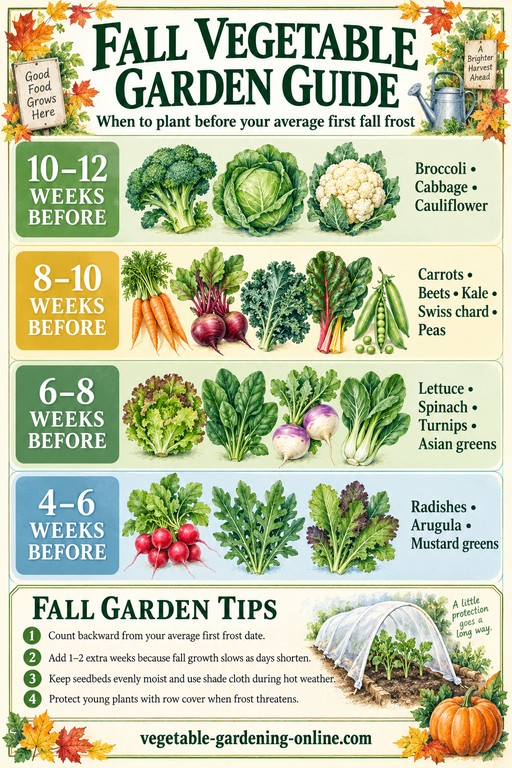
The key to a successful fall vegetable garden is timing. Unlike spring planting, where you plant after the last frost, fall vegetable garden planning works backward from your first expected frost date. You need to count back from that date to know exactly when to sow each crop.
This guide gives you everything you need: the best vegetables, the timing, the planting chart, and the techniques for getting the most from your fall vegetable garden this season.
Why a Fall Vegetable Garden Is Worth Growing

Many gardeners skip the fall vegetable garden entirely. They miss out on some of the most rewarding growing of the year.
Here is why a fall vegetable garden deserves a place in your annual gardening plan.
Better growing conditions
The cool temperatures of autumn suit many vegetables far better than the heat of summer. Lettuce that bolted in July grows lush and sweet in September. Spinach that struggled in summer heat becomes incredibly productive in a fall vegetable garden.
Kale, broccoli, carrots, and beets all develop better flavor when grown in cool autumn soil. Many become noticeably sweeter after the first light frost, which converts starches to sugars in the plant tissue.
Fewer pests and diseases
One of the most underappreciated advantages of a fall vegetable garden is the dramatic reduction in pest pressure. Aphids, caterpillars, squash vine borers, and cucumber beetles all decline sharply as temperatures drop.
Your fall vegetable garden will need far less pest management than a summer garden of the same size. Disease pressure from fungal problems is also significantly lower in the drier, cooler air of autumn.
Less watering
Autumn brings cooler temperatures and often more rainfall. That means your fall vegetable garden needs significantly less irrigation than a summer bed.
In many regions, natural rainfall is enough to sustain a fall vegetable garden with little or no supplemental watering. That is a real savings in both time and water.
Extended harvests
A fall vegetable garden effectively doubles your productive season. Rather than sitting empty from October onward, a well-planted fall vegetable garden keeps producing right through the cooler months.
In mild climates, a fall vegetable garden planted in late summer can continue producing fresh food well into December or even January, with a little frost protection.
Improved soil for next year
A fall vegetable garden that includes legumes like peas and overwintering cover crops actively improves your soil over winter. Crops left in the bed after harvest decompose and add organic matter.
The root systems of fall crops create channels that improve drainage and soil structure. Your beds end up in better shape for spring planting than if they sat empty all winter.
This fall vegetable garden guide is part of our Seasonal Vegetable Garden hub, where you will find complete guides to spring, summer, fall, and winter growing, along with cold frame techniques and a full list of cold-hardy vegetables.
This fall vegetable garden guide covers each of these advantages in more detail below.
The fall vegetable garden is one of the most rewarding seasons for gardeners who plan ahead.
This page is part of our Seasonal Vegetable Garden hub, where you will find complete guides to spring, summer, fall, and winter growing, along with cold frame techniques and a full list of cold-hardy vegetables that keep the harvest going well into the colder months.
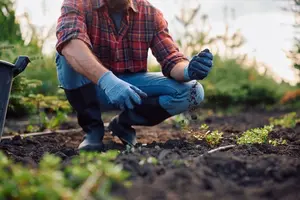
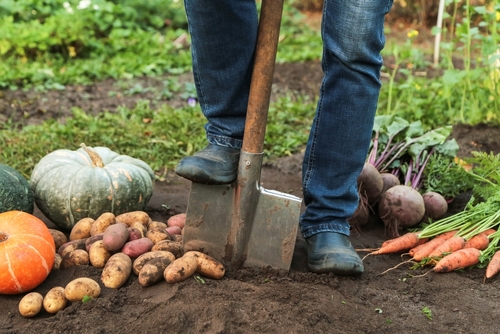 Harvesting garden vegetables at the end of the summer growing season.
Seasonal Vegetable Garden — complete hub for spring, summer, fall, and winter vegetable gardening guides
How to Time Your Fall Vegetable Garden
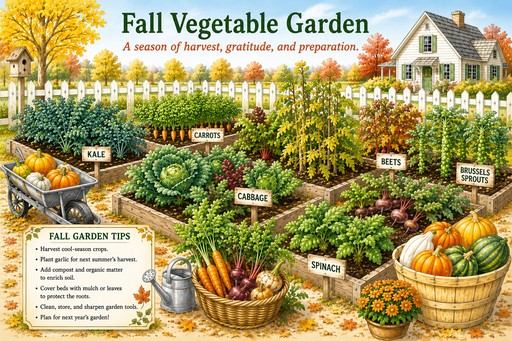
Timing is everything in a fall vegetable garden, and this fall vegetable garden guide starts with the single most important skill: counting backward from your first frost date.
The rule for a fall vegetable garden is simple: count backward from your first expected frost date. The University of Maryland Extension recommends starting your fall vegetable garden planning in mid-summer, much earlier than most gardeners expect.
How to calculate your fall vegetable garden guide planting dates
- Find your first expected frost date. This is the date by which there is a 50% chance of the first frost in your area, according to the University of Maryland Extension. For most of the continental US, this falls between late September (northern states) and late November (southern states). Our free interactive zone finder shows first frost dates by region.
- Find the days to maturity for each crop you want to grow. This is printed on seed packets and listed in the crop guide below.
- Add two weeks to the days-to-maturity figure. This accounts for the slower growth rate in cooling autumn temperatures.
- Count backward from your first frost date by that total number of days. That is your last safe planting date for that crop.
A worked example
Say your first frost date is October 15. You want to grow lettuce: 45 days to maturity, plus 2 weeks, equals 59 days. Count back 59 days from October 15. That gives you a planting date of around August 17. Plant your lettuce by mid-August and it will be ready to harvest before frost arrives.
Start earlier than you think. The biggest fall vegetable garden mistake is waiting too long. Most gardeners begin thinking about autumn planting in September, which is already too late for many crops. Successful fall vegetable gardeners start planning and sowing in July and August, while the summer garden is still in full swing.
The Best Vegetables for Your Fall Vegetable Garden

Not every vegetable is suited to a fall vegetable garden.
Warm-season crops like tomatoes, peppers, cucumbers, and squash need heat to grow and will not produce well when planted in late summer for autumn harvest.
A successful fall vegetable garden focuses on cool-season crops - vegetables that actually prefer the cooler temperatures of autumn and in many cases taste significantly better after a light frost.
This section of the fall vegetable garden guide breaks the best crops down by family, so you know exactly what to plant and when.
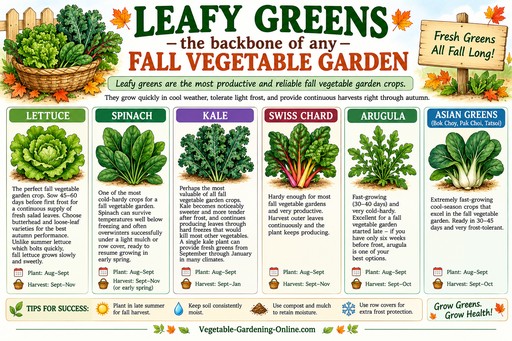 Chart of leafy greens plants that will grow in a fall vegetable garden. Click image to download and print this chart.
Leafy greens — the backbone of any fall vegetable garden
Leafy greens are the most productive and reliable fall vegetable garden crops. They grow quickly in cool weather, tolerate light frost, and provide continuous harvests right through autumn.
- Lettuce: The perfect fall crop. Sow 45-60 days before first frost for a continuous supply of fresh salad leaves. Choose butterhead and loose-leaf varieties. Unlike summer lettuce, which bolts quickly, fall lettuce grows slowly and sweetly.
- Spinach: One of the most cold-hardy crops you can grow. Spinach survives temperatures well below freezing and often overwinters under a light mulch or row cover, ready to resume growing in early spring.
- Kale: Perhaps the most valuable fall crop of all. Kale becomes noticeably sweeter and more tender after frost. It continues producing through hard freezes that would kill most other vegetables. A single kale plant can provide fresh greens from September through January in many climates.
- Swiss chard: Hardy and very productive. Harvest outer leaves continuously and the plant keeps producing.
- Arugula: Fast-growing, 30-40 days, and very cold-hardy. If you have only six weeks before frost, arugula is one of your best options.
- Asian greens (bok choy, pak choi, tatsoi): Extremely fast-growing and frost-tolerant. Ready in 30-45 days.
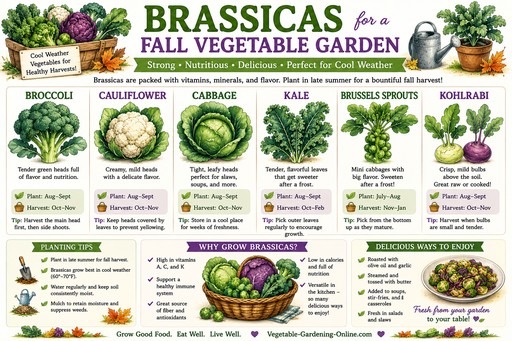 Chart of brassica or cabbage family crops to plant in a fall vegetable garden. Click image to download chart.
Brassicas — the workhorses of the fall vegetable garden
Broccoli, cabbage, Brussels sprouts, cauliflower, and kohlrabi are classic fall crops. They need a longer lead time than leafy greens. Many should be started in July for an autumn harvest. The yields are very rewarding.
- Broccoli: Start seeds indoors in late June or early July, transplant in late July or August. A fall-grown head is often larger and more flavorful than a spring-grown one.
- Cabbage: Very cold-hardy and stores exceptionally well. A cabbage that heads up in October can often be left in the garden through hard frosts and harvested well into winter.
- Brussels sprouts: These need the longest lead time of any fall crop. Start seeds indoors in June for September transplanting. Flavor improves dramatically after hard frost.
- Cauliflower: More frost-sensitive than other brassicas but still productive in most climates. Time transplanting so heads form before consistent hard frosts arrive.
- Kohlrabi: Fast-growing, 45-60 days, and very adaptable. Harvest at golf-ball to tennis-ball size for the best texture and flavor.
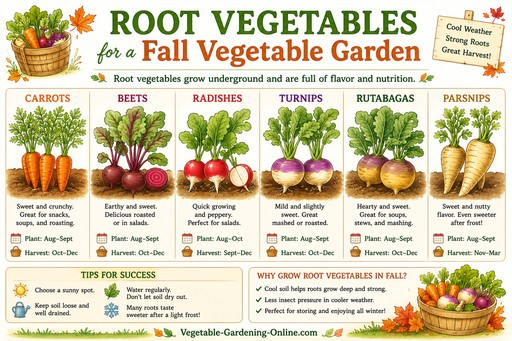 Chart of root vegetables appropriate for fall vegetable garden planting. Click image to download this chart.
Root vegetables — fall vegetable garden staples
Root vegetables are among the most valuable fall crops. Many store well right in the ground through winter in mild climates, effectively turning your garden bed into a natural root cellar.
- Carrots: Sown in midsummer for autumn harvest, they are sweeter than spring-grown carrots. Frost converts their starches to sugar. In many climates you can leave them in the ground all winter.
- Beets: Fast-growing, 50-60 days, and very cold-hardy. Both roots and greens are edible.
- Radishes: The fastest fall crop, ready in as little as 25 days. Succession sow every two weeks for a continuous supply.
- Turnips: Often overlooked, but productive. Ready in 45-60 days. The greens are also delicious.
- Parsnips: Slow to mature but incredibly cold-hardy. They become sweeter with each frost. Harvest through winter as needed.
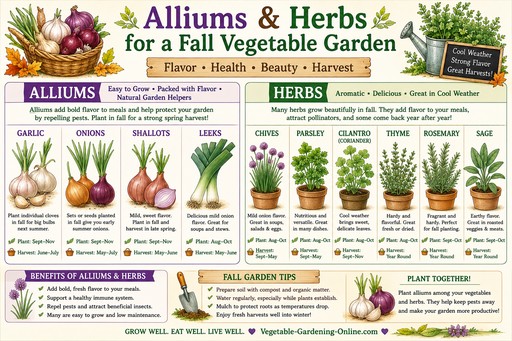 Chart of alliums and herbs that will grow in a fall vegetable garden. Click image to download and print this chart.
Alliums and herbs for the fall vegetable garden
- Green onions / scallions: Fast-growing and cold-hardy. A fall vegetable garden scallion planting gives you fresh onion flavour right through autumn.
- Garlic: Plant garlic cloves in October or November for harvest the following summer. Garlic is the classic autumn planting that requires no special care over winter.
- Peas: In mild climates (Zones 7 and warmer), peas planted in early autumn produce a second crop before hard frost arrives. In cooler zones, autumn peas can be planted for overwintering and an extra-early spring harvest.
- Cilantro and parsley: Both thrive in cool weather and make excellent fall vegetable garden herbs. Cilantro in particular bolts in summer heat but grows beautifully in the cool of autumn.
Use this chart as your fall vegetable garden planting reference. Days to maturity are from transplant for crops marked T, and from direct sowing for all others. Add two weeks to each figure to account for slower autumn growth rates when calculating your final planting dates.
For additional information, please see our Cold Hardy Vegetable section!
Complete Fall Vegetable Garden Guide
Planting Chart

Transitioning Your Garden to Fall
Transitioning your garden from summer to fall is one of the most important seasonal tasks. Doing it well sets your autumn crops up for success.
Clearing summer crops
As summer crops finish, remove them promptly. Do not leave spent plants in the bed. They can harbor pests and disease that will affect your fall garden.
Compost healthy plant material. Bag and dispose of anything that showed signs of disease. Pull roots out of the bed rather than cutting at ground level where possible.
Refreshing the soil
A summer of intensive cropping depletes soil nutrients. Before planting your fall garden, top up the bed with a generous layer of compost, two to three inches worked lightly into the surface.
This refreshes fertility without digging. It sets your fall garden up with the best possible growing conditions from the start.
Succession planting from summer into fall
You do not need to clear the entire bed at once. As individual summer crops finish, beans, zucchini, early tomatoes, clear those squares immediately and replant with fall crops.
This keeps the bed continuously productive rather than leaving a gap between summer and autumn production. When a zucchini plant finishes in late July, that square can go straight into broccoli transplants or a direct sowing of kale.
Watering newly sown fall seeds
Germinating seeds in the heat of late summer is the biggest challenge of fall garden establishment. Hot, dry soil in August can prevent germination or kill emerging seedlings.
Water newly sown seeds daily until they are established. Or sow in the late afternoon, when soil temperatures are cooler and moisture evaporates less quickly. A light covering of straw mulch over newly sown rows helps retain moisture.
Following this fall vegetable garden guide through the transition steps below sets your autumn crops up for real success.
Frost Protection for Your Fall Vegetable Garden

Understanding how to protect your fall vegetable garden from frost, covered in this section of the fall vegetable garden guide, is what separates gardeners who harvest through October from those who are done by the first cold night.
Know your crops' frost tolerance
Not all fall crops need the same protection. Hardy crops like kale, spinach, arugula, carrots, and parsnips can survive temperatures well below freezing with no protection at all, and actually taste better for it. Semi-hardy crops like broccoli, cabbage, lettuce, and chard tolerate light frosts down to around 28°F, but benefit from protection during harder freezes. Tender crops like cilantro and kohlrabi need protection from any frost. See our complete guide to cold-hardy vegetables for a full breakdown by crop.
Your main protection tools
Row cover, cold frames, mulch, and cloches are the four main ways to extend your fall harvest.
A lightweight row cover provides four to eight degrees of frost protection and is the simplest option for most gardeners.
A cold frame goes further, keeping soil temperatures ten to twenty degrees warmer and letting you grow cold-hardy greens through hard frosts and even light snow.
See our complete guide to building and using a cold frame for step-by-step instructions.
A thick layer of mulch insulates the soil directly, and root vegetables like carrots, beets, and parsnips can often be left in the ground all winter under a deep layer. Individual cloches, whether glass bell jars or a repurposed plastic milk jug, work well for protecting a single valuable plant.
Related guides: Cold Frame Vegetable Garden | Cold Hardy Vegetables
 Fall vegetable garden.
Vegetables That Taste Better After Frost in a Fall Vegetable Garden
 Harvesting carrots from the garden.
One of the great pleasures of a fall vegetable garden is discovering how many vegetables actually improve in flavor after frost. This is not gardening folklore. It is a real, well-documented biological process.
When temperatures drop, many plants convert stored starches to sugars as a natural antifreeze response. The result is noticeably sweeter, more complex flavor in your harvest.
- Kale: The transformation is remarkable. Frost-kissed kale has a sweetness summer kale never achieves.
- Brussels sprouts: The classic example. Famously better after frost. Leave them on the plant as long as possible.
- Carrots: Left in the ground after frost, they are noticeably sweeter than summer carrots, often as sweet as candy.
- Parsnips: Absolutely require frost for full flavor. Many gardeners refuse to harvest until after several hard frosts.
- Spinach: Cool temperatures intensify the flavor compared to summer-grown spinach, which can taste flat and slightly bitter.
- Cabbage: Fall-grown cabbage is sweeter and more tender than summer cabbage, especially after light frosts.
Planning Your Fall Vegetable Garden Layout
 Raised bed vegetable garden going into the fall season.
A productive fall vegetable garden does not happen by accident. It is the result of thoughtful planning, using the same layout principles that work for your summer garden, adapted for cool-season crops.
The square foot gardening method works just as well for fall planting as it does for summer. Dividing your bed into one-foot squares maximizes productivity and keeps weeds suppressed with close planting. See our complete square foot gardening guide for full spacing details by crop.
Within your layout, group crops by frost tolerance. Place hardy crops like kale, spinach, and carrots at one end of the bed where you're happy to leave them through winter. Place more tender crops like lettuce and chard where you can easily reach them with row cover or a cold frame when frost threatens.
Fall also lends itself well to succession planting. Fast crops like radishes and arugula can be sown multiple times through late summer and early autumn. Each time a square clears, sow another quick-maturing crop to keep production going.
This fall vegetable garden guide recommends the same layout principles that work for your summer garden, adapted for cool-season crops.
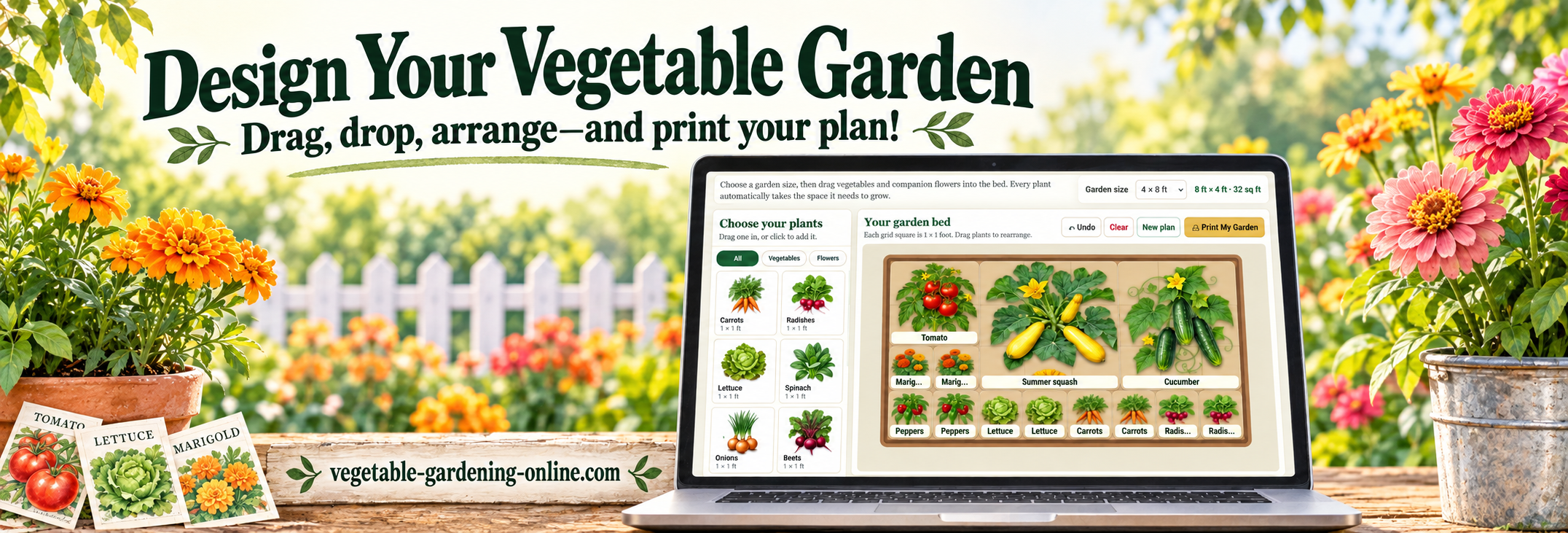
Use our free interactive vegetable garden planner to design your fall layout before you plant. It shows spacing for all 20 vegetables and checks companion planting automatically.
Related guides: Square Foot Gardening | Vegetable Garden Planner
Common Fall Vegetable Garden Mistakes to Avoid
 Fall vegetable harvest.
This fall vegetable garden guide would not be complete without a look at the mistakes that trip up even experienced gardeners.
Mistakes to avoid:
- Starting too late. By far the most common mistake. Most crops need six to ten weeks to mature. Waiting until September means missing the window for most crops. Plan in July, start sowing in August.
- Not watering germinating seeds. Late summer heat dries soil rapidly. Seeds sown in August need daily watering until they establish.
- Planting warm-season crops. Tomatoes, peppers, and cucumbers will not produce in fall. They need warm soil and warm nights to set fruit. Stick to cool-season crops.
- Forgetting to add compost. A summer of heavy cropping depletes soil nutrients. Skipping compost before fall planting results in poor growth and disappointing yields.
- Not protecting from frost at all. Even a single unexpected early frost can wipe out an unprotected garden. Keep row cover or old bedsheets handy and check forecasts regularly from mid-September onward.
- Overcrowding transplants. It's tempting to pack in more plants than the bed can support. Overcrowded plants compete for nutrients and have poor air circulation, which encourages disease in damper autumn conditions.
Frequently Asked Questions About the Fall Vegetable Garden
Vegetable garden in the fall season.These are the questions this fall vegetable garden guide gets asked most often.
When should I start my fall vegetable garden?
Start planning and sowing your fall vegetable garden in July and August for most of the United States. The exact timing depends on your first frost date and what you want to grow. Fast crops like radishes and arugula can be started as late as six weeks before frost. Slower crops like broccoli and Brussels sprouts need to be started in early to midsummer. The best approach is to work backward from your first frost date using the planting chart above.
What is the easiest crop for a beginner fall vegetable garden?
Lettuce, spinach, radishes, and arugula are the easiest fall vegetable garden crops for beginners. They germinate quickly, grow fast, tolerate frost, and provide harvests within four to six weeks of sowing. Start with these in your first fall vegetable garden and add brassicas and root vegetables as you gain experience.
Can I grow a fall vegetable garden in containers?
Absolutely. Container growing is an excellent approach for a fall vegetable garden, particularly for cool-season greens like lettuce, spinach, arugula, and herbs. Containers can be moved to sheltered positions when frost threatens, extending the fall vegetable garden season significantly. Use large containers (at least five gallons) with good drainage and a quality potting mix refreshed with compost for the autumn season.
How long can I harvest from my fall vegetable garden?
This depends on your climate, the crops you grow, and what frost protection you use. Without any protection, most fall vegetable gardens produce until the first hard frost - typically October or November in most of the US. With row covers and cold frames, a fall vegetable garden can extend production by four to eight weeks beyond that. In mild climates (Zones 7 and warmer), a well-planted fall vegetable garden with some protection can produce fresh food right through winter and into early spring.
Can I plant garlic in my fall vegetable garden?
Yes - and you absolutely should. Garlic is one of the most valuable autumn plantings, going in as individual cloves in October or November and overwintering to produce a full bulb harvest the following June or July. Garlic requires essentially no maintenance through winter and is one of the easiest and most rewarding crops you can add to a fall vegetable garden.
What vegetables can stay in my fall vegetable garden through winter?
Several crops can remain in a fall vegetable garden through winter in most climates: kale, spinach, Brussels sprouts, leeks, carrots, parsnips, beets, cabbage, and garlic. Hardy greens like kale and spinach often overwinter successfully and resume growing in early spring, giving you some of the earliest harvests of the new season. Root vegetables can be harvested as needed right through winter in many regions, effectively turning your fall vegetable garden bed into a natural root cellar.
More Vegetable Gardening Guides
 Harvesting onions at the end of summer.
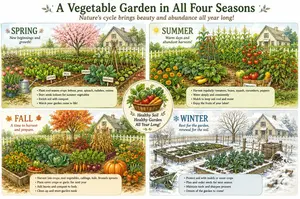
For an excellent guide to growing vegetables in all four seasons — including a detailed look at how to plan a fall vegetable garden while summer crops are still in the ground — Grit magazine at grit.com has a practical year-round vegetable gardening guide worth bookmarking.
Grit Magazine — Year-Round Vegetable Gardening — practical guide to growing vegetables in all four seasons, including fall and winter planting strategies
Grit MagazineExplore more: How to Start a Vegetable Garden from Scratch | Raised Bed Vegetable Gardening for Beginners | No-Dig Vegetable Gardening | Square Foot Gardening | Companion Planting Chart | Small Vegetable Garden Plans | Backyard Vegetable Garden Design | Free Interactive Vegetable Garden Planner | Free Planting Worksheets and Zone Charts

Recent Articles


-
How to Grow Cabbage
Sep 15, 26 12:33 PM
 How to Grow Cabbage: The Complete Guide from Seed to Harvest. This complete guide covers everything you need to know about how to grow cabbage.
 -
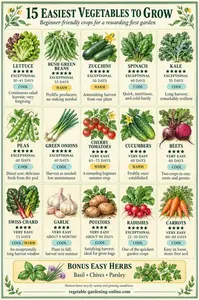
Easiest Vegetables to Grow: 15 Foolproof Crops for Beginners
Sep 15, 26 09:24 AM
 Easiest vegetables to grow for beginners - with advice on what makes each one easy, how to get started, and which vegetables are harder than they look.
 -
How to Grow Green Beans
Sep 14, 26 07:53 PM
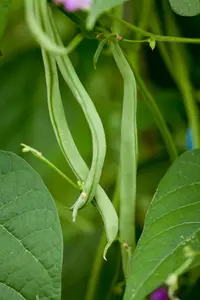
 How to Grow Green Beans: The Complete Guide to Bush and Pole Beans. Green beans are one of the most forgiving crops a beginner can choose.
 -
Seasonal Vegetable Garden
Sep 14, 26 05:38 PM
 Seasonal Vegetable Garden — Growing Food Through Every Season
 -
Overwintering Vegetables: Fall-Planted Crops for Early Spring Harvest
Sep 14, 26 05:35 PM
 Learn about overwintering vegetables like garlic, fava beans, and onions, planted in fall to sit through winter and reward you with an early spring harvest.
 -
Free Vegetable Garden Journal— Printable Downloads for Home Gardeners
Sep 14, 26 01:51 PM
 Download our free Vegetable Garden Journal — choose a full 16-page version or simpler 7-page journal. Track planting, harvest, & garden notes season by season.
 -
Free Vegetable Garden Cut and Paste Activities for Kids Ages 5-7
Sep 12, 26 09:13 PM
 Free printable vegetable garden cut and paste activities for kids ages 5-7. Build your own garden, match seeds to plants, and learn what grows where.