- Home
- Planning A Garden
- Vegetable Garden Shade
Vegetable Garden Shade: What to Grow and How to Succeed in a Shady Garden
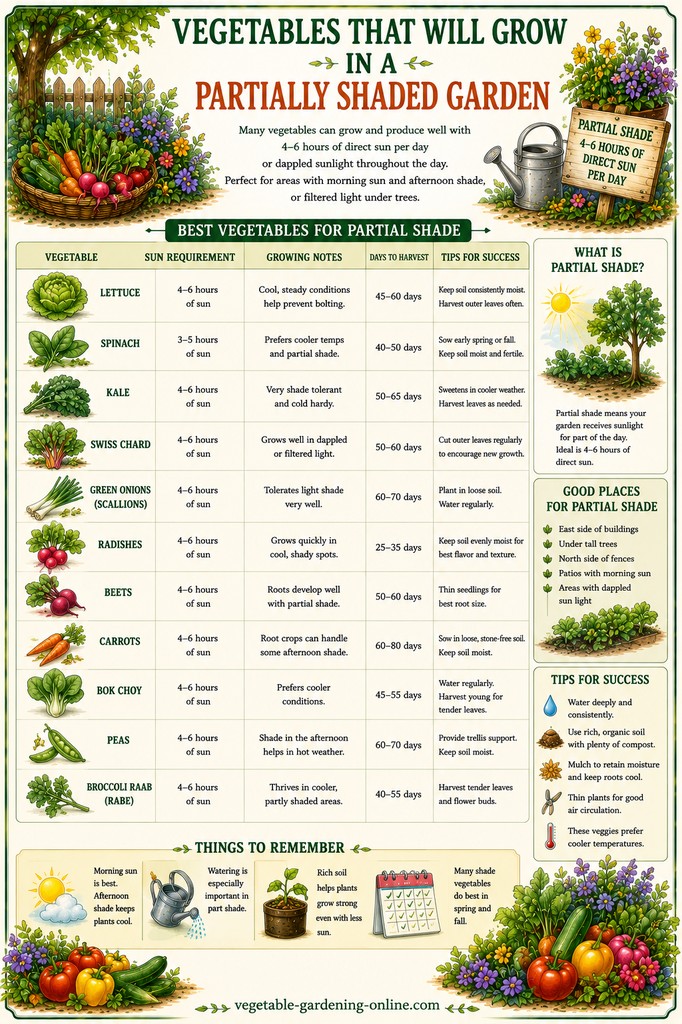
Is vegetable garden shade a problem in your yard or growing space?
A shady vegetable garden does not have to mean a disappointing one!
If you have ever looked at a partially shaded backyard and assumed that productive vegetable gardening was impossible there, this guide will change your perspective entirely.
A vegetable garden in shade - or partial shade - is genuinely productive when you choose the right crops, understand what your specific light conditions actually are, and design your garden to make the most of every ray of available light.
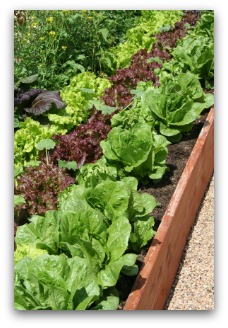
The reality of vegetable garden shade is more nuanced than the standard advice of six to eight hours of direct sunlight suggests.
That requirement applies to fruiting crops - tomatoes, peppers, cucumbers, squash, and beans - which need full sun to flower and set fruit reliably.
A large and productive category of vegetables, however, actually prefers or at least tolerates significantly less sun.
Leafy greens, root crops, and many herbs produce excellent harvests in a vegetable garden with shade, and some of them - particularly lettuce and spinach - actually perform better in partial shade during summer because shade keeps them cooler and delays the bolting that hot sunny conditions cause.
According to Iowa State University Extension, leafy vegetables such as leaf lettuce, spinach, collards, Swiss chard, and kale can be successfully grown in areas that receive only three to four hours of sun per day.
Source: Iowa State University Extension - Vegetables that Grow in Partial Shade
Understanding Shade in a Vegetable Garden
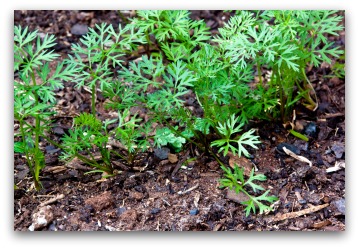
Before choosing what to grow in a vegetable garden with shade, it is important to understand exactly what kind of shade you are dealing with. Not all shade is the same, and the differences matter enormously for what you can grow successfully.
Full sun means six to eight or more hours of direct, unobstructed sunlight daily. This is what fruiting vegetables need to produce well - tomatoes, peppers, cucumbers, squash, corn, beans, and melons all require full sun conditions for reliable harvests.
Partial shade or dappled shade means three to six hours of direct sun daily. This is the most productive category for a shade vegetable garden. Many of the most useful and flavourful vegetables grow very well in partial shade, and some actually perform better here than in full sun. Morning sun with afternoon shade is the ideal partial shade condition for a vegetable garden - plants get the cooler morning light they need for photosynthesis and are protected from the intense, drying afternoon heat.
Light shade means two to three hours of direct sun daily, often filtered through tree canopy. This is challenging but not impossible for a vegetable garden. Very shade-tolerant leafy greens like mache, spinach, and some lettuce varieties will produce in light shade, though more slowly and less abundantly than in brighter conditions.
Deep or full shade means less than two hours of direct sun daily - essentially no direct sun. No food-producing vegetable grows productively in full shade. If you have areas of full shade, use them for non-productive garden purposes. Focus your vegetable garden on the areas with at least three hours of direct light.
Vegetable garden shade conditions at a glance
| Light Condition | Hours of Direct Sun | What Grows Well | What Will Struggle |
|---|---|---|---|
| Full sun | 6-8+ hours | All vegetables; maximum productivity | Nothing - this is ideal for every crop |
| Partial shade | 4-6 hours | All leafy greens, root crops, peas, brassicas, herbs; some fruiting crops reduced | Tomatoes, peppers, cucumbers, squash, beans - will grow but produce less |
| Dappled / light shade | 3-4 hours | Lettuce, spinach, arugula, mache, kale, chard, radishes, herbs | Most fruiting crops; root crops slower but possible |
| Deep shade | Under 2 hours | Nothing productive | All food crops |
The Best Vegetables to Grow in Shade
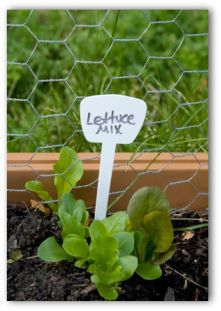
The key insight in vegetable garden shade is the difference between leafy crops and fruiting crops.
Leafy vegetables and most root vegetables do not need to produce flowers and fruit to give you a harvest - you are simply growing leaves and roots.
These crops need sunlight for growth and photosynthesis, but they do not need the intense sustained sun that drives flower production and fruit ripening.
This is why the vegetable garden shade problem is largely solvable with the right crop choices.
The absolute best performers in a shady vegetable garden are the salad greens.
Lettuce, spinach, arugula, Asian greens, endive, and mache all produce excellent harvests in partial shade, and lettuce in particular is often better in partial shade during summer because the reduced heat slows the bolting process and keeps leaves tender and sweet far longer than the same variety growing in full sun.
A shady vegetable garden plot can be one of the most productive salad gardens you have ever grown, with greens that stay in production through summer conditions that would cause the same crops to bolt within days in a sunny bed.
Kale and Swiss chard are two of the most valuable crops for a shady vegetable garden because of their continuous cut-and-come-again harvesting over a very long season.
Both tolerate partial shade well and continue producing leaves through conditions that stop more sun-dependent crops.
Swiss chard is particularly useful because it tolerates both heat and shade, making it one of the few crops that performs genuinely well in a shady vegetable garden in both spring and summer conditions.
Root vegetables including radishes, beets, turnips, and carrots all grow acceptably in a vegetable garden with shade, though their yields may be somewhat lower and their growth somewhat slower than in full sun.
The most shade-tolerant root crop is the radish, which germinates and matures quickly enough that three to four hours of sun is sufficient for a meaningful harvest.
Carrots and parsnips in a shady vegetable garden grow more slowly but develop well - they actually appreciate the cooler temperatures that shade provides, particularly in summer.

Complete shade vegetable garden crop guide
| Vegetable | Minimum Sun for Harvest | Notes on Growing in Shade | Shade Suitability |
|---|---|---|---|
| Lettuce (loose-leaf) | 3-4 hours | Often better in partial shade - slower to bolt; sweeter leaves in summer | ⭐⭐⭐⭐⭐ Excellent |
| Spinach | 3-4 hours | Thrives in partial shade; longer season than in full sun | ⭐⭐⭐⭐⭐ Excellent |
| Arugula | 3-4 hours | Partial shade slows bolting dramatically; ideal summer salad crop in shade | ⭐⭐⭐⭐⭐ Excellent |
| Mache (corn salad) | 2-3 hours | The most shade-tolerant salad green available; grows in light shade | ⭐⭐⭐⭐⭐ Excellent |
| Asian greens (bok choy, tatsoi, mizuna) | 3-4 hours | Excellent in partial shade; fast-growing; ideal for shady vegetable garden beds | ⭐⭐⭐⭐⭐ Excellent |
| Kale | 3-4 hours | Good in partial shade; slower growth but excellent harvest quality | ⭐⭐⭐⭐ Very Good |
| Swiss chard | 4 hours | Tolerates partial shade well; one of the most useful shade vegetable garden crops | ⭐⭐⭐⭐ Very Good |
| Radishes | 3-4 hours | Fast-maturing; works well in shade; most shade-tolerant root crop | ⭐⭐⭐⭐ Very Good |
| Beets | 4-5 hours | Smaller roots in shade but still productive; greens are excellent | ⭐⭐⭐⭐ Very Good |
| Broccoli | 4-5 hours | Tolerates partial shade; heads may be smaller; best in spring or autumn | ⭐⭐⭐ Good |
| Cabbage | 4-5 hours | Grows in partial shade; heads may take longer to form | ⭐⭐⭐ Good |
| Peas | 4-5 hours | Spring peas manage well in partial shade; avoid hot shady conditions | ⭐⭐⭐ Good |
| Carrots | 4-5 hours | Slower in shade but acceptable harvest; appreciate the cooler conditions | ⭐⭐⭐ Good |
| Green onions and chives | 3-4 hours | Both tolerate partial shade well; chives are particularly shade-tolerant | ⭐⭐⭐⭐ Very Good |
| Beans (bush) | 5-6 hours | Need more sun than leafy crops; partial shade reduces yield | ⭐⭐ Marginal |
| Tomatoes | 6-8 hours | Need full sun for good fruit production; grow but produce poorly in shade | ⭐ Poor |
| Peppers | 6-8 hours | Very sun-dependent; poor production in shade; not recommended | ⭐ Poor |
| Cucumbers | 6-8 hours | Need full sun; bitter and unproductive in shade | ⭐ Poor |

Herbs for a Shady Vegetable Garden
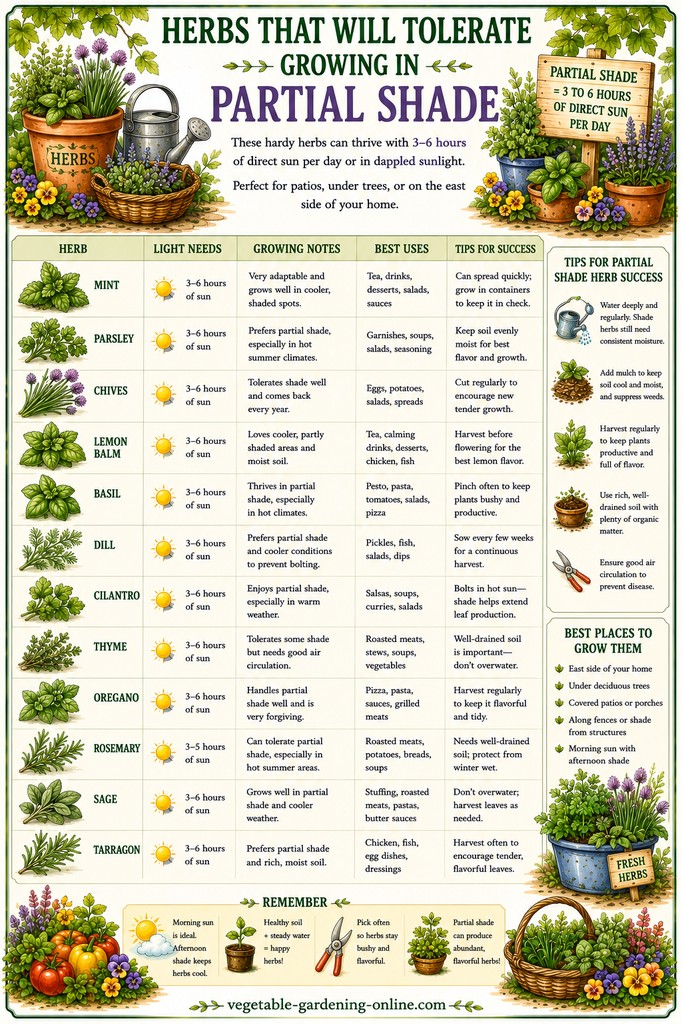
Herbs are one of the best uses of a shady vegetable garden space because many of the most useful kitchen herbs genuinely prefer or at least tolerate partial shade conditions. A shaded corner that cannot support fruiting vegetables can often be a highly productive herb garden.
Parsley is one of the most shade-tolerant herbs and one of the most useful in the kitchen. It grows well in a vegetable garden shade of three to four hours and actually benefits from some protection from intense afternoon sun, which can cause it to bolt prematurely. Mint is another very shade-tolerant herb - it thrives in conditions that would stress most vegetables, and partial shade keeps its foliage in better condition than full sun. Always grow mint in a container, however, as it spreads aggressively in the ground and will colonise a vegetable garden bed very quickly.
Chives are among the most forgiving plants in any vegetable garden - sun or shade - and are perfectly happy with three to four hours of direct light. They return reliably each year as a perennial, provide a continuous harvest of mild onion-flavored leaves, and are one of the best companion plants in the garden. Cilantro, which bolts almost immediately in full summer sun, actually thrives in a shady vegetable garden where the cooler, lower-light conditions keep it producing fresh leaves for weeks longer than in a sunny bed. The shade vegetable garden is also ideal for chervil, sorrel, lemon balm, and lovage - all useful culinary herbs that prefer partial shade over full sun.

Herbs for the shady vegetable garden
| Herb | Minimum Sun | Notes |
|---|---|---|
| Mint | 2-3 hours | Thrives in partial shade; keep in a container to prevent spreading |
| Chives | 3 hours | Very shade-tolerant perennial; excellent companion plant |
| Parsley | 3-4 hours | One of the most useful herbs for partial shade; slow to bolt |
| Cilantro | 3-4 hours | Ideal in shade - slower to bolt than in full sun; extends harvest season significantly |
| Chervil | 3 hours | Actually prefers partial shade; one of few herbs that thrives in low light |
| Sorrel | 3-4 hours | Tolerates shade well; perennial; lemony flavoured leaves |
| Lemon balm | 3-4 hours | Grows vigorously in partial shade; contain it as it spreads |
| Thyme | 4-5 hours | Tolerates light shade; less bushy than in full sun |
| Basil | 5-6 hours | Needs warm bright conditions; struggles in shade; not recommended for shady spots |
Why a Shady Vegetable Garden
Can Actually Be an Advantage

The vegetable garden shade problem has a genuine silver lining that experienced gardeners often discover and appreciate. For certain crops at certain times of year, partial shade is not just acceptable - it is actually better than full sun.
Lettuce and salad greens in a shady vegetable garden have a significantly longer productive season than the same crops in full sun. In summer, lettuce bolts - runs to seed and turns bitter - very quickly in hot, sunny conditions. A vegetable garden in shade keeps temperatures lower and light levels more moderate, dramatically slowing the bolting process. Salad greens that would bolt in a week in full midsummer sun often stay productive for four to six weeks longer in a partially shaded bed. The leaves are also often larger, more tender, and sweeter-flavoured in partial shade than in full sun exposure.See Fall Vegetable Gardening.
Spinach benefits from vegetable garden shade in the same way - its most common failure in summer gardens is bolting caused by heat and long days. A shady vegetable garden extends the spinach season significantly, allowing harvests well into summer that would be impossible in an unshaded bed.
Cool-season crops in general appreciate the moderated temperatures of a shady vegetable garden during the transition from spring to summer. Peas, broccoli, kale, and Asian greens all tolerate higher temperatures better when shielded from the most intense afternoon sun. This temperature benefit means a shady vegetable garden is often more productive for cool-season crops in late spring than an equivalent sunny bed, particularly in warmer climates where spring quickly gives way to summer heat. See Cold Frame Gardening.

How to Maximize a Shady Vegetable Garden

Understanding how to work with vegetable garden shade rather than against it makes a very significant difference to how productive a shady plot can be. A few practical strategies transform a challenging shady vegetable garden into a productive and well-managed growing space.
The first step in making the most of a vegetable garden with shade is accurate light mapping. Walk your garden at different times of day - 9am, 12pm, and 3pm - on a clear sunny day and honestly assess how much direct light each area receives. You may find that your garden has more variation than you expected - a strip along a fence that gets four hours of morning sun, a corner that receives dappled light all day, and an area under a tree canopy that gets almost no direct sun at all. Matching crops to the actual light level of each spot rather than treating the whole garden as uniformly shaded is the single most effective strategy in shade vegetable gardening.
Reflective surfaces dramatically improve vegetable garden shade performance. White-painted walls and fences, light-colored gravel paths, and metallic or white mulch all reflect available light back toward plants, effectively increasing the light intensity in a shady vegetable garden without adding any direct sun. Painting the wall or fence behind a shady vegetable garden white or pale grey is a simple and effective intervention that experienced shade gardeners recommend highly.
Choosing the right varieties matters even more in a shady vegetable garden than in full sun. Loose-leaf lettuce varieties outperform heading types in low light. Dwarf or compact brassica varieties produce better than large-headed types in a shade vegetable garden. Choosing varieties specifically described as good in partial shade or suitable for growing in lower light conditions in seed catalogues and on plant labels makes a real difference to results.
Remove or thin any trees, shrubs, or structures that are creating unnecessary shade if this is practical. Sometimes a single low branch of a nearby tree casts a surprisingly large shadow over a vegetable garden bed that would be eliminated by one pruning cut. Assessing whether any of the shade sources can be reduced is always worth doing before concluding that a vegetable garden plot is permanently shaded.
Designing a Vegetable Garden for Shade
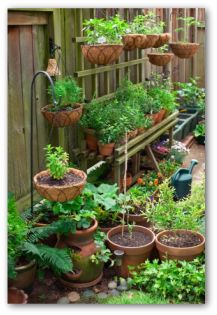
Designing a productive vegetable garden in shade requires thinking about layout, bed placement, and crop arrangement slightly differently than a full-sun garden design. The same design principles apply - good paths, accessible beds, vertical growing where possible - but with shade-specific considerations built in.Use our free Interactive Garden Planner to plan your garden layout.
Place the most shade-tolerant crops in the shadiest spots and reserve any sunnier areas for crops that need more light. This sounds obvious but is often not implemented systematically. A vegetable garden in shade benefits from careful allocation of its best light to the crops that can use it most productively. Even a single extra hour of sun on a bed of peas or broccoli makes a meaningful difference to yield.
Use vertical growing to catch more light in a shady vegetable garden. Climbing crops on a trellis or fence positioned at the sunniest edge of the garden can access light that the bed below cannot. Train beans, peas, or cucumbers up a trellis at the most open, brightest part of the garden while growing shade-tolerant greens in the darker areas.See Vertical Gardening for more tips.
Containers are a valuable tool in vegetable garden shade management. A container of cherry tomatoes, peppers, or herbs can be moved to wherever the sunniest spot in the garden is on any given day - following the sun across a patio or courtyard as it moves. A shady vegetable garden with a set of large containers is far more flexible than one with only fixed beds. Use our free interactive garden planner to design your layout and decide which crops go where before building any permanent structures.See Container Gardening for more info.
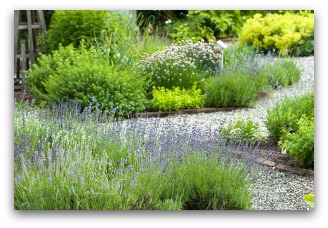
Shade vegetable garden design tips
| Challenge | Solution | Effect |
|---|---|---|
| Overall low light levels | Paint walls and fences white or pale grey; use light-coloured mulch | Reflects available light; increases effective light intensity |
| Deep shadow from tree canopy | Prune lower branches of overhanging trees; raise canopy where possible | Can add 1-2 hours of direct light to beds below |
| Crops growing spindly and weak | Reduce planting density in shade; increase spacing for better light penetration | Improved air circulation and light per plant |
| Short sunny window (morning only) | Plant east-facing beds with shade-tolerant crops; use morning sun for leafy greens | Morning sun is ideal for salad crops and cool-season vegetables |
| Root competition from nearby trees | Use raised beds with solid bases; containers on hard surfaces | Prevents tree roots accessing vegetable garden beds |
| Need fruiting crops in shady garden | Use containers that can be moved to sunniest available spots | Full-sun crops get more light without permanent bed infrastructure |
Common Mistakes in a Shady Vegetable Garden
Growing vegetables in a shady vegetable garden is achievable and rewarding, but a few common mistakes reduce productivity and cause frustration that is easily avoided.
Trying to grow the wrong crops is the most common vegetable garden shade mistake. Gardeners who insist on growing tomatoes, cucumbers, peppers, and squash in a shady vegetable garden repeatedly discover that the plants grow but produce little fruit. These crops need full sun - not as a suggestion but as a genuine requirement for flowering and fruiting. Accept the limitation of a shady vegetable garden and focus on the crops that genuinely produce well there. A productive salad garden growing in partial shade brings more satisfaction than a struggling tomato plant in the same spot.
Underestimating how little sun some spots get is another common vegetable garden shade problem. Many gardeners overestimate the light levels in their garden because they are thinking of the sunniest time of year or the sunniest part of the day. A vegetable garden bed that catches two to three hours of sun in June receives even less in September. Honest light assessment before deciding what to plant prevents disappointment.
Overcrowding plants in a shady vegetable garden reduces productivity even further. In a full-sun garden, closely spaced plants receive abundant light from above. In a vegetable garden with shade, every additional plant reduces the already-limited light reaching its neighbours. Space plants more generously in shade than in sun, and thin crops more aggressively to ensure each plant has the best possible access to available light.
Planting too deep in shade is a subtle but real mistake. Seedlings emerging into low-light conditions are already stretching toward available light. Deep planting in a shade vegetable garden produces very leggy, weak seedlings that struggle from the start. Plant at the standard depth and thin promptly.
Frequently Asked Questions About Vegetable Garden Shade
1. Can I grow a productive vegetable garden in full shade?
No edible vegetables grow productively in full shade - less than two hours of direct sun daily. If your only available space is in full shade, container growing on a sunnier hard surface is your best option. Even a patio, driveway, or path that receives more light than a shaded garden bed can host a productive container vegetable garden.
2. How many hours of sun does a vegetable garden need?
The minimum for the most productive shady vegetable garden crops - lettuce, spinach, arugula, mache, and herbs - is three to four hours of direct sunlight daily. Root vegetables like radishes and beets need at least four hours. Fruiting crops like tomatoes, peppers, cucumbers, and beans need six to eight hours of direct sun for reliable production and are generally not suitable for a shady vegetable garden.
3. My garden gets only morning sun - what can I grow?
Morning sun with afternoon shade is actually one of the better light profiles for a shade vegetable garden. It provides the cooler, gentler morning light that cool-season crops prefer and protects them from the intense afternoon heat that causes bolting. Lettuce, spinach, arugula, kale, Swiss chard, peas, radishes, and most herbs all do very well with four to six hours of morning sun and afternoon shade.
4. Why do my vegetables get leggy in a shady garden?
Legginess - weak, elongated stems reaching toward light - is the classic sign of insufficient light. In a vegetable garden with shade, reduce plant density so each plant has more light per individual. Increase reflected light by painting walls white. Choose compact or dwarf varieties that respond better to lower light. And accept that some crops simply need more light than a shady vegetable garden can provide - grow those in containers that can be positioned in the sunniest available spot.
5. Can I use grow lights to supplement a shady outdoor vegetable garden?
Grow lights are designed for indoor use and are not practical for supplementing light in an outdoor vegetable garden shade situation. The light output needed to meaningfully supplement a shady outdoor bed would require enormous and expensive lighting infrastructure. The practical solutions for vegetable garden shade are crop selection, reflective surfaces, and moving shade-intolerant crops into containers that can be repositioned.
More Vegetable Gardening Guides

Return to our Planning a Vegetable Garden hub for complete guides to garden design, layout, raised beds, containers, and planning tools.
- Planning a Vegetable Garden — complete hub for garden design, layout, raised beds, containers, and planning tools

Recent Articles


-
Small Vegetable Garden Plans: 8 Layouts That Maximise Space
Oct 08, 26 10:41 AM
 Small vegetable garden plans are some of the most searched and most valuable resources in home food growing.
 -
USDA Zone Finder - Find Your Vegetable Planting Dates | Vegetable-Gardening-Online.com
Oct 07, 26 03:53 PM
 Find your USDA hardiness zone, last spring frost date, and first fall frost date by state and region. Free interactive zone finder from Vegetable-Gardening-Online.com.
 -
Interactive Vegetable Garden Planner | Vegetable Gardening Online
Oct 07, 26 02:29 PM
Design a vegetable garden with correctly scaled plant spacing, companion flowers, drag-and-drop placement, and a printable plan. -
Free Printable Garden Stationery: Gardening Letter Paper & Note Cards
Oct 07, 26 12:48 PM
Free printable garden stationery: watercolor letter paper, lined and unlined, plus folded note cards with garden, fall, and Christmas scenes. Print at home. -
Free Preschool Vegetable Garden Cut and Paste Activities
Oct 07, 26 12:43 PM
 Free preschool vegetable garden cut and paste activities for ages 3-4. Build your own backyard, container, or seed packet garden scene, and sticker sheets.
 -
Planning a Vegetable Garden: Layouts, Raised Beds, Containers & More
Oct 06, 26 07:44 PM
 Planning a vegetable garden? Start here: layouts, raised beds, containers, square foot gardening, free planning tools, and tips to avoid beginner mistakes.
 -
How to Start a Vegetable Garden: 10 Easy Steps for Beginners
Oct 06, 26 04:38 PM
 How to start a vegetable garden in 10 easy steps: pick a sunny spot, choose raised beds or containers, prepare the soil, and grow easy vegetables.