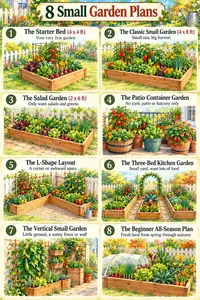
- Home
- Planning A Garden
- Succession Planting
Succession Planting Vegetables: How to Harvest All Season Long

Succession planting vegetables is the single most effective technique for turning a productive vegetable garden into a continuously productive one.
Without succession planting, most vegetable gardens deliver a burst of harvest at one or two peak moments during the season - and then go quiet.
With succession planting vegetables, those same beds can produce fresh food steadily from the first sowings of early spring all the way through to the last frosts of autumn, with each harvested crop being replaced by the next one already growing in its place.
Succession planting is the technique that keeps a seasonal vegetable garden producing continuously from early spring through late fall. This page is also part of our Seasonal Vegetable Garden hub, where you will find complete guides for growing through every season of the year.
Seasonal Vegetable Garden — complete hub for spring, summer, fall, and winter vegetable gardening guides
The principle behind succession planting vegetables is straightforward: rather than sowing or transplanting all of one crop at the same time and harvesting everything at once, you spread your sowings out over the season in planned intervals, so that as one batch reaches its peak and finishes, the next batch is ready to take over.
According to the University of Maryland Extension, succession planting is one of the most valuable tools for maximizing food production from a home garden, and the basic approach is as simple as sowing a little of each crop every one to three weeks rather than all at once.
Source: University of Maryland Extension - Planting Vegetables in Succession
The Three Methods of Succession Planting Vegetables

Most gardeners think of succession planting vegetables as simply sowing the same crop over and over at intervals - and that is the most common approach. But there are actually three distinct methods of succession planting vegetables, and understanding all three gives you far more flexibility and productivity than any single approach alone.
The first method is staggered sowing of the same crop - the classic succession planting approach. You sow a small amount of the same vegetable every one to three weeks throughout its appropriate growing season, so that each batch reaches harvest readiness a week or two after the previous one finishes. This is the most widely used succession planting method for quick crops like lettuce, radishes, spinach, beans, and arugula, where the goal is a steady supply of fresh harvests rather than one large batch.
The second method of succession planting vegetables uses different varieties of the same crop with different maturity dates, all planted at the same time. Choosing an early, a mid-season, and a late-season variety of the same vegetable - corn, beans, broccoli, or carrots, for example - and planting all three varieties on the same day staggers the harvest automatically based on the different days-to-maturity of each variety, without requiring multiple sowing dates. This approach is especially useful for crops that are difficult to transplant or that need to be sown all at once for practical reasons.
The third method is relay planting, also called harvest-and-sow succession planting. In relay planting, you follow one crop with a completely different crop in the same space once the first is harvested. Spring peas replaced by summer beans, then fall spinach. Spring lettuce replaced by summer zucchini, then autumn kale. Relay planting keeps every square foot of the garden in continuous production through multiple crop cycles in a single season, and is the most space-efficient of the three succession planting approaches. Most experienced gardeners use a combination of all three methods.

The three succession planting methods compared
| Method | How It Works | Best For | Main Benefit |
|---|---|---|---|
| Staggered sowings | Same crop sown every 1-3 weeks throughout the season | Lettuce, radishes, beans, spinach, arugula, cilantro | Continuous fresh supply all season; avoids glut |
| Multiple variety planting | Early, mid, and late varieties planted at the same time | Corn, broccoli, carrots, beans, tomatoes | Staggered harvest without multiple sowing dates |
| Relay planting | Different crop planted in the same space after the first is harvested | All beds; whole-garden planning | Maximum space use; garden in production all season |
The Best Vegetables for Succession Planting

Not every vegetable benefits equally from succession planting. The best candidates for succession planting are fast-maturing crops with a relatively short harvest window - crops where a single sowing produces a large concentrated harvest that is quickly over, rather than a plant that keeps producing all season on its own.
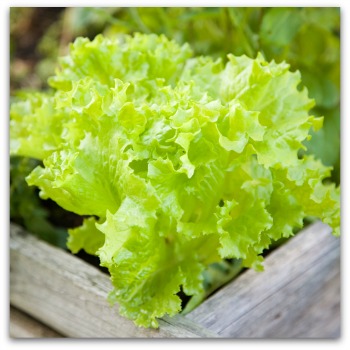
Lettuce is the top candidate for succession planting in most vegetable gardens. A single sowing of lettuce reaches peak quality and then quickly bolts in rising temperatures, giving you a limited window of perfect harvest.
Succession planting lettuce every two weeks from early spring through late summer - pausing only during the hottest weeks or switching to bolt-resistant varieties - provides continuous fresh salad greens for months rather than the frantic scramble to use a whole bed of lettuce before it turns bitter.
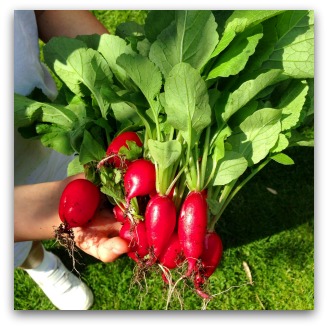
Radishes are the easiest and fastest succession planting crop. They are ready in 25 days, take up almost no space, and can be tucked into any available gap between slower crops. Succession planting radishes every ten to fourteen days from early spring through fall gives you a continuous supply of one of the most satisfying snack crops in the garden.
Bush beans are one of the most practically useful succession planting vegetables. A single sowing produces its entire concentrated harvest in two to three weeks - then it is finished. Succession planting beans every three to four weeks from the last frost through midsummer gives you fresh beans continuously rather than one overwhelming glut. Pole beans, by contrast, produce continuously all season on their own and do not need succession planting.

Spinach, arugula, cilantro, and Asian greens are all excellent succession planting candidates because they are fast-maturing, have limited harvest windows due to bolting in heat, and benefit enormously from staggered plantings that maintain supply through the transitions between cool and warm seasons.
Succession planting intervals for common vegetables
| Vegetable | Days to Maturity | Succession Interval | Season | Notes |
|---|---|---|---|---|
| Radishes | 25-30 days | Every 10-14 days | Cool (spring and fall) | Easiest succession crop; very fast |
| Lettuce (loose-leaf) | 30-45 days | Every 2 weeks | Cool; bolt-resistant types in summer | Most valuable succession planting vegetable |
| Arugula | 30-40 days | Every 2-3 weeks | Cool; shade in summer | Bolts quickly in heat; shade extends season |
| Spinach | 40-50 days | Every 2-3 weeks | Cool (spring and fall) | Stop summer sowings; resume in late summer for fall |
| Bush beans | 50-55 days | Every 3-4 weeks | Warm season | Ideal succession vegetable; concentrated harvest window |
| Beets | 55-70 days | Every 3 weeks | Cool (spring and fall) | Both roots and greens are useful |
| Carrots | 65-80 days | Every 3-4 weeks | Cool (spring and fall) | Direct sow only; cannot transplant |
| Cilantro | 50-55 days | Every 2-3 weeks | Cool; shade in summer | Bolts very quickly in heat; shade helps |
| Peas | 60-70 days | Every 2-3 weeks | Cool season only | Stop when soil warms; relay with warm-season crops |
| Asian greens | 30-45 days | Every 2-3 weeks | Cool; some heat tolerance | Very fast; excellent for relay planting gaps |
Vegetables That Don't Need Succession Planting

Understanding which crops do not need succession planting is just as important as knowing which ones do, since it helps you focus your planning energy where it will actually make a difference.
Indeterminate tomatoes, cucumbers, pole beans, zucchini, peppers, and eggplant are all self-succession crops in a practical sense - they continue producing new fruit throughout the season without any additional plantings.
A single tomato plant, once established, produces from midsummer through first frost. One zucchini plant produces for the entire summer. Two or three pole bean plants produce continuously all season long. Succession planting vegetables in these categories is unnecessary and wastes valuable garden space.
Crops with very long growing seasons like winter squash, pumpkins, and main-crop potatoes are typically planted once and harvested once. The season length leaves no room for a second succession, and they do not benefit from staggered plantings the way quick-maturing crops do.
The practical rule of thumb for succession planting vegetables is this: if a plant keeps producing on its own all season (tomatoes, cucumbers, peppers, pole beans, zucchini), you do not need to succession plant it. If a plant produces all at once and is finished (radishes, bush beans, beets, lettuce), succession planting is exactly what turns its concentrated harvest into a continuous supply.
Planning Succession Planting Vegetables Through the Seasons
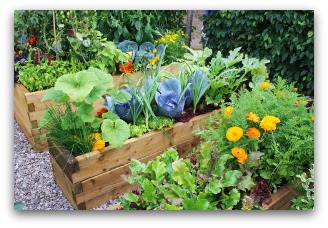
The most productive approach to succession planting vegetables organizes the garden around the natural rhythm of cool and warm seasons, with each crop type flowing into the next at the right time rather than leaving beds empty between sowings.
In early spring, the first succession plantings of the year go in as soon as the soil can be worked. Cool-season succession planting vegetables - lettuce, spinach, arugula, peas, radishes, and beets - kick off the growing year with a sequence of sowings two to three weeks apart. Each sowing carries the supply forward until the next batch is ready. Using our free vegetable planting calendar alongside your first and last frost dates makes it easy to map out exactly when each succession planting goes in without guesswork.
As spring transitions to summer, two things happen simultaneously in a well-managed succession planting vegetable garden. The cool-season crops planted in spring begin bolting in the heat and are pulled out - and the beds they leave behind immediately receive warm-season transplants or sowings.
Spring peas are pulled and beans go in. Spring lettuce is composted and summer squash goes in its place. This relay succession keeps every bed in active production through the transition rather than sitting empty while waiting for conditions to change.
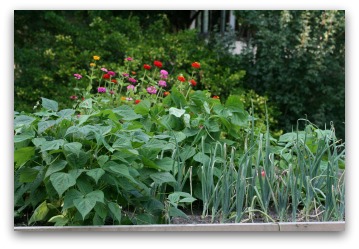
In midsummer, keep succession planting beans and fast greens while simultaneously beginning the planning and indoor starting of fall succession crops.
Brussels sprouts, broccoli, cabbage, and kale for autumn harvest need to be started indoors in July and August - this is the most commonly missed timing window in the entire succession planting vegetables calendar, and it is the step that separates gardens with productive falls from gardens that go quiet after the summer harvest.
In late summer, succession planting vegetables shifts back to cool-season crops. Spinach, lettuce, arugula, Asian greens, radishes, beets, and carrots sown in August and early September fill beds vacated by summer crops and produce right through autumn.
The last succession plantings of the year are often the most satisfying - crisp, sweet greens harvested in October and November from beds that would otherwise be sitting empty.

Relay Planting: The Most Productive Succession Technique

Relay planting is the form of succession planting vegetables that keeps individual beds in production through the most crop cycles per season, and it is the technique most used by experienced gardeners who want genuinely high productivity from a modest plot.
The basic relay planting sequence follows the natural rhythm of the seasons. Cool-season crops fill the bed in spring, producing their harvest as temperatures rise. When they are finished, warm-season crops replace them and carry production through summer. As fall approaches and warm-season crops wind down, cool-season crops return for the final act of the growing year.
A few classic relay sequences that work reliably across most US climates illustrate how this works in practice.
1. Garlic planted in October overwinters and is harvested in June, at which point cucumbers or beans go into the same space for summer production.
2. Spring peas finish in June and pole beans planted immediately after use the same trellis that the peas just vacated.
3. Spring lettuce and spinach are pulled in late May and summer bush beans go in.
4. Summer tomatoes or peppers finish with the first frost, and if timing allows, the space can receive a late sowing of cold-hardy greens or a cover crop for the winter.

The critical habit that makes relay planting succession work smoothly is never letting a harvested bed sit empty. As soon as a crop is pulled, assess what season it is, look at your succession planting schedule, and get the next crop into that space as quickly as possible. Even a few weeks of open soil is a lost growing opportunity in a well-managed garden. Top dress with compost when replanting to replenish the nutrients the previous crop drew on.
Classic relay succession sequences
| Spring Crop (vacates May-June) | Summer Crop (vacates August-September) | Fall Crop (through first frost) |
|---|---|---|
| Peas (on trellis) | Pole beans (same trellis) | Spinach or Asian greens |
| Lettuce and spinach | Bush beans or zucchini | Kale or arugula |
| Radishes and beets | Cucumbers | Radishes and lettuce again |
| Broccoli (spring) | Peppers or eggplant | Broccoli (fall) |
| Garlic (planted previous fall) | Beans or cucumbers | Spinach or arugula |
Practical Tips for Succession Planting Vegetables Successfully

Succession planting vegetables rewards planning and consistency but punishes missed timing more than almost any other garden technique. A few practical habits make the difference between a succession plan that works smoothly and one that falls apart by midsummer.
Write everything down. This is the most consistently given advice from experienced succession planting gardeners, and it is the most consistently ignored by beginners.
The moment you sow a batch of lettuce or beans, write the date on a calendar and write the date of the next sowing two to three weeks later as a reminder.
By July, when the garden is busy and life gets hectic, you will not remember which succession you are on without notes. A simple notebook or even a wall calendar in the garden shed is all you need.
Keep seeds on hand for the whole season. One of the most common reasons succession planting vegetables falls apart in practice is simply not having seeds available when the next sowing date arrives. Order or purchase all your succession seeds at the start of the season and store them in a cool, dry location so they are ready when the calendar says it is time to plant.
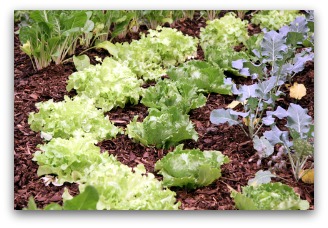
Factor in space availability realistically. Succession planting requires that space opens up when you need it for the next planting.
If your summer crops are sprawling across beds you planned to use for fall sowings, the succession cannot happen on schedule.
This is where a garden plan drawn up at the start of the season, even a rough one, helps enormously - knowing in advance which beds will be free in August makes August planting decisions simple rather than improvised. Our free interactive garden planner is an excellent tool for mapping out succession planting sequences before the season begins.
Amend soil between succession plantings. Every crop draws on the nutrients in your raised garden bed soil, and replanting into depleted soil without amending reduces the performance of the next succession. A quick top-dressing of two inches of compost worked lightly into the surface between each planting cycle maintains fertility and keeps successive crops as productive as the first.
Succession Planting Vegetables in Small Gardens and Containers
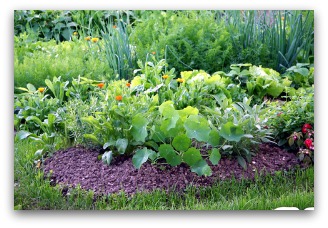
Succession planting vegetables is, if anything, even more valuable in a small garden than in a large one, because it multiplies productivity without requiring any additional space. A small raised bed managed with succession planting through the whole season feeds a household as well as a much larger bed harvested in a single main flush.sm

For container gardeners, succession planting provides a practical rhythm that prevents the common problem of a container sitting idle after a spent crop is removed.
As soon as one container's crop is finished, the soil is refreshed with compost, and the container is replanted with the next crop in the succession sequence.
Three or four large containers managed this way provide a rotating supply of fresh vegetables across multiple crop cycles with no additional equipment needed. See our complete guide to container gardening.
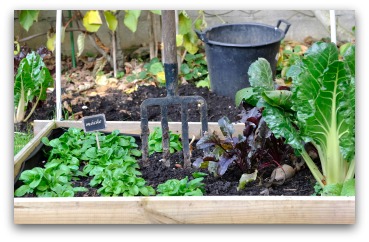
In small raised beds using square foot gardening spacing, succession planting vegetables works on a square-by-square basis - as each square finishes its crop, it is replanted independently rather than waiting for the whole bed to be free at once. See our complete guide to square foot gardening.
A 4x4 foot raised bed might have spring lettuce finishing in squares 1 and 2 while the rest of the bed is still producing, allowing those two squares to be replanted with summer crops while everything else continues.
This rolling approach to succession planting maximizes the use of every square foot continuously rather than treating the whole bed as a single planting unit.
Frequently Asked Questions About Succession Planting Vegetables
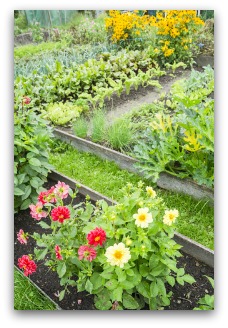
1. What is succession planting vegetables and why does it work?
Succession planting vegetables means staggering sowings of fast-maturing crops at regular intervals rather than planting everything at once. It works because most vegetable crops have a relatively brief peak harvest window after which they bolt, decline, or need to be removed. Staggering the plantings staggers the harvest windows, ensuring that as one batch peaks and finishes, the next is ready to take over.
2. How often should I succession plant vegetables?
The right interval depends on the crop. Very fast crops like radishes can be succession planted every ten to fourteen days. Lettuce and arugula work well at two-week intervals. Bush beans and beets are best succession planted every three to four weeks. Slower crops like carrots and broccoli benefit from three to four week intervals.
A useful rule of thumb: if the crop takes under 45 days to mature, succession plant every two weeks; if it takes 45 to 70 days, every three weeks; if longer, every four weeks.
3. How do I know when to make my last succession planting of the season?
For each crop, count backward from your first fall frost date by the number of days that crop needs to mature. That gives you the latest date on which planting that crop still makes sense for the season.
For fall succession planting vegetables like spinach, lettuce, and kale, planting right up to this date - or even a little past it for very cold-hardy crops with some protection - extracts the most from the season. Use our free interactive zone finder to confirm your first fall frost date before planning your final successions.
4. Does succession planting vegetables work in northern climates with short seasons?
Yes, though the approach is adapted slightly. In short-season climates, focus succession planting on fast-maturing crops where multiple sowings genuinely fit within the frost-free window.
Cool-season succession vegetables like radishes, lettuce, spinach, and arugula are particularly well-suited to northern gardens because they thrive in the cool conditions at both ends of the season.
Warm-season succession crops like beans may only allow two or three successions rather than four or five, but even two successions doubles the harvest compared to a single sowing.
5. How does succession planting relate to crop rotation?
Succession planting vegetables within a season and crop rotation across seasons address different goals and work well together. Succession planting keeps individual beds productive through multiple crop cycles within one growing year.
Crop rotation moves entire plant families to different beds from year to year to prevent the buildup of soil-borne pests and diseases.
A well-planned succession planting schedule that also respects crop rotation principles - avoiding following one nightshade with another, or one brassica (cabbage, broccoli family) with another - is the most productive and most sustainable approach to managing a vegetable garden long-term.

Return to our Planning a Vegetable Garden hub for complete guides to garden design, layout, raised beds, containers, and planning tools.
- Planning a Vegetable Garden — complete hub for garden design, layout, raised beds, containers, and planning tools

Recent Articles


-
Small Vegetable Garden Plans: 8 Layouts That Maximise Space
Oct 08, 26 10:41 AM
 Small vegetable garden plans are some of the most searched and most valuable resources in home food growing.
 -
USDA Zone Finder - Find Your Vegetable Planting Dates | Vegetable-Gardening-Online.com
Oct 07, 26 03:53 PM
 Find your USDA hardiness zone, last spring frost date, and first fall frost date by state and region. Free interactive zone finder from Vegetable-Gardening-Online.com.
 -
Interactive Vegetable Garden Planner | Vegetable Gardening Online
Oct 07, 26 02:29 PM
Design a vegetable garden with correctly scaled plant spacing, companion flowers, drag-and-drop placement, and a printable plan. -
Free Printable Garden Stationery: Gardening Letter Paper & Note Cards
Oct 07, 26 12:48 PM
Free printable garden stationery: watercolor letter paper, lined and unlined, plus folded note cards with garden, fall, and Christmas scenes. Print at home. -
Free Preschool Vegetable Garden Cut and Paste Activities
Oct 07, 26 12:43 PM
 Free preschool vegetable garden cut and paste activities for ages 3-4. Build your own backyard, container, or seed packet garden scene, and sticker sheets.
 -
Planning a Vegetable Garden: Layouts, Raised Beds, Containers & More
Oct 06, 26 07:44 PM
 Planning a vegetable garden? Start here: layouts, raised beds, containers, square foot gardening, free planning tools, and tips to avoid beginner mistakes.
 -
How to Start a Vegetable Garden: 10 Easy Steps for Beginners
Oct 06, 26 04:38 PM
 How to start a vegetable garden in 10 easy steps: pick a sunny spot, choose raised beds or containers, prepare the soil, and grow easy vegetables.