- Home
- How to Grow Vegetables
- How to Grow Eggplant
How to Grow Eggplant
in Your Garden
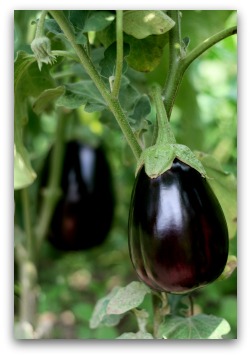
Easy tips for how to grow eggplants when home vegetable gardening.
Learn how to plant and care for eggplants; also pest and disease control tips for growing healthy eggplants in your garden.
Warm season vegetables such as eggplant do not tolerate the slightest hint of frost very well.
That is why you should hold off planting until warm weather has arrived to stay.
In milder climates, choose varieties that withstand cooler temperatures.
We have gathered vegetable gardening information about how to grow eggplant that we hope you will find useful.
Download Free Garden Planning Worksheets, Garden Diary, Zone Chart, Or Planting Guide
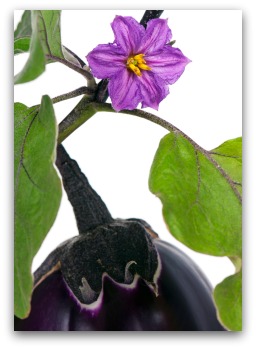
Eggplant, which are known to the British as aubergines, typically have deep purple skins.
However there are also some very beautiful white, pink, and striped varieties of eggplants to add extra color to your garden!
Growing Eggplant at Home
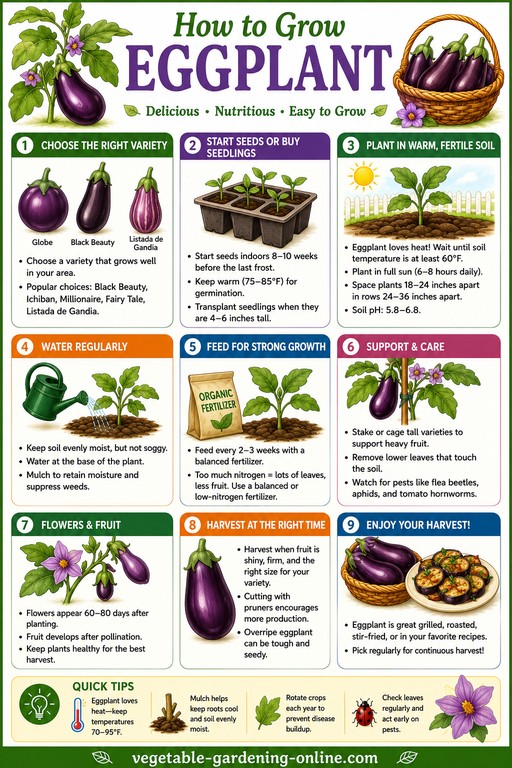
- When vegetable gardening space is limited, eggplants will do well
planted just about anywhere in the back or side yard using the following
method:
- Prepare the planting holes for eggplant 2 weeks prior to putting the plants in the ground.
- Dig a hole 2 feet deep that is 1 foot square.
- Mix two shovelfuls of compost, a handful of bone meal, and an ounce of rock phosphate with enough garden soil to fill the hole.
- After refilling the hole with this mixture, water the area with diluted seaweed/fish emulsion mixture.
- Let it sink in before planting or transplanting begins.
- Mulch around the eggplants with a thick layer of weed-free lawn clippings.
Best Varieties of Eggplant to Grow in Home Garden
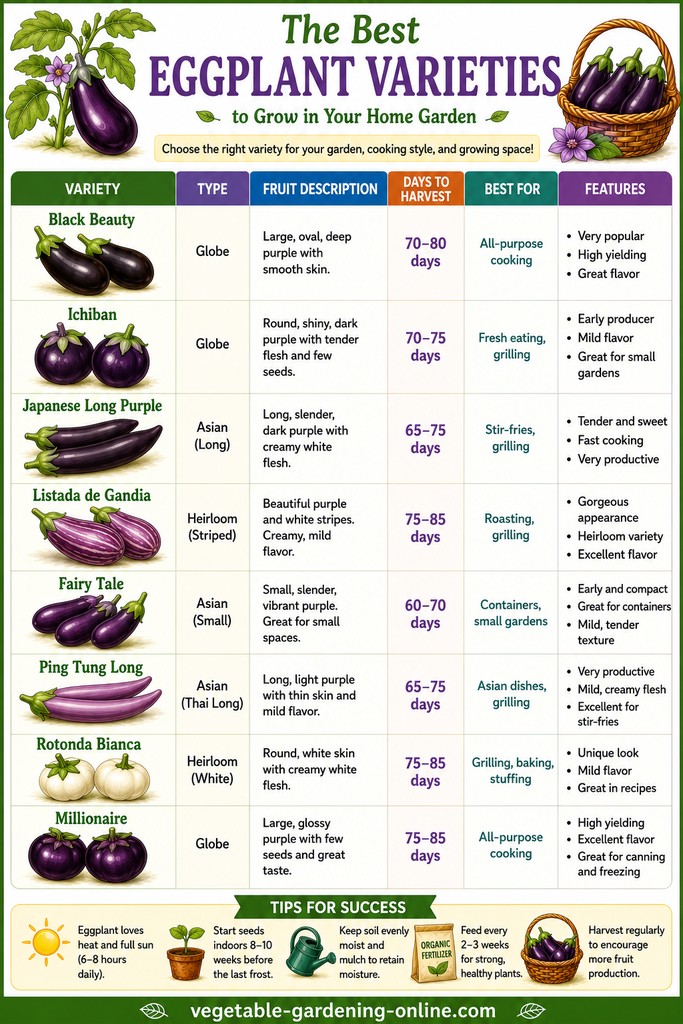
Black Beauty variety is ready for harvest in 80 days. This is one of the most popular growing eggplant for home vegetable gardens. Fruits are nearly black and almost round. Pale yellow flesh is excellent for breading and frying.
Black Jack and Superhybrid are two varieties, not shown above, that are partially tolerant to verticillium wilt.
 There are many varieties of eggplants; stripes, solids, and different colors.
How to Grow Eggplant Tips
- Set out seedlings in soil that is 70 degrees.
- For best results grow eggplant in raised beds.
Eggplants in Container Gardens
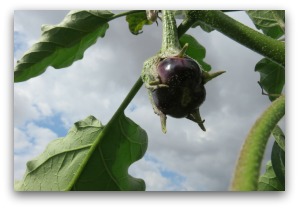
Eggplants are good candidates for container grown vegetables because of their shallow root systems.
Plant one eggplant per medium-sized container, or several plants in a large container.
Fertilize every week or two with liquid garden fertilizer according to the directions on the container.
Be sure to place the containers in a sunny location.
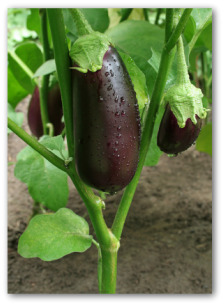
Harvesting Eggplant
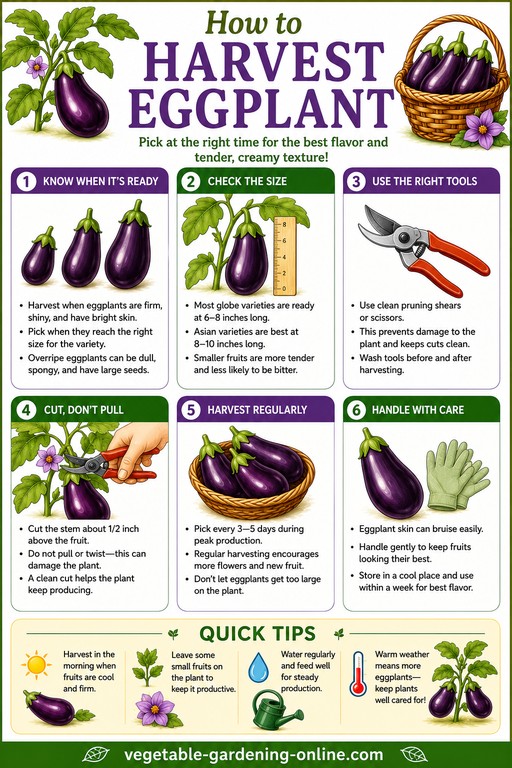
The final step in how to grow eggplant is about taking careful steps for bringing in the bounty. Follow these guidelines:
- Harvest eggplant in the morning, when their natural sugar content is the highest.
- Avoid picking fruits, or doing any vegetable gardening work, when plants are wet. You are likely to spread plant diseases.
- Use care when harvesting. Bruised vegetables spoil quickly and damaged plants are susceptible to pests and diseases.
- Use a sharp knife to harvest eggplant. The produce can be injured if you try to pull or tear the fruit from their stems.
Eggplant Pest Control
Growing eggplant is a favorite of the cutworm. Use a cutworm collar over each plant.
With a gardener's ever watchful eye, you can solve a simple problem before it turns into a catastrophe for the vegetable garden.
If you notice that the eggplant foliage is turning yellow and brown, this is a symptom of verticillium wilt.
This plant disease is often fatal to tomatoes and peppers and cuts down severely on the production of eggplants.
The wilt stays active in the soil at least fifteen years. The most that the home vegetable gardener can generally do is to rotate the susceptible crops to keep them out of harm's way.
If you have a small garden plot that you use year after year, the easiest way of growing eggplant is to sow the seeds in a sterile potting soil and transfer the seedlings into large containers.
Flea beetles are the likely suspects if your leaves are so full of holes that resemble lace. These insects are particularly fond of the taste of eggplant.
To control flea beetles, zap them during the cool of the morning using the following homemade insect spray recipe.
Homemade insect spray recipe:
6 cloves of chopped fine garlic
1 small chopped fine onion
1 tablespoon cayenne pepper
1 tablespoon liquid dish soap
- Mix all the above ingredients in 1 quart of warm water.
- Allow mixture to sit overnight.
- Strain; pour the liquid into a sprayer bottle.
- Now, you are loaded for beetles!
For long term protection against insects that are looking for a free lunch, make yellow sticky traps using the following directions.
Paint 1 x 6 inch boards yellow, tack them to sticks, and coat the surfaces with a sticky substance like honey. Then poke the sticks into the soil among the eggplant.
You can also shield your eggplants from invading flea beetles and encourage vigorous plant growth by surrounding them with tomato cages covered with floating row cover fabric.
Disease Control for Growing Eggplants

Tobacco mosaic virus is best known for infecting eggplants and its close relatives in the vegetable garden, tomatoes and peppers.
The plant disease generally arrives on infected plants or containers.
Symptoms include thickened leaves that are mottled with various shades of green, slow growth, and greatly reduced fruit set.
The virus lives in the soil for as long as 5 years.
Look for eggplant varieties that are resistant to tobacco mosaic virus.
You will see a capital T after the variety name in a seed catalog description or garden center plant label.
- Growing Vegetables — complete hub for growing all vegetables at home

Recent Articles


-
How to Grow Cabbage
Sep 15, 26 12:33 PM
 How to Grow Cabbage: The Complete Guide from Seed to Harvest. This complete guide covers everything you need to know about how to grow cabbage.
 -
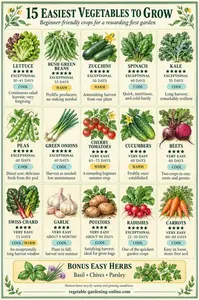
Easiest Vegetables to Grow: 15 Foolproof Crops for Beginners
Sep 15, 26 09:24 AM
 Easiest vegetables to grow for beginners - with advice on what makes each one easy, how to get started, and which vegetables are harder than they look.
 -
How to Grow Green Beans
Sep 14, 26 07:53 PM
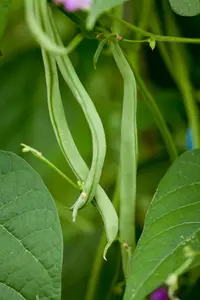
 How to Grow Green Beans: The Complete Guide to Bush and Pole Beans. Green beans are one of the most forgiving crops a beginner can choose.
 -
Seasonal Vegetable Garden
Sep 14, 26 05:38 PM
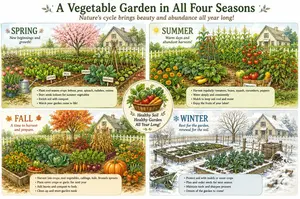
 Seasonal Vegetable Garden — Growing Food Through Every Season
 -
Overwintering Vegetables: Fall-Planted Crops for Early Spring Harvest
Sep 14, 26 05:35 PM
 Learn about overwintering vegetables like garlic, fava beans, and onions, planted in fall to sit through winter and reward you with an early spring harvest.
 -
Free Vegetable Garden Journal— Printable Downloads for Home Gardeners
Sep 14, 26 01:51 PM
 Download our free Vegetable Garden Journal — choose a full 16-page version or simpler 7-page journal. Track planting, harvest, & garden notes season by season.
 -
Free Vegetable Garden Cut and Paste Activities for Kids Ages 5-7
Sep 12, 26 09:13 PM
 Free printable vegetable garden cut and paste activities for kids ages 5-7. Build your own garden, match seeds to plants, and learn what grows where.