- Home
- Growing Fruit and Berries
- Growing Strawberry Plants
Best Tips for Growing Strawberry Plants

The best tips for planting and growing strawberry plants when home gardening.
Learn how to plant, and care for strawberry plants an your backyard garden.
Design Your Own Vegetable Garden Layout Using our Free "Vegetable Garden Planner" Software!
Perennials do not live forever but some can be very long-lived if cared for properly.
In vegetable gardening, asparagus may be productive for thirty years while strawberries are effectively perennial, but in practical terms may need replacing every third or fourth year to ensure a bountiful harvest.
A well-maintained strawberry bed keeps producing for seven years or more. The work you put in at planting pays off every season. This page is part of our Growing Fruit and Berries hub, where you will find guides to raspberries, blackberries, blueberries, gooseberries, and all the best fruits for the home garden.
Growing Fruit and Berries — complete hub for growing strawberries, raspberries, blackberries, blueberries, and gooseberries at home
Tips on Growing Strawberry Plants

- Berries require enriched, moist, well-drained soil and most will tolerate light shade. However, full sun is best.
- Strawberries are quite tender, but since they are low growing, they can be grown in fairly cold climates with a mulch and protection against snow.
Download Free Garden Planning Worksheets, Garden Diary, Zone Chart, Or Planting Guide
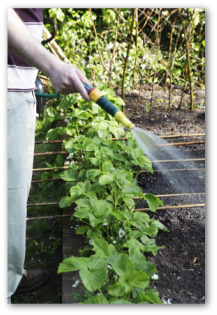
Mulching Strawberries
 Mulching strawberry plants offers several benefits; water retention, weed control, and adding nutrients to the soil.
The plants love pine needle mulches.
Mulching with pine needles discourages slugs and improves the flavor of the fruit while inhibiting weeds.
The first wild strawberry plants I ever picked were growing under the pine trees on the edge of our school yard. They had little bitty strawberries, but they were delicious!
Companion Planting with Growing Strawberry Plants
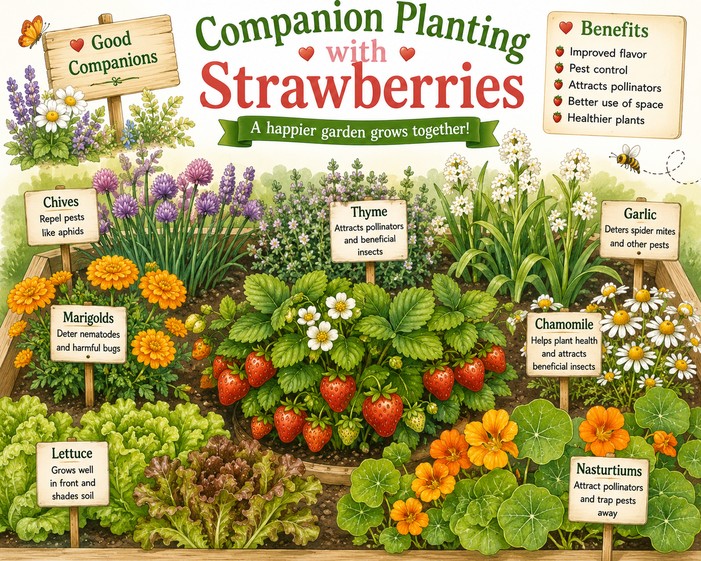
It's ideal to have an area entirely devoted to growing strawberry plants.
However if you are limited for space, strawberries can be companion planted with some of the vegetables in your garden.
When companion planting, any bean, especially French beans, spinach, lettuce, and borage grow well with strawberries.
Brassicas, such as cabbage, cauliflower, and broccoli, do poorly planted near the strawberry patch.
The strawberry plants grow well at the base of peach trees but not directly under them.
The alpine variety is a good companion plant anywhere.
 Delicious ripe strawberries from the garden.
Types of Strawberry Plants
The type of strawberry you plant decides when you pick and how much room the plants need. There are three main types, plus the little alpine strawberries.
June-bearing: one big crop over two to three weeks in late spring or early summer. These give the largest berries and send out plenty of runners, so the patch fills in on its own. Plant early, mid-season, and late kinds to stretch the harvest. Two dependable choices are Sparkle, a late-midseason berry with fine flavor for jam and freezing, and Surecrop, a vigorous, reliable producer.
Everbearing: a crop in early summer and another in late summer or fall, with a few berries in between. They make fewer runners, so they suit small beds and containers. Ozark Beauty is an old favorite with big, sweet berries, and Quinault, bred in the Pacific Northwest, bears large, soft, very sweet berries.
Day-neutral: flowers and fruit from early summer until frost, as long as the weather isn't too hot. They make few runners, so they are ideal for small spaces, hanging baskets, and strawberry jars. Albion and Seascape are popular choices.
Alpine strawberries: small, wild-type plants such as Alexandria that make no runners and stay in neat clumps about a foot tall. The berries are small but very fragrant, and the plants bear all summer. Alpines are the one kind that is easy to grow from seed. Start them indoors in late winter, 10 to 12 weeks before your last frost.
Short on space? Build a strawberry pyramid: three stacked rings of metal edging, each about six inches deep. A pyramid about six feet across at the base holds around 50 plants.
Starting out Right with Planting Strawberries

Lavish some extra effort on preparing your new strawberry patch and you will be richly rewarded with years of bountiful harvests.
- Till or dig the prospective patch, one year prior to planting strawberry plants.
- When establishing a new bed, grow a crop of soybeans first and dig them into the soil while they are green to prevent root rots on the new plants.This preparation will also help suppress pests, weeds, and build organic matter in the soil.
- A good spot for growing strawberries in your existing vegetable garden is where carrots have previously grown.However, any well-fertilized and weed free area will suffice.
- Make certain to remove all of the perennial weeds before planting strawberries. Weeds are the number one problem when growing the berries.
- Add well aged-manure, compost and other organic material to the soil. This will make weed removal easier, and will help the soil retain moisture as well.
Vegetable Gardening Tips for Planting Strawberries
Avid growers recommend spreading out your harvest by planting an early-season berry such as ‘Earliglow', a mid-season strawberry like ‘Jewel', and a late-season berry such as ‘Blomidon'.
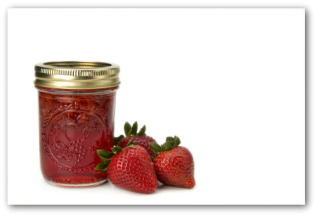 Enjoy the delicious results of your strawberry patch all winter long!
When to Plant Strawberries
- Strawberries can be planted in the spring as soon as the ground is dry enough to be worked.
- Depending on the area where you live, this can be March, April, or May.
- You want to plant as early as possible, so the plants can be well-established before the arrival of hot summer weather.
Planting Depth
- It is best to plant the strawberry plants in the evening or on a cloudy day, as it is less stressful for them than dealing with sunshine at that time.
- Depending on the size of your transplants, dig a hole that will allow you to plant the strawberry so that the soil just covers the tops of the root.
- If the crown is planted too low, and is covered with soil, it will be prone to disease or rotting.
- If the crown is too high, the roots will dry.
- So like Mama Bear, it is best to plant the strawberry "just right" with the soil "level" or "even" with the crown of the plant.
Caring for Growing Strawberry Plants
Pick off all the flowers from your newly planted strawberry plants.
You will not get any fruit the first season but this helps the plants become established.
They will produce far more fruit the following years than they would if you did not pick off the blooms at the start.
Once the season's strawberry harvest has ended, it is time to give next year's crop a boost.
 Freshly picked berries.
Here's how to grow strawberry plants for reliable returns:
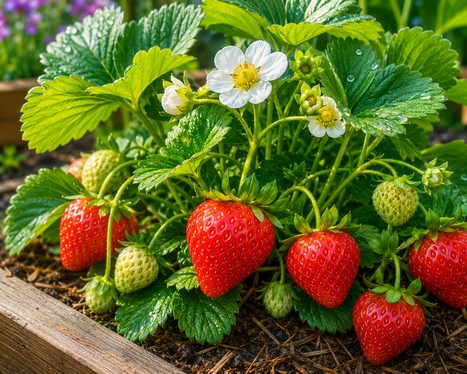 Close up image of a growing strawberry plant.
- Mow off the tops leaving an inch or so of leafstalk to protect the crowns.
- It is important not to injure the crowns because that can kill or at least stunt the plants.
- Get rid of the leaves from the bed to remove any diseased material or insects that may be present.
- Compost the trimmings well away from the strawberry patch.
- Take away the runners that have rooted on either side of the rows until the remaining rows are no wider than 2 feet.
- This will give you better fruit because it gives you more row edges, which is where the best fruit is borne.
- Removing the runners also encourages good air circulation, which helps prevent plant diseases.
- Your diligence in weeding is the most important determining factor of the length of the bed‘s production.
- With proper care, you can get seven or more good years out of a strawberry patch.
- The original mother plants are the best producers.
- Last but not least, spread one inch of compost over the strawberries.
- Not only does this feed the plants, it keeps the crowns in proper position.
The University of Minnesota Extension has a thorough research-based strawberry growing guide at extension.umn.edu. It covers soil preparation, planting systems, renovation after harvest, and managing common strawberry pests and diseases.
University of Minnesota Extension — Growing Strawberries in the Home Garden — research-based guide to strawberry planting systems, soil preparation, renovation, and pest management

Recent Articles


-
Paper Garden Craft for Kids: How Does Your Garden Grow? Free Printable
Oct 15, 26 11:05 AM
 Free printable paper garden craft for kids: cut out plants, children, a puppy, and a kitten, then plant them in a paper raised bed that stands on the table.
 -
How to Ripen Green Tomatoes Indoors
Oct 14, 26 04:11 PM
 Ripen green tomatoes indoors with a simple newspaper method. Learn when to pick, where to place them, and how to keep fresh ripe tomatoes coming for weeks.
 -
Free Vegetable Garden Printables — Downloads for Every Gardener
Oct 14, 26 12:29 PM
 Browse our complete library of free vegetable garden printables, from planning worksheets and growing charts to kids' activities, all free to download & print.
 -
Free Printable Return Address Labels: Garden and Christmas
Oct 14, 26 12:11 PM
Free printable return address labels with watercolor garden and Christmas designs. Type your address, pick a picture, and print on Avery 5160 label sheets. -
Free Printable Gift Stickers: Christmas and Garden Designs
Oct 14, 26 11:58 AM
Free printable round gift stickers with watercolor garden and Christmas pictures. Add a message or To and From, and print on 2-inch labels at home. -
Free Printable Place Cards: Thanksgiving, Christmas, and Parties
Oct 13, 26 01:46 PM
Free printable place cards for Thanksgiving, Christmas, birthdays, tea parties, and garden parties. Type your guest list, pick a picture, and print. -
Free Printable Garden Stationery: Gardening Letter Paper & Note Cards
Oct 13, 26 09:58 AM
Free printable garden stationery: watercolor letter paper, lined and unlined, plus folded note cards with garden, fall, and Christmas scenes. Print at home.