Seed Matching Game for Kids
This seed matching game uses real seeds, photographed next to a quarter. Can your child tell which seed grows a pumpkin, a sunflower, or an ear of corn? Play on the screen, or print the matching cards for the table.
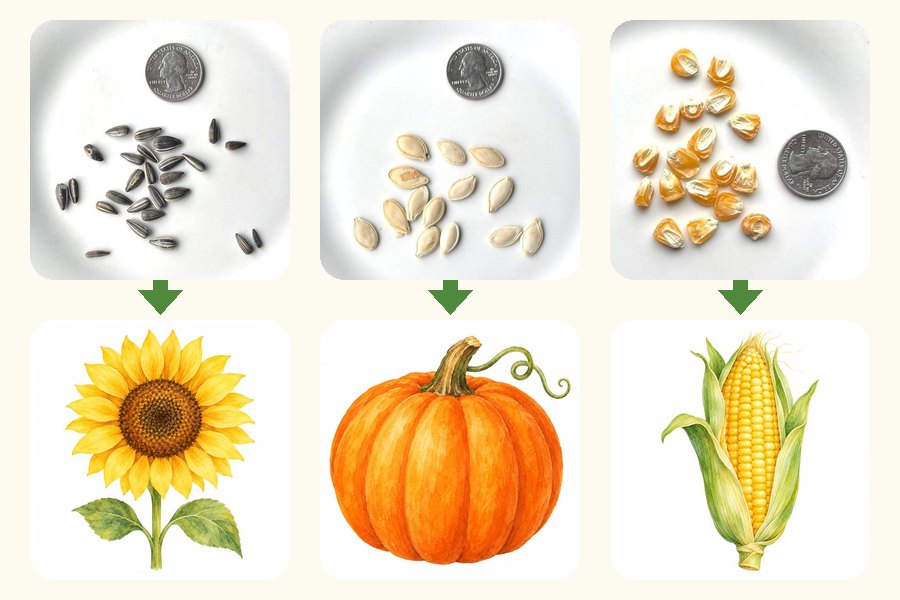
This seed matching game uses real seeds, photographed next to a quarter. Can your child tell which seed grows a pumpkin, a sunflower, or an ear of corn? Play on the screen, or print the matching cards for the table.
Two sheets: 13 seed cards and 13 vegetable cards. Cut them apart and match them on the table.
Every seed in this game is real. I bought the packets at my garden center, spilled the seeds onto a white plate, and photographed each kind next to a quarter so children can see how big or tiny they are.
There are three ways to play, from little ones who are just learning vegetable names to children who want a real challenge.
A star counts when you get it right on the first try. Play again and try to beat your score.
The game also works on the table, with no screen at all. Click "Print the Matching Cards" to print two sheets: 13 seed cards and 13 vegetable cards with their names.
Cut the cards apart on the dashed lines, then lay them face up and match each seed to its plant. Print on cardstock if you want the cards to last.
Turn it into a memory game: lay all 26 cards face down and take turns flipping two at a time to find a seed and its plant.
Want something to study before you play? This chart shows 12 garden vegetables, each one next to its seeds. The seeds are drawn larger than life, so children can see the stripes, ridges, and wrinkles up close.
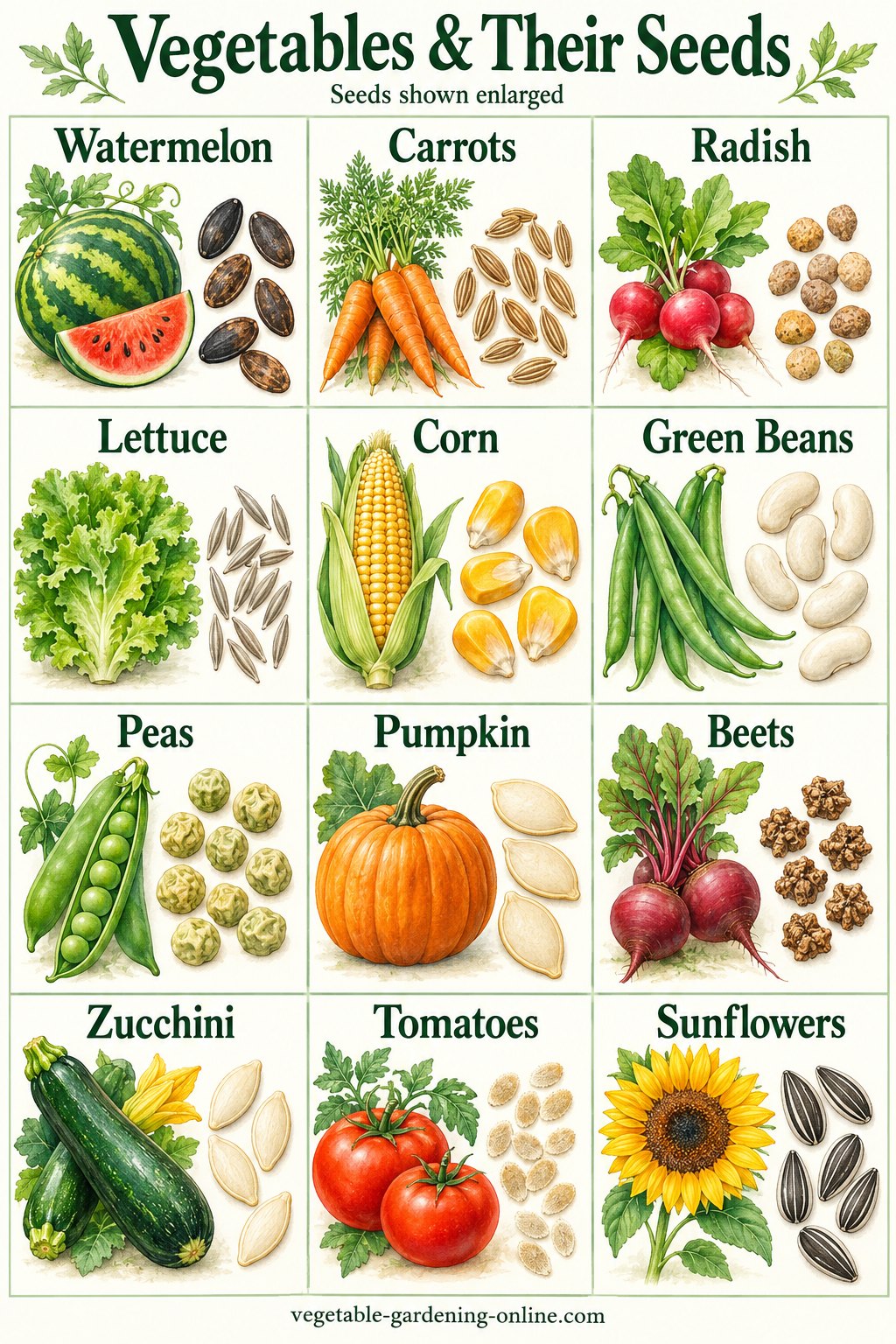
Hang it on the fridge or the classroom wall, then play the game and see how many seeds your child remembers. Compare the chart with the real seed photos in the game to see their true size.
Did you print something from this site?
I would love to hear about it! Tell me how you used your seed matching cards, crowns, or garlands, or send a photo if you have one.
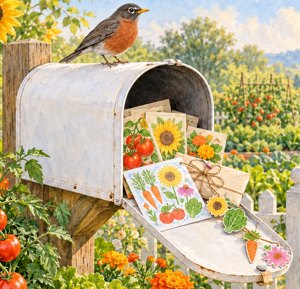
Share Your Comment, Story, or Photo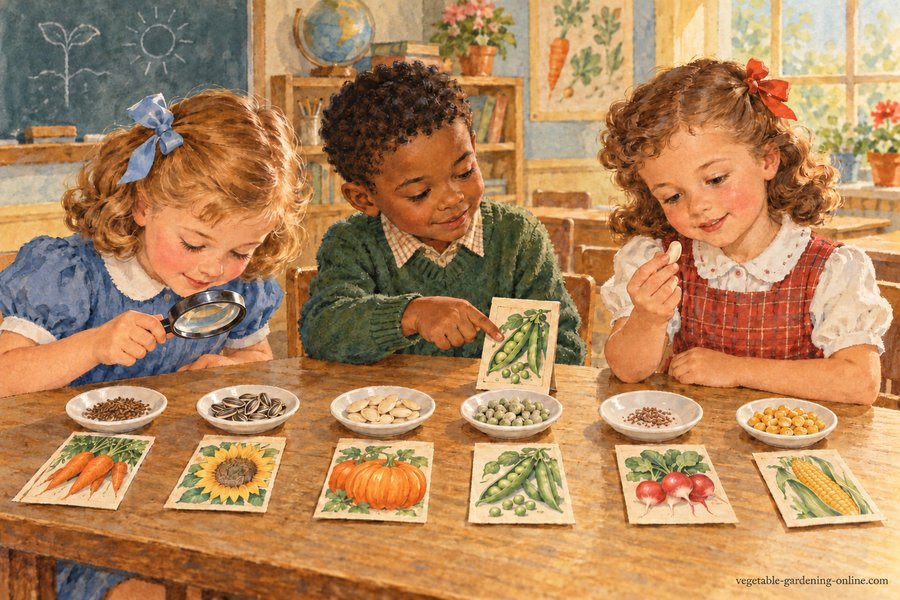
Teachers: this game fits right into a plant life cycle lesson for kindergarten through third grade. Put it on the classroom screen and let children take turns choosing the answer.
Bring a few packets of real seeds so children can hold them, compare sizes, and guess before they play. Big seeds like beans, peas, pumpkins, and sunflowers are the easiest for small hands.
Every one of these seeds will grow in a home vegetable garden. Radishes are ready in about four weeks, while pumpkins and watermelons take most of the summer.
Let children choose a few seeds to plant this spring. Beans, peas, sunflowers, radishes, and pumpkins sprout quickly and are big enough for children to plant themselves. Our seed starting chart shows when to plant each one, and our easiest vegetables to grow list is a good place to start.
Saving seeds from your own garden? Make your own free printable seed packets to store them in and share them with friends.