- Home
- Children's Corner
- Plant Life Cycle Worksheet
Free Plant Life Cycle Worksheet — Vegetable Garden Edition

A plant life cycle worksheet helps children understand one of the most fundamental concepts in science — that all living things grow, change, reproduce, and begin again.
Our free printable plant life cycle worksheet collection is specifically designed for vegetable gardens, giving children real-world examples they can observe and verify in an actual garden.
Instead of a generic flower diagram, our plant life cycle worksheet uses vegetables children recognize and can grow themselves — tomatoes, beans, pumpkins, and carrots.
Understanding the plant life cycle is a core science standard from kindergarten through fifth grade.
A good plant life cycle worksheet makes that learning visible, hands-on, and memorable.
Download our free plant life cycle worksheet collection below and use it alongside a real garden growing experience for the most effective science learning possible.
What Is a Plant Life Cycle?

Before children complete a plant life cycle worksheet, it helps to understand what a life cycle actually is. A life cycle is the series of stages a living thing passes through from the beginning of its life to the point where it produces the next generation.
For a plant, the life cycle begins and ends with a seed.
Every plant life cycle worksheet in our collection covers the same fundamental stages, though the specific details vary by plant species.
The stages are:
- seed
- germination
- seedling
- mature plant
- flowering
- pollination
- fruit
- seed production
Understanding how these stages connect is exactly what a well-designed plant life cycle worksheet teaches.

A seed contains everything needed to begin a new plant — the embryo, a food supply, and a protective seed coat.
When conditions are right — enough moisture, the right soil temperature, and access to oxygen — the seed germinates.
The root emerges first, anchoring the new plant and beginning to absorb water.
The shoot follows, pushing upward toward the light.
This is the stage children find most dramatic and most satisfying to observe — and it is the stage that brings a plant life cycle worksheet to life when children are growing their own seeds alongside completing the worksheet.
The Stages of the Plant Life Cycle —
What Every Worksheet Covers

Our plant life cycle worksheet collection walks children through each stage of plant development with illustrations and labeling activities matched to different grade levels.
The seed stage is where every plant life cycle worksheet begins. Seeds come in an enormous range of sizes — from the tiny seeds of tomatoes and carrots to the large seeds of beans and pumpkins.
Despite their differences, all seeds contain the same basic structures. A plant life cycle worksheet for younger grades focuses on recognizing seeds and understanding that seeds contain baby plants.
A plant life cycle worksheet for older grades introduces seed structure — the seed coat, cotyledons, and embryo.
- Germination is the moment the seed wakes up.
- Moisture activates enzymes inside the seed that begin breaking down the stored food supply.
- The root emerges first, always growing downward.
- The shoot emerges second, always growing upward.
Our plant life cycle worksheet uses real vegetable examples to make this stage concrete — bean seeds are particularly useful because they germinate quickly and the stages are large enough for children to observe clearly.
The seedling stage is when children see the first true leaves appear.
The first leaves on most seedlings are not true leaves — they are cotyledons, which are part of the seed itself and serve as the initial food source for the plant.
A plant life cycle worksheet for grades 2 and up introduces this distinction and asks children to sketch what they observe in their own seedlings.

The mature plant stage varies enormously between vegetable species and is one of the most interesting aspects of a vegetable-focused plant life cycle worksheet.
A mature tomato plant looks very different from a mature bean plant, which looks very different from a mature pumpkin vine or a mature carrot.
Observing these differences in the garden — and recording them on a plant life cycle worksheet — is genuine botany science.
Flowering and pollination are the stages that connect the plant to the wider garden ecosystem.
- Flowers attract pollinators
- Pollinators transfer pollen
- Fertilization occurs and fruit begins to develop
This stage of the plant life cycle worksheet is a natural opportunity to introduce the concept of beneficial insects and explain why flowers matter in a vegetable garden.

Fruit and seed production complete the cycle. The fruit is the mature ovary of the plant — which means that tomatoes, cucumbers, squash, beans, and pumpkins are all technically fruits even though we often call them vegetables.
Seeds inside the fruit are the next generation.
When a plant life cycle worksheet traces the seed inside the tomato back to the original seed that was planted, children experience the "cycle" concept as a real and observable loop rather than an abstract diagram.

Vegetable-Specific Plant Life Cycle Worksheets

What makes our plant life cycle worksheet collection distinctive is the focus on vegetable-specific life cycles.
Rather than using a generic flower or tree as the example, each plant life cycle worksheet in our collection follows one specific vegetable from seed to harvest and back to seed. This approach connects directly to the real garden and gives children a concrete, observable example for every stage on the worksheet.
The tomato plant life cycle worksheet follows one of the most popular and dramatic garden vegetables from a tiny seed through weeks of indoor growing, outdoor transplanting, flowering, pollination by bees, fruit development, ripening, and finally seed saving for next year's garden.

The bean plant life cycle worksheet uses the fastest and most child-friendly example available. Bean seeds are large enough for young children to handle easily, germinate in as few as five to seven days in warm soil, and produce visible fruit within 50 to 60 days of planting.
A bean plant life cycle worksheet is ideal for younger grades because the entire cycle can be observed within a single school term.

The pumpkin plant life cycle worksheet covers the full growing season of one of the most beloved garden vegetables.
Children who have grown pumpkins are often amazed to trace the connection between the tiny seed and the large orange fruit.
The pumpkin plant life cycle worksheet also introduces the concept of a long growing season and the difference between annual and biennial plants.

The carrot plant life cycle worksheet presents an interesting case — carrots are biennial plants that complete their full life cycle over two years rather than one. In the first year the carrot stores energy in its root. In the second year it uses that energy to flower and produce seeds.
Most people never see a carrot in bloom because we harvest the root in the first year.
A plant life cycle worksheet for the carrot introduces children to the concept of biennial plants and seed saving.
How to Use Plant Life Cycle Worksheets
in the Garden

A plant life cycle worksheet is most powerful when used alongside a real growing experience.
When children can hold the actual seed, watch the seedling emerge, observe the flower open, and harvest the fruit — every stage on the plant life cycle worksheet becomes a real memory rather than an abstract diagram.
Begin the plant life cycle worksheet at the seed stage.
Before planting, examine the actual seeds with children.
Compare the size, shape, and color of different vegetable seeds. Record observations on the worksheet.
Plant the seeds and observe the germination stage over the following days.
Use the plant life cycle worksheet as an ongoing observation journal.
As each new stage appears in the garden — the first true leaves, the first flower bud, the first open flower, the first tiny fruit — children update their worksheet with sketches and notes.
By harvest time the plant life cycle worksheet has become a personal scientific record of a real plant's real journey.

For classroom teachers who do not have access to a school garden, a plastic cup filled with potting soil on the windowsill works perfectly for the earliest stages of the plant life cycle worksheet.
Bean seeds in a cup on a sunny windowsill germinate reliably and give children an observable experience of the first three stages before any outdoor garden access is needed.
For homeschool families, the plant life cycle worksheet pairs naturally with a season-long garden project.
Start the worksheet when seeds are sown in spring and complete the final stages at harvest time.
By the end of the growing season children have both a completed plant life cycle worksheet and a genuine experience of science in action.
Plant Life Cycle Worksheets and Science Standards

Our plant life cycle worksheet collection addresses science learning standards from preschool through fifth grade.
Plant life cycles appear in virtually every elementary science curriculum as part of the life science strand.
A well-designed plant life cycle worksheet satisfies the observational, recording, and vocabulary components of these standards while connecting science learning to the real world of the garden.

For preschool and kindergarten, a plant life cycle worksheet focuses on sequencing — putting the stages of the plant life cycle in the correct order.
Simple cut-and-paste versions of our plant life cycle worksheet let children physically arrange seed, sprout, seedling, flower, fruit, and seed in a circle or a line.
For grades 1 and 2, a plant life cycle worksheet adds labeling — identifying and writing the name of each stage. Children begin to use scientific vocabulary including germination, seedling, pollination, and seed dispersal.
For grades 3 through 5, a plant life cycle worksheet introduces more detailed botanical concepts including seed structure, the role of pollinators, the difference between annual and biennial plants, and the connection between fruit and seed production.
Written observation components ask children to record what they notice in their own words, building both science and writing skills simultaneously.

For grades 6 through 8, our most advanced plant life cycle charts introduce plant hormones and their roles in growth and development, the photosynthesis equation, cellular-level fertilization, and the classification of seeds into monocots and dicots — topics that appear in middle school life science curricula.
More Free Kids Garden Club Printables

Our plant life cycle worksheet collection is part of the Kids Garden Club printable library at Vegetable Gardening Online.
We also offer garden scavenger hunts in three grade levels, vegetable flash cards, Go Fish card games for vegetables, fruits, berries, and flowers, cut and paste activity sets, coloring books, mazes, dot-to-dots, word searches, and bookmarks.
For the most effective garden-based science unit, combine the plant life cycle worksheet with our garden scavenger hunt printable and vegetable flash cards — together they cover observation science, vocabulary, and life science concepts across a complete garden unit.
For additional resources on garden-based science education for elementary children, the National Gardening Association at garden.org has extensive materials on garden-based learning for teachers and homeschool families.
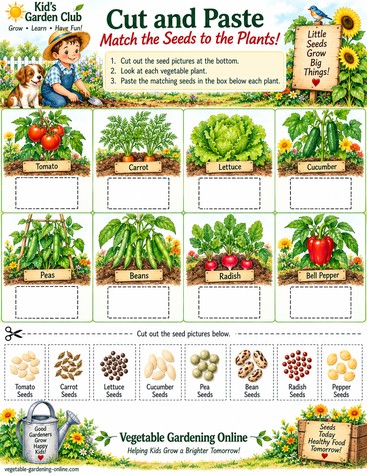
For more hands-on learning, see our Vegetable Garden Cut and Paste Activities, seven free printable activities for kids ages 5-7.
- Garden Scavenger Hunt Printable — free outdoor observation activity in three grade levels, pairs perfectly with plant life cycle study
- Vegetable Flashcards Printable — free vegetable vocabulary cards covering 32 vegetables for Grade 1
- Vegetable Go Fish Card Game — free printable card games covering vegetables, fruits, berries, and flowers
- Free Worksheets for Kids — mazes, dot-to-dots, word searches, bookmarks, and garden activity pages
- Vegetable Garden Coloring Books — free printable coloring pages and coloring books for children
- Kids Gardening — complete hub for children's gardening activities and free printables
- Free Vegetable Garden Printables — all our free downloads in one place
National Gardening Association —
Garden-Based Science for Kids
For research-based resources on garden-based science education — including curriculum connections for plant life cycle study, lesson plan ideas, and guidance for starting school and home garden programs that bring the plant life cycle worksheet to life — the National Gardening Association at garden.org has one of the most comprehensive free libraries of garden education materials available for teachers and families.
- National Gardening Association — Learn — research-based garden science education resources for elementary teachers and homeschool families, including plant life cycle curriculum connections and school garden program guidance

Recent Articles


-
How to Grow Cabbage
Sep 15, 26 12:33 PM
 How to Grow Cabbage: The Complete Guide from Seed to Harvest. This complete guide covers everything you need to know about how to grow cabbage.
 -
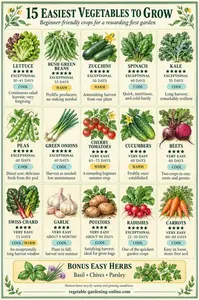
Easiest Vegetables to Grow: 15 Foolproof Crops for Beginners
Sep 15, 26 09:24 AM
 Easiest vegetables to grow for beginners - with advice on what makes each one easy, how to get started, and which vegetables are harder than they look.
 -
How to Grow Green Beans
Sep 14, 26 07:53 PM
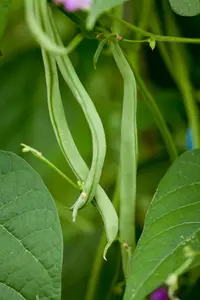
 How to Grow Green Beans: The Complete Guide to Bush and Pole Beans. Green beans are one of the most forgiving crops a beginner can choose.
 -
Seasonal Vegetable Garden
Sep 14, 26 05:38 PM
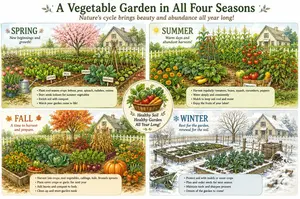
 Seasonal Vegetable Garden — Growing Food Through Every Season
 -
Overwintering Vegetables: Fall-Planted Crops for Early Spring Harvest
Sep 14, 26 05:35 PM
 Learn about overwintering vegetables like garlic, fava beans, and onions, planted in fall to sit through winter and reward you with an early spring harvest.
 -
Free Vegetable Garden Journal— Printable Downloads for Home Gardeners
Sep 14, 26 01:51 PM
 Download our free Vegetable Garden Journal — choose a full 16-page version or simpler 7-page journal. Track planting, harvest, & garden notes season by season.
 -
Free Vegetable Garden Cut and Paste Activities for Kids Ages 5-7
Sep 12, 26 09:13 PM
 Free printable vegetable garden cut and paste activities for kids ages 5-7. Build your own garden, match seeds to plants, and learn what grows where.