- Home
- Planning A Garden
- Small Garden Plans
Small Vegetable Garden Plans: 8 Layouts That Maximize Every Square Foot

Small Vegetable Garden Plans: 8 Layouts That Maximise Every Square Foot
Small vegetable garden plans are some of the most searched and most valuable resources in home food growing - because the reality is that most people do not have a large backyard, and even those who do often want to start with something manageable. The good news is that small vegetable garden plans, when designed well, can be extraordinarily productive. A single well-planned 4x4 ft raised bed produces more food than most people expect, and with the right small vegetable garden plan you can grow a genuinely impressive variety of vegetables from a very small footprint. By Vegetable-Gardening-Online.com | Updated May 2026 | 12 min read
This guide gives you eight complete small vegetable garden plans - from the simplest single-bed layout to a multi-bed kitchen garden - with full plant lists, spacing notes, and practical advice for making the most of every square foot. Use our free interactive garden planner to design and customise any of these plans before you build.

Small vegetable garden plans are some of the most searched and most valuable resources in home food growing - because the reality is that most people do not have a large backyard, and even those who do often want to start with something manageable. The good news is that small vegetable garden plans, when designed well, can be extraordinarily productive. A single well-planned 4x4 ft raised bed produces more food than most people expect, and with the right small vegetable garden plan you can grow a genuinely impressive variety of vegetables from a very small footprint. By Vegetable-Gardening-Online.com | Updated May 2026 | 12 min read
This guide gives you eight complete small vegetable garden plans - from the simplest single-bed layout to a multi-bed kitchen garden - with full plant lists, spacing notes, and practical advice for making the most of every square foot. Use our free interactive garden planner to design and customise any of these plans before you build.

How to Get More From Any Small Vegetable Garden Plan
Whichever of these small vegetable garden plans you choose, these strategies will help you get significantly more food from the same space:
1. Never Leave a Square Empty
The moment a crop finishes, that square should be going back into production. Pull the spent plant, work in a handful of compost, and plant something new. Radishes finish in 25 days - three or four succession sowings from the same square in a season is entirely achievable in any of these small vegetable garden plans.
2. Plant for Shade Tolerance
In any small vegetable garden plan, some squares will inevitably be partially shaded by taller neighbours. Choose shade-tolerant crops for those squares - lettuce, spinach, parsley, and radishes all tolerate 4 hours of direct sun and will still produce well in dappled shade.
3. Use Companion Planting to Reduce Pest Pressure
In a small vegetable garden plan where plants are growing intensively, pest and disease pressure can build up quickly. Companion planting is your best tool for managing this without pesticides:
- Plant basil between tomatoes to repel aphids and whiteflies
- Dot marigolds throughout the bed to deter nematodes and many other pests
- Interplant carrots and onions - each repels the other's main pest
- Add nasturtiums at the edges as a trap crop to lure aphids away from your vegetables
Our companion planting chart gives the complete guide to which plants benefit each other and which to keep apart.
4. Feed and Water Consistently
Intensive planting in a small vegetable garden plan depletes soil nutrients faster than widely spaced traditional gardening. A liquid vegetable feed applied every two weeks once plants are actively growing, combined with a 2-inch layer of compost worked in each spring, keeps the bed fertile and productive. Consistent watering - checking the bed daily in summer and watering when the top 2 inches of soil feel dry - prevents the stress that causes poor harvests and plant problems.
5. Keep Detailed Records
Small vegetable garden plans improve dramatically year on year when you track what worked and what did not. Note which varieties produced best, which combinations worked well as companions, which squares needed replanting early, and what you would change next season. After two years of records, your small vegetable garden plan will be tailored specifically to your space, your climate, and your tastes.
Design Your Small Vegetable Garden Plan Online
Use our free interactive planner to lay out any of these plans, customise the vegetables, check companion planting, and print a finished design before you build anything.
Open the Free Garden Planner
Download Free Planning Worksheets
Click Here to Download Sample "Square Foot" Garden Design
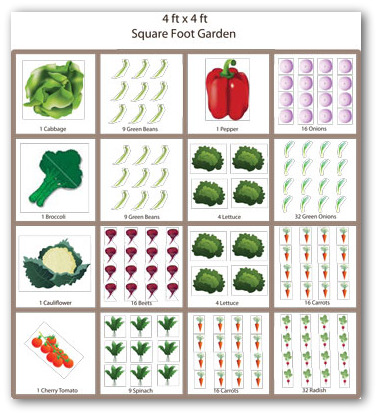
See our hub page Planning a Vegetable Garden for additional information on this topic.
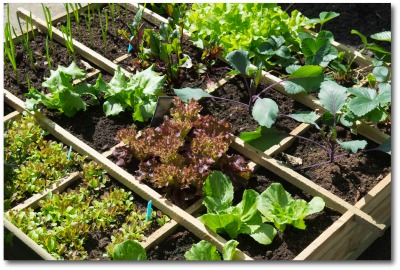
Frequently Asked Questions About Small Vegetable Garden Plans
How small can a vegetable garden be and still be productive?
A single 4x4 ft raised bed - just 16 square feet - can produce a genuinely meaningful supply of fresh food for one to two people. With intensive square foot gardening spacing and succession planting, even this small vegetable garden plan delivers salads, herbs, radishes, beans, tomatoes, and much more. You need sunlight and good soil far more than you need space.
What vegetables are best for small garden plans?
The best vegetables for small vegetable garden plans are those that produce a lot from a small footprint. Cherry tomatoes, lettuce, spinach, radishes, green onions, herbs, peas, and bush beans all fit this profile. Crops to use sparingly in small plans include zucchini (one plant is usually plenty), sweet corn (needs a large block to pollinate), and sprawling pumpkins.
How do I plan a vegetable garden in a small space?
Start by measuring your available space accurately. Choose one of the small vegetable garden plans from this guide that fits your dimensions. Use the square foot gardening system to assign crops to each square. Plan for succession planting in fast-finishing squares like radishes and lettuce. Add a trellis for climbing crops to maximise vertical space. Then use our free interactive planner to visualise and refine your layout before you build.
Can I grow enough vegetables to matter in a small space?
Absolutely. A well-managed 4x8 ft bed following one of these small vegetable garden plans can supply a significant portion of salads, fresh herbs, and summer vegetables for one to two people through the growing season. It will not replace your grocery shopping entirely, but it will provide a regular, meaningful supply of the freshest possible produce - and the satisfaction of growing your own food is worth as much as the harvest itself.
Do small vegetable garden plans need raised beds?
Raised beds are strongly recommended for small vegetable garden plans because they give you complete control over soil quality, drain well, warm up faster in spring, and have clearly defined edges that keep grass and weeds out. That said, a small vegetable garden plan can work in the ground if you have good soil - simply prepare it well with compost and mark out your grid with string or boards.

What You Will Learn in This Small Vegetable Garden Plans Guide
- The principles that make small vegetable garden plans work
- How to choose the right small vegetable garden plan for your space
- Plan 1 - The Starter Bed (4x4 ft)
- Plan 2 - The Classic Small Garden (4x8 ft)
- Plan 3 - The Salad Garden (2x6 ft)
- Plan 4 - The Patio Container Garden
- Plan 5 - The L-Shape Layout
- Plan 6 - The Three-Bed Kitchen Garden
- Plan 7 - The Vertical Small Garden
- Plan 8 - The Beginner All-Season Plan
- How to get more from any small vegetable garden plan

The Principles Behind the Best Small Vegetable Garden Plans
What separates a productive small vegetable garden plan from one that disappoints comes down to a few key principles. Every plan in this guide is built around them:
Intensive Planting
Small vegetable garden plans must use every square foot intensively. The square foot gardening method - dividing the bed into a grid and planting each square at the correct intensive spacing - is the foundation of all the plans in this guide. It produces two to three times more food from the same space as traditional row planting. For a complete explanation, see our square foot gardening guide.
Succession Planting
The best small vegetable garden plans do not just fill beds - they refill them. When a fast crop like radishes or lettuce finishes, that square goes straight back into production with the next crop. A well-managed 4x4 ft bed can produce three or four different crops from the same squares in a single season - dramatically multiplying the total yield from a tiny space.
Vertical Growing
The best small vegetable garden plans use vertical space as well as horizontal space. A trellis at the back of a small bed can support cucumbers, beans, or peas without using a single additional square foot of ground space. This is one of the most powerful techniques available to small space gardeners.
Cool and Warm Season Crops Combined
A small vegetable garden plan that only grows summer crops sits empty for half the year. The best plans include cool-season crops (lettuce, spinach, peas, radishes) for spring and autumn, and warm-season crops (tomatoes, peppers, cucumbers, beans) for summer - keeping the bed productive from early spring through to the first hard frost.
Before you choose a plan: Use our free interactive vegetable garden planner to visualise any of these small vegetable garden plans on screen, swap in different vegetables, and check companion planting before you commit to a layout. It takes minutes and can save significant time and money.

How to Choose the Right Small Vegetable Garden Plan for Your Space
With eight plans to choose from, here is a quick guide to picking the right one:
| Your Situation | Best Small Vegetable Garden Plan |
|---|---|
| Absolute beginner, first garden ever | Plan 1 - The Starter Bed (4x4 ft) |
| First garden, want meaningful variety | Plan 2 - The Classic Small Garden (4x8 ft) |
| Only want salads and fresh greens | Plan 3 - The Salad Garden (2x6 ft) |
| No yard - patio or balcony only | Plan 4 - The Patio Container Garden |
| Corner or awkward space to work with | Plan 5 - The L-Shape Layout |
| Small yard, want serious food production | Plan 6 - The Three-Bed Kitchen Garden |
| Very limited ground space, sunny fence or wall | Plan 7 - The Vertical Small Garden |
| Want fresh food from spring through to autumn | Plan 8 - The Beginner All-Season Plan |

Small Vegetable Garden Plan 1 - The Starter Bed (4x4 ft)
This is the ideal first small vegetable garden plan - a single 4x4 ft raised bed divided into 16 one-foot squares. It is manageable, affordable, and genuinely productive. One person can build and fill this bed in a single weekend, and it will produce fresh food all season. The Old Farmer's Almanac has long recommended a layout of this size as the ideal starting point for first-time vegetable gardeners.
Starter Bed Plant List (16 squares)
| Square | Crop | Plants | Season |
|---|---|---|---|
| 1 | Cherry tomato (north edge, with stake) | 1 | Warm |
| 2 | Pepper | 1 | Warm |
| 3 | Basil | 4 | Warm |
| 4 | Marigolds (pest control) | 4 | Warm |
| 5 | Lettuce mix | 4 | Cool |
| 6 | Spinach | 9 | Cool |
| 7 | Carrots | 16 | Cool |
| 8 | Radishes (succession sow every 2 weeks) | 16 | Cool |
| 9 | Green onions | 16 | Cool |
| 10 | Peas (with small trellis) | 8 | Cool |
| 11 | Bush beans | 9 | Warm |
| 12 | Beets | 9 | Cool |
| 13 | Kale | 1 | Cool |
| 14 | Broccoli | 1 | Cool |
| 15 | Cucumber (with trellis at north edge) | 1 | Warm |
| 16 | Parsley | 4 | Both |
Expected harvest: Salads, radishes, and herbs within 4-6 weeks. Tomatoes, peppers, cucumbers, and beans through summer. Kale and broccoli from late summer into autumn.

Small Vegetable Garden Plan 2 - The Classic Small Garden (4x8 ft)
The 4x8 ft bed is the most popular small vegetable garden plan in North America - and the most practical. It gives you 32 squares to work with, enough for a genuinely diverse mix of crops that will keep your kitchen well supplied. It is still small enough to manage in a few minutes a day, but large enough to feel like a real garden.
How to Divide the 4x8 ft Small Vegetable Garden Plan
- North end (squares 1-8): Tall and climbing crops - one tomato, one cucumber on a trellis, one zucchini at the far corner, five squares of beans and peas
- Middle section (squares 9-20): Medium crops - peppers, broccoli, kale, chard, basil, marigolds, strawberries
- South end (squares 21-32): Low-growing crops - lettuce, spinach, carrots, radishes, onions, beets, herbs
This small vegetable garden plan produces a remarkable variety from just 32 square feet. With succession planting in the cool-season squares, you can realistically harvest from this bed from early spring through to the first hard frost of autumn - six months or more of fresh food from a space barely larger than a dining table.
Small Vegetable Garden Plan 3 - The Salad Garden (2x6 ft)
This small vegetable garden plan is specifically designed for people who want a constant supply of fresh salad ingredients - and nothing else. At just 12 square feet it is the smallest productive plan in this guide, and it is perfect as a first garden, a doorstep bed, or a supplementary kitchen garden next to a larger plot.

Salad Garden Plant List
- 3 squares of mixed lettuce (4 plants per square = 12 lettuce plants) - cut-and-come-again harvesting, ready in 30 days
- 2 squares of spinach (9 plants per square = 18 plants) - harvest outer leaves continuously
- 1 square of radishes (16 plants) - ready in 25 days; succession sow every two weeks
- 2 squares of green onions (16 per square = 32 plants) - pull as needed all season
- 1 square of cherry tomatoes (1 plant with a small cage) - the summer star of the salad garden
- 1 square of basil (4 plants) - essential salad herb; improves tomato flavour nearby
- 2 squares of arugula or mixed salad greens (9 per square) - adds peppery variety
Place this small vegetable garden plan in a spot that gets at least 4-5 hours of sun - lettuce and salad crops tolerate partial shade better than fruiting crops. Keep it close to the kitchen door so you can harvest a handful of leaves on the way in from work.

Small Vegetable Garden Plan 4 - The Patio Container Garden
This small vegetable garden plan requires no ground at all - it is designed entirely around containers on a patio, balcony, or courtyard. Container growing has its limitations but it also has real advantages: you can move pots to follow the sun, bring tender plants indoors before frost, and create a productive garden on any hard surface.
Patio Container Plan - What to Grow and What Size Pot
| Container | Crop | Pot Size | Notes |
|---|---|---|---|
| 1 | Cherry tomato | 10-15 gallon | Stake or cage; water daily in summer |
| 2 | 2 peppers | 5 gallon each | Love heat reflected from walls |
| 3 | Mixed lettuce + radishes | Large window box | Partial shade fine; cut and come again |
| 4 | Herbs (basil, parsley, chives) | 3 x 2 gallon pots | Keep near the kitchen |
| 5 | Bush cucumber | 5-7 gallon + small trellis | Water consistently; liquid feed weekly |
| 6 | Spinach or kale | 3-5 gallon | Cool season; partial shade tolerated |
| 7 | Strawberries | 2 gallon per plant or strawberry tower | Everbearing variety for continuous fruiting |
| 8 | Potatoes | 10-15 gallon grow bag | Harvest by tipping the bag out - no digging |
For a full guide to getting the most from this type of small vegetable garden plan, see our complete container vegetable gardening guide.

Small Vegetable Garden Plan 5 - The L-Shape Layout
This small vegetable garden plan is ideal for corner spaces in a backyard - an area that is often wasted with lawn or left empty. The L-shape uses two beds arranged at right angles: a longer bed (4x8 ft) along one fence or wall, and a shorter connecting bed (4x4 ft) at right angles to it. Together they create an enclosed, sheltered growing space with a natural feeling of being a defined garden room.
L-Shape Layout Advantages
- Uses a corner that is usually wasted in a standard rectangular garden design
- The two fence or wall sides provide wind protection and a warm microclimate
- Creates a natural place to put a compost bin or tool storage in the inner corner
- The enclosed feeling makes the garden feel intentional and designed
- 48 squares total - enough for a genuinely diverse productive garden
How to Plant the L-Shape Small Vegetable Garden Plan
- Use the long bed (4x8 ft) for your main warm-season crops - tomatoes, peppers, cucumbers, beans, and summer salads
- Use the shorter bed (4x4 ft) for cool-season crops - brassicas, root vegetables, peas, and overwintering garlic
- Train climbing crops up the fence or wall at the back of each bed - this adds significant productive capacity without using any additional ground space
- Place a tall trellis or obelisk at the inner corner as a focal point
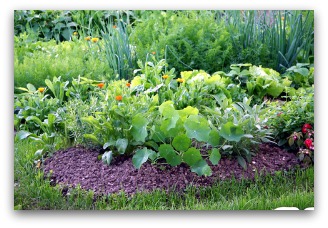
Small Vegetable Garden Plan 6 - The Three-Bed Kitchen Garden
This small vegetable garden plan steps up to three 4x4 ft beds arranged in a U-shape - 48 squares of productive planting in a footprint of roughly 10x10 ft including paths. This is the plan for gardeners who want serious food production from a small backyard without the complexity of a larger design.
Three-Bed Plan - One Bed Per Purpose
- Bed 1 - Summer crops: Tomatoes, peppers, cucumbers, basil, and marigolds. This is your main warm-season productive bed.
- Bed 2 - Cool season crops: Lettuce, spinach, kale, broccoli, peas, radishes, and green onions. This bed produces heavily in spring and autumn.
- Bed 3 - Root vegetables and long-season crops: Carrots, beets, onions, garlic, beans, chard, and parsley. These crops need more time but low daily attention.
Crop Rotation in the Three-Bed Plan
One of the great advantages of this small vegetable garden plan is built-in crop rotation. Each year, rotate the purpose of each bed:
- Move summer fruiting crops to where roots and legumes were
- Move roots and legumes to where cool season crops were
- Move cool season crops to where summer crops were
This simple three-year rotation prevents the build-up of soil pests and diseases that comes from growing the same crop family in the same place repeatedly.
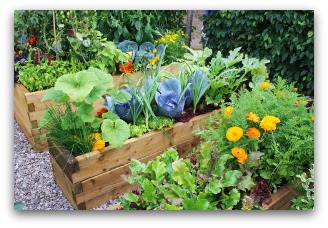
Small Vegetable Garden Plan 7 - The Vertical Small Garden
This small vegetable garden plan is designed for situations where ground space is extremely limited but there is a sunny fence, wall, or structure to work with. By growing primarily upward rather than outward, this plan maximises production from a bed as narrow as 18 inches deep.
The Vertical Plan Layout
- Against the wall: Fix a trellis panel or wire system to a south or west-facing fence or wall
- Climbing crops on the trellis: Cucumbers, pole beans, peas, and nasturtiums trained up the vertical surface
- Narrow bed at the base (18-24 inches deep): Compact crops that tolerate some shade from the climbing plants above - lettuce, spinach, herbs, radishes, strawberries
- Containers along the front edge: Cherry tomatoes, peppers, and herbs in pots extending the planting without increasing the fixed bed size
A 10-foot stretch of fence with this vertical small vegetable garden plan can produce as much as a 4x4 ft raised bed - without occupying more than a narrow strip at its base. It is one of the most space-efficient small vegetable garden plans available for urban and suburban gardeners.

Small Vegetable Garden Plan 8 - The Beginner All-Season Plan
This small vegetable garden plan is designed specifically to give a beginner fresh food from the garden for as much of the year as possible - not just in peak summer. It uses a 4x8 ft bed divided into three zones by season, with each zone in active production at different times of year.
All-Season Plan - Zone by Season
| Zone | Squares | Spring Crops | Summer Crops | Autumn Crops |
|---|---|---|---|---|
| Zone A (north 8 squares) | 8 | Peas on trellis, spinach | Tomato, cucumber on trellis | Kale, garlic (for spring) |
| Zone B (middle 8 squares) | 8 | Lettuce, radishes, green onions | Peppers, basil, beans | Spinach, lettuce, radishes |
| Zone C (south 16 squares) | 16 | Carrots, beets, broccoli, onions | Cucumbers, marigolds, herbs | Winter salad mix, chives, parsley |
This all-season small vegetable garden plan means something is always growing, always producing, and always being harvested. It is the closest thing to a year-round kitchen garden that a single 4x8 ft bed can deliver in most climates.
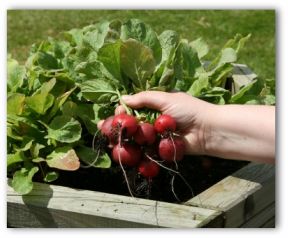


Start Your Small Vegetable Garden Plan This Weekend
The most important thing about any small vegetable garden plan is that you actually start it. Every gardener who has a thriving productive garden today started with a single small bed - often smaller than the plans in this guide. Pick the plan that fits your space and your goals, use our free planner to finalise the layout, gather your materials, and get started.
A small vegetable garden plan done well will produce more food, more satisfaction, and more gardening knowledge than a large plan done poorly. Start small, learn fast, and expand when you are ready. Your first harvest - even if it is just a handful of radishes three weeks after sowing - will be more rewarding than you expect.
More Vegetable Gardening Guides
- Square Foot Gardening: The Complete Guide
- Raised Bed Vegetable Gardening for Beginners
- Backyard Vegetable Garden Design
- Vegetable Garden Layout Ideas
- Container Vegetable Gardening Guide
- Companion Planting Chart for Vegetables
- No-Dig Vegetable Gardening
- Free Interactive Vegetable Garden Planner
- Free Planting Worksheets and Zone Charts