- Home
- Free Garden Printables
- Calendar
Vegetable Planting Calendar:
What to Plant Every Month of the Year

A vegetable planting calendar is the single most useful planning tool a home vegetable gardener can have.
It tells you exactly when to sow seeds indoors, when to direct sow outdoors, and when to transplant - taking all the guesswork out of timing and giving every crop the best possible chance of success.
The right vegetable planting calendar saves you from the two most common timing mistakes: planting too early (when cold soil and late frosts set plants back) and planting too late (when crops run out of time to mature before frost arrives).
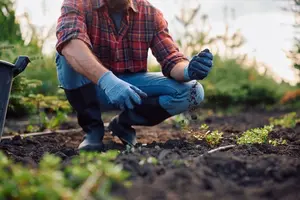
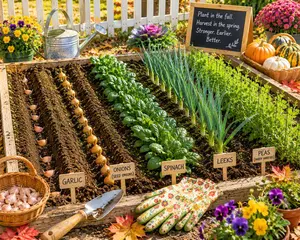
 Enjoying freshly harvested vegetables from your garden is one of the most satisfying rewards of planting a garden!
This complete vegetable planting calendar covers every month of the year, explains how to personalize your planting dates based on your specific frost dates, and gives you a month-by-month guide to what needs doing in the garden.
According to the University of Maryland Extension, the most successful vegetable gardens are those planned around a personalized vegetable planting calendar that takes local frost dates into account rather than relying on general seasonal advice.
Use our free interactive zone finder to confirm your frost dates, then use this vegetable planting calendar to build your personalized growing schedule.

Source: University of Maryland Extension - Vegetable Planting Calendar
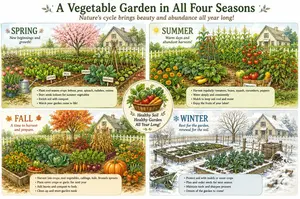
A printable planting calendar is one of the most practical tools for organizing a seasonal vegetable garden across all four seasons. This page is also part of our Seasonal Vegetable Garden hub, where you will find complete guides to growing through every season of the year.
Seasonal Vegetable Garden — complete hub for spring, summer, fall, and winter vegetable gardening guides
This page is part of our Free Vegetable Garden Printables collection, where you will find all our free downloads in one place — worksheets, plans, coloring books, zone charts, and more.
Free Vegetable Garden Printables — all our free downloads for home vegetable gardeners in one place
How to Use the Vegetable Planting Calendar

Before you can use any vegetable planting calendar effectively, you need two key dates for your location: your last spring frost date and your first fall frost date. These two dates are the anchors around which your entire vegetable planting calendar is built. Every planting date for every crop is calculated from one of these two reference points.
Your last spring frost date is the average date of the final frost in spring. Warm-season crops like tomatoes, peppers, cucumbers, beans, and zucchini are planted outdoors after this date. Cool-season crops like lettuce, spinach, peas, and broccoli can go outdoors four to six weeks before this date. Seeds for slow-growing warm-season crops are started indoors six to ten weeks before this date.
Your first fall frost date is the average date of the first autumn frost. It tells you how long your summer growing season lasts and is the reference point for your fall vegetable planting calendar. Count backward from your first fall frost date to calculate when autumn crops need to be sown to reach maturity before cold arrives.
For a customizable vegetable garden planting calendar based on your zip code — with exact planting dates calculated from your local frost dates — the Old Farmer's Almanac at almanac.com is one of the most trusted planting guides available for home vegetable gardeners.
- Old Farmer's Almanac — Planting Calendar — free customizable vegetable garden planting calendar by zip code based on your local frost dates
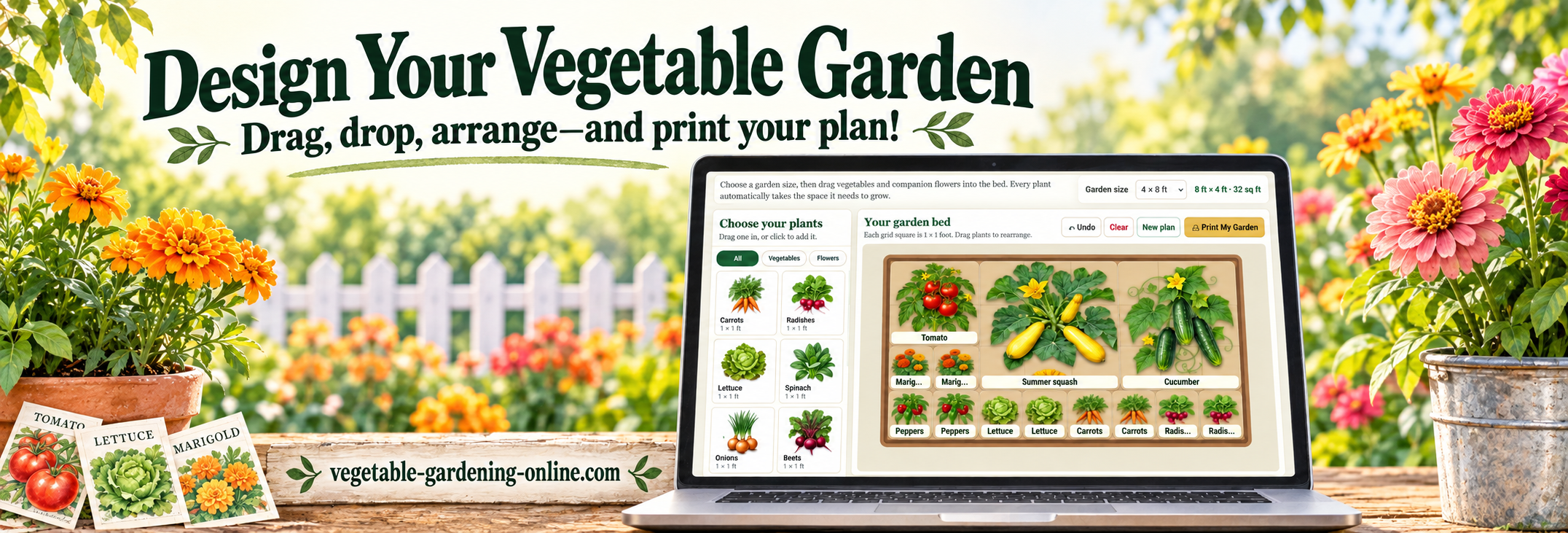
Use our free interactive Garden Planner to design and plan your vegetable garden size and layout.
Check out our Free Vegetable Garden Printables!
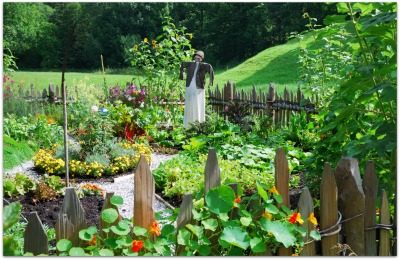
Vegetable planting calendar: key calculations
| What You Want to Do | Count From | How Many Weeks | Example (Last Frost May 1) |
|---|---|---|---|
| Start peppers and eggplant indoors | Last spring frost date | 10-12 weeks before | February 5-19 |
| Start tomatoes indoors | Last spring frost date | 6-8 weeks before | March 6-20 |
| Start brassicas indoors (broccoli, cabbage) | Last spring frost date | 4-6 weeks before | March 20 - April 3 |
| Direct sow cool-season crops outdoors | Last spring frost date | 4-6 weeks before | March 20 - April 3 |
| Transplant tomatoes, peppers outdoors | Last spring frost date | At or after | May 1 or later |
| Direct sow warm-season crops outdoors | Last spring frost date | At or after | May 1 or later |
| Start fall brassica transplants indoors | First fall frost date | 10-12 weeks before | If Oct 1: plant July 8-22 |
| Direct sow fall leafy greens outdoors | First fall frost date | 6-8 weeks before | If Oct 1: plant August 6-20 |
| Plant garlic outdoors | First fall frost date | 4-6 weeks before | If Oct 1: plant August 20 - Sept 3 |
Vegetable Planting Calendar: January and February

January and February feel like quiet months in the vegetable garden, but they are actually among the most important months in your vegetable planting calendar. What you do now determines how well prepared you are when the growing season begins, and for gardeners in warmer zones, real outdoor planting is already underway.
January is the best month to review last year's garden notes, order seeds from catalogues, and plan this year's layout. Seed catalogues are available from December and the best varieties sell out by February - ordering early gives you access to the full range. Use our free interactive garden planner to design your beds and our free zone chart to confirm your planting dates for the coming season. In Zones 9 and above, January is active planting time for cool-season crops outdoors.
February brings the first real seed-starting activity for most gardeners. According to Oregon State University Extension, February is the critical month for laying the groundwork for a successful growing season. Peppers and eggplant need the longest indoor growing time of any common vegetable - 10 to 12 weeks before the last frost date. In most of the continental United States, this means pepper seeds should be started indoors in January or February. Onion and leek seeds also benefit from a very early start in February. Check your vegetable planting calendar dates and get these slow-starting crops underway as soon as possible.
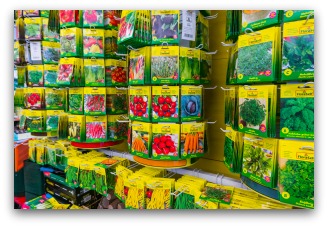 Those vegetable garden seed packets can be so tempting in the spring, when we start thinking about this year's garden!
Vegetable planting calendar: January and February tasks
| Task | All Zones | Zones 7-8 | Zones 9-11 |
|---|---|---|---|
| Order seeds and supplies | January - do not delay | January | January |
| Plan garden layout | January / February | January / February | January |
| Start peppers and eggplant indoors | January (10-12 wks before last frost) | January / February | Not needed - direct sow |
| Start onions and leeks indoors | January / February | January / February | Direct sow outdoors |
| Direct sow cool-season crops outdoors | Not yet (too cold) | February in mild spots | January / February actively |
| Test and prepare soil | Whenever ground not frozen | February | January / February |
Vegetable Planting Calendar: March and April
 March and April are good for starting seeds indoors or in the greenhouse for later spring planting in the vegetable garden.
March and April are the most exciting months in the vegetable planting calendar for most gardeners. The pace of activity accelerates rapidly, the seed-starting trays fill up, and the first outdoor sowings become possible as the soil thaws and warms.
March is tomato month on most vegetable planting calendars. Tomato seeds started six to eight weeks before the last frost date will be perfectly sized transplants by planting time. For gardeners with a May 1 last frost date, mid-March is the ideal time to start tomatoes indoors. March is also the time to start broccoli, cabbage, cauliflower, kale, and other brassicas indoors if you want large transplants for the spring garden. In Zones 6 and above, cool-season crops can often be direct sown outdoors in March under row cover or in a cold frame vegetable garden.
April is one of the busiest months in the vegetable planting calendar. For most gardeners with a May last frost date, April is the month for direct sowing cool-season crops outdoors - lettuce, spinach, arugula, peas, radishes, beets, carrots, and green onions can all go into the ground in April. April is also the hardening-off month: tomato and pepper transplants that have been growing indoors since February and March need to begin their gradual transition to outdoor conditions before they are transplanted to the garden. Start the hardening-off process two weeks before your planned transplant date.
Vegetable planting calendar: March and April tasks
| Task | Zones 3-5 | Zones 6-7 | Zones 8-9 |
|---|---|---|---|
| Start tomatoes indoors | Late March / early April | Mid March | February / early March |
| Start brassicas indoors | Late March / April | Mid March | Already outdoors |
| Direct sow cool-season crops outdoors | Mid April (with protection) | March / April | Already underway |
| Start cucumbers and squash indoors | Late April | Early April | Direct sow outdoors |
| Harden off indoor transplants | Late April | April | March |
| Transplant cold-hardy brassicas outdoors | Late April (with protection) | Early April | Already planted |

Vegetable Planting Calendar: May and June

May and June are the main planting months on most vegetable planting calendars in the northern United States. For many gardeners, this is the most exciting time of the growing year - the last frost passes, the soil is warm, and the full summer garden goes in.
May is transplant month for warm-season crops in most of the continental US. Once your last frost date has passed and overnight temperatures are consistently above 50 degrees Fahrenheit, tomatoes, peppers, eggplant, basil, and cucumbers can be transplanted to their final outdoor positions. Do not rush this step - soil that feels warm on the surface but is still cold six inches down will stall warm-season transplants for weeks. Use your hand to check soil temperature six inches deep before planting. May is also the time to direct sow beans, corn, and zucchini directly outdoors in most zones.
June is a month of establishment and early harvests on the vegetable planting calendar. By June, the spring cool-season crops planted in March and April are producing - radishes, lettuce, spinach, and peas are all harvestable or close to it. Warm-season transplants are establishing in the garden. June is also the time to start thinking about succession plantings of fast crops and to begin planning your fall vegetable planting calendar. As spring crops finish, replant those squares immediately with summer crops to keep the bed continuously productive.
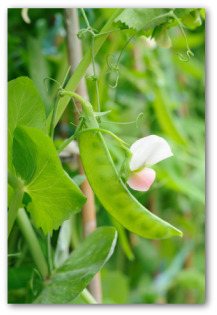
Vegetable planting calendar: May and June tasks
| Task | Zones 3-5 | Zones 6-7 | Zones 8-9 |
|---|---|---|---|
| Transplant tomatoes, peppers outdoors | Late May | May 1-15 | March / April |
| Direct sow beans, corn, zucchini | Late May / early June | May | March / April |
| Direct sow cucumbers outdoors | Early June | May | April |
| Harvest first spring crops | June (radishes, lettuce) | May / June | April / May |
| Succession sow fast crops | Every 2-3 weeks all season | Every 2-3 weeks all season | Every 2-3 weeks all season |
| Start fall brassicas indoors (for early fall) | Not yet | Late June | June |
Vegetable Planting Calendar: July and August

July and August are peak summer season but they are also, critically, the months to begin your fall vegetable planting calendar. This surprises many gardeners. While the summer garden is at its most productive, the most experienced growers are already sowing autumn crops - because the window for getting fall vegetables established in time closes fast.
July is the month to start thinking seriously about the fall side of your vegetable planting calendar. Brussels sprouts, which need the longest lead time of any autumn crop, should be started indoors in June or early July for a fall harvest. Cabbage, broccoli, and leek transplants for autumn should also be started in July in most zones. These crops need to be well established before cool autumn temperatures arrive - a small transplant set out in October will barely grow before frost, while the same crop planted in late July will be large and productive by September.
August is the most important month on the fall vegetable planting calendar for direct-sown crops. Six to ten weeks before the first fall frost, direct sow spinach, kale, lettuce, arugula, Asian greens, beets, carrots, radishes, green onions, and turnips for an autumn harvest. August sowings typically fall right in the window for first-fall-frost dates in October through November. This is the month where acting promptly pays the biggest dividends - every week of delay in August reduces the harvest window significantly.
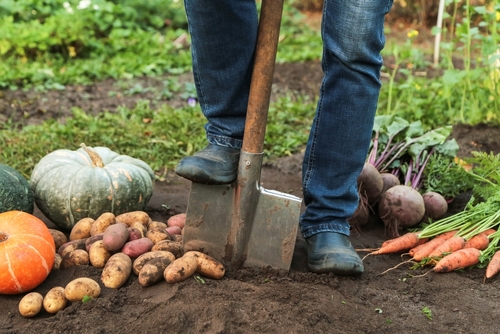
Vegetable planting calendar: July and August tasks
| Task | Zones 3-5 | Zones 6-7 | Zones 8-9 |
|---|---|---|---|
| Start Brussels sprouts indoors (fall crop) | Early July | Mid July | August |
| Start broccoli and cabbage indoors (fall) | Early July | Mid July | August |
| Direct sow kale and spinach outdoors | Late July / early August | August | September |
| Direct sow lettuce and arugula outdoors | Early August | August | September |
| Direct sow carrots and beets outdoors | Late July | Early August | September |
| Transplant fall brassicas to garden | Late July / early August | August | September |
| Continue harvesting summer crops | July through August | July through September | July through October |
Vegetable Planting Calendar: September and October
 Fall is the time to do garden cleanup chores, and maintain some cold weather vegetables in your garden.
September and October mark the transition from summer to autumn on the vegetable planting calendar. In northern zones, the first frost is approaching and harvest pressure is building. In southern zones, the most productive planting season of the year is just getting underway.
September is harvest month in the northern vegetable planting calendar. Tomatoes, peppers, cucumbers, beans, and corn are all producing abundantly, and the focus shifts to harvesting everything before frost, preserving surplus, and protecting crops from the first cold nights. September is also the month to plant garlic - one of the most satisfying entries on the fall vegetable planting calendar. Garlic planted in September or October overwinters and produces a full bulb harvest the following June or July, requiring virtually no care through the cold months. In Zones 6 and above, September direct sowings of fast cool-season crops like arugula, radishes, and Asian greens can still produce a harvest before hard frost.
October is garlic month on almost every vegetable planting calendar. Garlic cloves planted four to six weeks before the ground freezes develop roots before winter and emerge strongly in spring. October is also the time to deploy frost protection over cold hardy vegetable beds - row covers, cold frames, and mulch over root vegetables - to extend harvests past the first frosts. Begin clearing summer crops that have finished producing, adding them to the compost heap, and top-dressing beds with compost for the following season.

Vegetable planting calendar: September and October tasks
| Task | Zones 3-5 | Zones 6-7 | Zones 8-9 |
|---|---|---|---|
| Plant garlic outdoors | September / early October | October | October / November |
| Harvest and preserve summer crops | September urgently before frost | September / October | October / November |
| Direct sow fast fall crops (arugula, radish) | Only in Zone 5 with protection | September | September / October actively |
| Deploy row covers and cold frames | September / early October | October | November |
| Mulch root vegetables for storage in ground | Before ground freezes - October | October / November | December |
| Top-dress beds with compost | October | October / November | October / November |
| Clear and compost finished summer crops | September / October | October | November |
Vegetable Planting Calendar: November and December

November and December are the quietest months on the vegetable planting calendar in northern zones - but they are far from inactive, and in warmer climates they are genuinely productive growing months.
November is the month for final garden preparations and winter crops in northern zones. By now most beds have been cleared of summer crops and top-dressed with compost. Hardy overwintering crops - kale, spinach, leeks, parsnips, carrots, and garlic - are settled in for winter. In Zones 6 and above, cold frames and row covers keep greens producing through November. This is also a good month to plant overwintering onion sets and to apply a final layer of mulch over any beds containing root vegetables to be harvested through winter.
December is planning and dreaming month on the vegetable planting calendar. Seed catalogues begin arriving and it is the perfect time to review what worked and what did not in the current season, identify gaps in the planting calendar, and start building next year's schedule. In Zones 8 and above, December is an active month for cool-season crops outdoors - lettuce, spinach, broccoli, cauliflower, and kale all grow productively through mild winter conditions. In all zones, a cold frame vegetable garden with hardy greens can be providing fresh harvests right through December in most years.

Vegetable planting calendar: November and December tasks
| Task | Zones 3-5 | Zones 6-7 | Zones 8-9 |
|---|---|---|---|
| Harvest from cold frames and row covers | While weather permits | November / December | Actively through winter |
| Plant overwintering onion sets | Not applicable | November | October / November |
| Harvest root crops from ground storage | Before ground freezes hard | November / December | Through winter as needed |
| Browse seed catalogues / plan next season | December / January | December / January | December / January |
| Direct sow cool-season crops outdoors | Not applicable | Mild zones only | Actively - excellent growing month |
| Start very early crops indoors | Not yet | Not yet | Possible in Zone 9+ for very early spring |
Complete Vegetable Planting Calendar: All Crops at a Glance
This complete vegetable planting calendar shows the key timing for every common vegetable in one table. All dates are expressed relative to your last spring frost date (LF) or first fall frost date (FF) so the calendar works for any zone. Find your dates using our free interactive zone finder, then apply them to each crop below.

| Vegetable | Start Indoors | Direct Sow Outdoors / Transplant | Fall Planting | Days to Harvest |
|---|---|---|---|---|
| Peppers | 10-12 weeks before LF | Transplant after LF, warm soil | Not applicable | 70-85 from transplant |
| Eggplant | 10-12 weeks before LF | Transplant after LF, warm soil | Not applicable | 70-85 from transplant |
| Tomatoes | 6-8 weeks before LF | Transplant after LF | Not applicable | 65-85 from transplant |
| Broccoli | 6-8 weeks before LF (spring) or 10-12 weeks before FF (fall) | Transplant 4 weeks before LF | Transplant 8-10 weeks before FF | 60-80 from transplant |
| Cabbage | 6-8 weeks before LF | Transplant 4 weeks before LF | Transplant 8-10 weeks before FF | 70-90 from transplant |
| Brussels sprouts | 12-14 weeks before FF | Transplant to garden in July/August | Primary purpose - harvest after frost | 90-100 from transplant |
| Cucumbers | 3-4 weeks before LF | Direct sow after LF, warm soil | Not applicable | 55-65 from sowing |
| Zucchini | Not necessary | Direct sow after LF | Not applicable | 50-60 from sowing |
| Bush beans | Not recommended | Direct sow after LF, warm soil | Possible 60 days before FF | 55-65 from sowing |
| Peas | Not recommended | Direct sow 4-6 weeks before LF | Direct sow 8-10 weeks before FF | 60-70 from sowing |
| Lettuce | 4-6 weeks before LF (optional) | Direct sow 4 weeks before LF | Direct sow 6-8 weeks before FF | 30-45 from sowing |
| Spinach | Not necessary | Direct sow 4-6 weeks before LF | Direct sow 6-8 weeks before FF | 40-50 from sowing |
| Kale | Optional - 4-6 weeks before LF | Direct sow 4 weeks before LF or transplant | Direct sow 8-10 weeks before FF | 55-65 from sowing |
| Carrots | Not recommended | Direct sow 4 weeks before LF | Direct sow 10-12 weeks before FF | 70-80 from sowing |
| Beets | Not necessary | Direct sow 4 weeks before LF | Direct sow 8-10 weeks before FF | 55-70 from sowing |
| Radishes | Not recommended | Direct sow 4 weeks before LF; succession every 2 weeks | Direct sow 4-6 weeks before FF | 25-30 from sowing |
| Onions | 10-12 weeks before LF | Transplant sets 4-6 weeks before LF | Plant sets in autumn for overwintering | 100-120 from transplant |
| Garlic | Not applicable | Not applicable | Plant cloves 4-6 weeks before ground freezes | Harvest following summer |
| Basil | 4-6 weeks before LF | Transplant after LF; direct sow possible | Not applicable | 30 days to first harvest |
| Arugula | Not necessary | Direct sow 4 weeks before LF | Direct sow 4-6 weeks before FF | 30-40 from sowing |
Personalizing Your Vegetable Planting Calendar
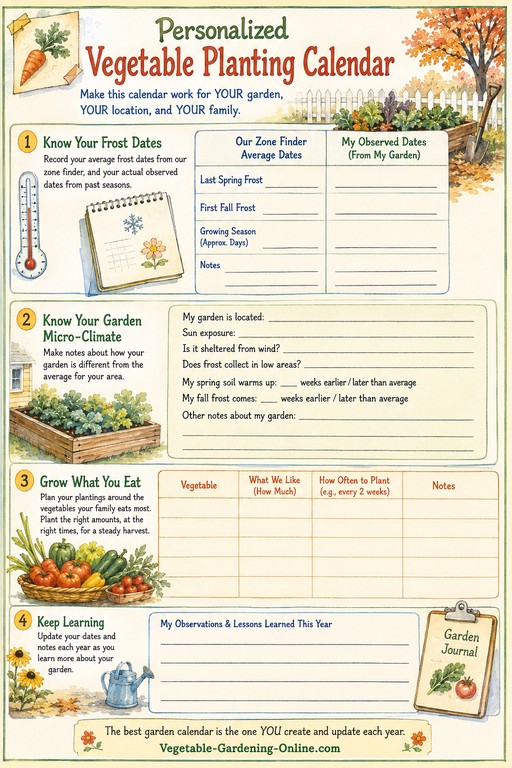
The most useful vegetable planting calendar is not a generic one - it is one personalized to your specific location, your garden setup, and your food preferences. A few simple adjustments transform a general vegetable planting calendar into a precision tool for your own garden.
Start by noting your actual observed frost dates from previous seasons alongside the average dates from our zone finder. In most gardens, frosts occasionally occur outside the average dates - knowing your personal range allows you to make more confident decisions about when to plant and when to protect. Many experienced gardeners keep a garden journal where they record first and last frost observations each year, building a personalised record over time that is more accurate than any published average.
Adjust your vegetable planting calendar for your specific micro-climate. A raised bed in a south-facing sheltered corner may be ready to plant two weeks earlier than the open garden. A low-lying frost pocket may experience frost a week later into spring and a week earlier in autumn than the general area average. Observations over two or three seasons give you this personalized knowledge.
Finally, plan your vegetable planting calendar around what your household actually eats. If you go through large quantities of salad greens, space your lettuce and spinach sowings every two to three weeks rather than sowing everything at once. If you love cherry tomatoes, plan for two or three plants rather than one. The best vegetable planting calendar is the one that produces the food you want, in the quantities you can use, at the right times of year.

Frequently Asked Questions About the Vegetable Planting Calendar

1. When should I start my vegetable planting calendar for the year?
The vegetable planting calendar effectively starts in January when you order seeds and plan your layout. Indoor seed starting begins in January or February for the slowest crops - peppers and eggplant. By the time most gardeners are thinking about the garden in March or April, the most prepared gardeners already have well-established seedlings growing indoors.
2. What is the most important date on the vegetable planting calendar?
Your last spring frost date is the single most important anchor point on any vegetable planting calendar. All spring and summer planting dates are calculated from it - indoor starting dates count back from it, and outdoor planting dates are keyed to it. Find your last frost date using our free interactive zone finder and write it prominently at the top of your vegetable planting calendar.
3. Can I use the same vegetable planting calendar every year?
The general framework stays the same, but your specific dates may shift slightly from year to year as climate patterns vary. Use the average frost dates as your planning baseline, but watch actual weather forecasts and adjust as needed. A warm spring may allow earlier planting than the average suggests; a cold spring may push dates back by a week or two. The vegetable planting calendar is a guide, not a rigid rule.
4. Why do my vegetables not match the days to harvest on the seed packet?
Days to harvest figures on seed packets are calculated under ideal conditions - warm soil, consistent moisture, and optimal nutrition. In practice, plants often take longer due to cooler-than-ideal soil temperatures, stress from transplanting, irregular watering, or suboptimal growing conditions. Use the seed packet figures as a minimum estimate and add a buffer of one to two weeks when calculating your vegetable planting calendar dates.
5. How do I adjust my vegetable planting calendar for a late or early spring?
In a late spring when the last frost arrives two or three weeks later than average, simply push all your spring planting dates back by the same amount. Your indoor seedlings may become overgrown waiting for safe outdoor conditions - pot them up into larger containers to give their roots more room. In an early spring, resist the temptation to plant too early - a late frost after planting can kill tender transplants that took weeks to grow.
Return to our Free Vegetable Garden Printables hub for all our free downloadable charts, calendars, planners, and worksheets.
- Free Vegetable Garden Printables — all our free downloadable garden charts, planners, calendars, and worksheets

Recent Articles


-
How to Grow Cabbage
Sep 15, 26 12:33 PM
 How to Grow Cabbage: The Complete Guide from Seed to Harvest. This complete guide covers everything you need to know about how to grow cabbage.
 -
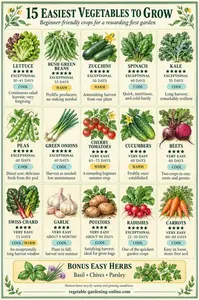
Easiest Vegetables to Grow: 15 Foolproof Crops for Beginners
Sep 15, 26 09:24 AM
 Easiest vegetables to grow for beginners - with advice on what makes each one easy, how to get started, and which vegetables are harder than they look.
 -
How to Grow Green Beans
Sep 14, 26 07:53 PM
 How to Grow Green Beans: The Complete Guide to Bush and Pole Beans. Green beans are one of the most forgiving crops a beginner can choose.
 -
Seasonal Vegetable Garden
Sep 14, 26 05:38 PM
 Seasonal Vegetable Garden — Growing Food Through Every Season
 -
Overwintering Vegetables: Fall-Planted Crops for Early Spring Harvest
Sep 14, 26 05:35 PM
 Learn about overwintering vegetables like garlic, fava beans, and onions, planted in fall to sit through winter and reward you with an early spring harvest.
 -
Free Vegetable Garden Journal— Printable Downloads for Home Gardeners
Sep 14, 26 01:51 PM
 Download our free Vegetable Garden Journal — choose a full 16-page version or simpler 7-page journal. Track planting, harvest, & garden notes season by season.
 -
Free Vegetable Garden Cut and Paste Activities for Kids Ages 5-7
Sep 12, 26 09:13 PM
 Free printable vegetable garden cut and paste activities for kids ages 5-7. Build your own garden, match seeds to plants, and learn what grows where.