- Home
- Children's Corner
- Vegetable Garden Cut and Paste Activities
Free Vegetable Garden
Cut and Paste Activities for Kids Ages 5-7
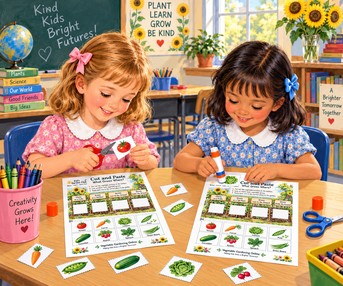 Cut and paste activities are great fun, and teach important skills also.
Cutting and pasting is more than just a fun way to pass an afternoon.
For young children, it builds scissor skills, hand-eye coordination, and early plant knowledge, all at once.
These vegetable garden cut and paste activities are designed for ages five to seven, though younger children enjoy them with a bit of help, and older kids often like them too.
I loved cutting and pasting when I was in kindergarten and first grade! I still remember the almost edible smell of the paste. I went to a small two-room grade school in the country in Oregon. Grades 1-4 were in the same classroom. Our teacher would sometimes keep the little ones busy with cut and paste when she was busy teaching the older grades.
Have a younger child at home? Try our Preschool Vegetable Garden Cut and Paste Activities, with open-ended garden scenes for ages 3-4.
Each activity below is part of our free vegetable garden cut and paste activities collection.
Grab some safety scissors, a glue stick, and let the cutting and pasting begin!
Make Your Own Garden
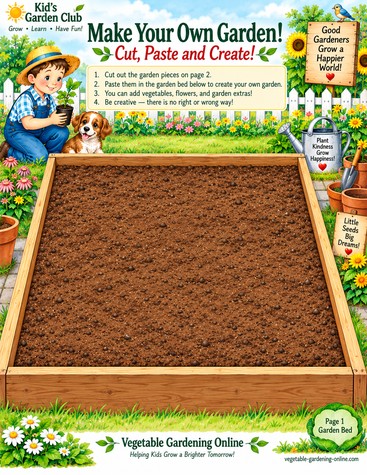
This is the most open-ended activity in the set, and often the favorite.
Page one is a big, empty garden bed.
Page two is a full sheet of garden pieces to cut out: vegetables, flowers, garden tools, and a few friendly garden visitors like a bunny and a ladybug.
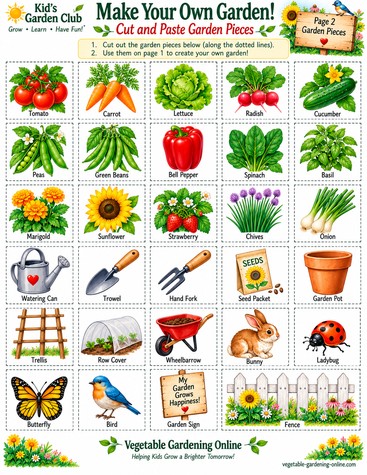
Kids cut out whatever pieces they like and arrange their own garden however they want.
There's no right or wrong way to do it with these vegetable garden cut and paste activities.
One child might plant a whole bed of carrots.
Another might fill it with sunflowers and a butterfly. That's exactly the point. It's their garden to design.
Match the Seeds to the Plants
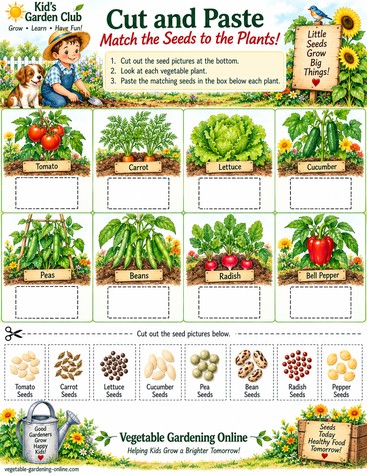
This activity teaches a simple but important idea: every plant starts as a seed, and every seed looks a little different.
Eight full-grown vegetables sit at the top of the page, each with an empty box beneath it.
At the bottom, eight matching seed pictures wait to be cut out.
Kids look at each vegetable, find its matching seed, and paste it in the box below.
It's a great vegetable garden cut and paste activity for talking about what different seeds actually look like before they end up on the plate.
Vegetable Garden Cut and Paste Activities:
What Grows Where?
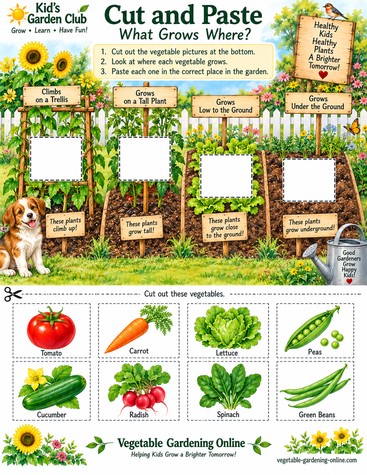
Not every vegetable grows the same way, and these vegetable garden cut and paste activities help kids notice that.
Four garden beds are labeled by growing habit: climbs on a trellis, grows on a tall plant, grows low to the ground, and grows underground.
Eight vegetables wait to be cut out and sorted into the right spot.
This is a nice one to pair with a real trip to the garden.
After finishing the page, walk outside together and see if you can spot a vine climbing, a tall plant, a low grower, and something that grows out of sight underground.
Put the Vegetables in the Garden
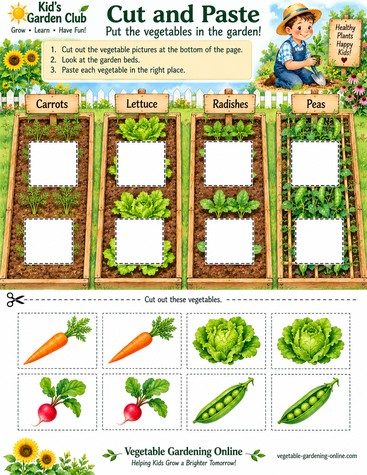
This one is a good choice for the younger end of the five-to-seven range.
Four garden rows are labeled: carrots, lettuce, radishes, and peas.
Each row has two spots waiting to be filled. Kids simply match each cut-out vegetable to its correctly labeled row.
It's a simple, satisfying vegetable garden cut and paste activity, and a good confidence-builder for a child who's newer to cutting and pasting.
My Favorite Vegetables to Eat for Dinner
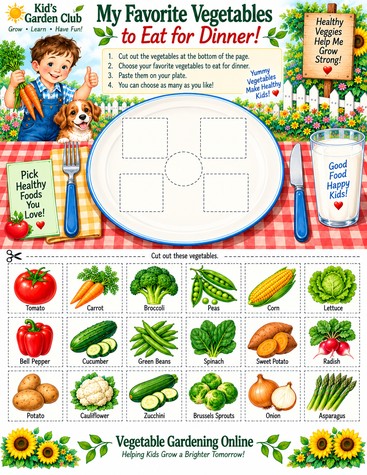
This activity turns healthy eating into a game. A plate sits empty, divided into four sections, with a spot in the middle too.
At the bottom, eighteen different vegetables wait to be cut out, from familiar favorites like carrots and corn to less common ones like Brussels sprouts and asparagus.
Kids choose their own favorites and paste them onto the plate, filling as many spots as they like.
It's a simple, positive way to talk about vegetables kids actually enjoy, rather than ones they're told to eat.
These vegetable garden cut and paste activities works especially well as a conversation starter around dinner time.
Garden Friend or Garden Pest?
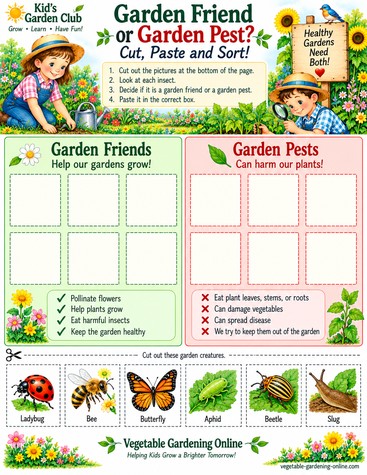
Not every creature in the garden is a problem, and this activity helps kids tell the difference.
Six garden visitors wait to be cut out: a ladybug, a bee, a butterfly, an aphid, a beetle, and a slug.
Two sorting boxes are labeled Garden Friends and Garden Pests, each with a short list explaining what makes a creature helpful or harmful.
This is a nice early introduction to beneficial insects, a concept most kids never hear about until much later.
Pollinators like bees and butterflies get a chance to shine here, right alongside the pest-eating ladybug, while aphids, beetles, and slugs represent the creatures a real gardener keeps an eye on.
Match the Garden Tools to Their Activity
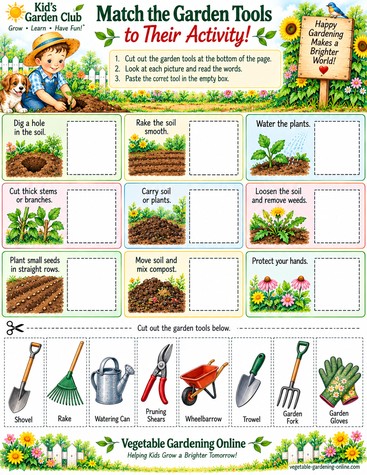
Every tool in the garden shed has a job, and this activity helps kids connect the two.
Nine garden tasks are shown in pictures, from digging a hole to protecting your hands, each with an empty box beside it.
At the bottom, eight garden tools wait to be cut out and matched to the correct task.
This is a great one to do right before an actual gardening day.
Once a child has matched the shovel to digging and the watering can to watering plants, they're ready to recognize and use those same tools for real.
More Free Kids Gardening Printables

Related guides: Free Worksheets for Kids | Vegetable Garden Coloring Books | Plant Life Cycle Worksheet | Kids Gardening

Recent Articles


-
How to Grow Cabbage
Sep 15, 26 12:33 PM
 How to Grow Cabbage: The Complete Guide from Seed to Harvest. This complete guide covers everything you need to know about how to grow cabbage.
 -
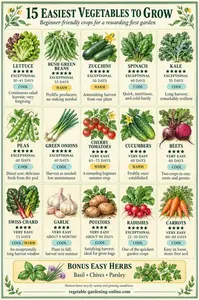
Easiest Vegetables to Grow: 15 Foolproof Crops for Beginners
Sep 15, 26 09:24 AM
 Easiest vegetables to grow for beginners - with advice on what makes each one easy, how to get started, and which vegetables are harder than they look.
 -
How to Grow Green Beans
Sep 14, 26 07:53 PM
 How to Grow Green Beans: The Complete Guide to Bush and Pole Beans. Green beans are one of the most forgiving crops a beginner can choose.
 -
Seasonal Vegetable Garden
Sep 14, 26 05:38 PM
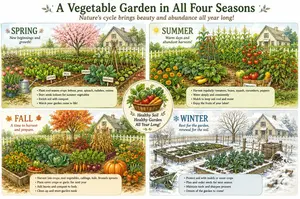
 Seasonal Vegetable Garden — Growing Food Through Every Season
 -
Overwintering Vegetables: Fall-Planted Crops for Early Spring Harvest
Sep 14, 26 05:35 PM
 Learn about overwintering vegetables like garlic, fava beans, and onions, planted in fall to sit through winter and reward you with an early spring harvest.
 -
Free Vegetable Garden Journal— Printable Downloads for Home Gardeners
Sep 14, 26 01:51 PM
 Download our free Vegetable Garden Journal — choose a full 16-page version or simpler 7-page journal. Track planting, harvest, & garden notes season by season.
 -
Free Vegetable Garden Cut and Paste Activities for Kids Ages 5-7
Sep 12, 26 09:13 PM
 Free printable vegetable garden cut and paste activities for kids ages 5-7. Build your own garden, match seeds to plants, and learn what grows where.