- Home
- Vegetable Garden Soil
- Raised Garden Bed Soil
Raised Garden Bed Soil:
The Complete Mixing and Filling Guide

Choosing the right raised garden bed soil is one of the most important decisions you will make for the long-term success of your vegetable garden - and one that many new gardeners get wrong simply because nobody told them that raised beds need something different from what works in the ground.
Native garden soil, even good native soil, is usually too dense and poorly draining for the deep, loose, free-draining conditions that raised garden bed soil needs to provide.
Standard bagged potting soil, designed for small containers, is often too lightweight and nutrient-poor to sustain a full season of vegetables in a large bed.
Getting the mix right from the start saves money, saves frustration, and sets your plants up for genuinely vigorous growth.
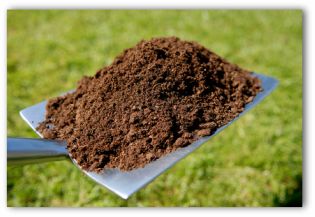
This complete guide covers everything you need to know about raised garden bed soil - the most widely recommended mix recipes, how to calculate exactly how much you need, money-saving layering strategies for deep beds, and how to maintain fertility in your raised garden bed soil year after year without starting from scratch every season.
According to Iowa State University Extension, an excellent raised garden bed soil mix can be made from equal parts topsoil, organic matter such as well-rotted compost or manure, and coarse sand - a simple, time-tested formula that remains one of the most reliable starting points for any new bed
Source: Iowa State University Extension - Soil Mix for a Raised Bed
Why Raised Garden Bed Soil Is
Different from Garden Soil

Understanding why raised garden bed soil needs a different composition than ordinary ground soil is the foundation for making good decisions about what to put in your beds. Raised beds create an entirely different growing environment, and the soil filling them has to do more work than soil left undisturbed in the ground.
In a raised bed, water drains downward and out through the bottom and sides far more readily than it does in the ground, where surrounding soil slows percolation. This is generally an advantage - good drainage is one of the main reasons gardeners build raised beds in the first place - but it also means raised garden bed soil dries out faster and needs a structure that holds adequate moisture and nutrients between waterings rather than washing them straight through.
A heavy, unimproved garden soil simply scooped into a raised bed compacts over time and drains poorly despite the bed's elevation, defeating much of the purpose of building it in the first place.
Raised garden bed soil also needs to support a much higher planting density than most in-ground gardens, particularly in beds managed using square foot gardening or other intensive methods.
Closely spaced plants draw more heavily on the nutrients and moisture in a given volume of soil than the same number of plants spread across open ground, so a raised garden bed soil mix needs a richer organic matter content to keep up with demand throughout the season.
This is why university extension services consistently recommend a deliberately blended mix rather than straight topsoil or straight compost for filling a new bed.
- Raised Garden Bed Soil — what soil mix to use in raised beds and how to build fertility over time in a contained growing space
The Best Raised Garden Bed Soil Recipes

There is no single correct raised garden bed soil recipe - several well-tested formulas work very well, and the right choice for you often comes down to what materials are easily available locally and how much you want to spend. Here are the most widely recommended mixes, each with a track record of producing strong, healthy vegetable growth.
The classic equal-thirds mix is one of the simplest and most forgiving raised garden bed soil recipes available, and it is the formula most often recommended by university extension services. Combine equal parts topsoil, well-rotted compost or aged manure, and coarse sand by volume. The topsoil provides mineral structure and body, the compost supplies nutrients and beneficial microbial life, and the coarse sand improves drainage and prevents the mix from compacting into a dense, airless block over time.
A slightly richer variation uses forty percent topsoil, forty percent compost, and twenty percent coarse sand. This formula leans a little more heavily on organic matter than the equal-thirds version, producing a darker, more nutrient-dense raised garden bed soil that many gardeners find especially well-suited to heavy feeders like tomatoes, squash, and brassicas (such as cauliflower, cabbage, kale, garden cress, bok choy, radish, broccoli, Brussels sprouts).
The Mel's Mix recipe, developed for the square foot gardening method, takes a completely different approach using no native soil at all: equal parts peat moss (or coconut coir), coarse vermiculite, and a blend of multiple types of compost. This mix is exceptionally light, fluffy, and weed-free, draining well while still holding moisture - ideal for shallow raised beds and intensive, closely spaced planting, though it costs more than soil-based recipes because of the price of vermiculite and peat moss or coir. See square foot gardening for more information.
For gardeners filling beds with materials sourced in bulk rather than bags, a budget-friendly raised garden bed soil approach combines roughly seventy percent good quality topsoil with thirty percent screened compost. This ratio costs considerably less than buying bagged mixes and works well for filling large beds, provided the compost is fully finished and the topsoil has not been degraded by chemical treatment.
Raised garden bed soil recipes compared
| Recipe | Ingredients | Relative Cost | Best For |
|---|---|---|---|
| Classic equal-thirds | 1/3 topsoil, 1/3 compost, 1/3 coarse sand | Low-Medium | General all-purpose beds; most extension-recommended starting point |
| Rich 40/40/20 mix | 40% topsoil, 40% compost, 20% coarse sand | Medium | Heavy feeders - tomatoes, squash, brassicas |
| Mel's Mix (Square Foot Gardening) | Equal parts peat moss/coir, vermiculite, blended compost | High | Shallow beds; intensive square foot planting; weed-free start |
| Budget bulk mix | 70% topsoil, 30% screened compost | Very Low | Filling large beds affordably from bulk landscape suppliers |
| Compost/soilless 1:1 | 50% compost, 50% soilless growing mix | Medium-High | Beds on hard surfaces (patios, driveways) with no soil contact below |
Getting the right soil mix into a raised bed is one of the most important decisions you make for a raised bed vegetable garden — and one of the easiest to get right if you understand what good vegetable garden soil needs.
This page is part of our Soil, Fertilizer and Composting hub, where you will find complete guides to composting, fertilizing, mulching, manure, and building the rich vegetable garden soil that every productive garden depends on.
The Four Essential Ingredients
in Raised Garden Bed Soil

Rather than memorizing a single fixed recipe, it helps to understand the four roles that good raised garden bed soil needs to fill, since this lets you adapt and substitute ingredients based on what is locally available without losing the qualities that make a mix successful.
Structure comes from mineral material like topsoil or screened native soil, giving the mix body and something for roots to anchor into. Without adequate structure, a raised garden bed soil mix that is too light can leave taller plants like tomatoes and pole beans poorly anchored and prone to toppling in wind.
Nutrients and microbial life come primarily from compost, aged manure, or worm castings. This is the ingredient that feeds plants throughout the season and supports the beneficial soil organisms that make nutrients available to roots. A raised garden bed soil mix that skimps on this component will need far more supplemental fertilizing through the season to keep plants healthy.
Porosity and drainage come from coarse sand, perlite, or vermiculite, which create air pockets that let excess water drain freely while preventing the mix from compacting into a dense, suffocating block over time. Without adequate porosity, even a nutrient-rich raised garden bed soil mix can become waterlogged and oxygen-starved after heavy rain.
Moisture retention comes from peat moss, coconut coir, or a generous compost content, all of which hold water in their structure and release it gradually to plant roots between waterings. This balances out the free drainage provided by sand and perlite so the mix does not dry out too quickly in hot weather.
How Much Soil Do You Need? Calculating Volume
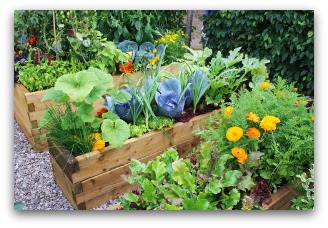
Before ordering or buying any materials, it pays to calculate exactly how much raised garden bed soil your beds will require - bulk soil and compost are typically sold by the cubic yard, and getting the math right avoids both expensive over-ordering and frustrating shortfalls partway through filling a bed.
The calculation is straightforward: multiply the length, width, and depth of your bed, all measured in feet, to get the volume in cubic feet. For example, a typical 4 foot by 8 foot bed filled to a depth of 1.5 feet requires 4 x 8 x 1.5, which equals 48 cubic feet of raised garden bed soil.
Because bulk suppliers sell by the cubic yard rather than the cubic foot, divide the total cubic feet by 27 to convert - in this example, 48 divided by 27 comes to approximately 1.8 cubic yards.
If you are filling several beds, calculate the volume of each one separately and add the totals together before converting to cubic yards, since suppliers can usually deliver a single combined order more efficiently and at a better price than several smaller ones. Always round up slightly when ordering raised garden bed soil, since beds settle over the first season as the mix compacts and organic matter breaks down, and a little extra on hand makes topping off beds in subsequent years much simpler.
Raised garden bed soil volume calculator examples
| Bed Size | Depth | Cubic Feet | Cubic Yards Needed |
|---|---|---|---|
| 4 ft x 4 ft | 1 ft | 16 cu ft | ~0.6 cu yd |
| 4 ft x 8 ft | 1 ft | 32 cu ft | ~1.2 cu yd |
| 4 ft x 8 ft | 1.5 ft | 48 cu ft | ~1.8 cu yd |
| 4 ft x 8 ft | 2 ft | 64 cu ft | ~2.4 cu yd |
| 3 ft x 6 ft | 1 ft | 18 cu ft | ~0.7 cu yd |
| 8 ft x 8 ft | 1.5 ft | 96 cu ft | ~3.6 cu yd |
Layering: How to Fill Deep Beds
Without Buying So Much Soil

Filling a deep raised bed entirely with purchased raised garden bed soil can become surprisingly expensive once a bed gets beyond about eighteen inches deep, since most vegetable roots only actually use the top eight to twelve inches anyway. Layering is the practical, money-saving solution that experienced gardeners rely on for tall beds, and it has the added benefit of recycling yard waste that would otherwise be hauled away.
The base layer, at the very bottom of a deep bed, can be filled with bulky, low-value material that does not need to support root growth directly - plain brown cardboard to suppress any weeds or grass underneath, followed by branches, twigs, and other coarse woody yard waste. This approach, sometimes called hugelkultur, creates air pockets as the material slowly decomposes over years, gradually improving the soil from below while saving you from having to buy soil to fill that entire depth.
A middle layer of less critical fill - lower-quality topsoil, partially composted leaves, or even soil dug from garden paths - adds bulk and height without requiring premium raised garden bed soil at that depth, since plant roots rarely reach that far down in their first few seasons.
The top layer, typically the final eight to twelve inches, is where your actual raised garden bed soil mix belongs - the carefully blended combination of topsoil, compost, and amendments that roots will be growing through directly. This is the layer worth investing in, since it is doing all of the immediate work of feeding and supporting your plants, while the layers below it continue breaking down and contributing nutrients gradually over the years.
Should You Use Bagged Soil or Bulk Soil?

One of the most practical decisions in sourcing raised garden bed soil is whether to buy bagged products from a garden center or order in bulk from a landscape supply yard, and the right answer depends heavily on the size of your project.
Bagged soil and compost are convenient, consistent, and easy to transport in a car, making them a reasonable choice for filling one or two small raised beds or topping up an established bed each spring. However, the cost per cubic foot of bagged raised garden bed soil is considerably higher than buying the same materials in bulk, and the expense adds up quickly once you are filling anything larger than a modest bed or two.
Bulk soil, compost, and sand from a landscape supply yard cost dramatically less per cubic foot than bagged equivalents and are the clear choice for filling multiple beds or anything larger than roughly two cubic yards of total volume.
The trade-off is that bulk delivery requires a truck or trailer (or a supplier who delivers), some space to stage the material before moving it into beds, and a bit more legwork to confirm the quality and composition of what you are buying, since bulk products vary more between suppliers than packaged ones do.
Visiting a bulk supplier in person and asking directly about the composition and ratios of their raised garden bed soil blends, rather than relying on a label alone, is well worth the extra effort for a project of any real size.
Testing and Adjusting Soil pH and Nutrients

Even a well-mixed raised garden bed soil benefits from testing once it is in place, since the exact pH and nutrient levels of bulk materials can vary noticeably between suppliers and seasons, and most vegetables perform best within a fairly narrow range.
Most vegetables thrive in a soil pH between 6.2 and 6.8 - slightly acidic to neutral. A simple home test kit gives a rough reading, but sending a sample to a state extension soil testing lab provides far more accurate results, including specific recommendations for any amendments your particular raised garden bed soil needs. According to the University of Maryland Extension, the organic matter content in raised bed soil should fall between 25 and 50 percent by volume for the best balance of fertility, structure, and water-holding capacity.
If a soil test shows pH that is too low (too acidic), a light application of garden lime raises it gradually.
If pH is too high (too alkaline), elemental sulfur or additional acidic organic matter like pine bark fines can bring it down over time. Avoid making large pH adjustments all at once - work in amendments gradually over a season or two and retest, since dramatic swings in either direction can stress plant roots and soil organisms alike.
Maintaining Raised Garden Bed Soil Year After Year

A raised bed is a long-term investment, and good raised garden bed soil does not stay good indefinitely without some annual attention - organic matter breaks down, nutrients are drawn out by each season's crops, and the bed gradually settles and loses volume over time.
The simplest and most important annual maintenance task is top-dressing with fresh compost at the start of each growing season, typically two to three inches worked lightly into the top few inches of existing soil. This single habit replenishes organic matter and nutrients more effectively than almost any other single intervention, and it is the practice most consistently recommended for keeping raised garden bed soil productive year after year without starting over from scratch.
Cover cropping or simply mulching beds heavily between growing seasons protects bare raised garden bed soil from erosion and nutrient loss over winter, while adding organic matter as the cover crop or mulch breaks down. Avoid excessive tilling or turning of established raised garden bed soil - a gentle fork-and-loosen approach that mixes in fresh compost without fully inverting the soil preserves the beneficial soil structure and microbial life that has built up over previous seasons, rather than disrupting it the way aggressive digging does.
Crop rotation within and between raised beds also helps maintain soil health over the long term, since different plant families draw on different nutrients and are susceptible to different soil-borne pests and diseases. See our complete organic vegetable gardening guide for additional detail on building and maintaining living, fertile soil using compost and natural amendments rather than synthetic fertilizers.
Common Mistakes with Raised Garden Bed Soil
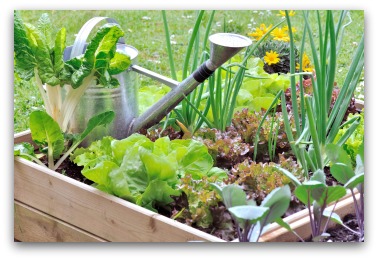
A handful of predictable mistakes account for most of the disappointment gardeners experience with a new raised bed, and avoiding them from the start saves a great deal of wasted money and frustration.
Using straight topsoil or straight native soil, without blending in compost and a porosity ingredient, is one of the most common errors. Even good native soil tends to compact significantly once confined inside a raised bed frame, defeating the loose, well-draining structure that makes raised garden bed soil so much more productive than ground planting in difficult native conditions.
Using straight bagged potting soil for an entire large bed is another frequent and expensive mistake. Potting soil is formulated for the small, enclosed volume of a container, and using it exclusively to fill a large raised bed is both very costly and often results in a mix that is too lightweight and nutrient-thin to sustain a full season of vegetable growth without constant supplemental feeding.
Skipping a soil test and simply guessing at pH and fertility is a missed opportunity that often leads to mysterious, hard-to-diagnose problems later in the season. A basic test before planting, repeated every year or two afterward, removes most of the guesswork from troubleshooting poor plant performance.
Forgetting to account for settling is a smaller but very common oversight. Freshly filled raised garden bed soil typically settles by several inches over its first season as organic matter compacts and breaks down, so filling a bed completely to the brim on day one often leaves it noticeably lower than expected by midsummer. Planning for a top-up of fresh compost partway through the first season, and again each spring afterward, keeps the bed at its ideal working depth.
Frequently Asked Questions
About Raised Garden Bed Soil

1. Can I just use soil from my yard to fill a raised bed?
Yard soil can be used as part of a raised garden bed soil mix, but it should not be used alone, especially if it is heavy clay or compacted. Blending native yard soil with compost and a porosity ingredient like coarse sand or perlite improves its structure and drainage dramatically while still taking advantage of soil you already have on hand at no cost.
2. How deep does raised garden bed soil need to be?
Most vegetables perform well with eight to twelve inches of good quality raised garden bed soil, since the majority of root activity for common crops happens in this top layer. Deep-rooted crops like tomatoes, carrots, and potatoes benefit from twelve to eighteen inches where space and budget allow, though even these crops produce respectably in shallower beds with good fertility.
3. How often should I replace raised garden bed soil completely?
A full replacement is rarely necessary. With annual top-dressing of fresh compost, occasional pH testing and adjustment, and reasonable crop rotation, the same raised garden bed soil can remain productive indefinitely, gradually improving over years rather than needing to be dug out and started over.
4. Is bagged "raised bed soil" sold at garden centers worth buying?
Pre-blended bagged raised bed soil products can be a convenient, reasonably reliable option for filling one or two smaller beds, particularly for gardeners who want to skip the mixing process entirely. For larger projects, the cost per cubic foot is usually significantly higher than mixing your own raised garden bed soil from bulk topsoil, compost, and amendments, so the convenience comes at a real price premium worth weighing against the size of your project.
5. What is the cheapest way to fill a raised bed?
The most economical approach combines bulk-purchased topsoil and compost rather than bagged products, supplemented by a layering strategy for deep beds that uses cardboard, branches, and lower-value fill material at the bottom where roots will not reach, reserving the more expensive, carefully blended raised garden bed soil for just the top eight to twelve inches where it does the most good.
More Vegetable Gardening Guides

Return to our Raised Bed Vegetable Garden hub for complete guides to building, filling, and planting raised beds.
- Raised Bed Vegetable Garden — complete hub for building, filling, and planting raised vegetable garden beds
Recent Articles


-
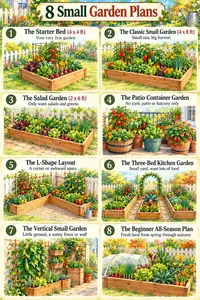
Small Vegetable Garden Plans: 8 Layouts That Maximise Space
Oct 08, 26 10:41 AM
 Small vegetable garden plans are some of the most searched and most valuable resources in home food growing.
 -
USDA Zone Finder - Find Your Vegetable Planting Dates | Vegetable-Gardening-Online.com
Oct 07, 26 03:53 PM
 Find your USDA hardiness zone, last spring frost date, and first fall frost date by state and region. Free interactive zone finder from Vegetable-Gardening-Online.com.
 -
Interactive Vegetable Garden Planner | Vegetable Gardening Online
Oct 07, 26 02:29 PM
Design a vegetable garden with correctly scaled plant spacing, companion flowers, drag-and-drop placement, and a printable plan. -
Free Printable Garden Stationery: Gardening Letter Paper & Note Cards
Oct 07, 26 12:48 PM
Free printable garden stationery: watercolor letter paper, lined and unlined, plus folded note cards with garden, fall, and Christmas scenes. Print at home. -
Free Preschool Vegetable Garden Cut and Paste Activities
Oct 07, 26 12:43 PM
 Free preschool vegetable garden cut and paste activities for ages 3-4. Build your own backyard, container, or seed packet garden scene, and sticker sheets.
 -
Planning a Vegetable Garden: Layouts, Raised Beds, Containers & More
Oct 06, 26 07:44 PM
 Planning a vegetable garden? Start here: layouts, raised beds, containers, square foot gardening, free planning tools, and tips to avoid beginner mistakes.
 -
How to Start a Vegetable Garden: 10 Easy Steps for Beginners
Oct 06, 26 04:38 PM
 How to start a vegetable garden in 10 easy steps: pick a sunny spot, choose raised beds or containers, prepare the soil, and grow easy vegetables.