- Home
- Garden Care
Vegetable Garden Care — Everything You Need to Maintain a Thriving Garden

Good vegetable garden care is what separates a garden that struggles through the season from one that produces abundantly right through to the last harvest.
Planting is only the beginning — the weeks and months of watering, weeding, feeding, pest monitoring, and general maintenance that follow determine how much of your garden's potential actually makes it to the table.
Most vegetable garden care tasks are not difficult or time-consuming once you understand what needs to be done and when.
The challenge is knowing which tasks matter most and how to do them efficiently.

This page is your hub for all our vegetable garden care and maintenance guides.
You will find detailed resources on:
- Watering and irrigation
- Weed control
- Pest and disease management
- Garden fencing
- Trellises and plant supports
- Diagnosing common plant problems
Whether you are tending your first vegetable garden or refining the care routine of an established one, the guides below cover every aspect of keeping a productive garden healthy from spring planting through fall cleanup.
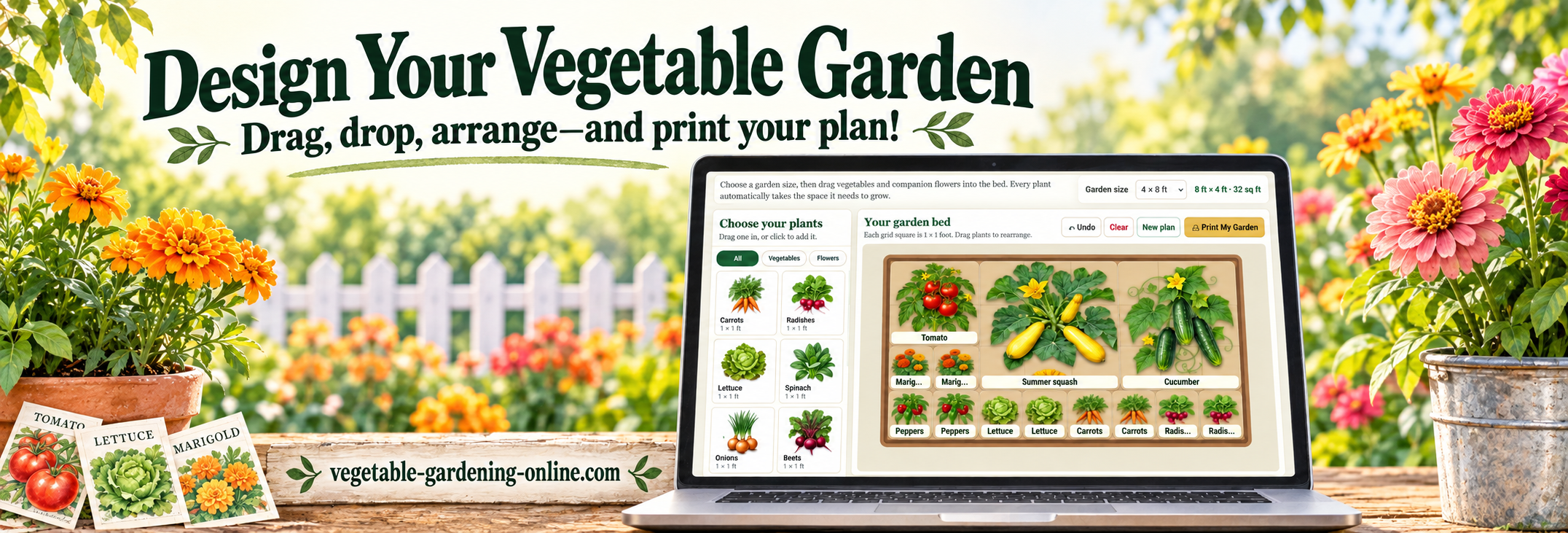
Use our free Interactive Vegetable Garden Planner to layout your next garden ideas!
Watering and Irrigation —
The Foundation of Vegetable Garden Care

Consistent, correctly applied water is the single most important day-to-day element of vegetable garden care.
Most vegetables need approximately one inch of water per week — from rainfall, irrigation, or a combination of both.
But how that water is delivered matters as much as how much.
Watering at the base of plants rather than overhead keeps foliage dry and dramatically reduces the incidence of fungal diseases like powdery mildew, early blight, and downy mildew that thrive on wet leaves.
Morning watering — if overhead watering is unavoidable — gives foliage time to dry before evening, further reducing disease risk.
Deep, infrequent watering is better for vegetable garden care than shallow, frequent watering.
Shallow watering encourages roots to stay near the surface, where they are more vulnerable to heat and drought stress.
Deep watering draws roots down into the soil, creating more drought-tolerant, robust plants that handle dry spells without wilting and stress.
As a general guide, water thoroughly and then allow the top inch of soil to dry before watering again.
An automated drip irrigation or soaker hose system is one of the best investments you can make in vegetable garden care — it delivers water directly to the root zone, reduces waste, and frees you from daily hand watering during peak season.
- Vegetable Garden Irrigation — how much water your garden needs and how to apply it correctly for healthy, productive plants
- Watering and Irrigation Systems — drip irrigation, soaker hoses, and automatic watering systems for efficient vegetable garden care
Weed Control —
Essential Vegetable Garden Maintenance

Weeds are among the most persistent challenges of vegetable garden care — and the most important to address early.
A weed left to mature and set seed creates hundreds or thousands of future weed problems. The most effective approach to weed control in vegetable garden care is to remove weeds when they are small, before they establish deep roots or produce seeds, and to prevent new weeds from germinating through consistent mulching.
Cultivating shallowly — just deep enough to cut weed roots below the surface without bringing buried weed seeds up to light — is one of the most efficient weed management techniques available.
A sharp hoe used regularly during the first six weeks of the season, before young vegetable plants have canopied and shaded the soil, does more for vegetable garden care than any amount of reactive weeding later in the season.
A thick layer of straw, shredded leaves, or compost mulch applied after cultivation suppresses germinating weed seeds and dramatically reduces ongoing weeding labor.
Some gardeners who mulch consistently from planting onward find that weeding becomes a minor task rather than a major one — which is exactly what effective vegetable garden care should feel like.
- Garden Weed Control — effective weed control methods for the vegetable garden including mulching, cultivation, and organic options
Pest and Disease Management
 Learn how to spot the most common vegetable garden pests; click the image to download the Common Garden Pests Chart.
Pest and disease management is one of the areas of vegetable garden care where early action makes the most difference.
A pest or disease caught at the first sign of damage is relatively easy to manage.
The same problem left to develop for two or three weeks can devastate an entire crop. Regular scouting — walking the garden and checking plants carefully, including the undersides of leaves, at least twice a week during the growing season — is the most important habit of good vegetable garden care.
When you identify a problem, start with the least disruptive response. Hand-pick insects and their egg masses, remove and dispose of diseased leaves and plant material.
Apply insecticidal soap or neem oil for soft-bodied insect pests as effective first responses that do not harm beneficial insects or soil organisms.
Understanding what is causing a problem — whether the yellowing leaves, the holes in the foliage, or the stunted growth are caused by a pest, a disease, a nutrient deficiency, or a watering issue — is the first step in choosing the right vegetable garden care response.
Our pest and disease guide and our tomato leaf problem guide help you identify and address the most common vegetable garden problems.
- Vegetable Garden Pests and Diseases — identifying and managing the most common pest and disease problems in the home vegetable garden
- Why Are My Tomato Leaves Turning Yellow? — a diagnostic guide to the most common causes of yellowing tomato leaves and how to treat each one
Garden Fencing —
Protecting Your Vegetable Garden Care Investment

A garden fence is one of the most practical investments in vegetable garden care you can make — it protects everything else you are doing from deer, rabbits, groundhogs, and other animals that can undo an entire season's work in a single night.
The type of fence you need depends on which animals are your primary problem. Deer require fencing at least eight feet tall or angled outward to discourage jumping.
Rabbits and groundhogs are deterred by wire fencing buried six to twelve inches below the soil surface to prevent burrowing.
A fence that addresses your specific animal pressure pays for itself in the first season. Garden fencing does not have to be expensive to be effective.
Chicken wire, welded wire mesh, wooden posts, and inexpensive netting can all create an effective barrier at minimal cost.
Our garden fencing guides cover the full range of options — from simple and inexpensive solutions to more permanent wooden fences — with plans and materials guidance to help you choose the right vegetable garden care protection for your situation.
- Vegetable Garden Fence — choosing and installing the right fence to protect your vegetable garden from animal pests
- Vegetable Garden Fencing — fencing options for the home vegetable garden including wire, netting, and permanent wood fences
- Cheap Garden Fences — low-cost fencing solutions that effectively protect the vegetable garden without a large investment
- Garden Fence Plans — downloadable plans for building a practical and attractive vegetable garden fence
- Wooden Garden Fences — attractive and durable wooden fencing options for the permanent vegetable garden
Trellises and Plant Support

Supporting climbing and vining vegetables is an often-overlooked element of vegetable garden care that pays significant dividends in productivity and ease of harvest.
Cucumbers, pole beans, peas, tomatoes, and winter squash all perform better when trained upward on a trellis, stake, or cage rather than sprawling on the ground.
Vertical growing keeps fruit off the soil where it is vulnerable to rot and slug damage, improves air circulation around the plant which reduces disease, and makes harvesting dramatically easier.
Installing plant supports at or before planting is better vegetable garden care practice than waiting until plants have grown — by the time a cucumber vine needs a trellis, its roots are established and disturbing the surrounding soil to install a post is more difficult and risks root damage.
Think through your support systems when you lay out the garden, and put supports in place before they are needed.
- Cucumber Trellis — how to build and use a trellis for cucumbers and other climbing vegetables
More Vegetable Garden Resources
 Ripe cherry tomatoes; one of the many joys of summer vegetable gardening!
Good vegetable garden care works best when it is built on a strong foundation — the right soil, the right planning, and the right varieties for your climate.
Our Soil, Fertilizer and Composting hub covers building the fertile soil that makes vegetable garden care easier all season long.
Our Planning hub has tools and layouts to help you design an efficient, manageable garden.
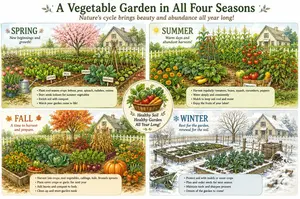
And our Seasonal Vegetable Garden hub covers the care tasks specific to each time of year, from spring soil preparation through fall cleanup.
- Seasonal Vegetable Garden — care tasks and planting guides for every season from spring through winter
- Planning a Vegetable Garden — complete hub for garden planning layouts, spacing, and design
- Free Newsletter — seasonal vegetable garden care reminders and tips delivered to your inbox
Iowa State University Extension —
Growing and Caring for Your Vegetable Garden
 Happy square-foot garden.
For a thorough, research-based overview of vegetable garden care covering soil preparation, mulching, watering, fertilizing, weed management, insect pests, diseases, and animal pest control, Iowa State University Extension has one of the most comprehensive vegetable garden care guides available at yardandgarden.extension.iastate.edu — an excellent reference to bookmark alongside the guides on this site.
- Iowa State University Extension — Growing and Caring for Your Vegetable Garden — comprehensive research-based guide to all aspects of vegetable garden care from soil to harvest

Recent Articles


-
How to Grow Cabbage
Sep 15, 26 12:33 PM
 How to Grow Cabbage: The Complete Guide from Seed to Harvest. This complete guide covers everything you need to know about how to grow cabbage.
 -
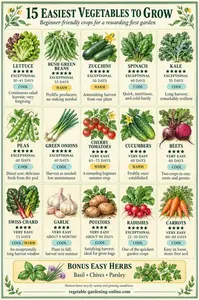
Easiest Vegetables to Grow: 15 Foolproof Crops for Beginners
Sep 15, 26 09:24 AM
 Easiest vegetables to grow for beginners - with advice on what makes each one easy, how to get started, and which vegetables are harder than they look.
 -
How to Grow Green Beans
Sep 14, 26 07:53 PM
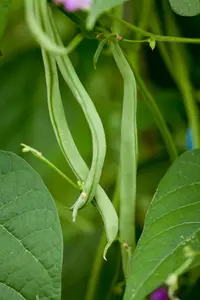
 How to Grow Green Beans: The Complete Guide to Bush and Pole Beans. Green beans are one of the most forgiving crops a beginner can choose.
 -
Seasonal Vegetable Garden
Sep 14, 26 05:38 PM
 Seasonal Vegetable Garden — Growing Food Through Every Season
 -
Overwintering Vegetables: Fall-Planted Crops for Early Spring Harvest
Sep 14, 26 05:35 PM
 Learn about overwintering vegetables like garlic, fava beans, and onions, planted in fall to sit through winter and reward you with an early spring harvest.
 -
Free Vegetable Garden Journal— Printable Downloads for Home Gardeners
Sep 14, 26 01:51 PM
 Download our free Vegetable Garden Journal — choose a full 16-page version or simpler 7-page journal. Track planting, harvest, & garden notes season by season.
 -
Free Vegetable Garden Cut and Paste Activities for Kids Ages 5-7
Sep 12, 26 09:13 PM
 Free printable vegetable garden cut and paste activities for kids ages 5-7. Build your own garden, match seeds to plants, and learn what grows where.