- Home
- Vegetable Garden Soil
- Mulching a Vegetable Garden
Mulching a Vegetable Garden
Helps with Weeds and Water

Tips for mulching a vegetable garden including how much, when, and why to mulch your garden.
Use compost as mulch layered on the topsoil to provide a slow-release organic fertilizer when growing vegetables.
Use mulch in the garden to retain water in the soil by preventing evaporation, and to help control weeds.
Design Your Own Vegetable Garden Layout Using our Free "Vegetable Garden Planner" Software!
One of the obstacles gardeners' face which may seem like an uphill battle is persistent weeds.
Mulching a vegetable garden is an ideal way to win the fight.
Pulling pesky weeds is no ones idea of a fun task!
However, it is a necessary gardening chore to remove the invaders who are competing with your plants for essential space, sunlight, water, and nutrients.
Download Free Garden Planning Worksheets, Garden Diary, Zone Chart, Or Planting Guide

Mulching is one of the simplest and most effective ways to protect and continuously improve your vegetable garden soil throughout the growing season.
This page is part of our Soil, Fertilizer and Composting hub, where you will find complete guides to composting, fertilizing, using manure, making compost tea, and all the key practices for building productive vegetable garden soil year after year.
Soil, Fertilizer and Composting — complete hub for building rich vegetable garden soil through composting, fertilizing, mulching, and manure
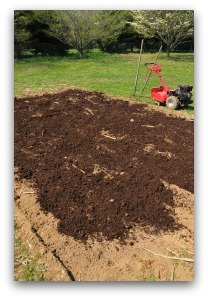
Using Mulch to Help Control Weeds
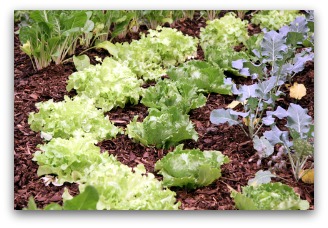
- Mulching a vegetable garden helps you to control a weed population without resorting to herbicides.
- If an herbicide is used excessively or too often, the chemicals may also kill your desired plants indiscriminately along with the undesirable weeds.
- Furthermore, there is evidence that herbicides impede root development of plants.
- Providing the garden bed with organic mulch is the best non-chemical solution to prevent weed problems.
Benefits of Mulching a
Vegetable Garden with Compost

• Mulch layered five or six inches deep not only controls weeds but it also makes the existing weeds easier to pull.
• Mulching also reduces water evaporation, which increases the garden soil moisture.
• The protective covering of mulch can make an attractive addition to the landscape as well.
• Generally, organic mulch made from compost improves soil structure, fertility, and insulates plants from extreme weather conditions.
• Mulching with organic compost can provide a slow-release vegetable garden fertilizer to your garden plants, while offering the added benefits of retaining moisture and controlling weeds.
Applying Vegetable Garden Mulch

Mulching is an important part of vegetable garden soil preparation.
Mulching a vegetable garden helps prevent erosion, helps retain moisture, and at times, conditions and enriches the garden bed soil.
Commonly used organic mulch materials include: compost, bark, cocoa bean hulls, grass clippings, peat moss, pine needles, and sawdust.
In mild winter areas, apply mulches after the ground has warmed up in the spring.
Dig in the mulch in late autumn. In cold winter regions, the garden area should be mulched with thicker layers and applied before the first frost.
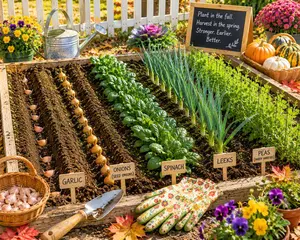
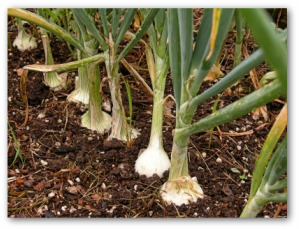 Mulching Onions in Vegetable Garden
Spread a new layer of mulch in the vegetable garden just before the peak of summer heat.
Mulch must be at least three inches deep to hinder weed growth.
Cover the soil in between rows with black mulching plastic.
Mulches attract earthworms and other organisms which provide nutrients to the soil and loosen the soil's structure.
By contrast, un-mulched earth is considered biologically dead.
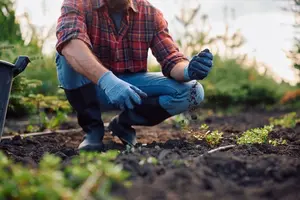
Weed and water the vegetable garden before mulching.
Fertilizer should be applied beforehand as well because organic materials decompose more quickly under a layer of mulch.
Vegetable Gardening Tips

Turn Autumn Leaves into Garden Mulch Leaf Mold
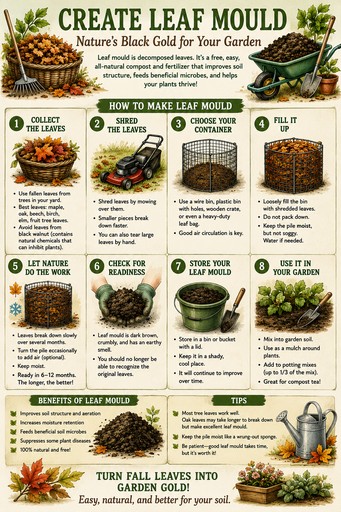
Trying to fill piles of autumn leaves into trash bags can be a frustrating chore unless you have helping hands!
- If all your fall helpers have scattered, cut the bottom out of a cardboard box and insert it in the bag to help keep it open.
- Gather the leaves as soon as possible before they get wet and damage your yard.
- Tie up the bags and make a bowl-shaped area at the top to collect rainwater.
- Make a few small holes around the bottom and sides of the plastic so that water can seep in and beneficial insects can creep inside.
- After leaving the bagged leaves to sit for an entire
year, you will have splendidly rich mulch called leaf mold for mulching
your vegetable garden.
Deep-rooted weeds such as Canada thistle and European glorybind are especially difficult to combat.
Their roots can burrow as deep as ten feet! A winning strategy calls for the roots to be completely dug up before they are given the chance to grow.
Mulching a vegetable garden should become a natural part of your gardening routine. (This is one habit your bountiful harvest will thank you not to break!)
Mulch provides the plants with a fertile, well-conditioned garden soil that is much more productive.
Back To Top
The Oregon State University Extension Service guide to using compost in gardens covers mulching with compost in depth — including correct layer depths, how organic mulch feeds the vegetable garden soil as it decomposes, and how mulch reduces the need for supplemental watering and fertilizing.
A practical and authoritative reference for gardeners in the Pacific Northwest and comparable climates.
Oregon State University Extension — How to Use Compost in Gardens — covers mulching with compost, correct layer depths, and how organic mulch improves vegetable garden soil over time

Recent Articles


-
How to Grow Cabbage
Sep 15, 26 12:33 PM
 How to Grow Cabbage: The Complete Guide from Seed to Harvest. This complete guide covers everything you need to know about how to grow cabbage.
 -
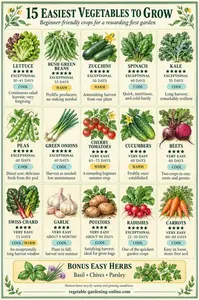
Easiest Vegetables to Grow: 15 Foolproof Crops for Beginners
Sep 15, 26 09:24 AM
 Easiest vegetables to grow for beginners - with advice on what makes each one easy, how to get started, and which vegetables are harder than they look.
 -
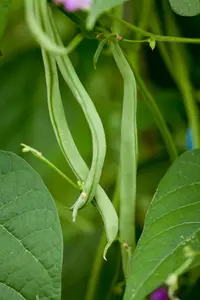
How to Grow Green Beans
Sep 14, 26 07:53 PM
 How to Grow Green Beans: The Complete Guide to Bush and Pole Beans. Green beans are one of the most forgiving crops a beginner can choose.
 -
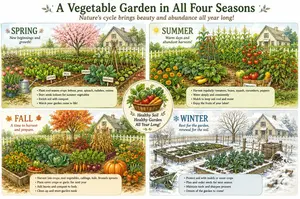
Seasonal Vegetable Garden
Sep 14, 26 05:38 PM
 Seasonal Vegetable Garden — Growing Food Through Every Season
 -
Overwintering Vegetables: Fall-Planted Crops for Early Spring Harvest
Sep 14, 26 05:35 PM
 Learn about overwintering vegetables like garlic, fava beans, and onions, planted in fall to sit through winter and reward you with an early spring harvest.
 -
Free Vegetable Garden Journal— Printable Downloads for Home Gardeners
Sep 14, 26 01:51 PM
 Download our free Vegetable Garden Journal — choose a full 16-page version or simpler 7-page journal. Track planting, harvest, & garden notes season by season.
 -
Free Vegetable Garden Cut and Paste Activities for Kids Ages 5-7
Sep 12, 26 09:13 PM
 Free printable vegetable garden cut and paste activities for kids ages 5-7. Build your own garden, match seeds to plants, and learn what grows where.