- Home
- How to Grow Vegetables
- Peppers
How to Grow Peppers: The Complete Guide to Bell, Sweet and Hot Peppers

Learning how to grow peppers opens up one of the most colorful, versatile, and productive chapters in vegetable gardening.
From sweet bell peppers that turn from green to brilliant red, yellow, or orange on the vine, to crisp banana peppers perfect for pickling, to fiery jalapeños and habaneros for heat lovers, the pepper family offers something for every taste and every garden.
Once you understand how to grow peppers well, you will find them among the most rewarding summer crops in the garden - ornamental, abundantly productive, and useful in the kitchen in more ways than almost any other vegetable.
If you can grow tomatoes, you can grow peppers - they share the same basic requirements of warmth, full sun, and consistent moisture.
The key differences are that peppers are slower to start, need even more heat than tomatoes, and should be planted outside slightly later in the season.
Get the timing and warmth right and growing peppers is very straightforward.
According to the University of Minnesota Extension, peppers are one of the most heat-demanding vegetables in the home garden - soil temperature at planting time matters more for peppers than for almost any other crop.
Source: University of Minnesota Extension - Growing Peppers
Growing Peppers from Seed
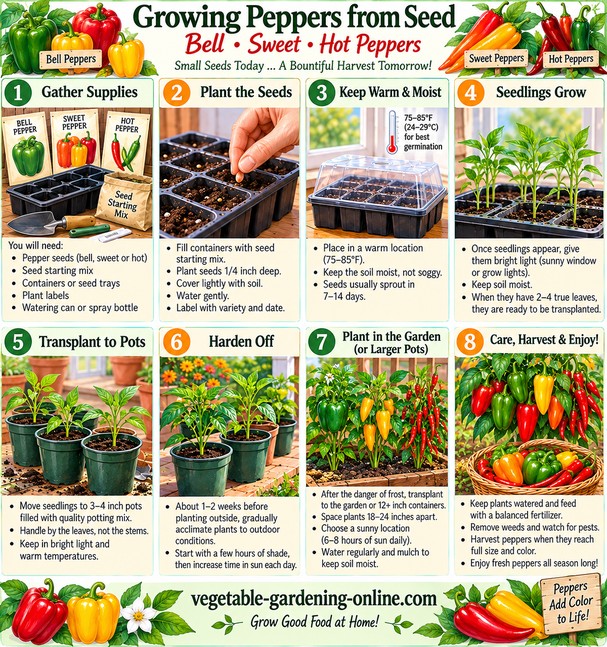 Chart of steps for starting pepper seeds indoors to be transplanted into the garden when the time is right.
Peppers take longer to get going than most garden vegetables. Start seeds indoors eight to ten weeks before your last frost date. Give yourself that extra time. Peppers are in no hurry to sprout.
Warmth matters more than anything else at this stage. Peppers germinate best between 80 and 85 degrees. A seedling heat mat makes a real difference here, especially if your house runs cool. Without one, germination can take two to three weeks, or fail altogether.
Sow seeds about a quarter inch deep in a good seed-starting mix.
Keep the soil consistently moist, but not soaked.
Once seedlings emerge, move them under strong light right away.
A sunny windowsill rarely provides enough light on its own. Weak light produces tall, leggy seedlings that struggle later.
From there, follow the chart above for hardening off and transplanting. The timing and spacing details there will take you the rest of the way to a healthy pepper harvest.
Choosing the Right Pepper Variety to Grow
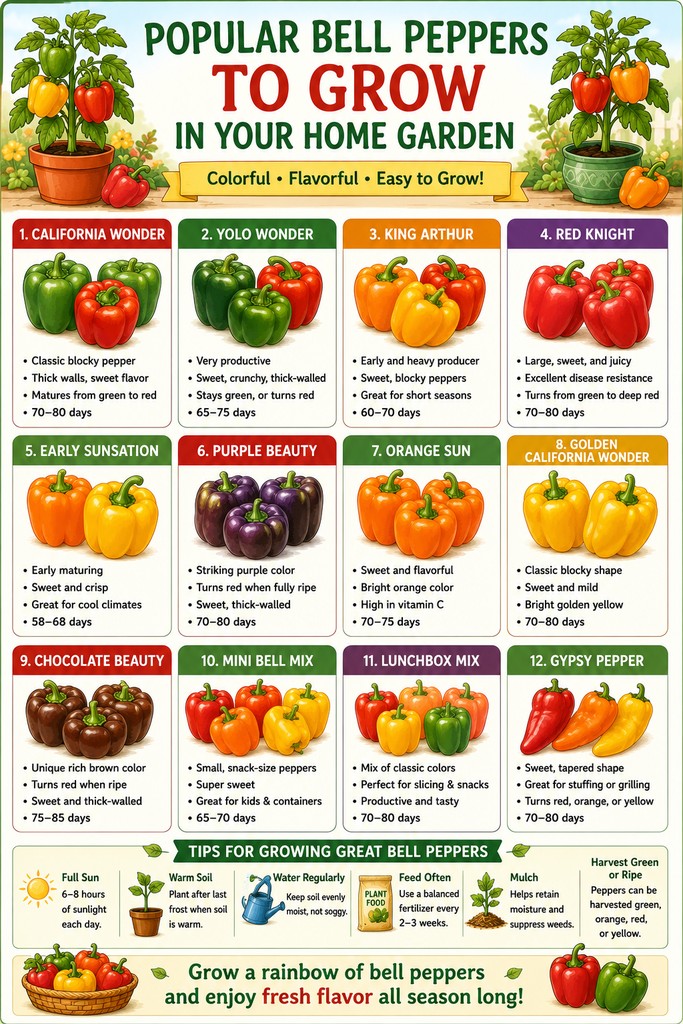 Chart of sweet pepper varieties to grow in a home vegetable garden.
See our complete Growing Vegetables from Seed guide!
One of the most enjoyable parts of learning how to grow peppers is the extraordinary variety available.
There are hundreds of pepper varieties to explore, ranging from large sweet bell peppers to tiny fiery chillies, and choosing the right one for your situation is the first and most important step.
Peppers are divided into sweet and hot types. Sweet peppers include bell peppers, banana peppers, Italian frying peppers, and pimento peppers - all mild, fruity, and versatile in the kitchen.
Hot peppers range from moderately spicy jalapeños and poblanos to very hot cayennes, serranos, and Thai chillies, all the way to the intensely hot habaneros, scotch bonnets, and ghost peppers.
When choosing which peppers to grow, think about how you actually use peppers in your cooking - and do not overlook the enormous range of sweet pepper varieties if heat is not your priority.
Days to maturity is a particularly important consideration when growing peppers.
Bell peppers are ready to eat green in 70 to 75 days but need an additional 3 to 4 weeks to ripen to full color - red, yellow, or orange depending on variety.
This extended ripening period means bell peppers need a longer frost-free season than faster crops.
In short-season climates, choosing varieties labelled as early or short-season is essential for a full color harvest.
Hot peppers are often faster to mature and ripen than bell peppers, making them a better choice for northern gardeners.
Popular pepper varieties for home gardeners
| Variety | Type | Heat Level | Days to Green / Ripe | Best For |
|---|---|---|---|---|
| California Wonder | Bell pepper | None | 75 days green / 100+ days red | Classic large bell; excellent flavour; most popular sweet pepper |
| King Arthur | Bell pepper | None | 72 days green / 95 days red | Large blocky fruits; high yield; disease resistant |
| Banana Pepper | Sweet / mild | Mild | 65 days | Pickling; fresh eating; very productive |
| Cubanelle | Sweet frying | None | 65 days | Italian cooking; frying; very prolific |
| Jalapeño (Early) | Hot | Medium (2,500-8,000 SHU) | 65-70 days | Most versatile hot pepper; excellent in most climates |
| Cayenne Long Red | Hot | Hot (30,000-50,000 SHU) | 70 days | Drying; pepper flakes; sauces |
| Poblano | Mildly hot | Mild-Medium (1,000-2,000 SHU) | 65 days | Stuffed peppers; Mexican cooking; excellent roasted |
| Sweet Chocolate | Bell pepper | None | 70 days | Turns chocolate brown when ripe; very sweet; early maturing |
| Patio Red Marconi | Sweet Italian | None | 70 days | Containers; roasting; very ornamental |
| Habanero | Very hot | Very hot (100,000-350,000 SHU) | 75 days | Experienced heat lovers only; needs a long hot summer |
When to Plant Peppers: Timing Is Everything
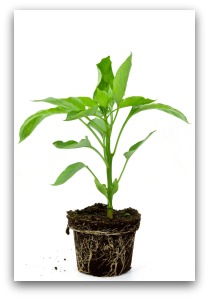
Timing is the single most critical factor in how to grow peppers successfully. Peppers are the most heat-demanding common vegetable - more so than even tomatoes - and planting them too early into cold conditions sets them back significantly.
A pepper transplant sitting in cold soil does not just grow slowly - it can actually suffer chilling injury that affects growth for weeks afterward, long after the soil warms up. Patience at planting time is always rewarded when growing peppers.
The right time to transplant peppers outdoors is when all frost risk has passed and soil temperature has reached at least 65 degrees Fahrenheit - ideally 70 degrees or above.
Most experienced pepper growers wait until two weeks after the last frost date to transplant, when nights are reliably warm.
This is slightly later than tomatoes, which can go out at the last frost date. Check soil temperature at six inch depth with a thermometer before planting.
Cool nights below 55 degrees Fahrenheit cause blossom drop and slow growth even if daytime temperatures are warm.
Because peppers need such a long growing season - ten to twelve weeks from indoor sowing to transplant size - they should be started indoors earlier than any other common vegetable.
Start pepper seeds indoors ten to twelve weeks before your planned outdoor transplant date. For a May 15 transplant date, this means starting seeds indoors in early to mid March.
This earlier start is essential for bell peppers in particular, which need the longest season to ripen to full color.
Pepper growing timeline
| Task | Zones 3-4 | Zones 5-6 | Zones 7-8 | Zones 9-10 |
|---|---|---|---|---|
| Start seeds indoors | Late January | Early February | Late February | March |
| Last frost date (approx) | Late May/June | Early to mid May | Late March/April | Feb/March or none |
| Transplant outdoors | After last frost + 2 weeks | After last frost + 2 weeks | After last frost | March/April |
| First harvest (green) | Late August | July/August | June/July | May/June |
| First fully ripe colour | September (if season allows) | August/September | July/August | June/July |
Transplanting and Spacing Peppers
Use our free Interactive Zone Finder to determine when to transplant!
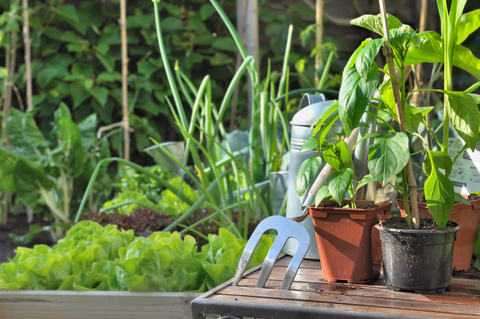
Transplanting correctly is an important step in how to grow peppers that produce well all season. Unlike tomatoes which benefit from deep planting, peppers should be transplanted at the same depth they were growing in their pots - not deeper. Planting peppers too deep can slow their growth significantly.
Before transplanting, harden off pepper seedlings carefully over seven to ten days. Peppers are particularly sensitive to sun scald when moved from indoor conditions to direct outdoor sun without acclimatization. Begin hardening off by placing seedlings in a sheltered spot with indirect light for one to two hours, increasing exposure and duration gradually each day until they can handle a full day of direct sun. Peppers that are properly hardened off establish quickly after transplanting. Those moved straight from indoors to full sun often suffer leaf bleaching and growth stalls that take weeks to recover from.
Space pepper plants eighteen to twenty-four inches apart in rows, or eighteen inches apart in all directions in raised beds. Good spacing is important for how to grow peppers productively because crowded plants compete for light, water, and nutrition, and poor air circulation between plants encourages fungal diseases. In containers, use one pepper plant per five-gallon pot minimum - ten gallons for larger bell pepper varieties. After transplanting, water thoroughly and consider providing temporary shade for the first two to three days if weather is very hot and sunny.
Pepper spacing and container guide
| Pepper Type | In-Ground Spacing | Raised Bed Spacing | Container Size |
|---|---|---|---|
| Bell peppers (large) | 18-24 inches | 18 inches | 10 gallon minimum |
| Sweet peppers (medium) | 18 inches | 12-18 inches | 5-7 gallon |
| Hot peppers (compact) | 12-18 inches | 12 inches | 5 gallon |
| Large hot peppers (cayenne, poblano) | 18 inches | 18 inches | 7-10 gallon |
Soil, Sun, and Site Requirements for Growing Peppers

Peppers have specific site and soil requirements that are important to understand when learning how to grow peppers productively. Getting these fundamentals right makes everything else about growing peppers easier.
Peppers need full sun - eight or more hours of direct sunlight daily is ideal. They are more sun-demanding than any other common vegetable garden crop. Partial shade causes slow growth, poor fruit set, and reduced yield. Choose the most sun-drenched position in your garden for peppers. Growing peppers against a south or west-facing wall or fence provides the additional warmth from reflected heat that peppers absolutely love - plants in these positions consistently outperform those in open positions.
Peppers prefer a well-draining, fertile soil with a pH of 6.0 to 6.8. Waterlogged soil causes root rot almost immediately in pepper plants. If your soil drains poorly, raised beds are strongly recommended for growing peppers - the elevated, free-draining environment suits them perfectly. Work generous amounts of compost into the planting area before transplanting. For raised beds, use a quality raised bed mix with additional compost incorporated.
Avoid planting peppers in the same bed where peppers, tomatoes, eggplant, or potatoes were grown in the previous two years. All of these are in the nightshade family and share common soil pests and diseases that build up with continuous planting. Rotating pepper crops to a new bed location each year is one of the simplest and most effective disease prevention strategies in how to grow peppers over multiple seasons.
Watering and Feeding Peppers
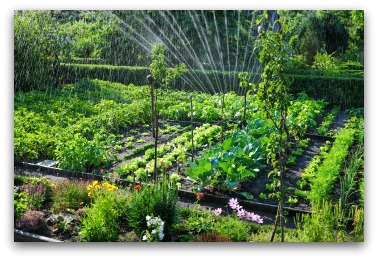
Getting watering and feeding right is at the heart of how to grow peppers that are productive and healthy all season. Peppers have specific needs at different growth stages, and adjusting your approach as the season progresses makes a significant difference to yield and fruit quality.
For watering, peppers need consistent moisture - not too wet, not too dry. The goal is evenly moist soil that never becomes waterlogged and never dries out completely. Waterlogged soil causes root rot; drought stress causes blossom drop and poor fruit set. In hot summer weather, in-ground peppers typically need watering every two to three days. Container peppers need daily watering in summer and sometimes twice daily during heat waves. Always water at the base of the plant, not overhead - wet foliage promotes disease in peppers just as it does in tomatoes and cucumbers.
One nuance of how to grow peppers in late summer: slightly reducing water stress during the final weeks before harvesting hot peppers concentrates the capsaicin compounds that create heat. Allowing the soil to become slightly - but not completely - dry between waterings in the final three to four weeks of a hot pepper crop produces noticeably hotter fruits. This applies only to hot varieties; sweet peppers should receive consistent moisture all season.
For feeding, peppers have two distinct nutritional phases. From transplanting until the first flowers appear, feed with a balanced vegetable fertilizer that supports leafy growth and root establishment. Once the first flowers open, switch to a high-potassium feed - a tomato fertilizer works perfectly. High potassium supports flower development, fruit set, and fruit quality. Continuing to use a high-nitrogen fertilizer once peppers are flowering encourages lush green growth at the expense of fruit production.
Supporting and Pruning Pepper Plants
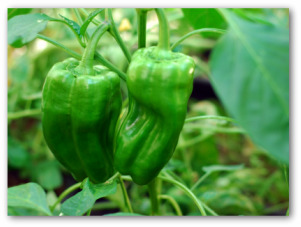
Support and pruning are aspects of how to grow peppers that beginners often overlook but which make a real difference to plant health and productivity.
Most pepper plants benefit from some support, particularly larger bell pepper varieties which develop heavy fruit that can cause branches to snap in wind. A simple stake driven into the ground at planting time and tied loosely with soft garden twine is sufficient for most pepper plants. Insert stakes at planting time before roots develop rather than later, when pushing a stake into the soil risks damaging established roots.
Pruning is a more debated topic in how to grow peppers - experienced growers have different opinions and both approaches can work well. The most widely recommended pruning practice is to remove the first flower bud that appears on young transplants shortly after outdoor planting. This flower typically appears at the first fork in the stem (the growing point) and removing it redirects the plant's energy from early fruit production into developing a stronger, larger root system and more branching structure. The result is a larger, more productive plant overall that produces significantly more fruits later in the season. This practice is particularly beneficial for plants going into the ground in cool conditions where early season growth establishment matters.
In terms of ongoing pruning, removing damaged, diseased, or crossing branches improves air circulation around the plant and reduces disease pressure. Beyond this, most pepper plants do not require significant pruning and produce abundantly with minimal intervention.
Companion Planting for Peppers
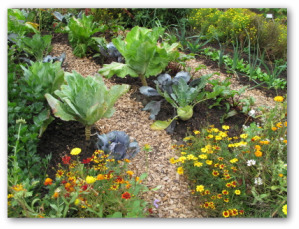
See our Companion Planting Chart for vegetables!
Choosing the right plant neighbors is a useful tool in how to grow peppers with less pest pressure and better results. Peppers share many of the same beneficial and harmful companion relationships as tomatoes, since they are closely related crops in the nightshade family.
The best companions for growing peppers are basil, which repels aphids, thrips, and spider mites through its volatile compounds and is one of the most consistently effective companions in the vegetable garden. French marigolds planted throughout the pepper bed deter a wide range of soil and foliar pests and are one of the most universally beneficial companion plants available. Carrots and onions are good pepper companions - onion scent deters many insects that bother peppers. Tomatoes and peppers are generally compatible neighbors as they share similar growing conditions and companion plants, though they should not be rotated through the same bed location year after year.
Keep peppers away from fennel, which releases allelopathic chemicals that inhibit most vegetables including peppers. Avoid planting peppers near brassicas (cabbage, broccoli, cauliflower family- the very different soil, water, and nutritional needs of brassicas and peppers make them poor bed companions even if no direct antagonism exists between them.
See our Complete Guide to How to Grow Tomatoes!
How to Grow Peppers: Common Problems and Solutions
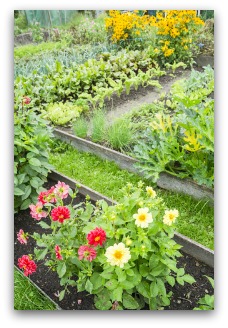
Understanding the most common problems that arise when growing peppers helps you identify and resolve issues quickly before they significantly affect your harvest.
1. Blossom drop is the most common and most frustrating pepper problem - flowers appear and then fall from the plant without setting fruit. The cause is almost always temperature related. Peppers drop blossoms when daytime temperatures exceed 90 degrees Fahrenheit or nighttime temperatures drop below 55 degrees Fahrenheit - outside these ranges, pollen viability fails and the plant aborts the flower. There is no spray or treatment that fixes blossom drop in peppers caused by temperature. The solution is to wait for temperatures to moderate, at which point flower setting resumes naturally. Providing light shade during extreme heat and planting earlier-maturing varieties in cool climates both help reduce blossom drop when growing peppers in challenging temperature conditions.
2. Pepper plants that are large and healthy but producing few or very small fruits are usually experiencing nutrient imbalance - specifically too much nitrogen and not enough potassium and phosphorus. Switch to a high-potassium tomato fertilizer and fruit production typically improves within a few weeks.
Sunscald - pale, papery, bleached patches on the skin of pepper fruits - occurs when peppers are exposed to intense direct sun, particularly after the leaf canopy thins from disease or pruning. It is cosmetic and the fruit is still edible. Grow disease-resistant varieties to maintain a healthy leaf canopy, and avoid removing too many leaves at once when pruning.
Aphids are the most common insect pest on peppers. They cluster on growing tips and the undersides of leaves, causing curled and distorted growth. A strong jet of water dislodges most colonies. Basil planted nearby deters aphids proactively. Neem oil or insecticidal soap spray resolves established infestations.
Common pepper growing problems at a glance
| Problem | Most Likely Cause | Solution |
|---|---|---|
| Blossom drop | Temperatures too hot (above 90°F) or too cold (below 55°F at night) | Wait for temperatures to moderate; provide shade in extreme heat; choose heat-tolerant varieties |
| Few or small fruits | Too much nitrogen; insufficient potassium and phosphorus | Switch to high-potassium tomato fertiliser; ensure adequate sun |
| Sunscald (pale papery patches) | Direct sun exposure on fruit; thin leaf canopy | Maintain healthy foliage; avoid removing too many leaves; cosmetic only - fruit still edible |
| Aphid infestation | Aphid colonies on growing tips and leaf undersides | Jet of water; plant basil nearby; neem oil; insecticidal soap |
| Wilting despite adequate water | Root rot from waterlogged soil; bacterial wilt | Improve drainage; avoid overwatering; remove and destroy wilted plants |
| Slow growth after transplanting | Soil too cold; transplant shock; insufficient hardening off | Wait for warm soil; harden off thoroughly before transplanting |
| Blossom end rot (black patch at bottom) | Calcium deficiency from inconsistent watering | Water consistently; mulch heavily; calcium foliar spray |
How and When to Harvest Peppers

Understanding when and how to harvest is one of the most important aspects of how to grow peppers successfully - and one of the questions gardeners ask most often.
All peppers start green and ripen to their final color - red, yellow, orange, chocolate, purple, or any other color the variety produces. Green peppers and fully ripe colored peppers are the same fruit at different stages of maturity. Green peppers have a crisper, slightly grassier flavor. Fully ripe colored peppers are sweeter, more complex in flavor, and more nutritious - they contain significantly more vitamins C and A than green peppers. The trade-off is time - allowing peppers to ripen to full color takes three to four additional weeks on the plant and reduces how many the plant produces, since energy that goes into ripening one fruit is not going into producing new ones.
Most experienced growers compromise: harvest some peppers green to keep the plant producing new fruits, and allow a portion to ripen to full color for the superior flavor and nutrition. This is a practical middle ground that works well when growing peppers in gardens with moderate season length.
Always use scissors or a sharp knife to harvest peppers - do not pull or twist the fruit from the plant, as this often breaks branches and damages the plant. Cut the stem one inch above the fruit. Continue harvesting regularly through the season - the more you pick, the more the plant produces. A pepper plant that holds many large ripe fruits begins to slow production; one that is regularly picked stays productive longer.
How to Grow Peppers in Containers

See our Container Vegetable Gardening Guide for more information!
Growing peppers in containers is one of the most successful applications of container vegetable gardening. Peppers actually perform exceptionally well in pots because containers warm up faster than in-ground soil, giving pepper plants the heat they love from the earliest possible point in the season. A container of peppers on a hot sunny patio or against a south-facing wall often produces significantly earlier and more abundantly than the same variety in the open ground.
The minimum container size for growing peppers is five gallons for compact hot pepper varieties. Bell peppers and larger sweet peppers need ten gallons minimum to produce well. Use a quality potting mix with compost incorporated. Avoid garden soil in containers. A slow-release balanced fertilizer mixed into the potting soil at planting time, combined with weekly liquid feeding from a high-potassium tomato feed once flowers appear, keeps container peppers productive all season.
One of the great advantages of growing peppers in containers is the ability to bring plants indoors before the first autumn frost and extend the productive season by several weeks. Pepper plants brought into a bright indoor position in early October can continue producing fruits through November in many climates. Unlike tomatoes, peppers can also be overwintered indoors under grow lights and replanted outdoors the following spring - an overwintered pepper plant establishes much faster and produces earlier than a new transplant, and large mature specimens can be extraordinarily productive.

Frequently Asked Questions About How to Grow Peppers
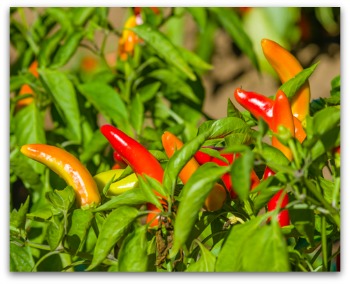
1. How long does it take to grow peppers from seed to harvest?
From indoor seed sowing to first green pepper harvest is typically twenty to twenty-four weeks - the longest seed-to-harvest window of any common vegetable. This is why starting seeds indoors ten to twelve weeks before the last frost date is so important when growing peppers. From transplanting outdoors to green pepper harvest is typically seventy to eighty days. Add another three to four weeks for fully ripened coloured peppers.
2. Why do my peppers stay green and never turn red or yellow?
Peppers ripen to their final color only when they reach full maturity on the plant - this takes three to four weeks longer than the green harvest date listed on most seed packets. Factors that prevent coloring include insufficient heat, short growing season, plants allowed to carry too many fruits at once, or the variety simply being a green-fruited type. Choose varieties suited to your season length and allow adequate time after green maturity for full colour development.
3. Can I grow peppers in a cold climate?
Yes, with the right approach. Choose early-maturing varieties (under 70 days to green harvest), start seeds very early indoors in January or February, use black plastic mulch on the soil to increase ground temperature, and consider growing in containers that can be moved to the warmest position in the garden. Wall-of-water protectors allow transplanting three to four weeks earlier than normal and significantly extend the effective growing season. Hot peppers generally ripen faster than bell peppers and are a better choice for short-season zones.
4. Are hot peppers harder to grow than sweet peppers?
No - the growing requirements for hot and sweet peppers are essentially identical. The main difference is that many hot pepper varieties, particularly from the Capsicum chinense species (habaneros, scotch bonnets, ghost peppers), need longer to mature and germinate more slowly, requiring an even earlier start. In terms of day-to-day care, growing hot peppers is no more demanding than growing sweet bell peppers.
5. What is the difference between growing peppers and growing tomatoes?
Peppers and tomatoes have very similar basic requirements but differ in a few important ways. Peppers are slower to start from seed and need more warmth for germination. They are more sensitive to cold soil at transplanting time. They should not be planted as deeply as tomatoes. They are more tolerant of dry conditions once established. And they can be overwintered indoors much more easily than tomatoes - a significant advantage for serious pepper growers.
More Vegetable Growing Guides
- Growing Vegetables — complete hub for growing all vegetables at home
Recent Articles


-
Paper Garden Craft for Kids: How Does Your Garden Grow? Free Printable
Oct 15, 26 11:05 AM
 Free printable paper garden craft for kids: cut out plants, children, a puppy, and a kitten, then plant them in a paper raised bed that stands on the table.
 -
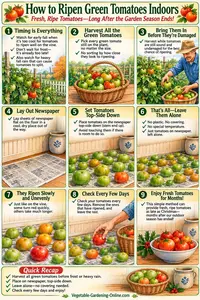
How to Ripen Green Tomatoes Indoors
Oct 14, 26 04:11 PM
 Ripen green tomatoes indoors with a simple newspaper method. Learn when to pick, where to place them, and how to keep fresh ripe tomatoes coming for weeks.
 -
Free Vegetable Garden Printables — Downloads for Every Gardener
Oct 14, 26 12:29 PM
 Browse our complete library of free vegetable garden printables, from planning worksheets and growing charts to kids' activities, all free to download & print.
 -
Free Printable Return Address Labels: Garden and Christmas
Oct 14, 26 12:11 PM
Free printable return address labels with watercolor garden and Christmas designs. Type your address, pick a picture, and print on Avery 5160 label sheets. -
Free Printable Gift Stickers: Christmas and Garden Designs
Oct 14, 26 11:58 AM
Free printable round gift stickers with watercolor garden and Christmas pictures. Add a message or To and From, and print on 2-inch labels at home. -
Free Printable Place Cards: Thanksgiving, Christmas, and Parties
Oct 13, 26 01:46 PM
Free printable place cards for Thanksgiving, Christmas, birthdays, tea parties, and garden parties. Type your guest list, pick a picture, and print. -
Free Printable Garden Stationery: Gardening Letter Paper & Note Cards
Oct 13, 26 09:58 AM
Free printable garden stationery: watercolor letter paper, lined and unlined, plus folded note cards with garden, fall, and Christmas scenes. Print at home.