- Home
- How to Grow Vegetables
- Cucumbers
- Why Are My Cucumber Leaves Turning Yellow
Why Are My Cucumber Leaves Turning Yellow? Causes and Fixes
 Here are 7 reasons why cucumber leaves turn yellow--causes and fixes. Click image to download chart.
Why are my cucumber leaves turning yellow?
This is one of the most common questions home vegetable gardeners ask during the growing season — and the good news is that in most cases the problem is identifiable and fixable once you know what to look for.
Cucumber plants are sensitive indicators of stress, and yellowing leaves are their way of signaling that something needs attention.
The key to diagnosing why your cucumber leaves are turning yellow is to look carefully at which leaves are affected, what the yellowing pattern looks like, and what else is happening on the plant.
Yellowing that starts on the oldest lower leaves means something different from yellowing that starts on new growth at the top.
A uniform pale yellowing means something different from a mottled yellow-green pattern.
This guide walks through the seven most common reasons cucumber leaves turn yellow and tells you exactly what to do about each one.
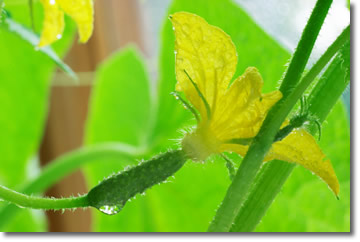
One important thing to know before you start: once a cucumber leaf has turned yellow it will not turn green again.
The goal is to identify the cause and stop the yellowing from spreading to healthy leaves — not to rescue the already-affected ones.
Remove yellowed leaves once you have diagnosed the problem to keep the plant tidy and reduce disease pressure.
Over-watering — The Most Common Reason Cucumber Leaves Turn Yellow
Over-watering is the single most common reason cucumber leaves turn yellow and it is also the most commonly misdiagnosed.
When cucumber roots sit in waterlogged soil they cannot absorb oxygen, and root rot sets in.
The plant responds by yellowing its leaves — which looks exactly like drought stress, causing many gardeners to water more and make the problem worse.

With over-watering, the yellowing typically begins toward the top of the plant and the leaves feel soft rather than crispy.
The soil around the plant feels consistently wet.
You may notice a sour or musty smell from the soil — a sign of anaerobic conditions from waterlogging.
The fix: Stop watering immediately.
- Allow the soil to dry out at the two-inch depth before watering again.
- If your cucumbers are in containers, make sure the drainage holes are clear and not sitting in standing water.
- For garden beds, check drainage — if water pools around the base of the plant after rain, the soil needs organic matter or the planting site needs to change.
- Going forward, only water when the top inch of soil feels dry.
Cucumbers need about one inch of water per week.
Deep, infrequent watering is far better than shallow daily watering.
A two to three inch layer of mulch around the base of the plants conserves moisture and prevents the cycle of wet-dry-wet conditions that stresses roots.

Under-watering — Crispy Yellowing With Wilting
Under-watering produces yellowing cucumber leaves too — but with a distinctly different appearance from over-watering.
When cucumber plants do not receive enough water, the leaves develop crispy brown edges before or alongside the yellowing, and the plant wilts noticeably during the hottest part of the day.

Why are my cucumber leaves turning yellow?
Remember that cucumbers are approximately 95 percent water.
They need consistent moisture to produce well.
A cucumber plant that experiences drought stress during flowering and fruiting will drop flowers, produce bitter fruit, and yellow rapidly.
The fix: Water deeply and immediately.
Give the plant a thorough soaking at the base — not a light sprinkling.
After watering, mulch heavily around the plant to retain moisture.
Cucumbers in containers dry out significantly faster than those in the ground and may need watering every day or even twice a day during hot weather.
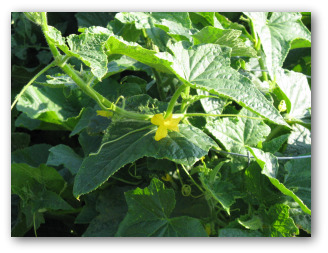
After solving a drought stress problem, watch the plant carefully for several days.
New growth should emerge green and healthy.
If yellowing continues to spread despite adequate watering, another cause is at work.
Nitrogen Deficiency —
Pale Yellowing Starting on Oldest Leaves
Why are my cucumber leaves turning yellow?
Nitrogen deficiency is the most common nutrient problem when cucumber leaves turn yellow. Nitrogen is a mobile nutrient — when the plant runs short of it, it pulls nitrogen from its oldest leaves to feed new growth.
This means nitrogen deficiency always shows up first on the lowest, oldest leaves, gradually progressing up the plant.

The yellowing from nitrogen deficiency is uniform and pale — the entire leaf turns a washed-out yellow-green rather than showing a mottled or spotted pattern.
The rest of the plant may look reasonably healthy with the yellowing confined to the bottom third.
Nitrogen deficiency is particularly common in container-grown cucumbers where nutrients deplete faster, in sandy soils that drain quickly, and during periods of heavy rain that leaches nitrogen from the soil.
The fix: Apply a balanced vegetable garden fertilizer or a nitrogen-rich fertilizer such as fish emulsion, blood meal, or composted manure.
Follow label directions carefully — over-applying nitrogen produces lush leafy growth at the expense of fruit.
For container cucumbers, use a liquid fertilizer every two weeks through the growing season rather than waiting for deficiency symptoms to appear.
Magnesium Deficiency —
Yellowing Between Leaf Veins
Why are my cucumber leaves turning yellow?
Magnesium deficiency produces a very distinctive yellowing pattern that makes it easier to diagnose than nitrogen deficiency.
When cucumber leaves turn yellow from magnesium deficiency, the yellowing appears between the leaf veins — a pattern called interveinal chlorosis — while the veins themselves remain green.
This yellow-between-green-veins pattern is the diagnostic signature of magnesium deficiency.

Like nitrogen, magnesium is a mobile nutrient that shows deficiency symptoms on older leaves first.
Magnesium is easily leached from sandy soils and can be blocked from uptake when soil potassium or calcium levels are very high.
- The fix: Apply Epsom salt — magnesium sulfate — dissolved in water as a soil drench or foliar spray.
- Two tablespoons of Epsom salt dissolved in one gallon of water applied to the soil around the plant usually shows results within a week.
This is one of the faster fixes available when cucumber leaves turn yellow from a nutrient cause.
Cucumber Mosaic Virus —
Mottled Yellow-Green Patterning
Why are my cucumber leaves turning yellow?
Cucumber mosaic virus produces one of the most distinctive patterns when cucumber leaves turn yellow — a mottled mosaic of yellow and green rather than a uniform yellowing.
Affected leaves look as though someone splashed irregular patches of yellow across the normal green surface.
The leaves may also be distorted, puckered, or smaller than normal.

Cucumber mosaic virus is spread by aphids — the virus is injected into the plant when aphids feed on infected plants and then move to healthy ones.
There is no cure once a plant is infected.
- The fix: Remove and dispose of infected plants immediately — do not compost them.
- Control aphid populations on remaining plants using insecticidal soap spray or a firm jet of water.
- Do not plant cucumbers in the same location next year.
- Choosing mosaic virus-resistant varieties is the best long-term prevention — look for the CMV or MV designation on seed packets.
Powdery Mildew —
White Coating With Underlying Yellowing
Why are my cucumber leaves turning yellow?
Powdery mildew is one of the most common diseases of cucumber plants and it frequently causes cucumber leaves to turn yellow.
The first sign is a white or gray powdery coating on the upper surface of the leaves.
As the disease progresses the tissue beneath the white coating turns yellow and the leaf eventually dies.

Powdery mildew spreads rapidly during warm days and cool nights — conditions that are common in late summer in most growing regions.
- It does not require wet leaves to spread, which makes it different from most fungal diseases.
- The fix: Remove heavily affected leaves immediately.
- Apply neem oil spray to remaining foliage every seven to ten days — neem oil is effective against powdery mildew when applied before the infection becomes severe.
- Improve air circulation around the plants by trellising vines rather than letting them sprawl.
- Avoid overhead watering.
Some cucumber varieties have built-in powdery mildew resistance — worth choosing for next season if your garden is prone to this disease.
Natural Aging— Normal Lower Leaf Yellowing
Why are my cucumber leaves turning yellow?
Not every case of cucumber leaves turning yellow signals a problem.
As cucumber plants mature and vines grow longer, the oldest leaves at the base of the plant naturally yellow and die.
This is normal senescence or aging— the plant withdrawing nutrients from leaves it no longer needs and redirecting them to fruit production and new growth.

Natural yellowing from aging, or senescence, affects only the lowest, oldest leaves. The rest of the plant is vigorous and healthy. New growth at the tips of the vines is green and strong. The plant is producing flowers and fruit normally.
The fix: None needed. Simply remove the yellowed lower leaves to improve air circulation and keep the plant tidy. This is healthy garden management, not a problem to solve. The cucumber plant is doing exactly what it is supposed to do.
Quick Diagnosis Guide —
Why Are My Cucumber Leaves Turning Yellow?
Use this quick reference to identify why your cucumber leaves are turning yellow based on what you observe.
- Yellowing starts at the top of the plant, leaves feel soft, soil is wet — over-watering. Stop watering, check drainage.
- Yellowing with crispy brown edges, plant wilts in afternoon, soil is dry — under-watering. Water deeply, add mulch.
- Uniform pale yellowing on oldest lower leaves, new growth looks healthy — nitrogen deficiency. Apply nitrogen-rich fertilizer.
- Yellowing between leaf veins, veins remain green, older leaves affected first — magnesium deficiency. Apply Epsom salt solution.
- Mottled irregular yellow-green pattern, leaves distorted or puckered — cucumber mosaic virus. Remove and destroy plant, control aphids.
- White powdery coating on leaves with yellowing beneath — powdery mildew. Remove affected leaves, apply neem oil, improve air circulation.
- Only the lowest oldest leaves are yellowing, rest of plant is healthy and productive — natural senescence. Remove yellowed leaves, no other action needed.
More Cucumber Growing Guides
Now that you know why your cucumber leaves are turning yellow and how to fix the problem, visit our complete cucumber growing guide for everything else you need to grow a healthy and productive crop — from choosing the right variety and planting at the right time through trellising, watering, feeding, and harvesting at peak flavor.
Our companion planting guide also covers the best and worst neighbors for cucumbers in the vegetable garden.
For more help identifying and managing vegetable garden problems organically, visit our organic pest control page and our vegetable garden pests and diseases guide.

For research-based information on cucumber diseases and integrated pest management, the University of Minnesota Extension at extension.umn.edu has an excellent diagnostic resource for home vegetable gardeners.
- Growing Cucumbers — complete guide to planting, trellising, watering, feeding, and harvesting cucumbers
- Vegetable Garden Pests and Diseases — identifying and managing common vegetable garden problems
- Companion Planting — best and worst neighbors for cucumbers in the vegetable garden
- Why Are My Tomato Leaves Turning Yellow? — similar diagnostic guide for the most popular garden vegetable
- Growing Vegetables — complete hub for growing all vegetables at home
University of Minnesota Extension —
Cucumber Problems Diagnostic Guide

For a research-based diagnostic guide to cucumber diseases, pest damage, and nutrient disorders — including color photographs of each problem to help identify exactly why your cucumber leaves are turning yellow — the University of Minnesota Extension at extension.umn.edu has one of the most thorough cucumber problem identification resources available for home vegetable gardeners.
- University of Minnesota Extension — Cucumber Pests and Diseases — research-based diagnostic guide with photographs for identifying cucumber leaf problems including yellowing, spots, wilting, and disease
- Growing Vegetables — complete hub for growing all vegetables at home

Recent Articles


-
How to Grow Cabbage
Sep 15, 26 12:33 PM
 How to Grow Cabbage: The Complete Guide from Seed to Harvest. This complete guide covers everything you need to know about how to grow cabbage.
 -
Easiest Vegetables to Grow: 15 Foolproof Crops for Beginners
Sep 15, 26 09:24 AM
 Easiest vegetables to grow for beginners - with advice on what makes each one easy, how to get started, and which vegetables are harder than they look.
 -
How to Grow Green Beans
Sep 14, 26 07:53 PM
 How to Grow Green Beans: The Complete Guide to Bush and Pole Beans. Green beans are one of the most forgiving crops a beginner can choose.
 -
Seasonal Vegetable Garden
Sep 14, 26 05:38 PM
 Seasonal Vegetable Garden — Growing Food Through Every Season
 -
Overwintering Vegetables: Fall-Planted Crops for Early Spring Harvest
Sep 14, 26 05:35 PM
 Learn about overwintering vegetables like garlic, fava beans, and onions, planted in fall to sit through winter and reward you with an early spring harvest.
 -
Free Vegetable Garden Journal— Printable Downloads for Home Gardeners
Sep 14, 26 01:51 PM
 Download our free Vegetable Garden Journal — choose a full 16-page version or simpler 7-page journal. Track planting, harvest, & garden notes season by season.
 -
Free Vegetable Garden Cut and Paste Activities for Kids Ages 5-7
Sep 12, 26 09:13 PM
 Free printable vegetable garden cut and paste activities for kids ages 5-7. Build your own garden, match seeds to plants, and learn what grows where.