Personalized Vegetable Planting Calendar
Enter your zip code, pick your crops, print your plan.
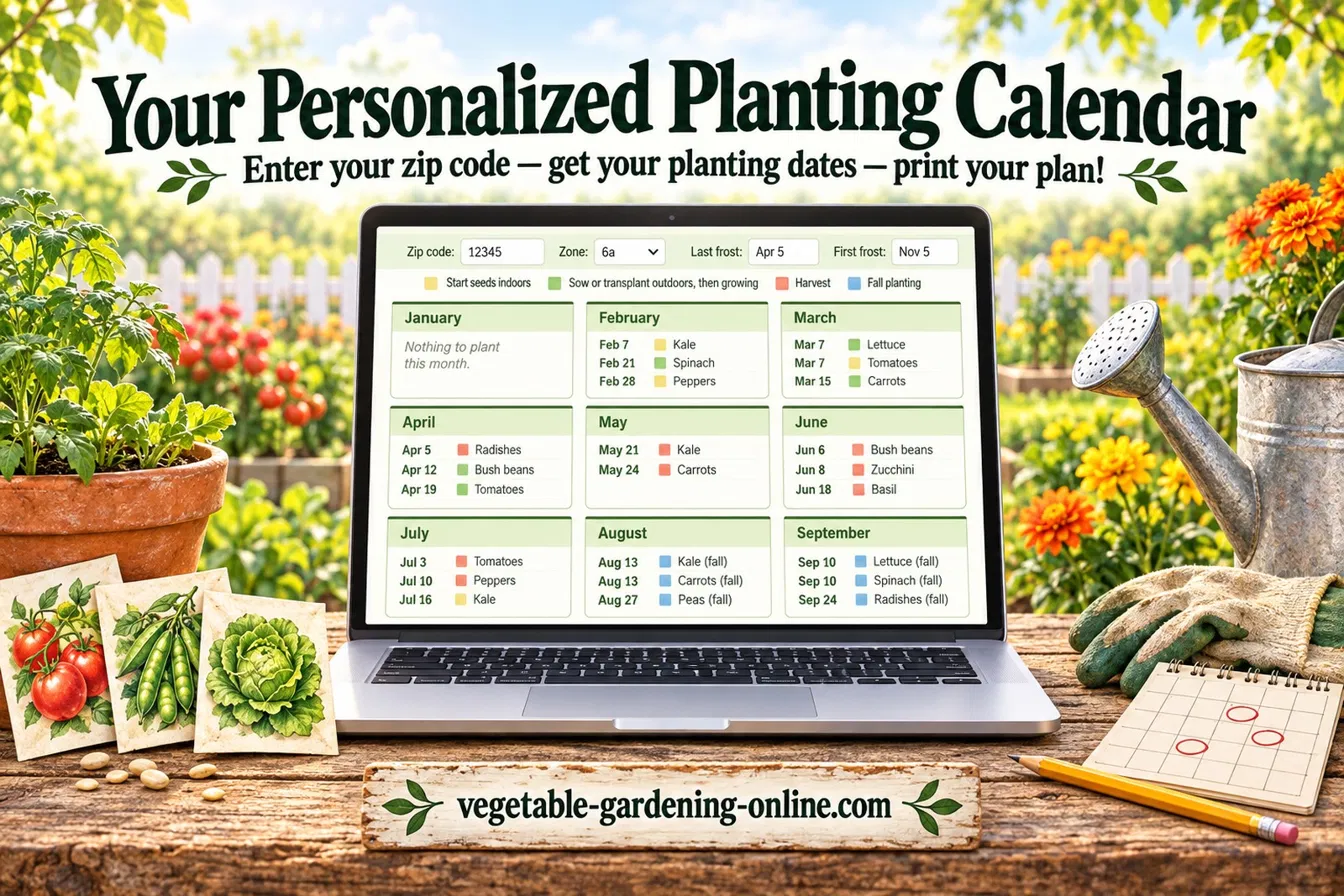
Every planting calendar you find online is written for someone else's garden. This personalized vegetable planting calendar is written for yours.
Type in your zip code, and the tool finds your USDA zone and frost dates. Or pick your zone from the list, or type in your own frost dates if you know them. Check the vegetables you plan to grow. The tool builds your season: when to start seeds indoors, when to transplant, when to sow directly in the garden, and when to expect the first harvest. Then print it and hang it where you will see it.
I have kept a planting calendar on paper for most of my gardening life. The trouble was always the same. The charts in books were made for some average garden that does not exist. Here in the Willamette Valley our last frost can land anywhere from late February to the middle of May, and no printed chart knows which year it will be. A personalized vegetable planting calendar built from your own dates takes that guesswork out.
1. Your frost dates
Type your zip code and the tool finds your zone and fills in typical frost dates for it. If you know your own frost dates, type them in instead; they are more accurate than any zone average. Zone lookup uses the 2023 USDA Plant Hardiness Zone Map (USDA-ARS and Oregon State University PRISM Climate Group).
2. What are you growing?
From the free planting calendar at vegetable-gardening-online.com
How to Use This Personalized Vegetable Planting Calendar
Start with your zip code. The tool looks it up on the 2023 USDA Plant Hardiness Zone Map, sets your zone, and fills in typical frost dates for it. You can also choose a zone from the list. If you know your own last spring frost and first fall frost, type them in instead. They are more accurate than any zone average.
Then check the vegetables you want to grow. The beginner set is a good starting point for a first garden. Select all if you want the personalized vegetable planting calendar to show the whole year at once.
Your personalized vegetable planting calendar updates as you go. The month-by-month view lists every task in date order. The season timeline shows the same plan as bars across the year, so you can see how long each crop holds its ground and when a bed opens up.
When it looks right, print it. The printed page drops the controls and keeps the personalized vegetable planting calendar.
Reading Your Calendar
Each line on your personalized vegetable planting calendar is one of four things.
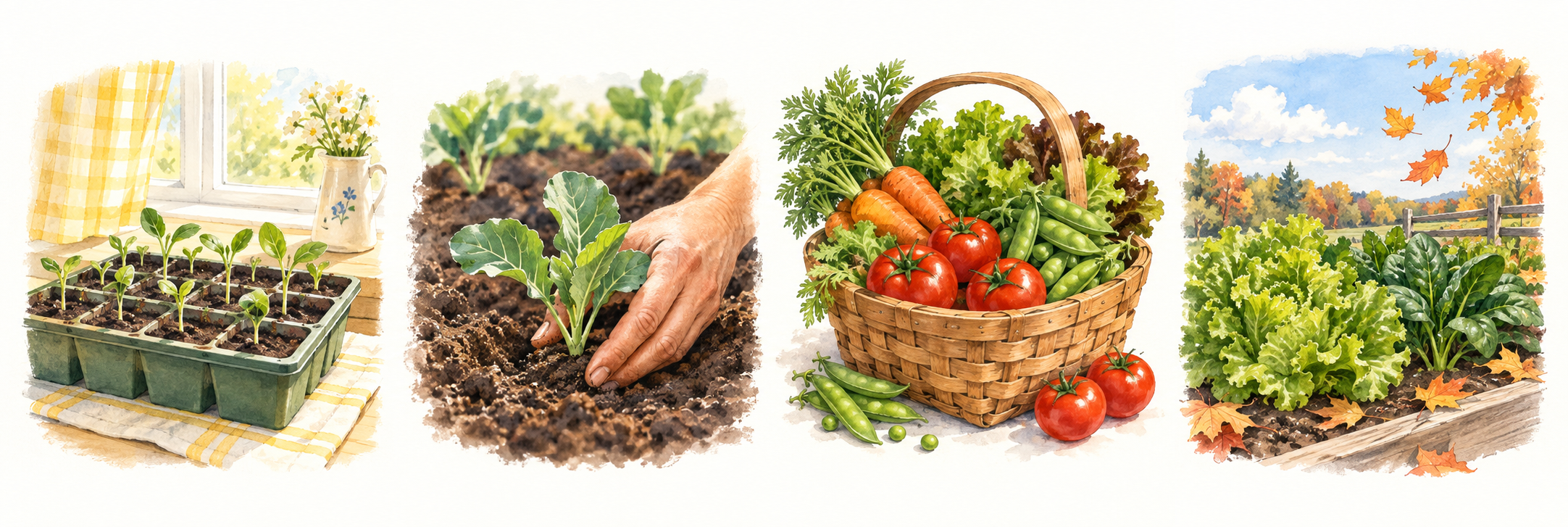
Start seeds indoors. The date to sow in trays under lights or in a sunny window. Tomatoes, peppers, broccoli, and cabbage need this head start.
Sow or transplant outdoors. The date the personalized vegetable planting calendar says to put seeds or plants in the garden. Cool-season crops like peas and spinach go in weeks before the last frost. Warm-season crops like beans and squash wait until after it.
Begin harvesting. The earliest date you can expect to pick. Weather moves this by a week or two either way.
Fall planting. A second crop of cool-season vegetables, sown in late summer so it matures in the cool weather of fall. Many gardeners skip this and miss the best lettuce and spinach of the year. A personalized vegetable planting calendar puts those fall dates in front of you in July, when it is easy to forget them.
Should You Trust the Frost Dates?
Frost dates are probabilities, not promises. The dates the personalized vegetable planting calendar uses for each zone are the point where there is an even chance of frost before or after. That is the right planning date for most crops.
For the ones that cannot take a frost, tomatoes, peppers, basil, and squash, cautious gardeners shift the last frost date two weeks later. For fall, shift the first frost date two weeks earlier if you want to be sure of a harvest before the cold. You can type either adjustment straight into the date boxes and the whole calendar moves with it.
Watch the soil, too. A personalized vegetable planting calendar tells you the earliest sensible date. Cold, wet soil in April can still rot bean seed on the right calendar day. When in doubt, wait a week.
Succession Planting: Turn One Harvest into Four
Tick "show succession plantings" and your personalized vegetable planting calendar adds repeat sowings for the crops that benefit from them. Lettuce, radishes, spinach, bush beans, carrots, and sweet corn all produce for a short window. Sowing a fresh row every two or three weeks keeps that window open all season instead of giving you a glut in June and nothing in August.
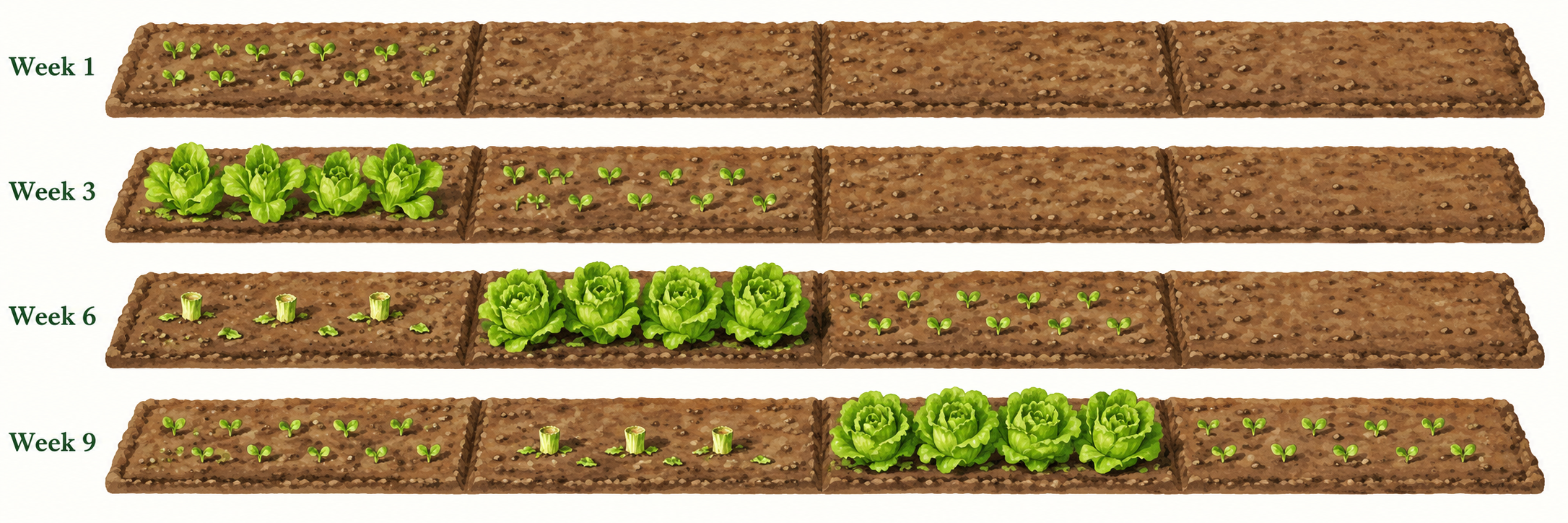
The personalized vegetable planting calendar stops repeat sowings when the weather would defeat them. Lettuce quits in summer heat, so the calendar does not schedule it. Beans need time to mature before frost, so the last sowing is counted back from your first frost date.
If you have never tried succession planting, start with lettuce and radishes. Both are cheap, quick, and forgiving. Our page on succession planting vegetables covers the method in more detail.
Planning the Rest of the Garden
Your personalized vegetable planting calendar tells you when. Our other free tools cover where and how much.
The interactive garden planner lets you lay out your beds on screen with correctly scaled spacing, so you know before you plant that everything fits. The seed starting chart gives days to germination and ideal soil temperature for each crop. The zone finder tells you which zone you are in.
If you prefer paper, the printable vegetable garden planner is an eight-page workbook for the kitchen table, and the printable planting calendar is a one-page chart by zone. Print your personalized vegetable planting calendar and tuck it inside the planner, and the two work together.
Questions About the Personalized Vegetable Planting Calendar
Does it work for every zone? Yes. The personalized vegetable planting calendar runs on frost dates, so it works anywhere from zone 3 to zone 11. Gardeners in the warmest zones with no real frost get a year-round calendar; for them the "first frost" date simply marks the end of the planting year.
Why is my zone showing different dates than another website? Zone averages vary by source. Your own frost dates from a local extension office or weather station are always better than any zone default. Type them in.
Can I save my personalized vegetable planting calendar? Print it, or use your browser's print-to-PDF option to save a copy. The tool does not store anything.
What if a crop I grow isn't listed? The personalized vegetable planting calendar covers the forty vegetables and herbs most home gardeners plant. If yours is missing, pick the closest relative. Most winter squashes follow pumpkins; most Asian greens follow bok choy.
Related Reading
- Interactive Vegetable Garden Planner — lay out your beds with correct spacing, then print the plan.
- Zone Finder — look up your USDA zone.
- Vegetable Planting Calendar — the one-page chart by zone.
- Succession Planting Vegetables — the method in more detail.
- Planning a Vegetable Garden — the rest of the planning guides.
Free garden planning tool from vegetable-gardening-online.com. Zone lookup uses the 2023 USDA Plant Hardiness Zone Map (USDA-ARS and Oregon State University PRISM Climate Group). Frost dates are averages; your own records beat any table.