- Home
- Vegetable Garden Soil
- How to Fertilize Garden
How to Fertilize Vegetable Garden
Using Organic Compost
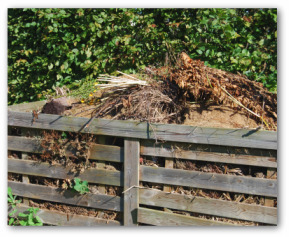
Learn how to fertilize vegetable garden.
Easy tips for growing a great garden using organic compost and other natural methods including making your own organic fertilizer recipe.
The richness of your vegetable plot depends on five factors. Namely, nitrogen, phosphorous, potassium, organic matter, and trace elements.
The basic fertilizer source for an organic garden will be the compost pile.
Design Your Own Vegetable Garden Layout Using our Free "Vegetable Garden Planner" Software!
A healthy dose of compost of about two inches or more is the best way to fertilize a vegetable garden.
Dig the compost into the bed several weeks prior to planting. An ideal time for adding compost is as you are tilling up the soil.
Knowing how to fertilize a vegetable garden correctly is the difference between plants that grow steadily and plants that struggle despite your best efforts.
This page is part of our Soil, Fertilizer and Composting hub, where you will find complete guides to vegetable garden soil building, composting, mulching, manure use, and making compost tea for a fast-acting liquid feed.
Soil, Fertilizer and Composting — complete hub for building rich vegetable garden soil through composting, fertilizing, mulching, and manure
How to Fertilize Vegetable Garden
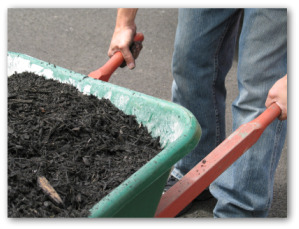
While you wait for your glorious seeds packets to arrive after finally cutting down the list of vegetables you want to grow to a more manageable size, let's get down to the "dirt" of what nitrogen, phosphorus, and potassium actually do for vegetable gardening that makes the element trio so essential.
How to Fertilize Vegetable Garden--
Compounds to Use
 Chart of different types of organic fertilizer to use in vegetable gardens; click image to download.
Have you heard of NPK? Most fertilizers list 3 ingredients, and their proportions. N is for nitrogen, P is for phosphorus, and (remember chemistry class?) K is for Potassium. These are the 3 elements that plants need in order to grow and be healthy.
• N is for Nitrogen
Nitrogen is a nonmetallic element that occurs as an odorless colorless gas used in fertilizers and makes up four fifths of the Earth's atmosphere. It is a basic building block of protein and makes plants green and succulent.
• P is for Phosphorus
This nonmetallic chemical element gets its name from a Greek word that means "morning star" named so because it brings light. Phosphorus ignites in air and glows in the dark. Its uses include: matches, fireworks, and fertilizers.
Download Free Garden Planning Worksheets, Garden Diary, Zone Chart, Or Planting Guide
• K is for Potassium
Potassium is metallic element that is soft, silvery white and highly reactive. Use is in fertilizers and coolant for nuclear reactors.
In the early 19th century, it was called potash.
It is necessary in the formation of starches, sugars, and cellulose.
Without this natural ingredient in the mix to fertilize a vegetable garden, plants do not mature properly.
Potassium also helps the plants to resist disease, especially fungi diseases.
How to Fertilize Vegetable Garden
Test your soil for adequate levels of nitrogen, phosphorus, and potassium.
Any deficiency can be remedied easily by adding material rich in the needed element to the soil.
Apply soil amendments as needed along with the compost before planting.
Organic Fertilizer Recipes for Success

If your soil is extremely low in a certain element, make a compost pile dedicated to replace the missing nutrient.
- Compost is a good organic fertilizer that many nutrients to vegetable garden soil.
- Compost can also be used to make "tea" to use as a nutrient rich liquid fertilizer.
- For example, if your vegetable garden bed lacks nitrogen, you can add well-aged animal manure, fish emulsion, bone meal, or blood meal.
- Some organic vegetable growers suggest using alfalfa meal instead for replacing nitrogen.
- Other organic gardeners grow nitrogen rich cover-crops such as hairy vetch on their garden beds to enrich the soil naturally.
- In place of using bone meal as a replacement for phosphorus, another alternative is soft-rock phosphate.
- To replace potassium, add seaweed or crushed granite.
Using Compost as Fertilizer
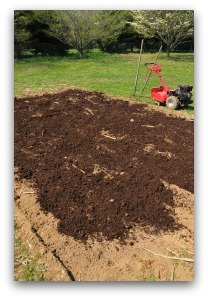 Spreading a layer of compost on the vegetable garden offers many benefits.
For the final step of how to fertilize a vegetable garden, once you have composted, planted all the rows, and watched the plants grow, more fertilizer may be added for the mature plants.
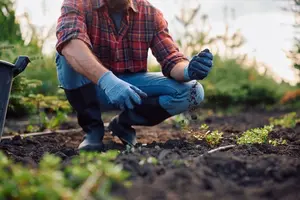
Spread compost along the sides of the rows, being careful not to cover the growing plant stems.
This side-dressing of compost will slowly filter down into the soil, providing nourishment for the roots.
At the same time, it acts as mulch, preventing weeds and retaining soil moisture.
History of Garden Fertilizer
In the 19th century, German scientist Justus Von Liebig and Cornish scientist Sir Humphrey Davy proved how to fertilize vegetable garden successfully was by improving the soil using phosphates and nitrates. (Honest truth about the German scientist's last name!)
This triggered a mad rush among gardeners for old bones that could be crushed into a powder and used as fertilizer. Liebig accused British merchants of digging up battlefields all over Europe in a frantic search for bones. Tens of thousands of animal bones were imported from Eastern Europe to supply the demand.
"Of all the delightful gifts that vegetable gardening provides, it is the anticipation we often enjoy the most". ~ Charlotte
The University of Georgia CAES Field Report has an excellent, clearly written article explaining why compost enriches vegetable garden soil but does not replace fertilizer — a common point of confusion for home gardeners. It covers the difference between soil amendment and plant nutrition, and explains why most vegetable gardens need both.
University of Georgia CAES — Compost Enriches Soil But Doesn't Replace Fertilizer — clear explanation of the difference between compost as soil amendment and fertilizer as plant nutrition

Recent Articles


-
How to Grow Cabbage
Sep 15, 26 12:33 PM
 How to Grow Cabbage: The Complete Guide from Seed to Harvest. This complete guide covers everything you need to know about how to grow cabbage.
 -
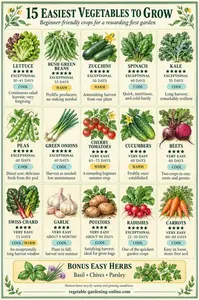
Easiest Vegetables to Grow: 15 Foolproof Crops for Beginners
Sep 15, 26 09:24 AM
 Easiest vegetables to grow for beginners - with advice on what makes each one easy, how to get started, and which vegetables are harder than they look.
 -
How to Grow Green Beans
Sep 14, 26 07:53 PM
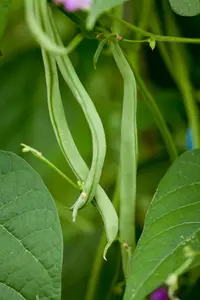
 How to Grow Green Beans: The Complete Guide to Bush and Pole Beans. Green beans are one of the most forgiving crops a beginner can choose.
 -
Seasonal Vegetable Garden
Sep 14, 26 05:38 PM
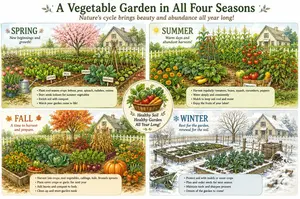
 Seasonal Vegetable Garden — Growing Food Through Every Season
 -
Overwintering Vegetables: Fall-Planted Crops for Early Spring Harvest
Sep 14, 26 05:35 PM
 Learn about overwintering vegetables like garlic, fava beans, and onions, planted in fall to sit through winter and reward you with an early spring harvest.
 -
Free Vegetable Garden Journal— Printable Downloads for Home Gardeners
Sep 14, 26 01:51 PM
 Download our free Vegetable Garden Journal — choose a full 16-page version or simpler 7-page journal. Track planting, harvest, & garden notes season by season.
 -
Free Vegetable Garden Cut and Paste Activities for Kids Ages 5-7
Sep 12, 26 09:13 PM
 Free printable vegetable garden cut and paste activities for kids ages 5-7. Build your own garden, match seeds to plants, and learn what grows where.