- Home
- Seasonal Gardens
- Overwintering Vegetables
Overwintering Vegetables
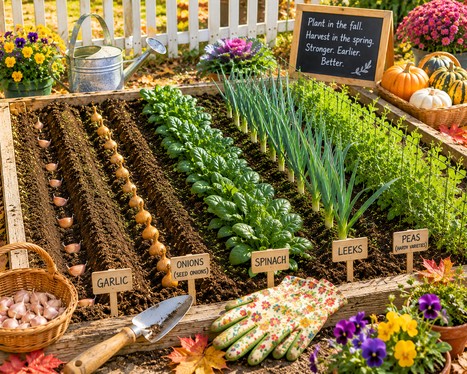
Not every fall planting is about squeezing out one more harvest before winter.
Overwintering vegetables is a different approach entirely.
You plant certain crops in fall.
They sit quietly through the cold months, doing very little above ground.
Then, the moment the days start lengthening in spring, they take off fast — often giving you a harvest weeks or even months before anything spring-planted could catch up.
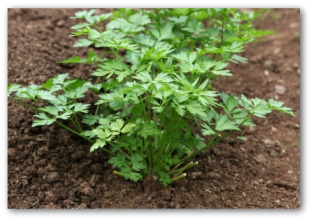 Parsley growing in a fall/winter garden.
This is one of the more rewarding things I have learned over the years, because it turns the quiet, seemingly empty part of the garden year into something that is actually working on your behalf the whole time.
I don't always overwinter crops, but it is genuinely helpful to do so, in several ways. For example, one year I overwintered a parsley plant, and it was so nice to be able to walk out the back door, pick a handful of fresh parsley, and let the rest of the plant kept growing.
When I buy a parsley bunch at the grocery store, most times some or even most of it goes to waste, as most recipes call for a few tablespoons of chopped parsley.
A handful of crops are genuinely well suited to overwintering here in the Willamette Valley and similar mild-winter climates, and getting the timing right is most of what matters.
Which Vegetables Overwinter Well
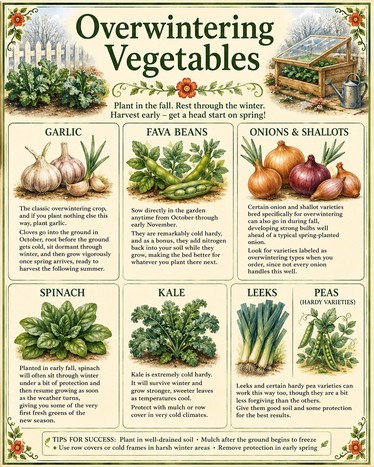
Garlic is the classic overwintering crop, and if you plant nothing else this way, plant garlic.
Cloves go into the ground in October, root before the ground gets cold, sit dormant through winter, and then grow vigorously once spring arrives, ready to harvest the following summer.
Fava beans are sown directly in the garden anytime from October through early November. They are remarkably cold hardy, and as a bonus, they add nitrogen back into your soil while they grow, making the bed better for whatever you plant there next.
Certain onion and shallot varieties bred specifically for overwintering can also go in during fall, developing strong bulbs well ahead of a typical spring-planted onion.
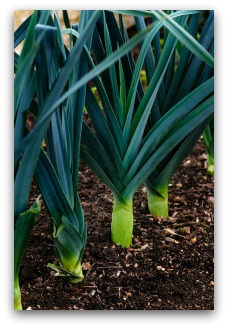 Leeks growing in a fall/winter vegetable garden.
Look for varieties labeled as overwintering types when you order, since not every onion handles this well.
Spinach and kale, planted in early fall, will often sit through winter under a bit of protection and then resume growing as soon as the weather turns, giving you some of the very first fresh greens of the new season.
Leeks and certain hardy pea varieties can work this way too, though they are a bit less forgiving than the others.
Overwintering Vegetables at a Glance
| Crop | Plant | Harvest |
|---|---|---|
| Garlic | October | Following summer |
| Fava Beans | October-early November | May |
| Overwintering Onions | Fall (variety-specific) | Early summer |
| Spinach | Early fall | Late winter-early spring |
| Kale | Late summer-early fall | Late winter-early spring |
How to Help Overwintering Vegetables
Survive the Cold
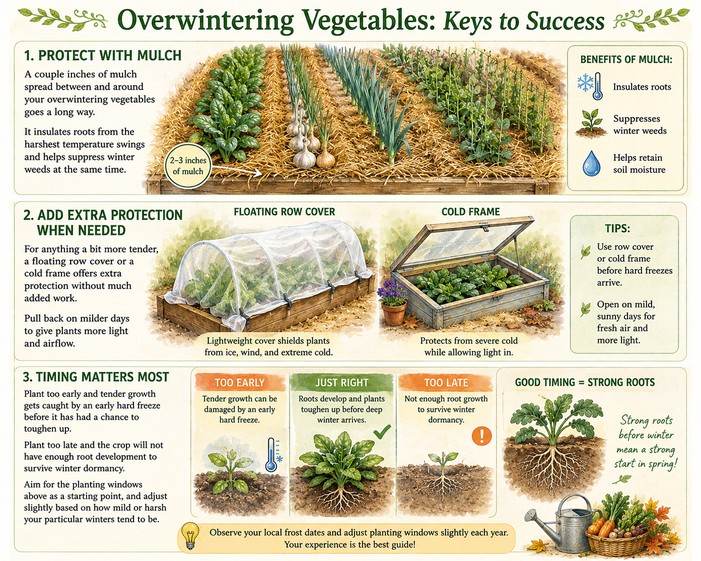
A couple inches of mulch spread between and around your overwintering vegetables goes a long way, insulating roots from the harshest temperature swings and helping suppress winter weeds at the same time.
For anything a bit more tender, a floating row cover or a cold frame offers extra protection without much added work, and can be pulled back on milder days to give plants more light and airflow.
Timing matters more than almost anything else with overwintering vegetables.
Plant too early and tender growth gets caught by an early hard freeze before it has had a chance to toughen up.
Plant too late and the crop will not have enough root development to survive winter dormancy.
Aim for the planting windows above as a starting point, and adjust slightly based on how mild or harsh your particular winters tend to run.
Related Reading
For crops you harvest continuously through the cold months rather than ones that go dormant, see our winter vegetable gardening guide and our list of cold-hardy vegetables.
If you want extra protection for either approach, our cold frame guide covers building and using one.
And if you are researching garlic specifically, see our garlic growing pages for planting depth and spacing.
Frequently Asked Questions

Frequently Asked Questions
1. Do overwintering vegetables need protection all winter?
Not always. Garlic and fava beans handle bare, unprotected soil well in most mild climates. Spinach, kale, and leeks appreciate a bit of help. Mulch, row cover, or a cold frame all work. Protection matters most during hard freezes, not ordinary winter cold.
2. Can I overwinter vegetables in a cold climate?
Yes, but the list gets shorter. Garlic is reliable almost everywhere. Fava beans and overwintering onions need more consistent protection in harsh climates. Spinach and kale can still work under a cold frame. Choose fewer crops and give them more protection if your winters run cold.
3. What happens if I plant overwintering crops too late?
Late planting is the most common mistake. A crop needs time to establish roots before the ground turns cold. Plant too late, and that root system never gets strong enough. The plant is then far more likely to die over winter instead of surviving it.
4. Do overwintered vegetables taste different?
Often, yes, and usually for the better. Cold weather converts some starches in a plant to sugar. Many gardeners find overwintered carrots, kale, and spinach taste sweeter than the same crops grown in warm weather. It is one of the quieter rewards of growing this way.
Related guides: Winter Vegetable Gardening Guide | Cold Hardy Vegetables | Cold Frame Vegetable Garden | How to Grow Garlic

Recent Articles


-
How to Grow Cabbage
Sep 15, 26 12:33 PM
 How to Grow Cabbage: The Complete Guide from Seed to Harvest. This complete guide covers everything you need to know about how to grow cabbage.
 -
Easiest Vegetables to Grow: 15 Foolproof Crops for Beginners
Sep 15, 26 09:24 AM
 Easiest vegetables to grow for beginners - with advice on what makes each one easy, how to get started, and which vegetables are harder than they look.
 -
How to Grow Green Beans
Sep 14, 26 07:53 PM
 How to Grow Green Beans: The Complete Guide to Bush and Pole Beans. Green beans are one of the most forgiving crops a beginner can choose.
 -
Seasonal Vegetable Garden
Sep 14, 26 05:38 PM
 Seasonal Vegetable Garden — Growing Food Through Every Season
 -
Overwintering Vegetables: Fall-Planted Crops for Early Spring Harvest
Sep 14, 26 05:35 PM
 Learn about overwintering vegetables like garlic, fava beans, and onions, planted in fall to sit through winter and reward you with an early spring harvest.
 -
Free Vegetable Garden Journal— Printable Downloads for Home Gardeners
Sep 14, 26 01:51 PM
 Download our free Vegetable Garden Journal — choose a full 16-page version or simpler 7-page journal. Track planting, harvest, & garden notes season by season.
 -
Free Vegetable Garden Cut and Paste Activities for Kids Ages 5-7
Sep 12, 26 09:13 PM
 Free printable vegetable garden cut and paste activities for kids ages 5-7. Build your own garden, match seeds to plants, and learn what grows where.