- Home
- Seasonal Vegetable Garden
Seasonal Vegetable Garden —
Growing Food Through Every Season

A seasonal vegetable garden is one that works with the natural rhythms of the year rather than fighting them.
Every season offers something worth growing — cool-weather crops that thrive in the frost of early spring, warm-season harvests that peak in midsummer heat, fall crops that taste sweetest after the first frost, and cold-hardy vegetables that survive all winter with nothing more than a cold frame or a layer of mulch.
When you understand what grows in each season and plan accordingly, the seasonal vegetable garden becomes a year-round source of fresh food rather than a three-month summer project.
Free garden tools for your own zip code
 Planting Calendar |
 Garden Planner |
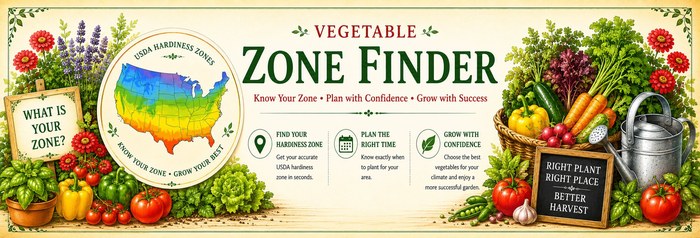 Zone Finder |
This page is your hub for all our seasonal vegetable garden guides. You will find individual guides for spring, summer, fall, and winter gardening, along with resources on cold frames, cold-hardy vegetables, and season extension techniques.
Whether you are planting your first spring garden or planning a winter harvest, the seasonal vegetable garden guides below have everything you need.
Spring Vegetable Garden — The Season Begins

Spring is the most anticipated season in the seasonal vegetable garden, and for good reason — it is when the year begins and the first fresh harvests arrive after a long winter.
The key to a successful spring vegetable garden is understanding the difference between cool-season and warm-season crops and knowing your last frost date.
Cool-season crops — lettuce, spinach, peas, broccoli, cabbage, carrots, radishes, and kale — can tolerate light frost and actually taste best when they mature in cool weather.

These go into the ground early, sometimes weeks before the last frost date, and form the first wave of a seasonal vegetable garden harvest.
Warm-season crops — tomatoes, peppers, cucumbers, corn, beans, squash, and melons — need warm soil and air temperatures and must wait until after your last frost date before going outside.
Starting warm-season crops indoors six to eight weeks before the last frost date gives you a head start and is one of the most effective techniques in seasonal vegetable garden planning.
- Spring Vegetable Garden — what to plant, when to start, and how to manage spring's unpredictable weather
Summer Vegetable Garden — Peak Season

Summer is when the seasonal vegetable garden reaches peak production. Warm-season crops — tomatoes, peppers, eggplant, cucumbers, squash, beans, corn, and melons — grow rapidly in long, warm days and need consistent water, feeding, and harvesting to keep producing at their best.
The most important summer task in the seasonal vegetable garden is harvesting regularly.
Every day you leave a ripe zucchini on the vine is a day the plant reduces its next fruit production.
Every oversized cucumber signals the plant to slow down.
Pick beans, cucumbers, squash, and tomatoes at their prime and the plant will reward you with continued production all season long.
Summer is also the time to start planning the fall seasonal vegetable garden — cool-season crops for fall need to go in as early as July in northern gardens, well before summer ends.
- Summer Vegetable Garden — warm-season crops, harvesting tips, and planning ahead for fall
- Succession Planting Vegetables — how to stagger plantings so your seasonal vegetable garden produces continuously

Fall Vegetable Garden — The Second Season

The fall vegetable garden is the most underused season by home gardeners, and one of the most rewarding.
Cool-season crops planted in late summer mature in autumn's cooler temperatures and taste significantly better than their spring counterparts — cold enhances the sweetness of carrots, beets, kale, Brussels sprouts, and parsnips in ways that warm-season growing simply cannot replicate.
To plan a productive fall seasonal vegetable garden, count back from your first expected frost date and plant accordingly.
Broccoli, cauliflower, and Brussels sprouts need 8 to 10 weeks. Kale, spinach, and lettuce need 6 to 8 weeks.
Radishes need as little as 3 to 4 weeks.
The fall seasonal vegetable garden rewards gardeners who plan ahead during the busy height of summer and do not wait until autumn to think about it.
Direct sow where space opens up as summer crops finish, and the gap between one harvest and the next nearly disappears.
- Fall Vegetable Garden — which vegetables to plant for fall and how to time them for your first frost date
Winter Vegetable Gardening —
Growing Through the Cold

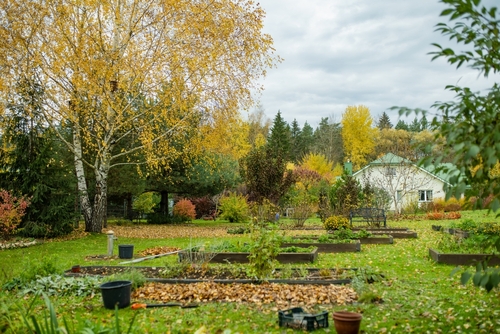
Winter vegetable gardening opens up the seasonal vegetable garden to gardeners willing to invest in a few simple season extension tools.
A cold frame, a row cover, or even just a heavy mulch layer can extend the harvest of cold-hardy crops well into the coldest months of the year.
In mild climates, a winter seasonal vegetable garden can produce spinach, kale, carrots, leeks, and other cold-tolerant crops throughout the winter with no protection at all.
Even in northern climates with harsh winters, certain crops can be left in the ground under a thick mulch of straw and harvested as needed — carrots left in the ground all winter often emerge in spring sweeter than any you picked in fall.
That's related to, but different from, planting crops specifically to overwinter — where you plant in fall knowing the crop will sit dormant through the cold months and take off fast once spring arrives. See our guide to overwintering vegetables for which crops work best this way and how to time the planting.
Our winter vegetable gardening guide covers which crops to try, how much protection they need in your climate, and how to set up a simple cold frame to extend your seasonal vegetable garden into the coldest months.
- Winter Vegetable Gardening Guide — how to keep your seasonal vegetable garden producing through cold and frost
- Cold Frame Vegetable Garden — how to build and use a cold frame to extend your seasonal vegetable garden into the coldest months
- Overwintering Vegetables — which crops to plant in fall so they sit dormant through winter and reward you with an early spring harvest

Cold Hardy Vegetables — What Survives Frost
Understanding which vegetables are cold hardy is essential knowledge for anyone who wants to run a four-season vegetable garden.
Cold hardy vegetables fall into two categories: those that tolerate light frost (temperatures just below 32 degrees Fahrenheit) and those that survive hard frost (temperatures in the mid-twenties and below).
Knowing which category each of your crops falls into tells you exactly when you can push the planting date at the start of the season and how long you can leave crops in the ground at the end.

The hardiest vegetables in the seasonal vegetable garden include kale, spinach, collard greens, Brussels sprouts, and leeks — all of which can survive temperatures well below freezing and often improve in flavor after frost.
A second tier of cold-tolerant vegetables — broccoli, cabbage, carrots, beets, and Swiss chard — tolerate moderate frost but need protection in the coldest conditions.
Our cold hardy vegetables guide gives you the full picture for planning the edges of your seasonal vegetable garden year.
 Some vegetables taste better after enduring a frost. Kale, spinace, Brussels sprouts, leeks are among the most cold hardy vegetables.
- Cold Hardy Vegetables — which vegetables survive frost and how cold each one can tolerate in the seasonal vegetable garden
Seasonal Vegetable Garden Planting
Resources and Timing Tools

Getting your timing right is the foundation of a productive seasonal vegetable garden.
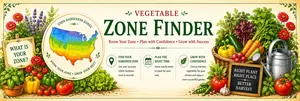
Knowing your USDA growing zone and your local frost dates allows you to translate general planting advice into a specific calendar for your garden.
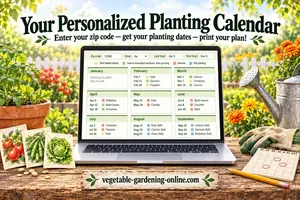
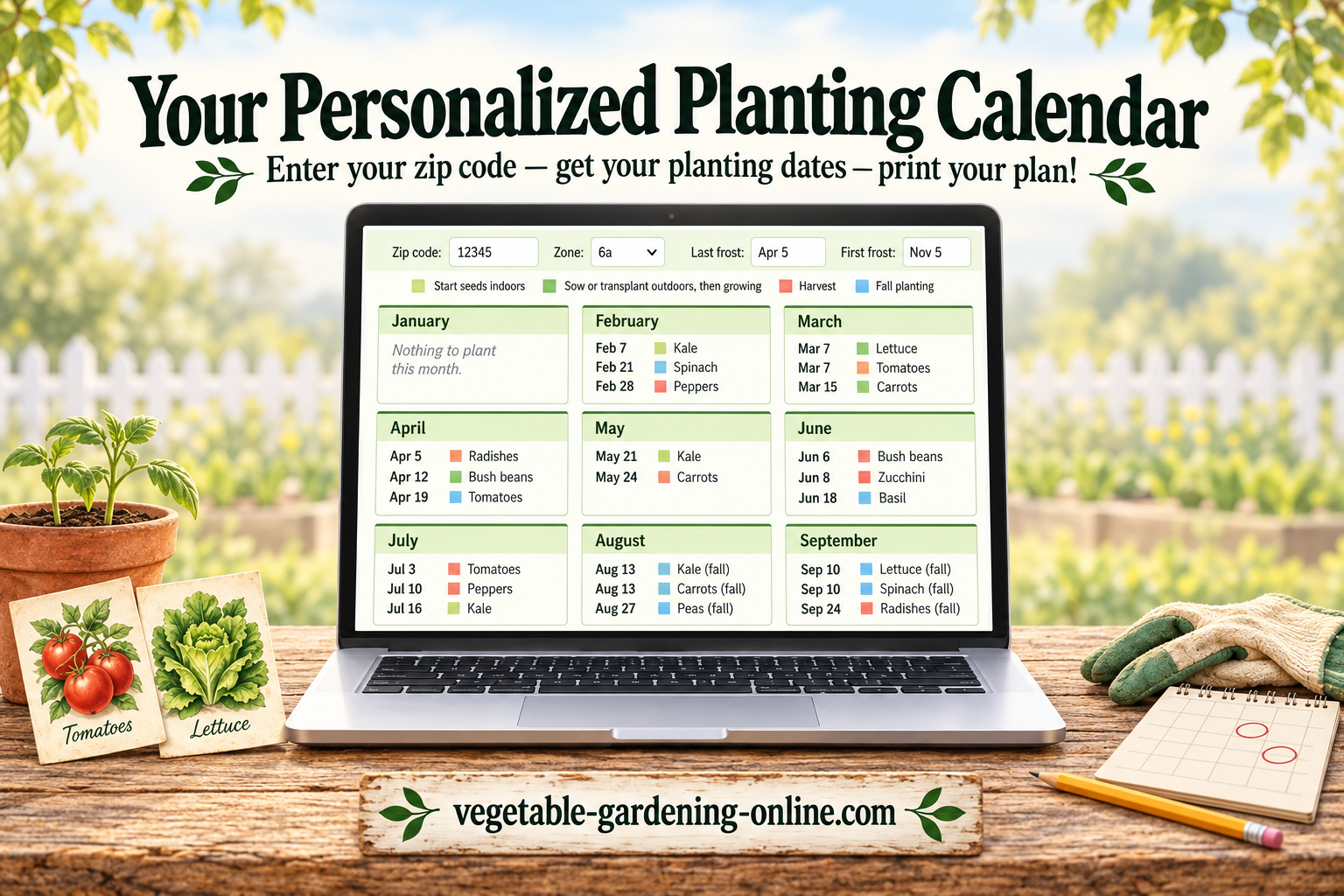
Our Zone Finder identifies your zone instantly, and our vegetable planting calendar gives you zone-specific planting windows for every major crop in your seasonal vegetable garden.
- Zone Finder — find your USDA growing zone and frost dates for seasonal vegetable garden planning
- Vegetable Planting Calendar — free printable zone-specific planting windows for every crop in your seasonal vegetable garden
- Best Time to Plant a Vegetable Garden — how to calculate the right planting dates for spring and fall
- Free Newsletter — seasonal reminders and gardening tips delivered to your inbox
Your Season-by-Season Garden Checklists
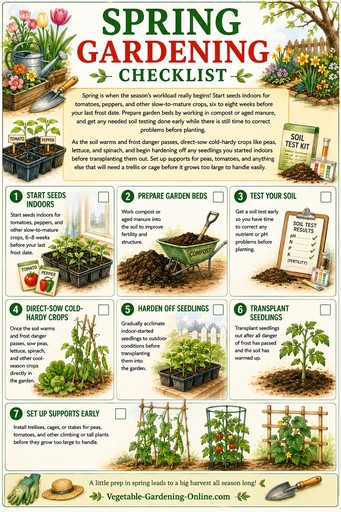
Spring is when the season's real work begins.
Seeds go in, beds get prepared, and everything you plant now sets the stage for the whole year ahead.
Print this spring checklist and keep it handy as the weather warms and the garden wakes back up.
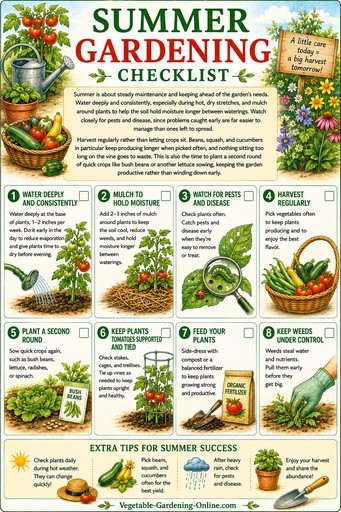
Summer is about staying ahead of the garden rather than catching up to it.
Steady watering, regular harvesting, and a close eye on pests make the difference between a good season and a great one.
This checklist keeps the routine simple, even during the busiest growing weeks.
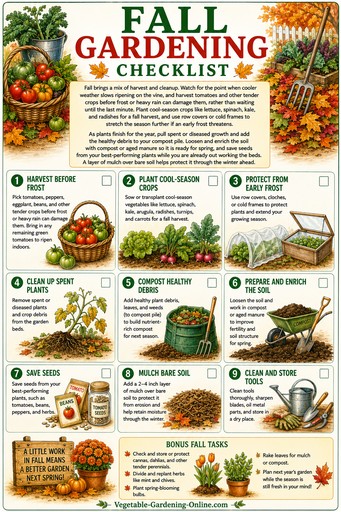
Fall brings a mix of harvest and cleanup, often happening at the same time. Bring in what's ripening before frost arrives, plant a few cool-season crops, and start putting the rest of the garden to bed.
This checklist covers both jobs so nothing gets missed in the rush.
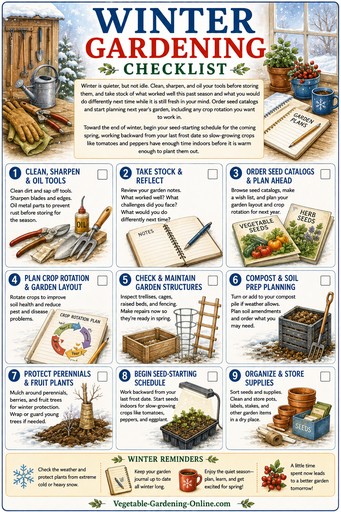
Winter is quieter, but it is not idle. Tools get cleaned, the season gets reviewed, and next year's garden starts taking shape on paper.
Use this checklist to turn the slow months into real preparation for spring.
Farmer's Almanac — Monthly Planting Calendar
For a month-by-month gardening calendar covering spring, summer, fall, and winter tasks in the seasonal vegetable garden — including when to sow, transplant, fertilize, and harvest each crop — the Farmer's Almanac at farmersalmanac.com has an excellent free planting calendar that complements the seasonal guides on this site
- Farmer's Almanac — Monthly Gardening Calendar — month-by-month seasonal vegetable garden tasks covering sowing, transplanting, fertilizing, and harvesting
Recent Articles


-
Free Printable Pet Calendar: Your Pet or Family Photos in the Garden
Oct 24, 26 02:47 PM
 Free printable pet calendar: add your dog, cat, or family photos to 12 watercolor garden scenes, type in birthdays, and print a 2027 calendar at home.
 -
Personalized Vegetable Planting Calendar: Free Tool, Your Frost Dates
Oct 24, 26 11:44 AM
Free personalized vegetable planting calendar. Enter your zip code or frost dates, pick your crops, and print a month-by-month seed starting and planting plan. -
USDA Zone Finder - Find Your Vegetable Planting Dates | Vegetable-Gardening-Online.com
Oct 24, 26 11:40 AM
 Find your USDA hardiness zone, last spring frost date, and first fall frost date by state and region. Free interactive zone finder from Vegetable-Gardening-Online.com.
 -
Interactive Vegetable Garden Planner | Vegetable Gardening Online
Oct 24, 26 11:36 AM
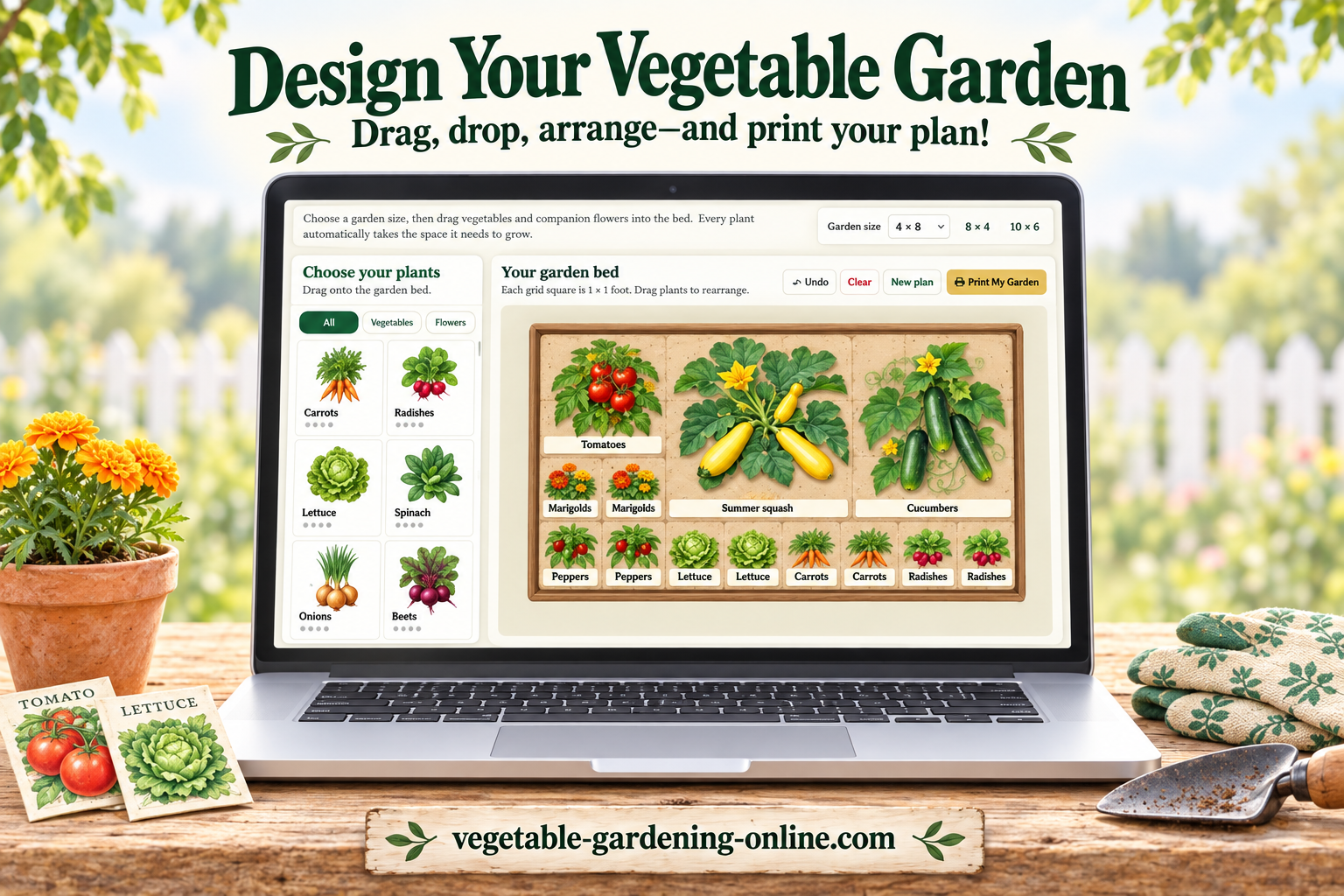
Design a vegetable garden with correctly scaled plant spacing, companion flowers, drag-and-drop placement, and a printable plan. -
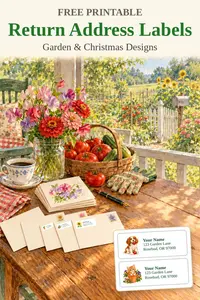
Free Printable Return Address Labels: Garden and Christmas
Oct 24, 26 11:01 AM
 Free printable return address labels with watercolor garden and Christmas designs. Type your address, pick a picture, and print on Avery 5160 label sheets.
 -
Free Printable Place Cards: Thanksgiving, Christmas, and Parties
Oct 24, 26 10:59 AM
 Free printable place cards for Thanksgiving, Christmas, birthdays, tea parties, and garden parties. Type your guest list, pick a picture, and print.
 -
Free Printable Seed Packets: Make Your Own Seed Packet Gifts
Oct 24, 26 10:49 AM
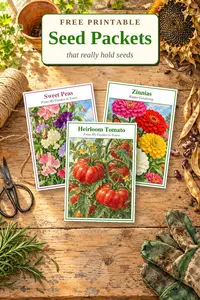
Free printable seed packets that really hold seeds. Pick a watercolor design or your own photo, type the plant name and a message, and print on cardstock.