- Home
- Seasonal Gardens
- Spring Garden
Spring Vegetable Garden
Designs and Planting Guide

Looking for spring vegetable garden plans and planting tips?
Wondering which vegetables to plant first?
Use our planting guide and zone chart to figure out exactly when to plant your spring garden.
Free Printable Spring Vegetable Gardening Checklist
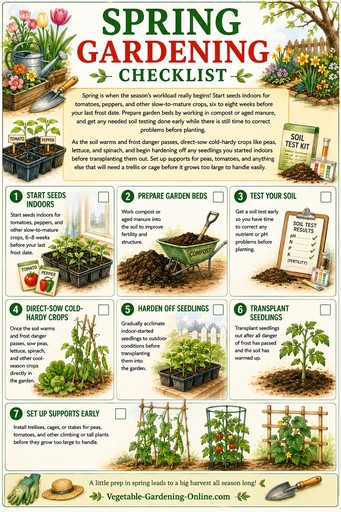
After a quiet winter, spring is where everything starts moving again.
Beds need preparing, seeds need starting, and timing matters more now than at any other point in the year.
Print this checklist and work through it step by step as the season gets underway.
It helps to get the timing right, as many vegetable plants won't survive freezing temperatures.
Our vegetable garden planner will help you have a plan that will work whether you are planning a backyard row garden, container garden, or raised bed garden.
When the weather finally starts getting warmer after a long winter and spring is surely on its way, it is time to plant your spring vegetable garden.
Spring? Actually the name can be a bit misleading.
Vegetables that are best-suited for the spring growing season are often planted as early as February depending on your zone.

Spring is just one chapter in the year-round story of the vegetable garden. This page is part of our Seasonal Vegetable Garden hub, where you will find complete guides to spring, summer, fall, and winter gardening, along with cold frame growing, cold-hardy vegetables, and the timing tools you need to plan a productive garden throughout the year.
Seasonal Vegetable Garden — complete hub for spring, summer, fall, and winter vegetable gardening guides

Most Popular Spring Vegetables

Knowing what to plant isn't always the hard part — knowing when is.
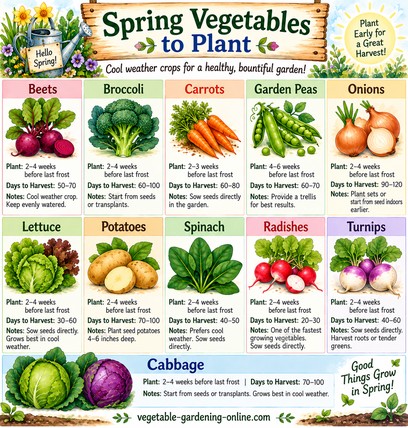
This spring planting chart covers eleven of the most reliable cool-weather crops, from quick radishes ready in three weeks to slower-growing onions and cabbage that take a couple months.
Each entry shows planting time, days to harvest, and a quick tip, so you can see at a glance what belongs in the ground first.
The most popular spring vegetable garden plants include beets, broccoli, carrots, garden peas, onions, lettuce, potatoes, spinach, radishes, turnips, and cabbage.
Plan Your Spring Vegetable Garden Ahead!

The most important thing you can do before planting is plan ahead. Gardens are not hard to start or maintain. Good planning just makes everything easier!
Start by deciding which vegetables you want to grow. Most spring vegetables are low-maintenance. The simplest approach is to choose your family's favorites first.
Don't get too ambitious right away. Many first-time gardeners build a garden too large to keep up with. They lose interest, and the garden gets away from them. Start small. Expand next season if it goes well.
Space matters too. Think about how much room you actually have before you plan what to plant. Always follow the planting instructions on your seed packets. Each variety has its own exact spacing and depth.
 When spring comes around, our thoughts turn to colorful seed packets and a beautiful vegetable garden; we forget the work involved in planting and tending our garden!
How to Plant a Spring
Backyard Row Garden
 Beets Can Be Planted in Spring
Choose a spot with good sunlight and mark it off. Remove the grass with a garden fork, a spade, or a tiller if you have one. Work the soil eight to ten inches deep.
Add compost, well-aged manure, or straw mulch to the topsoil. Compost aerates the soil and adds nutrients. Mulch holds in moisture and keeps weeds down. Both are worth the trip to your local garden center.
Once your bed is ready, plant your seeds following the seed packet instructions. Cover the rows with soil, then water gently. A strong stream of water can wash tiny seeds right out of their rows.
From here, most of the hard work is done. Keep the garden watered during dry spells, and stay ahead of the weeds.
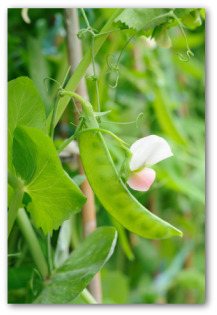 Peas Love Cool Spring Weather
Spring Vegetable Garden Tips
 Spring is a Good Time to Plant Early Vegetables
Many experienced gardeners cut the bottoms off plastic milk jugs and place them over young plants. This keeps cutworms away and helps warm the soil early in spring. It also protects tender plants from a late, unexpected frost. Remove the jugs once the weather warms and let your plants grow in the open.
If your plants seem slow to grow, check your soil pH. Too high or too low, and growth suffers. A small application of garden lime usually corrects the imbalance.
If your soil isn't especially fertile, a liquid fish fertilizer every two to three weeks can help.
Growing a spring vegetable garden is a great way to get outside after a long winter. Every season teaches you something new, and you'll be rewarded with fresh, homegrown vegetables for your family to enjoy.
So start planning, and enjoy your garden!
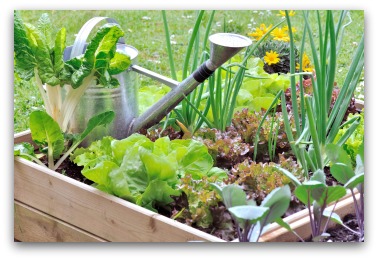 Spring Vegetable Salad Garden
If your soil is not especially fertile, it can help to add liquid fish fertilizer at 2-3 week intervals throughout the growing season.
Growing a spring vegetable garden is a great way to get out and enjoy mother nature after a long winter!
Each spring garden will be a learning experience.
You will also harvest fresh tasty vegetables for your family to enjoy.
So start planning, and enjoy your garden!
For a clear guide to which vegetables belong in the cool spring season and which need summer warmth — including lists of hardy, semi-hardy, tender, and warm-season crops — Bonnie Plants at bonnieplants.com has an excellent seasonal planting reference that is useful alongside this spring vegetable garden guide.
Bonnie Plants — Which Vegetables for Which Season — clear guide to cool-season spring crops vs. warm-season summer crops with planting temperature ranges
Recent Articles


-
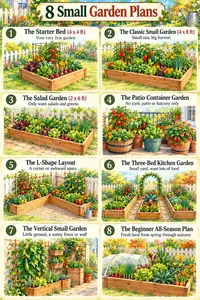
Small Vegetable Garden Plans: 8 Layouts That Maximise Space
Oct 08, 26 10:41 AM
 Small vegetable garden plans are some of the most searched and most valuable resources in home food growing.
 -
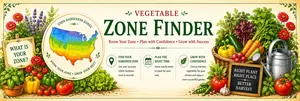
USDA Zone Finder - Find Your Vegetable Planting Dates | Vegetable-Gardening-Online.com
Oct 07, 26 03:53 PM
 Find your USDA hardiness zone, last spring frost date, and first fall frost date by state and region. Free interactive zone finder from Vegetable-Gardening-Online.com.
 -
Interactive Vegetable Garden Planner | Vegetable Gardening Online
Oct 07, 26 02:29 PM
Design a vegetable garden with correctly scaled plant spacing, companion flowers, drag-and-drop placement, and a printable plan. -
Free Printable Garden Stationery: Gardening Letter Paper & Note Cards
Oct 07, 26 12:48 PM
Free printable garden stationery: watercolor letter paper, lined and unlined, plus folded note cards with garden, fall, and Christmas scenes. Print at home. -
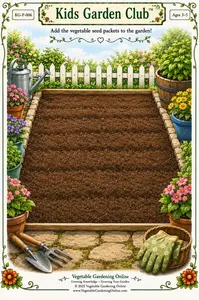
Free Preschool Vegetable Garden Cut and Paste Activities
Oct 07, 26 12:43 PM
 Free preschool vegetable garden cut and paste activities for ages 3-4. Build your own backyard, container, or seed packet garden scene, and sticker sheets.
 -
Planning a Vegetable Garden: Layouts, Raised Beds, Containers & More
Oct 06, 26 07:44 PM
 Planning a vegetable garden? Start here: layouts, raised beds, containers, square foot gardening, free planning tools, and tips to avoid beginner mistakes.
 -
How to Start a Vegetable Garden: 10 Easy Steps for Beginners
Oct 06, 26 04:38 PM
 How to start a vegetable garden in 10 easy steps: pick a sunny spot, choose raised beds or containers, prepare the soil, and grow easy vegetables.