- Home
- How to Grow Vegetables
- How to Grow Onions
How to Grow Onions:
The Complete Guide from Sets to Harvest
Learning how to grow onions is one of the most practical skills a home vegetable gardener can pick up, because few crops deliver as much everyday kitchen value for so little ongoing fuss.

Onions are a foundational ingredient in an enormous range of cooking, they store for months after harvest with almost no special equipment, and a single well-tended bed can supply a household with onions well into winter.
Unlike many vegetables that demand daily attention, onions mostly just need a good start, consistent moisture, and patience while they quietly build bulbs underground.
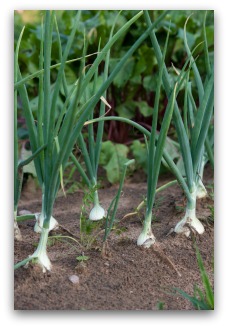
The part that trips up the most beginners is not difficulty so much as unfamiliarity - onions have a few quirks, particularly around day length and how they are started, that do not apply to most other vegetables.
Once you understand these few key principles in how to grow onions, they become one of the most reliable and rewarding routines in the garden.
This complete guide covers everything you need to know about how to grow onions, from choosing between seeds, sets, and transplants through to curing and storing a harvest that will last for months.
According to the University of Minnesota Extension, onions require full sun, consistent moisture, and the correct day-length type for your region to grow well and form good-sized bulbs.
Source: University of Minnesota Extension - Growing Onions in Home Gardens
Understanding Day Length: The Most Important Onion Growing Concept
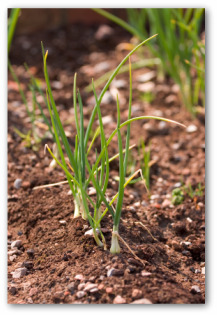
Before getting into the practical steps of how to grow onions, it is essential to understand day length, since this single factor determines whether a given variety will form good bulbs in your particular region at all.
Onions form bulbs in direct response to the number of daylight hours they receive, and varieties are bred and categorized specifically around this trigger.
Long-day onions need fourteen to sixteen hours of daylight to begin forming bulbs, and they are the right choice for gardeners in the northern United States, roughly north of the fortieth parallel.
Short-day onions need only ten to twelve hours of daylight to bulb and are the correct choice for southern gardeners, since long-day varieties planted in the South never receive enough daylight hours to trigger proper bulbing and instead stay small or go straight to flowering.
Intermediate-day (sometimes called day-neutral) onions need around twelve to fourteen hours and are the most forgiving choice for gardeners in the middle latitudes of the country, performing reasonably well across a wider range than either extreme type.
Choosing the wrong day-length type is one of the most common reasons beginners are disappointed with their first attempt at how to grow onions, producing small, underdeveloped bulbs despite otherwise good care. Check your latitude and choose a variety specifically marketed for your region - seed packets and supplier websites almost always state clearly whether a variety is long-day, short-day, or intermediate-day.
Onion day-length types by region
| Type | Daylight Needed to Bulb | Best Region | Example Varieties |
|---|---|---|---|
| Long-day | 14-16 hours | Northern US (roughly north of 40°N) | Walla Walla, Yellow Sweet Spanish, Patterson |
| Intermediate-day | 12-14 hours | Mid-latitude US (transition zone) | Candy, Super Star, Cabernet |
| Short-day | 10-12 hours | Southern US (roughly south of 35°N) | Texas Grano 1015Y, Red Creole |
Seeds, Sets, or Transplants? Choosing Your Starting Method
The second key decision in how to grow onions is choosing between three different starting methods - seeds, sets, or transplants - each with its own trade-offs in cost, convenience, and timing.

Onion sets are small dormant bulbs grown the previous year, widely sold at garden centers in early spring. They are by far the easiest and most beginner-friendly way to learn how to grow onions, since they require no indoor seed starting at all - simply push them into prepared soil as soon as it can be worked. The trade-off is a more limited variety selection compared to seed, since only a handful of common varieties are typically sold as sets.

Onion transplants are young seedlings, either purchased by mail order or grown at home from seed started indoors. They offer access to a much wider range of varieties than sets and produce excellent results, but they require either sourcing transplants from a supplier at the right time of year or doing the extra work of starting seeds indoors eight to twelve weeks ahead of your planting date.
Growing onions from seed yourself gives you the widest possible variety selection and is generally the least expensive option per plant, but it is also the slowest method and requires the most planning.
Seeds are sown indoors eight to twelve weeks before the last frost, since onions are slow growing in their early stages and need that head start to be ready for transplanting outdoors in spring. For most home gardeners learning how to grow onions for the first time, sets remain the simplest and most reliably successful starting point.
Seeds vs. sets vs. transplants
| Method | Ease for Beginners | Variety Selection | Lead Time Needed |
|---|---|---|---|
| Sets | Easiest | Limited (common varieties only) | None - plant directly in spring |
| Transplants (purchased) | Easy | Good | None - plant directly in spring |
| Seed (grown yourself) | More involved | Widest available | 8-12 weeks indoor start before transplant date |
When and Where to Plant Onions

Timing matters because onions need a long, cool early season to develop the leafy top growth that ultimately determines bulb size - each leaf an onion produces corresponds to one layer in the mature bulb, so more early leaf growth generally means a bigger onion at harvest.
Plant onion sets and transplants outdoors as soon as the soil can be worked in spring, typically two to three weeks before your last frost date, since both tolerate light frost without difficulty.
If starting from seed indoors, sow eight to twelve weeks before your planned outdoor transplant date so seedlings are well developed by the time conditions are right. Use our free interactive zone finder to confirm your frost dates before mapping out your how to grow onions planting schedule.
Onions need full sun - at least six hours of direct light daily - and should never be planted where taller crops will shade them later in the season, since the energy onions can capture from the sun directly determines how large their bulbs grow. Good soil drainage also matters enormously: onions are highly susceptible to rot in waterlogged conditions, so choose a bed that drains freely or consider raised beds if your native soil tends to stay wet.
Soil Preparation for Growing Onions

Good soil preparation is one of the most reliable ways to improve your results in how to grow onions, since this shallow-rooted crop depends heavily on a loose, fertile, well-drained growing medium to perform well.
The ideal soil for growing onions is a sandy loam or silty loam, rich in organic matter, with a pH between 6.0 and 6.8. Work two to three inches of compost or well-aged manure into the bed before planting, along with a complete, balanced fertilizer that includes adequate phosphorus to support strong root and bulb development.
Avoid heavy clay soils that compact and stay wet, since onions are particularly prone to bulb rot in poorly drained conditions - if clay is what you have, a raised bed filled with a properly blended raised garden bed soil mix solves the drainage problem completely.
Because onions are shallow-rooted, working the soil to a loose, fine texture in the top six to eight inches is more important than deep cultivation. Remove clumps, stones, and debris from this top layer so developing bulbs can expand outward without obstruction as they mature.
How to Plant Onions: Spacing and Depth

The practical mechanics of how to grow onions from sets or transplants are simple once the bed is prepared, and getting spacing and depth right makes a real difference to final bulb size.
For onion sets, plant each small bulb about one inch deep with the pointed end facing up, spaced three to four inches apart in rows twelve to eighteen inches apart.
For transplants, trim roots to about half an inch and tops to around four inches before planting, then set each seedling one to two inches deep - to roughly the top of the white portion of the stem - at the same three to four inch spacing.
If you want larger mature bulbs, increase spacing to four to six inches between plants; closer spacing produces smaller bulbs but a higher total yield, which works well if part of your goal in growing onions is harvesting some young as green onions while leaving others to mature to full size. In fact, thinning a closely spaced row and using the thinnings as fresh green onions is one of the most efficient ways to get two harvests from a single planting.
Onion planting depth and spacing at a glance
| Starting Method | Planting Depth | Spacing for Full-Size Bulbs | Spacing for Green Onions |
|---|---|---|---|
| Sets | 1 inch, point up | 4-6 inches | 1-2 inches |
| Transplants | 1-2 inches | 4-6 inches | 2-3 inches |
| Direct-sown seed | 1/4-1/2 inch | 3-4 inches after thinning | 1-2 inches |
Watering and Feeding Onions in the Garden
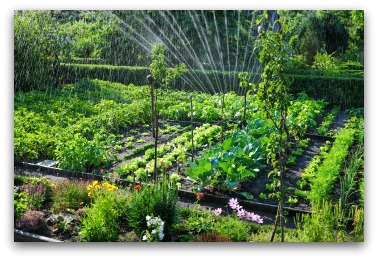
Consistent watering is one of the most important ongoing tasks in how to grow onions successfully, because their shallow root system has very little reserve capacity to ride out dry spells the way deeper-rooted crops can.
Onions need approximately one inch of water per week throughout the growing season, either from rainfall or supplemental irrigation. Water stress at any point - but particularly during the weeks when bulbs are actively sizing up - directly reduces final bulb size and can also trigger premature bolting in stressed plants.
A two to three inch layer of mulch around onion plants helps maintain the even soil moisture that growing onions depends on, while also suppressing the weeds that compete strongly with this slow-establishing crop in its early weeks.
Feeding follows a clear pattern in how to grow onions well. Side-dress with a nitrogen-rich fertilizer in the early-to-mid stages of growth, typically in late spring, to support the vigorous leaf production that ultimately becomes bulb layers. Stop nitrogen applications once bulbs visibly begin to swell at the soil surface - continued nitrogen at this stage delays bulbing and can result in soft, poorly storing onions. Adequate phosphorus throughout the season, ideally worked into the soil at planting time, supports healthy root and bulb development from the start.
Common Problems When Growing Onions

A handful of recurring problems account for most of the trouble gardeners encounter while learning how to grow onions, and most are straightforward to prevent once you know what to watch for.
Bolting - when an onion sends up a flower stalk instead of focusing energy into the bulb - is one of the most common frustrations. It is usually triggered by a cold spell after the plant has already grown past a certain size, or by stress from drought or transplant shock. Once an onion bolts, the bulb stops developing further and should be harvested and used promptly rather than left in the ground, since it will not improve. Choosing bolt-resistant varieties and avoiding planting overly mature transplants helps reduce this risk.
Splitting or doubled bulbs occur when growing conditions fluctuate sharply, particularly uneven watering during bulb development. Consistent moisture throughout the season is the most effective prevention.
Onion maggot and thrips are the most significant insect pests in many regions. Onion maggot larvae tunnel into bulbs at the base, often introduced through wounds or weak transplants, while thrips cause silvery streaking and stippling on leaves. Crop rotation, removing garden debris promptly, and avoiding planting in the same bed as the previous year's onions or other alliums all reduce pest carryover significantly.
Soft, rotting bulbs at or after harvest most often trace back to waterlogged soil during the growing season or insufficient curing afterward. Good drainage during growth and a thorough curing period after harvest, described below, are the two most effective preventive steps in how to grow onions that store well.
Common onion problems and solutions
| Problem | Most Likely Cause | Solution |
|---|---|---|
| Bolting (flower stalk forms) | Cold stress after establishment; transplant shock | Choose bolt-resistant varieties; avoid overly mature transplants; harvest promptly if it occurs |
| Small bulbs despite good care | Wrong day-length type for your latitude; overcrowding | Choose correct long-day/short-day/intermediate type; thin to proper spacing |
| Split or doubled bulbs | Inconsistent watering during bulb development | Water consistently; mulch to even out soil moisture |
| Tunneling/rot at base of bulb | Onion maggot larvae | Crop rotation; remove debris; avoid replanting alliums in same bed |
| Silvery streaks on leaves | Thrips feeding | Remove weeds nearby; encourage beneficial insects; insecticidal soap if severe |
| Soft, rotting bulbs after harvest | Waterlogged growing conditions; insufficient curing | Improve drainage; cure thoroughly before storage |
Companion Planting for Onions
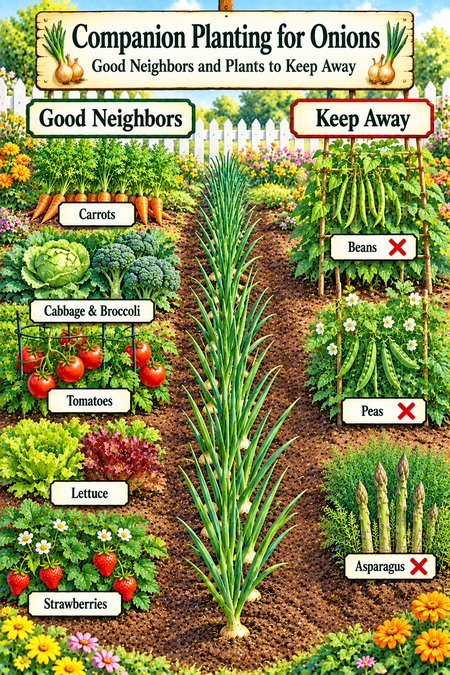
Companion planting offers real, practical benefits when growing onions, particularly around pest deterrence, since the strong scent of alliums confuses or repels several pests that target neighboring crops.
Carrots are the classic companion for onions - the pairing is mutually beneficial, since onion scent helps deter carrot fly while carrot foliage does not compete significantly with onions for light or nutrients given their different growth habits. Onions planted near brassicas like cabbage and broccoli help repel cabbage worms and other common brassica pests. Strawberries, tomatoes, and lettuce are all generally compatible neighbors for onions.
Keep onions away from beans and peas, since the alliums in onions can inhibit the nitrogen-fixing bacteria that beans and peas rely on, reducing the soil benefit those legumes would otherwise provide. Asparagus is another crop best kept at a distance from onions for similar reasons. See our companion planting chart for the full guide to which crops pair well with onions and which to keep separated.
How to Harvest, Cure, and Store Onions

Knowing when and how to harvest is the final and arguably most important stage in how to grow onions that will actually keep well through the months ahead, since improperly cured onions spoil quickly regardless of how well they grew.
Onions are ready to harvest when the tops naturally begin to yellow, soften, and fall over - typically when about half the plants in a bed show this sign. At this point, gently lift the bulbs from the soil with a garden fork, taking care not to bruise or nick them, since damaged onions do not store well and should be set aside for immediate use rather than long-term storage.
Harvest on a dry day if at all possible, since wet conditions at harvest increase the risk of rot during curing.

Curing is the essential step that most new gardeners learning how to grow onions skip or rush, and it is the single biggest factor in how long a harvest will store.
After lifting, spread onions out in a single layer in a warm, dry, well-ventilated location out of direct sun - a covered porch, garage, or shed all work well.
Leave them to cure for two to three weeks, turning each onion now and then, until the outer skins are fully dry and papery and the necks have shriveled and tightened.
Then trim the tops to about an inch and store the onions in mesh bags or baskets in a cool, dry, dark place.
Properly cured onions develop the protective outer layers that keep moisture and pathogens out during storage.
Onion Relatives to Grow
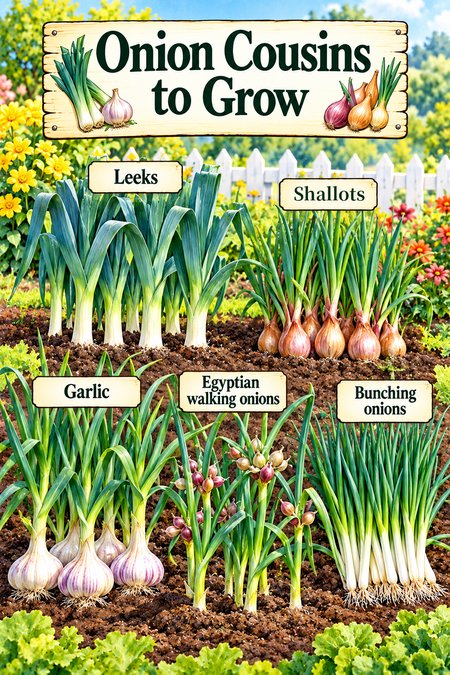
Onions have several easy-to-grow cousins that take very little garden space.
- Bunching onions. Grown for their green tops, not bulbs. Many are ready in 50 to 75 days. Try Evergreen or Beltsville Bunching.
- Shallots. Mild, sweet cousins that grow in clusters, like garlic cloves. Great in soups and stews. See growing shallots.
- Leeks. Mild-flavored stalks for soups, stews, and salads. They grow slowly but stand well in cold weather. See how to grow leeks.
- Egyptian walking onions. A cold-hardy perennial that grows little bulb clusters on top. The stalks bend to the ground and the bulbs root, so the patch "walks." See growing Egyptian onions.
- Garlic. Planted in fall and harvested the next summer. See how to grow garlic.
Frequently Asked Questions About How to Grow Onions
1. How long does it take to grow onions from planting to harvest?
Most onions take 100 to 120 days from transplanting or setting out sets to reach full maturity, though green onions intended to be harvested young can be ready in as little as 60 days. The exact timeline in how to grow onions to full bulb size depends heavily on variety and on getting the day-length type right for your region, since the wrong type may never bulb properly regardless of how long it grows.
2. Can I grow onions in containers?
Yes - growing onions in containers works well, particularly for green onions and smaller bulb varieties. Use a container at least eight to ten inches deep with good drainage, and space sets or transplants two to three inches apart for green onions, or four to six inches apart if you want full-size bulbs. Container onions need slightly more frequent watering than in-ground plantings since pots dry out faster.
3. Why do my onions have small bulbs even though the plants look healthy?
Small bulbs despite healthy-looking foliage usually point to one of two causes: planting a day-length type that does not suit your latitude, or overcrowding that forces plants to compete for space and light. Confirm you have chosen the correct long-day, short-day, or intermediate-day variety for your region, and make sure plants are thinned or spaced at least four inches apart for full-size bulb development.
4. Should I grow onions from seed, sets, or transplants?
For most home gardeners learning how to grow onions, sets are the simplest and most forgiving starting method, requiring no indoor seed starting and producing reliable results with minimal effort. Seeds offer the widest variety selection but require the most lead time and indoor care. Transplants split the difference, offering good variety access without the work of starting your own seedlings.
5. What is the best way to use up onions that have started to sprout in storage?
Onions that have begun sprouting in storage are still perfectly edible and can be used in cooking right away, though their flavor and texture decline somewhat compared to a freshly cured bulb. A sprouting onion can also be replanted in the garden - simply set it in soil and allow the green shoots to grow on for fresh green onion tops, even if the original bulb itself is past its best for kitchen use.
More Vegetable Growing Guides

- Growing Vegetables — complete hub for growing all vegetables at home
Recent Articles


-
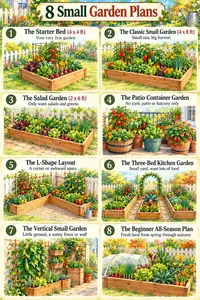
Small Vegetable Garden Plans: 8 Layouts That Maximise Space
Oct 08, 26 10:41 AM
 Small vegetable garden plans are some of the most searched and most valuable resources in home food growing.
 -
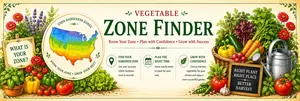
USDA Zone Finder - Find Your Vegetable Planting Dates | Vegetable-Gardening-Online.com
Oct 07, 26 03:53 PM
 Find your USDA hardiness zone, last spring frost date, and first fall frost date by state and region. Free interactive zone finder from Vegetable-Gardening-Online.com.
 -
Interactive Vegetable Garden Planner | Vegetable Gardening Online
Oct 07, 26 02:29 PM
Design a vegetable garden with correctly scaled plant spacing, companion flowers, drag-and-drop placement, and a printable plan. -
Free Printable Garden Stationery: Gardening Letter Paper & Note Cards
Oct 07, 26 12:48 PM
Free printable garden stationery: watercolor letter paper, lined and unlined, plus folded note cards with garden, fall, and Christmas scenes. Print at home. -
Free Preschool Vegetable Garden Cut and Paste Activities
Oct 07, 26 12:43 PM
 Free preschool vegetable garden cut and paste activities for ages 3-4. Build your own backyard, container, or seed packet garden scene, and sticker sheets.
 -
Planning a Vegetable Garden: Layouts, Raised Beds, Containers & More
Oct 06, 26 07:44 PM
 Planning a vegetable garden? Start here: layouts, raised beds, containers, square foot gardening, free planning tools, and tips to avoid beginner mistakes.
 -
How to Start a Vegetable Garden: 10 Easy Steps for Beginners
Oct 06, 26 04:38 PM
 How to start a vegetable garden in 10 easy steps: pick a sunny spot, choose raised beds or containers, prepare the soil, and grow easy vegetables.