Victoria Rhubarb
How to Grow Rhubarb in Your Garden
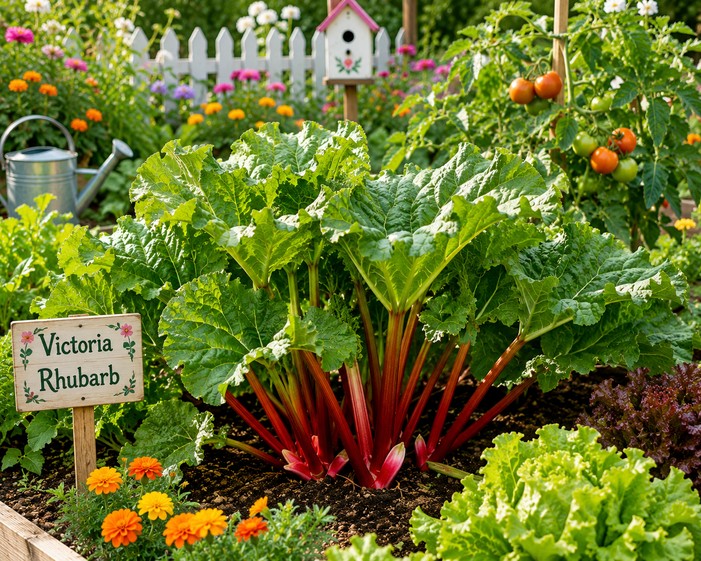
Victoria rhubarb is one of the best and easiest rhubarb varieties to grow. Rhubarb is a hardy perennial, an old-time favorite in every grandma's garden. Plant it once, and it gives you tart, tasty stalks for pies, crisps, sauces, and jams every spring for 10 to 15 years or more. Even a beginner gardener can grow a healthy crop!
 ★ Save
| Rhubarb at a glance | |
|---|---|
| Type | Hardy perennial; Zones 3 to 8 (needs winter cold) |
| Sun | Full sun; afternoon shade in hot climates |
| Soil | Rich, well-drained, lots of organic matter; pH 6.0 to 6.8 |
| Plant | Crowns in early spring, as soon as the soil can be worked |
| Spacing | 3 to 4 feet apart |
| Harvest | Lightly the 2nd year; fully from the 3rd year on, in spring |
About Victoria Rhubarb
 ★ Save
Victoria is an old heirloom variety, grown since the 1800s and still one of the most popular. It is very productive, with green stalks blushed red toward the base. The stalks are tender and slim, and many cooks find Victoria milder and less stringy than other varieties, which makes it quick and easy to prepare.
Its tart-sweet flavor has wide appeal. With a bit of sugar, rhubarb makes wonderful pies, tarts, muffins, sauces, and jams, and it is finding new popularity in many dishes today.
How to Plant Rhubarb
How to Plant and Grow Rhubarb
 ★ Save
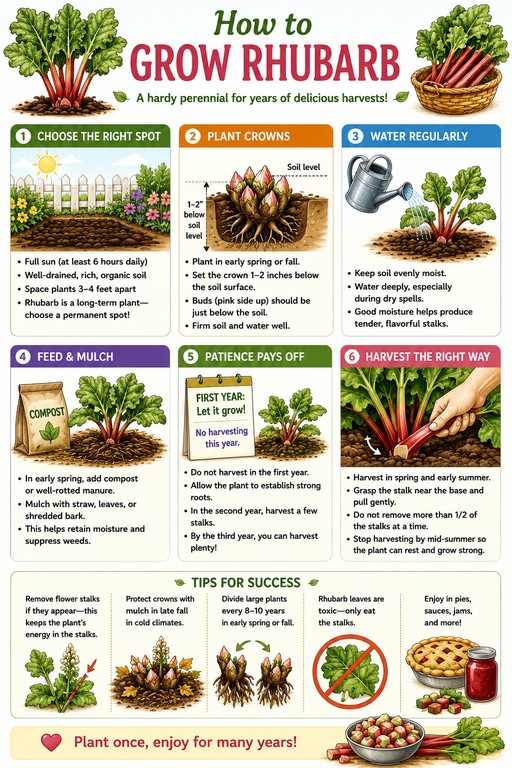
Plant crowns, not seed. Rhubarb is almost always grown from crowns, which are pieces of root with a bud or two. Buy them from a nursery, or get a division from a friend's plant. Rhubarb from seed takes an extra year or two to produce, and the plants may not be like the parent.
- Choose a permanent spot. Rhubarb stays in place for many years, so put it at the edge of the garden where it won't be disturbed by tilling.
- Prepare the soil well. Dig a hole about 2 feet wide and 1 foot deep, and mix in plenty of compost or aged manure. The plant will feed from this soil for many years.
- Plant the crown. In early spring, set the crown in the hole with the buds 1 to 2 inches below the soil surface. Fill in and firm the soil.
- Space them out. Plant crowns 3 to 4 feet apart. Two or three plants are plenty for most families.
- Water well. Keep the soil moist while the plants get established.
Caring for Rhubarb
 ★ Save
- Water: give about 1 inch a week, especially in dry weather. Established plants handle short dry spells, but steady water gives you the best stalks.
- Feed: spread compost or aged manure around the plants every spring.
- Mulch: a layer of straw or compost keeps the soil moist and holds down weeds.
- Cut off flower stalks: rhubarb sometimes sends up tall flower stalks. Cut them off at the base as soon as you see them, so the plant puts its energy into leaves and stalks.
- Sun and heat: in cool and northern areas, plant rhubarb in full sun. In hot climates, give it afternoon shade, or the plants may wilt and struggle in summer heat.
Rhubarb needs winter cold. It grows best where the ground freezes in winter, which gives the plants the rest they need.
How to Harvest Rhubarb
 ★ Save
Be patient the first two years. Don't harvest the first year, so the roots can grow strong. The second year, pick just a few stalks for a week or two. From the third year on, you can harvest fully.
- When: in spring, when the stalks are 10 to 15 inches long. The harvest lasts about 8 to 10 weeks.
- How: grasp a stalk near the base and pull it with a slight twist, so it pops free from the crown. Pulling is better than cutting, which leaves a stub that can rot.
- Don't take too much: always leave at least a third of the stalks on the plant, and stop harvesting by early summer so the plant can build up strength for next year.
- Trim: cut off the leaves and the bottom end of each stalk before using.
- Store: fresh stalks keep a week or two in the refrigerator. Rhubarb freezes beautifully raw: just wash, cut into 1-inch pieces, and freeze in bags.
Rhubarb leaves are poisonous! They contain oxalic acid. Never eat any part of the leaf, and keep the leaves away from children and pets. The leaves are safe to add to your compost pile.
Dividing Rhubarb Plants
A rhubarb plant usually lives 10 to 15 years or longer. Every 4 to 5 years, or when the stalks start getting thin and crowded, divide the plants.
- Dig in early spring, just as the new growth appears.
- Split the crown with a sharp spade into pieces, each with at least one or two buds and some roots.
- Replant the healthiest pieces in freshly prepared soil.
This is a perfect time to share rhubarb plants with friends and neighbors!
Rhubarb with Strawberries and Raspberries
 ★ Save
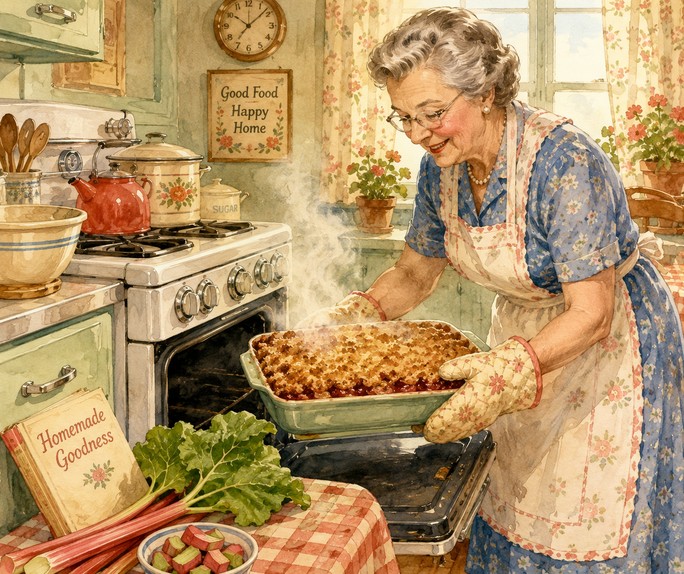
Rhubarb is a great partner for berries. Have you tried strawberry-rhubarb pie? Then you know what I mean! For people who don't love rhubarb by itself, combining it with strawberries or raspberries makes a truly delicious flavor combination. Pies, crisps, and cobblers made with rhubarb, with or without berries, are a dessert staple in many homes.
Grow your own berries, too: see our guides to growing strawberries and growing raspberries.
Victoria Rhubarb: Questions
Why are my rhubarb stalks green instead of red?
Victoria is naturally a green variety with a red blush. Green stalks taste just as good. Color also varies with the weather and soil.
Why are my rhubarb stalks thin?
The plant may be crowded and need dividing, or it may need more compost and water. Also make sure you aren't harvesting too many stalks.
Can I eat rhubarb after it flowers?
Yes, the stalks are still safe to eat. Cut off the flower stalks so the plant keeps making good leaf stalks.
Can I grow rhubarb in a container?
Yes, in a large pot at least 20 inches deep and wide, but it does best in the ground.
More Vegetable Growing Guides
Victoria rhubarb is a beautiful, long-lived addition to any garden. This page is part of our How to Grow Vegetables hub.
My short garden email, Get the Dirt, comes Saturday mornings.
Sign Up for My Free Newsletter