This free square foot garden planner shows you exactly how many plants fit in each square of your bed. Pick your bed size, click a vegetable, then click the squares where you want it. The planner adds up how many plants and seeds you need, and you can print your plan.
1. Pick your bed size
2. Click a vegetable
3. Click the squares to plant it
Click or drag across squares to fill them. Pick a new vegetable any time. To empty a square, choose Clear a square.
What to plant
Want the next free garden tool first? My short garden email, Get the Dirt, comes Saturday mornings. Sign Up for My Free Newsletter
How to Use the Square Foot Garden Planner
Start with your bed size. A 4 x 4 foot bed has 16 squares, and a 4 x 8 foot bed has 32. Keep beds 4 feet wide or less, so you can reach the middle from either side without stepping on the soil.
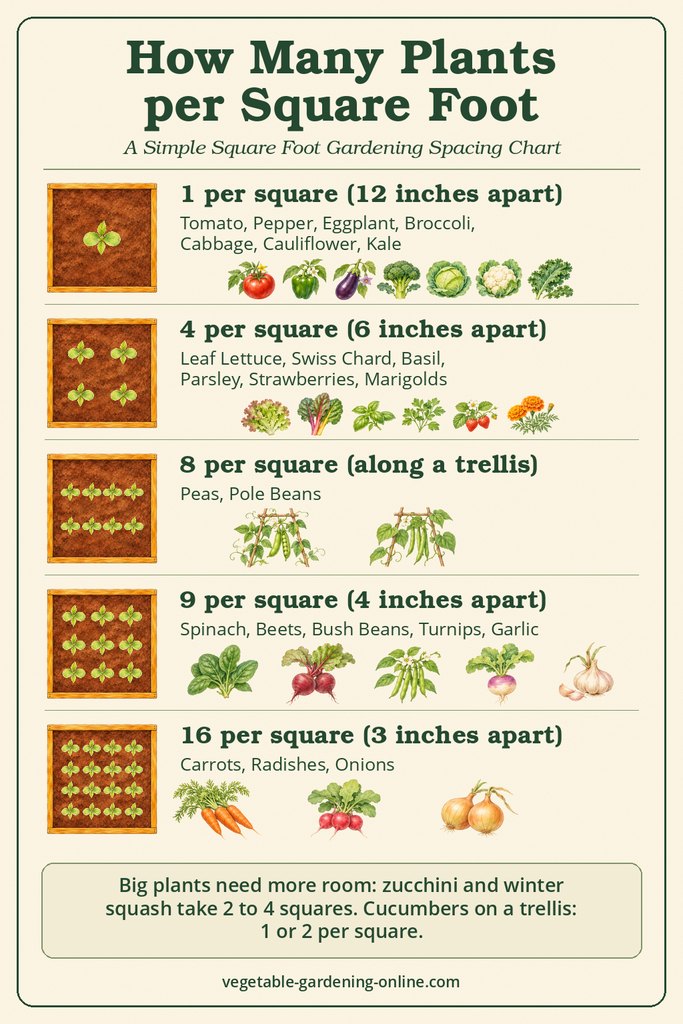
Click a vegetable, then click the squares. Each square fills with the right number of plants for that crop: 1, 4, 8, 9, or 16. You can drag across several squares at once.
Check the list under your bed. The square foot garden planner adds up how many plants you will grow, and how many seeds, transplants, cloves, or onion sets to get.
Print your plan and take it to the garden or the garden center. Give it a name first, so you can tell your beds apart.
Big plants need more room. Zucchini and winter squash take 2 to 4 squares, and cucumbers on a trellis fit 1 or 2 per square.
Corn needs a block of at least 4 rows to pollinate well, so it does better in a long bed or a separate patch.
Tips for Planting Your Square Foot Garden
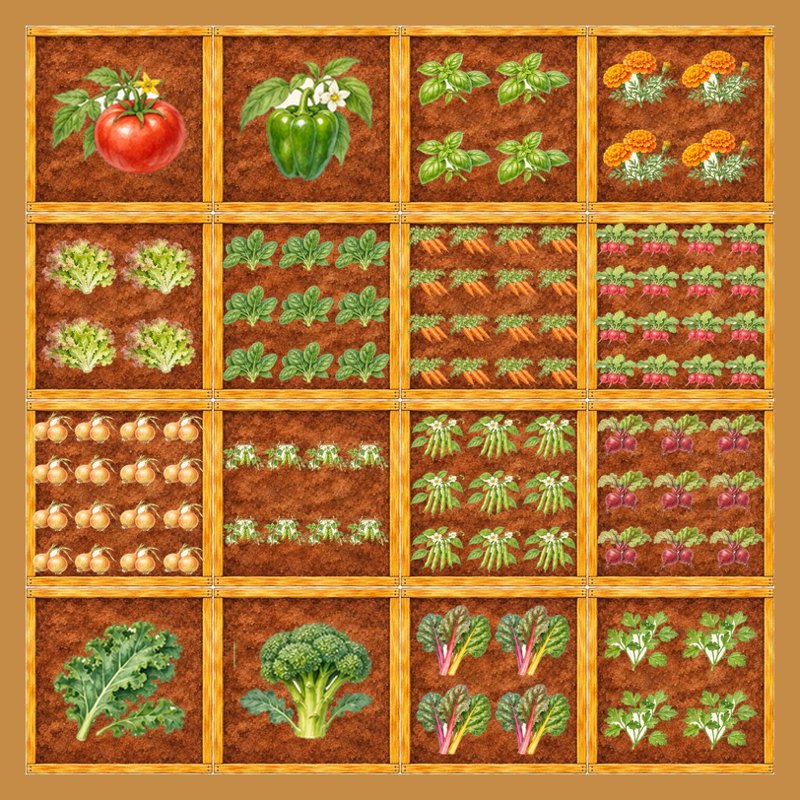
A 4 x 4 bed with 16 different crops, one in each square.
My Advice for a First 4 x 4 Bed
When planning a first 4 x 4 bed, my advice is to plant your family's favorite vegetables. That will get you off to a great start.
Lettuce, carrots, a tomato plant, green onions, radishes, and peas or a green bean plant or two will make an easy and fulfilling first garden for your family to enjoy.
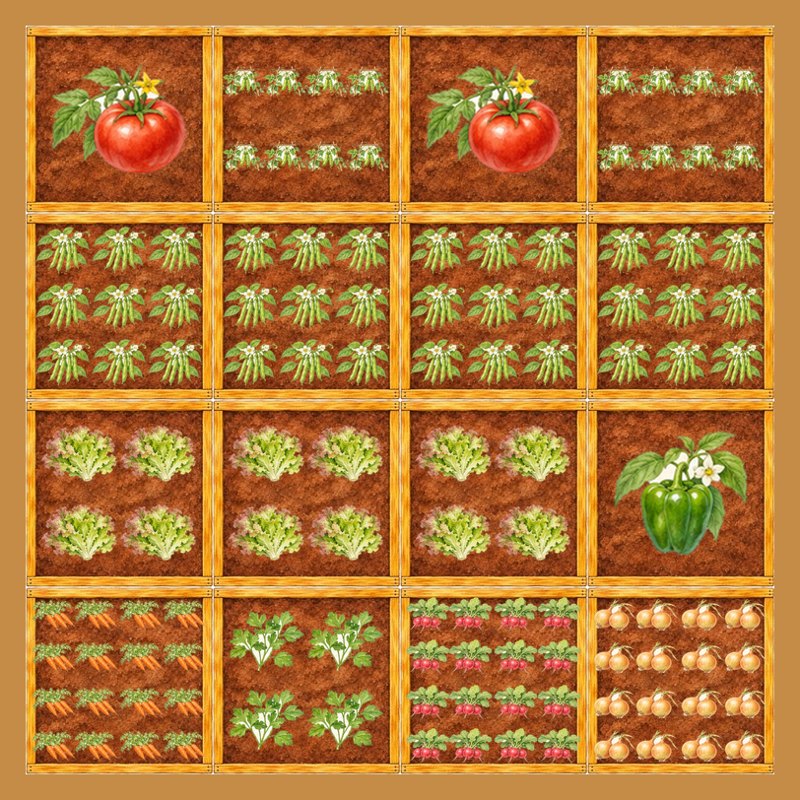
Click Show my first-garden plan in the square foot garden planner above to see how I would plant it:
Two tomatoes: one cherry tomato and one regular tomato, such as Early Girl or Beefsteak.
Peas between the tomatoes: the peas will be finished and can be removed by the time the tomatoes are ready to transplant.
Lettuce: plant one square every two weeks.
Pepper: it won't be ready until the end of summer.
Onions: harvest them as green onions, and leave some to mature if you like.
Parsley: it bolts in hot weather, so replant it when the weather is cooler.
Charlotte
Put tall crops on the north side (tomatoes, pole beans, peas on a trellis), so they don't shade the shorter plants.
Sow two seeds in each planting spot, then snip off the weaker seedling. The planner's seed count allows for this.
Replant as you harvest. When a square of radishes or lettuce is done, plant something new in it. One square can grow two or three crops in a season.
Mix flowers and herbs in to bring in bees and other helpful insects. Marigolds and basil fit nicely between vegetables.
Square Foot Garden Planner: Questions
Is this square foot garden planner free?
Yes. There is nothing to sign up for or download. It works on a computer, tablet, or phone.
Does it save my plan?
Your plan stays on the page while you work. To keep it, print it or save it as a PDF from the print window.
Why are the seed numbers higher than the plant numbers?
Not every seed comes up, so the planner counts two seeds for each planting spot. Thin to the strongest seedling.
My vegetable isn't listed. What should I do?
Use one with a similar size. For example, use the Swiss chard square for collards, or the radish square for small green onions.