- Home
- Preserving Harvest
- Making Sauerkraut
Making Sauerkraut at Home — A Simple Traditional Fermented Food

Making sauerkraut at home is one of the oldest and most satisfying ways to preserve a cabbage harvest.
Sauerkraut is a German word meaning sour cabbage — and making sauerkraut is essentially a process of fermenting salted shredded cabbage in its own juices until it becomes tangy, crunchy, and full of natural probiotics.
The technique has been used for centuries and requires no special equipment beyond a large crock or bucket, some salt, and patience.

Homemade sauerkraut made from garden-fresh cabbage bears almost no resemblance to the canned version from the grocery store.
The flavor is brighter, the texture is crunchier, and the fermentation process produces beneficial bacteria that are largely destroyed by the heat processing commercial sauerkraut undergoes.
If you grow cabbage in your vegetable garden, making sauerkraut is one of the most rewarding ways to use the harvest — and a batch made in fall will keep well into winter.
Fermentation is one of the oldest and most satisfying methods of preserving garden vegetables — and sauerkraut is the perfect place to start.
This page is part of our Preserving Garden Vegetables hub, where you will find complete guides to canning, freezing, fermenting, drying, and freeze drying vegetables from your home garden.
Our hub page will help you choose the right preserving method for every crop in your garden.
Preserving Garden Vegetables — complete guides to canning, freezing, fermenting, drying, and freeze drying vegetables from your home garden
What You Need for Making Sauerkraut
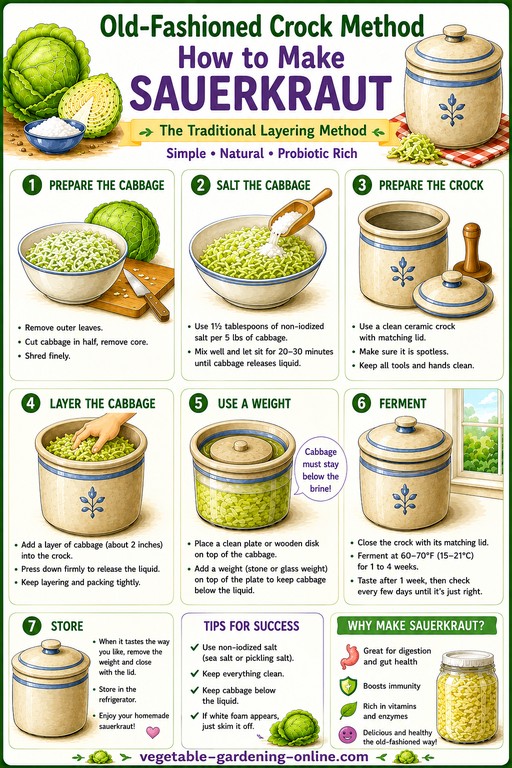
First assemble the necessary items for putting sauerkraut together; a plastic bucket or stone crock, and a vegetable shredder.
You can use a handy food processor to shred the cabbage about the thinness used for coleslaw.
Also needed is a board or plate that fits snugly into the crock, cheese cloth, and a weight to weigh down the plate such as a clean rock, or some other type of heavy weight, a bowl or jar filled with water might also be used.
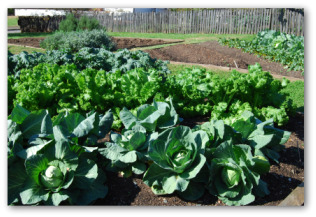
Ingredients for Making Homemade Sauerkraut
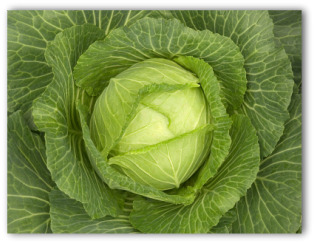
Food ingredients for putting sauerkraut together include cabbage and sea or pickling salt.
You will also need a one to three-gallon size crock, depending on how much sauerkraut you wish to make.
Procedure for Making Sauerkraut
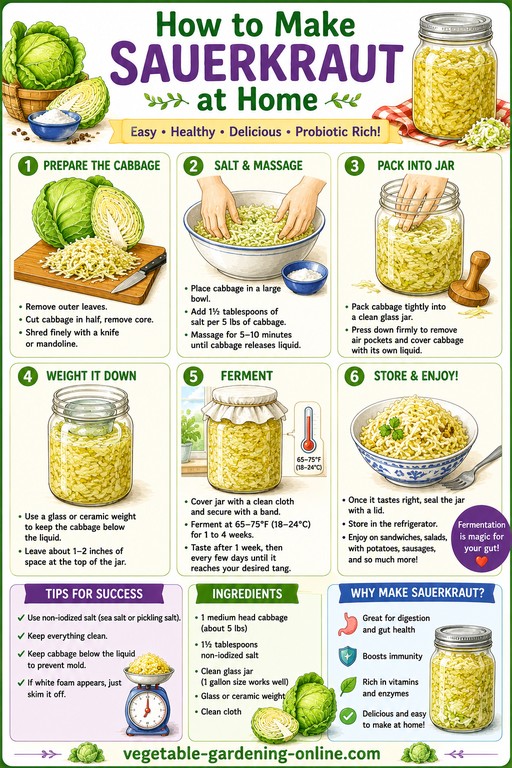
- First add a layer of shredded cabbage to the crock, then the salt.
- Pack down the cabbage mixture tightly using a potato masher or wooden mallet.
- Continue adding layers of cabbage and salt, packing down as well, until the mixture is a few inches of the rim of the crock.
- As the salt draws the liquid from the cabbage, brine will develop on the surface.
- As much air as possible must be excluded from the surface of the brine when making sauerkraut.
- Put cheese cloth on top of the cabbage. Place the tight fitting plate on the cloth.
- Weigh the plate down with a heavy weight.
- The juice should cover the cabbage at all times without rising above the plate.
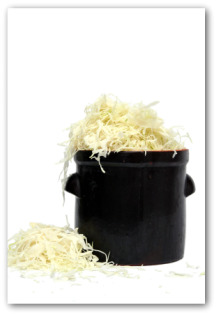
- Allow the cabbage to ferment in a temperature of around 60 -65 degrees.
- Every day you need to remove the weight, plate, and cloth to skim the brine.
- Scald the weight, plate, and cloth with boiling water before replacing them back on top of the sauerkraut.
- The sauerkraut can be eaten raw or cooked as soon as you no longer see any bubbles arise to the top.
- The flavor becomes stronger as time goes by.
- Test taste it after a few weeks to see if it is to your liking.
- If it passes your inspection, you can freeze it in freezer bags or can it in glass jars.
Preserving Your Finished Sauerkraut

Once making sauerkraut is complete and the flavor is to your liking, you have several preservation options.
- Refrigerating the finished sauerkraut is the simplest option.
- Transfer it to clean mason jars, cover with brine, seal, and refrigerate.
- Refrigerated sauerkraut keeps for several months and continues to slowly develop flavor over time.
- Freezing sauerkraut is easy and effective.
- Pack it into freezer bags or freezer containers with enough brine to cover, leaving half an inch of headroom for expansion.
- Frozen sauerkraut keeps well for up to a year and retains most of its flavor though it loses some of its crunch after thawing.
- Canning sauerkraut allows storage at room temperature for a year or more.
- Use the raw pack method — fill clean canning jars with sauerkraut and brine, leaving half an inch of headroom.
- Wipe the jar rims clean, apply the lids and bands, and process in a boiling water bath canner.
- Process pint jars for fifteen minutes and quart jars for twenty minutes. Remove and let cool completely before storing.
Making Sauerkraut — Serving and Recipe Ideas
 Reuben sandwiches, sauerkraut and sausage, and sauerkraut and apples are great ways to enjoy your homemade sauerkraut. See recipes below this image.
Homemade sauerkraut made from garden cabbage is delicious in a wide range of dishes. Here are some favorite ways to use your finished sauerkraut.
A classic Reuben sandwich — corned beef, Swiss cheese, and a generous mound of tangy sauerkraut on rye bread — is the most famous use of sauerkraut in American cooking. Homemade sauerkraut makes a Reuben genuinely extraordinary.
Sauerkraut with sausage is a traditional German pairing that works beautifully.
Place sauerkraut and frankfurters or bratwurst in alternate layers in a casserole, add caraway seeds and a bay leaf, cover, and bake at 325 degrees for thirty minutes. Simple, hearty, and delicious.
Sauerkraut with apples and wine is a more refined version worth trying.
Cook a diced onion in butter, add the sauerkraut, diced apple, white wine, and enough chicken stock to cover.
Cook on low heat uncovered for thirty minutes, add a pinch of sugar and caraway seeds, then cover and finish in a 325-degree oven for another thirty minutes.
Excellent served alongside pork.
Sauerkraut on its own as a condiment with grilled meats, hot dogs, and bratwurst is the simplest and perhaps most satisfying use — particularly when the kraut is made from cabbage you grew yourself.
Growing Cabbage for Making Sauerkraut
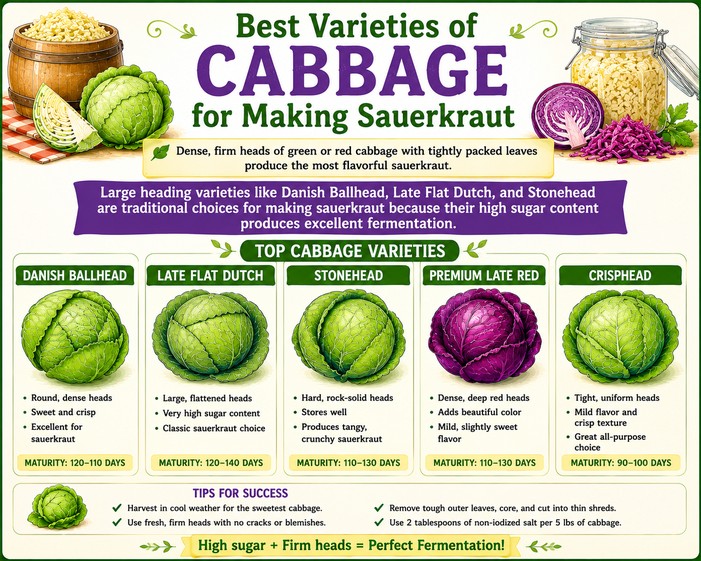
The best sauerkraut starts with the best cabbage — and the best cabbage comes from your own garden.
Dense, firm heads of green or red cabbage with tightly packed leaves produce the most flavorful sauerkraut.
Large heading varieties like Danish Ballhead, Late Flat Dutch, and Stonehead are traditional choices for making sauerkraut because their high sugar content produces excellent fermentation.
Harvest cabbage for making sauerkraut in fall after the heads have reached full size and density. Fall-harvested cabbage tends to have higher sugar content than spring-harvested heads, which translates directly into better-flavored sauerkraut. A light frost actually improves cabbage flavor by converting some starches to sugars — ideal timing for making sauerkraut.
One five-pound head of cabbage produces approximately one quart of finished sauerkraut. Plan accordingly when deciding how many heads to reserve from your harvest for making sauerkraut versus fresh eating and other preservation methods.
Now that you are on your way to becoming the neighborhood expert on making sauerkraut, you will want to wow your neighbors and family using the homemade tasty ingredient to make the following delicious homemade sauerkraut recipes:
Ball Mason Jars at ballmasonjars.com has been a trusted name in home food preservation for over a century. Their homemade sauerkraut recipe page walks you through the full fermentation process step by step — a great reference to use alongside your own sauerkraut project.
More Vegetable Preservation Guides
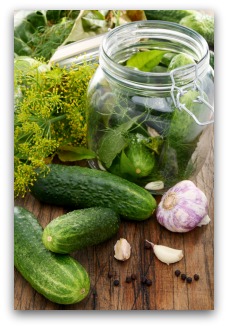
Making sauerkraut is one of the most satisfying preservation projects from the home vegetable garden.
For more ways to preserve your harvest through the growing season and into winter, visit our Preserving Garden Vegetables hub.
We also have guides to freezing vegetables, canning vegetables, and storing onions, garlic, and potatoes — everything you need to make the most of a productive garden harvest.
For research-based guidance on making sauerkraut safely — including salt ratios, fermentation temperatures, troubleshooting off-flavors, and safe canning procedures — the National Center for Home Food Preservation at nchfp.uga.edu is the most authoritative free resource available for home fermenters and canners.
- Preserving Garden Vegetables — complete hub for freezing, canning, and storing vegetables from the garden
- How to Grow Cabbage — complete guide to growing the best cabbage for fresh eating and sauerkraut
- Canning Vegetables — complete guide to home canning for long-term vegetable storage
- Freezing Vegetables — quick and easy vegetable preservation for the home freezer
National Center for Home Food Preservation — Sauerkraut Guide
For research-based guidance on making sauerkraut safely at home — including precise salt ratios, fermentation temperatures, troubleshooting common problems, and tested canning procedures for preserving finished sauerkraut — the National Center for Home Food Preservation at nchfp.uga.edu is the most authoritative and reliable free resource available for home fermenters and canners in the United States.
- National Center for Home Food Preservation — Sauerkraut — research-based guide to making and canning sauerkraut safely at home including salt ratios, fermentation guidance, and tested preservation methods
Ball Mason Jars — Homemade Sauerkraut Recipe — step-by-step fermentation instructions for homemade sauerkraut from a century-old trusted preserving brand
Recent Articles


-
Free Printable Return Address Labels: Garden and Christmas
Oct 11, 26 10:32 AM
Free printable return address labels with watercolor garden and Christmas designs. Type your address, pick a picture, and print on Avery 5160 label sheets. -
Free Printable Canning Jar Labels: Regular, Wide Mouth & Jam Jars
Oct 11, 26 10:29 AM
 Free printable canning jar labels for regular and wide mouth lids and jam jars: tomatoes, salsa, pickles, green beans, peaches, pears, and jam.
 -
Free Printable Gift Tags: Garden, Harvest, and Christmas
Oct 11, 26 10:24 AM
 Free printable gift tags and folded gift cards in watercolor garden designs: flowers, harvest, Thanksgiving, winter, and Christmas. Print at home on cardstock.
 -
Free Vegetable Garden Printables — Downloads for Every Gardener
Oct 11, 26 10:15 AM
 Browse our complete library of free vegetable garden printables, from planning worksheets and growing charts to kids' activities, all free to download & print.
 -
Free Printable Gift Stickers: Christmas and Garden Designs
Oct 11, 26 10:00 AM
Free printable round gift stickers with watercolor garden and Christmas pictures. Add a message or To and From, and print on 2-inch labels at home. -
Free Printable Garden Calendar 2027: 12 Watercolor Months (PDF)
Oct 10, 26 10:30 AM
 Free printable garden calendar for 2027: 12 watercolor garden scenes, a monthly garden task, and room to write. Print the whole year or one month at a time.
 -
Free Printable Garden Stationery: Gardening Letter Paper & Note Cards
Oct 10, 26 10:22 AM
 Free printable garden stationery: watercolor letter paper, lined and unlined, plus folded note cards with garden, fall, and Christmas scenes. Print at home.