- Home
- Vegetable Garden Soil
- Compost Bin Plans
Easy Compost Bin Plans

The following free compost bin plans to build at home, are geared to an average do-it-yourself vegetable gardener.
You may use recycled materials when applicable to hold down costs.
These easy compost bin designs can be built as a weekend project.
Design Your Own Vegetable Garden Layout Using our Free "Vegetable Garden Planner" Software!
A well-built compost bin is one of the most useful permanent additions to a productive vegetable garden — it turns kitchen and yard waste into the rich organic matter that good vegetable garden soil is built on, season after season.
This page is part of our Soil, Fertilizer and Composting hub, where you will find complete guides to composting, fertilizing, mulching, manure, compost tea, and all the methods that build productive long-term vegetable garden soil.
Soil, Fertilizer and Composting — complete hub for building rich vegetable garden soil through composting, fertilizing, mulching, and manure
Single Sided Wood DIY Compost Bin
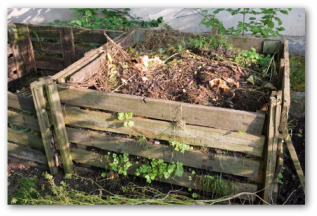
A one compartment compost bin is sufficient to confine most composting materials. Turning the heap and removing the finished product for supplying the vegetable garden is accessed through the loosened front boards. This design should be situated on a level piece of ground.
- 1 4'-9" 2x2s
- Six 3'-6" 2x2s posts
- 24 4' 1x6s
- 96 1-1/2" No. 10 galvanized wood screws
- 4- 2-1/2" No. 10 galvanized wood screws
Download Free Garden Planning Worksheets, Garden Diary, Zone Chart, Or Planting Guide
Compost Bin Plans : Necessary Tools
- Hammer
- Hatchet
- Power drill
- 1/8 inch twist bit
Compost Bin Plans : Step 1
Use the hatchet to shave down the ends of the six 2x2 posts to a point.
At the compost bin location site, pound in the four corner posts into the ground to a depth of six inches.
The posts should be spaced apart 4 feet from front to back and 3 feet 10-1/2" from side to side.
Hammer in the remaining two posts to the identical soil depth. Allow a one inch gap between the posts for the front boards.
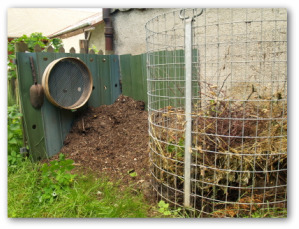 Simple homemade wire compost bin design.
Compost Bin Plans : Step 2
Starting at the bottom, attach 6 1x6 boards to the side posts on each side, allowing a ½ inch gap.
Pre-drill pilot holes to use a couple of 1-1/2" screws for each board.
A ½ inch gap between the boards allows for proper air circulation.
After attaching the side boards, screw six 1x6 planks to the back of the compost bin using a couple of 1 and a half inch screws on each post.
The remaining 1x6 boards should be loosely fitted into the formed slots of the front posts.
Compost Bin Plans : Step 3
From the leftover 2x2, cut two 3" pieces. Attach each end of the pieces with a couple of 2-1/2"screws.
Pilot drill the screw holes first with a 1/8" drill bit to prevent the wood from splitting.
Fit the completed cross bar across the top of the unit at the front.
Compost Bin Plans : Mobile Wire &
Wood Easy Compost Bin Design
A mobile bin serves to contain a compost heap in a temporary location.
When the time comes for the pile to be turned or finished compost to be removed, the container is taken apart and reset in a different garden spot.
Fork the partially decomposed material from atop the old heap over into the emptied bin, which leaves the aged compost free at the bottom for use in the vegetable garden.
Mobile compost bins can be constructed out of old wood pallets tied together or a roll of fencing or wire.
Hardware cloth was used for this illustration stretched over four wood lap jointed frames.
Materials List
- 12' 36" wide, ½ " hardware cloth
- Four 12' 2x4s100- ½ " No. 8 galvanized screws
- Four hook and eye gate latches
- Four 3" galvanized door hinges & screws
- carpenter's glue
- Tin snips
- Table saw
- Power drill
- 1/8 inch drill bit
- Power staple gun
- C/W staples
Step 1
Cut a total of 16 pieces by cutting each 12' 2x4 into four 3' long pieces.
Step 2
Cut three ½ "wide x ¾ " lap cuts at the ends of the 16 wood pieces.
Be certain that the cuts are made from the identical side of each plank.
Set the power saw blade to ¾" depth.
Make multiple passes until the end material has been removed.
Step 3
Using the 16 boards, make four 3' square lap jointed frames.
Pilot drill holes with drill bit initially to prevent the board ends from splitting.
Use carpenter's wood glue and wood screws to join each lap joint.
Step 4
Use tin snips to cut the hardware cloth into four 3' square sections.
Bend the edges back an inch for additional reinforcement.
Center each cloth section section onto a frame.
Staple hardware cloth every 4".
Ensure the cloth is fastened tight enough to prevent sagging when the compost bin is filled.
Step 5
Connect each pair of wood frames with two hinges.
Attach hook and eye latches on the outside of each connected frame.
In the end, the L shaped sections should be latched together.
Wire, Cinder Block, and Barrel Compost Bin Designs
It is also easy to make a wire compost bin that is movable, or to
convert a 50 gallon barrel into a compost bin. Cinder block compost bins
are also a simple and practical way to go as well.
The Old Farmer's Almanac at almanac.com has a practical step-by-step composting guide that covers what to add to a compost pile, what to leave out, how to manage the pile for fast decomposition, and how to know when the finished compost is ready to work into your vegetable garden soil — a useful reference alongside your compost bin building plans.

Recent Articles


-
How to Grow Cabbage
Sep 15, 26 12:33 PM
 How to Grow Cabbage: The Complete Guide from Seed to Harvest. This complete guide covers everything you need to know about how to grow cabbage.
 -
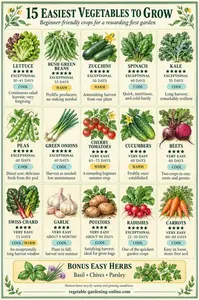
Easiest Vegetables to Grow: 15 Foolproof Crops for Beginners
Sep 15, 26 09:24 AM
 Easiest vegetables to grow for beginners - with advice on what makes each one easy, how to get started, and which vegetables are harder than they look.
 -
How to Grow Green Beans
Sep 14, 26 07:53 PM
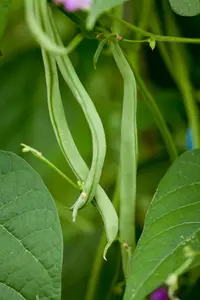
 How to Grow Green Beans: The Complete Guide to Bush and Pole Beans. Green beans are one of the most forgiving crops a beginner can choose.
 -
Seasonal Vegetable Garden
Sep 14, 26 05:38 PM
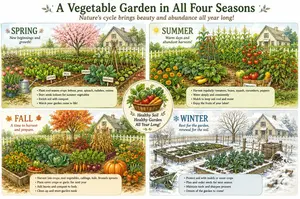
 Seasonal Vegetable Garden — Growing Food Through Every Season
 -
Overwintering Vegetables: Fall-Planted Crops for Early Spring Harvest
Sep 14, 26 05:35 PM
 Learn about overwintering vegetables like garlic, fava beans, and onions, planted in fall to sit through winter and reward you with an early spring harvest.
 -
Free Vegetable Garden Journal— Printable Downloads for Home Gardeners
Sep 14, 26 01:51 PM
 Download our free Vegetable Garden Journal — choose a full 16-page version or simpler 7-page journal. Track planting, harvest, & garden notes season by season.
 -
Free Vegetable Garden Cut and Paste Activities for Kids Ages 5-7
Sep 12, 26 09:13 PM
 Free printable vegetable garden cut and paste activities for kids ages 5-7. Build your own garden, match seeds to plants, and learn what grows where.