Raised Bed Soil Calculator for Beds and Containers
By Charlotte, a lifelong Oregon vegetable gardener · Updated November 2026
This free raised bed soil calculator tells you how much soil to buy before you fill a new bed. Enter the size of your raised beds, pots, or window boxes, pick a soil mix, and it shows the cubic feet, cubic yards, and bags of topsoil, compost, sand, or potting mix you need.
My Raised Bed and Container Soil List
1. Add your beds and containers
The raised bed soil calculator adds up everything you list. Add each size of bed or pot on its own line; for several beds the same size, just change "How many."
2. Pick your soil mix
3. Your soil shopping list
Want the next free garden tool first? My short garden email, Get the Dirt, comes Saturday mornings. Sign Up for My Free Newsletter
How to Use the Raised Bed Soil Calculator
Add each bed or container. Pick what you are filling: a square or rectangular raised bed, a round bed, a pot or grow bag by its gallon size, a round pot you measure, or a planter or window box. Enter the size and how many you have.
Pick a soil mix for your raised beds. The raised bed soil calculator splits your total into each ingredient: topsoil, compost, sand, peat or coir, or vermiculite. Containers always get potting mix.
Choose your bag size. The list shows cubic feet, cubic yards for a bulk delivery, and how many bags to buy.
Print your list and take it to the garden center or landscape supply yard. To plan what to grow in your new beds, use the vegetable garden seed calculator.
How Much Soil Does a Raised Bed Need?
Multiply the length and width of your bed in feet by the soil depth in feet. A 4 x 8 foot bed filled 12 inches deep holds 4 x 8 x 1 = 32 cubic feet. Divide by 27 to get cubic yards, the way bulk soil is sold. Here are common sizes:
Bed size
Soil depth
Cubic feet
Cubic yards
Bags of 1.5 cu ft
4 x 4 ft
12 in
16
about 0.6
11
4 x 8 ft
12 in
32
about 1.2
22
4 x 8 ft
18 in
48
about 1.8
32
4 x 8 ft
24 in
64
about 2.4
43
3 x 6 ft
12 in
18
about 0.7
12
4 x 12 ft
12 in
48
about 1.8
32
8 x 8 ft
18 in
96
about 3.6
64
Round up a little. New beds settle over the first season, so the raised bed soil calculator adds 10% extra unless you turn it off. A little extra soil makes topping off easy.
Use coarse sand, not play sand. If a mix calls for sand, buy coarse builder's sand. Fine sand fills the spaces between soil particles and makes the soil pack down harder, not looser.
How deep? Most vegetables grow well in 8 to 12 inches of good soil. Carrots, parsnips, and potatoes like 12 inches or more. See raised garden bed soil for the four soil recipes and what each one is best for.
How We Filled Our Raised Bed
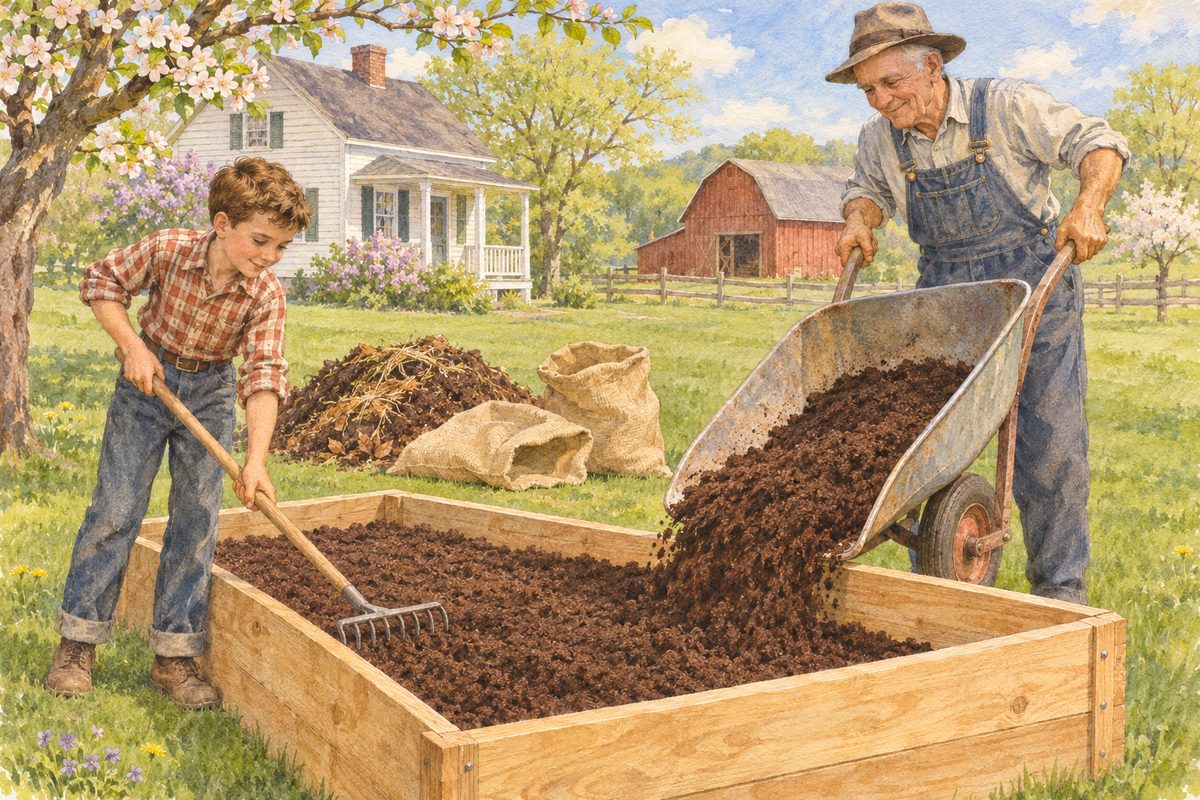
We filled our raised bed with bulk organic raised bed gardening soil from a local landscape supply company. My husband got two pick-up loads of soil in order to fill our 4 x 16 foot raised bed.
Charlotte
Our family building a raised bed vegetable garden together.
Layering: How to Fill a Deep Bed for Less
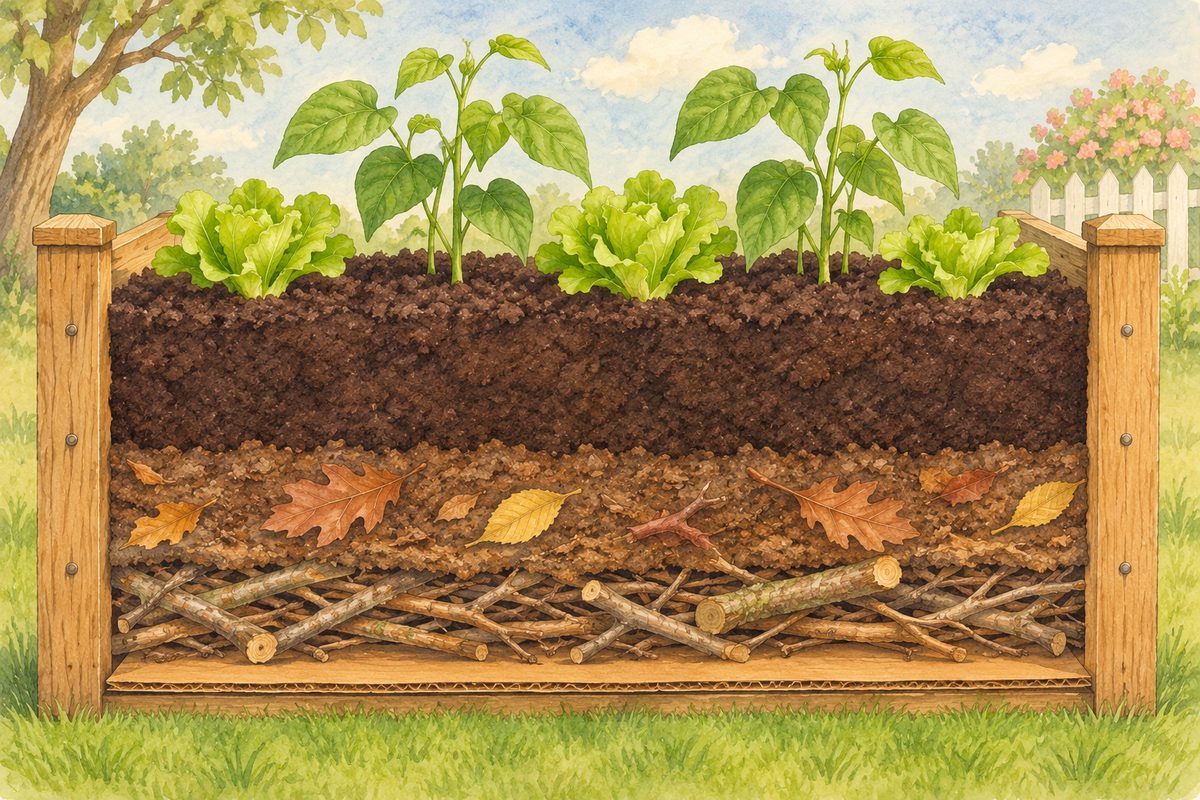
Fill the bottom of a deep bed with cardboard, branches, and leaves, and save the good soil for the top.
Filling a deep bed entirely with bought soil gets expensive once it is more than about 18 inches deep, and most vegetable roots only use the top 8 to 12 inches. Check the box in the raised bed soil calculator to figure good soil for the top 12 inches only.
Bottom layer: plain brown cardboard to smother grass and weeds, then branches, twigs, and other coarse yard waste.
Middle layer: lower-quality topsoil, half-rotted leaves, or soil dug from garden paths.
Top layer: the last 8 to 12 inches is where your good raised bed soil mix belongs.
Bagged Soil or Bulk Soil?
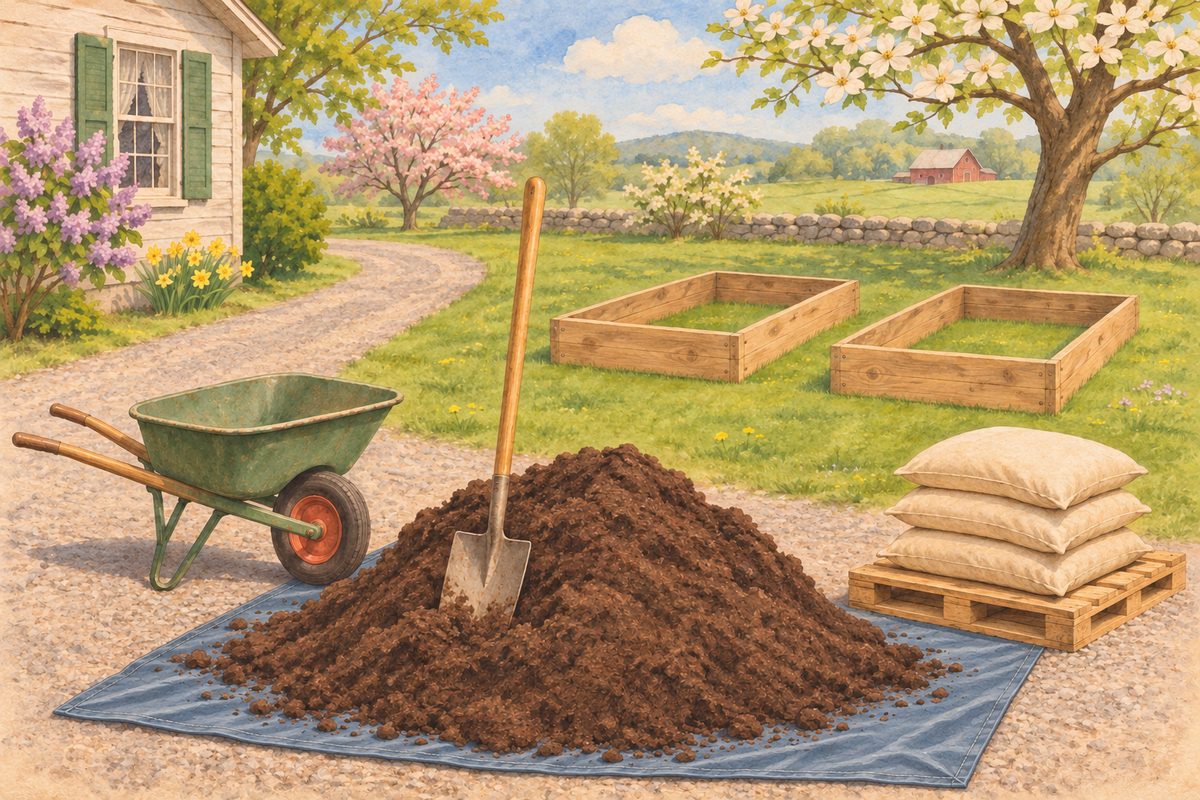
A load of bulk soil fills several beds for less than a stack of bags.
Bags are easiest for one or two small beds or a few pots. You can carry them in your car, and the soil is clean and weed-free.
Bulk is cheaper for bigger projects. One cubic yard is 27 cubic feet, the same as 18 bags of 1.5 cubic feet. Order all your beds at once; one delivery usually costs less than several small ones. Ask the supplier whether the compost is fully finished and the topsoil is free of weed killer.
How Much Potting Mix Do Containers Need?
Containers need potting mix, never garden soil.
Use potting mix, never garden soil, in containers. Garden soil packs down hard in a pot and drains poorly. Potting mix stays light and holds water and air.
Container
Potting mix
Good for
1 gallon
about 4 quarts (0.13 cu ft)
Lettuce, radishes, herbs
3 gallon
about 12 quarts (0.4 cu ft)
Lettuce, carrots, bush beans, peas
5 gallon (a bucket)
about 20 quarts (0.7 cu ft)
A pepper, eggplant, kale, cabbage, or cucumber
10 gallon
about 40 quarts (1.3 cu ft)
A bush tomato, bell pepper, zucchini, or potatoes
15 to 20 gallon
about 60 to 80 quarts (2 to 2.7 cu ft)
A tall tomato or a compact melon
Half barrel
about about 100 quarts (3.3 cu ft)
A mixed salad or herb garden
Potting mix is sold two ways: by the quart in smaller bags, and by the cubic foot in bigger ones. One cubic foot is about 26 quarts. Pick your bag size in the raised bed soil calculator and it does the math. See container vegetable gardening for which vegetables grow best in pots.
Keeping Raised Beds Full Year After Year
Add compost every spring. Spread 2 to 3 inches of fresh compost and work it lightly into the top few inches. The raised bed soil calculator shows how much your beds need under your soil list.
Refresh containers too. Each spring, replace the top third of the potting mix in your pots with fresh mix and a little compost, or start over with new mix if plants struggled.
Mulch with straw or shredded leaves to keep the soil from drying out and washing away. See mulching a vegetable garden.
Raised Bed Soil Calculator: Questions
Is this raised bed soil calculator free?
Yes. There is nothing to sign up for or download, and it works on a computer, tablet, or phone.
How many bags of soil do I need for a 4 x 8 raised bed?
A 4 x 8 bed filled 12 inches deep holds 32 cubic feet: about 22 bags of 1.5 cubic feet, or 24 with 10% extra for settling. At 18 inches deep it takes 48 cubic feet, or about 32 to 36 bags.
Can I use garden soil from my yard?
In a raised bed, mixed with plenty of compost, yes. In containers, no; use potting mix.
Why does the calculator add 10% extra?
New beds settle as the soil and compost break down over the first season. A little extra lets you top off the bed right away.