Vegetable Garden Seed Calculator: Seeds and Plants for Any Garden
By Charlotte, a lifelong Oregon vegetable gardener · Updated November 2026
This free vegetable garden seed calculator tells you how many seeds to plant and how many plants will fit, for any kind of garden: rows in the ground, raised beds, containers, or a trellis. Pick a vegetable, enter your garden size, and it does the math, then builds a seed shopping list you can print.
My Vegetable Garden Seed List
1. Add your vegetables
The vegetable garden seed calculator works one vegetable at a time. For each one, pick how you will grow it and enter the size. Add as many vegetables as you like; you can mix garden types, such as tomatoes in pots and beans in rows.
2. Your seed shopping list
The vegetable garden seed calculator adds extra seeds for ones that don't come up and for thinning. Packets vary a lot, so check the seed count on the back of yours.
Want the next free garden tool first? My short garden email, Get the Dirt, comes Saturday mornings. Sign Up for My Free Newsletter
How to Use the Vegetable Garden Seed Calculator
Pick a vegetable. The list has 36 vegetables, herbs, and strawberries. Tomatoes, peppers, lettuce, and beans are split into types, because a bush tomato and a tall vining tomato need very different room.
Pick how you will grow it: rows in the ground, a raised bed or wide bed, containers, or a trellis or fence. The vegetable garden seed calculator only offers a trellis for crops that climb, and only offers pots for crops that grow well in them.
Enter the size. For rows, enter how many rows and how long each one is. For a bed, enter the part of the bed you will give that crop. For containers, enter how many pots and their size. For a trellis, enter its length.
Read your list. Each vegetable shows how many plants fit and how far apart to space them. The shopping list adds everything up: seeds to sow, transplants to buy, garlic cloves, onion sets, or seed potatoes.
Print it and take it to the garden center, or keep it with your seed catalog. To place everything on a garden map, use the vegetable garden planner, or the square foot garden planner for square foot beds.
How Many Seeds to Plant for Rows, Raised Beds, Containers, and Trellises
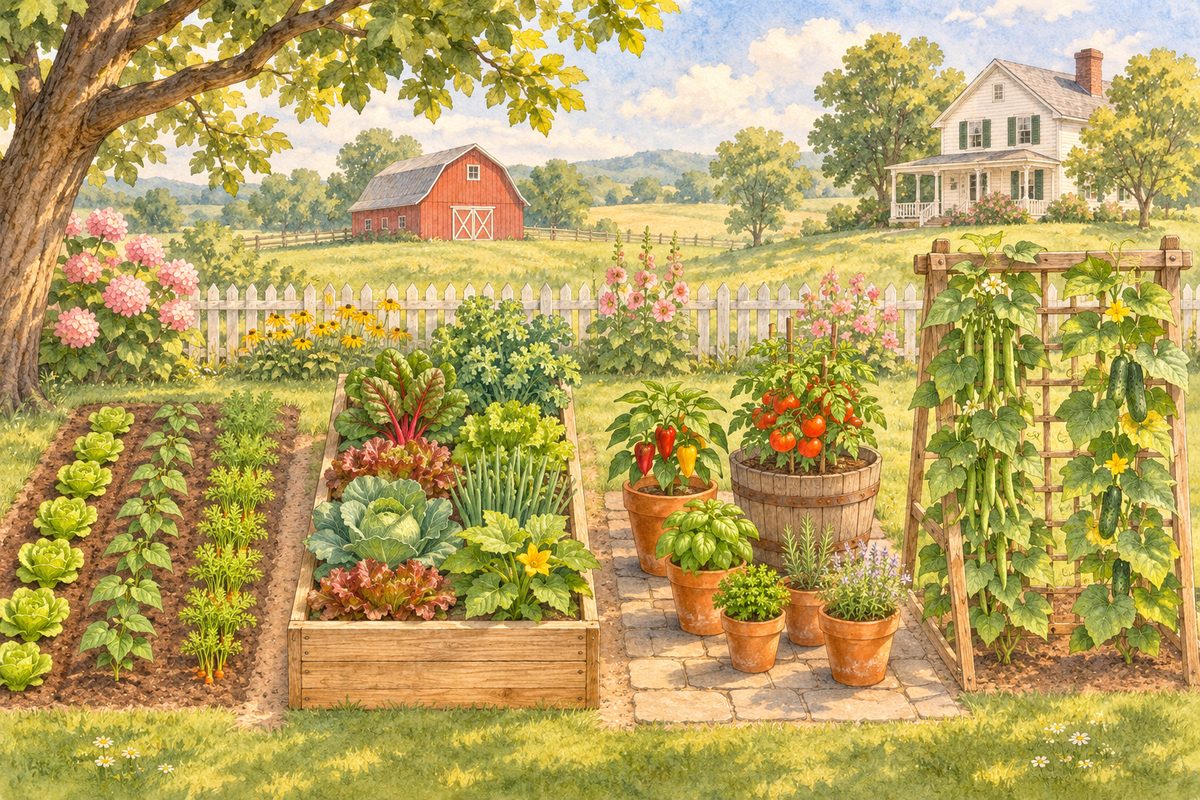
Rows, a raised bed, containers, and a trellis each fit a different number of plants.
Rows in the ground use the spacing on the seed packet: plants a few inches to a few feet apart, with a path between rows. Rows are easy to weed with a hoe and work well for big plantings of corn, potatoes, and beans.
Raised beds and wide beds skip the paths, so plants go closer together in every direction. The same space holds more plants, which is why a 4 x 8 bed can feed one or two people. See our raised bed vegetable garden guide for building one.
Containers hold fewer plants, and pot size matters most. A tomato needs at least a 10 gallon pot, while lettuce and radishes grow fine in a small one. The calculator tells you when a pot is too small for the vegetable you picked. See container vegetable gardening for more.
A trellis or fence lets peas, pole beans, cucumbers, and tall tomatoes grow up instead of out. You get more food from a narrow strip of ground. See our vertical vegetable garden ideas.
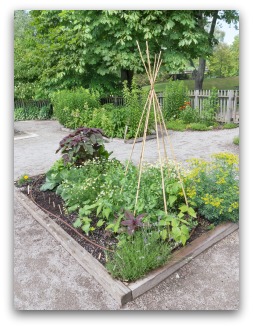
A bean teepee is the easy way to grow pole beans: tie 4 tall stakes together at the top and plant 3 seeds at each stake. One teepee gives a family of 2 plenty of fresh green beans, with some to give away. For canning, plant 3 or 4 teepees. Pick Bean teepee in the vegetable garden seed calculator to count the seeds.
Real gardens, real spacing. Here is how those ways of planting look in real vegetable gardens:
Rows in the groundSweet corn in a blockA raised bed planted closeOne zucchini fills a bedPeas in a big potPotatoes in a grow bagA teepee in a raised bed
How Many Vegetable Plants Per Person
A summer harvest from a family garden.
Before you use the vegetable garden seed calculator, think about how much your family eats, and whether you will eat everything fresh or put some up for winter. Enter the number of people in your household and pick fresh eating only, or fresh eating plus preserving. The last column shows how many plants to grow. Crops marked keeps for winter store well in a cool basement, garage, or root cellar.
These numbers are general guidelines. Plant more or less of each vegetable, depending on what your family likes to eat. If you have a family of 5, but only 3 of them like beets, tomatoes, or green beans, plan those crops for 3 people.
How much to plant depends on whether you want your garden for fresh vegetables only, or if you plan on canning, freezing, or pickling vegetables.
We always planted enough beets, turnips, acorn squash, hubbard squash, and carrots for storage and winter use.
We also raised a large plot of sweet corn, enough for fresh eating, and also for blanching and freezing for winter use. My mom's frozen corn, harvested and processed within a few hours, was so much more delicious than anything you could buy in a can or the frozen food section.
My father stepped off the rows, one hill per step, with 3 corn seeds in each hill. He had an old corn planting tool that dropped the 3 seeds into the ground at each hill, so he didn't have to bend over and plant them by hand. We never thinned them.
Charlotte
Plant lettuce, radishes, and cilantro a little at a time. Sow a few every 2 or 3 weeks instead of all at once, so you have a steady supply instead of more than you can eat. Our succession planting guide explains how.
Start small in your first year. It is easy to plant more than you can care for. Grow your family's favorite vegetables, keep notes, and adjust next year.
Tips for Buying and Sowing Seeds
Seed packets ready for spring planting.
Buy a little extra seed. Not every seed comes up, and birds, slugs, or a cold spell can take a row. The vegetable garden seed calculator already adds extra for thinning; one more packet of your favorites is cheap insurance.
Leftover seed keeps. Most seeds stay good for 2 to 4 years if you keep them cool and dry in a jar. Onion, parsnip, and leek seed are best used within a year.
Start some crops indoors. Tomatoes, peppers, eggplant, and the cabbage family are usually set out as transplants. The shopping list shows how many to buy, or how many seeds to start indoors if you grow your own. See growing vegetables from seed.
Vegetable Garden Seed Calculator: Questions
Is this vegetable garden seed calculator free?
Yes. There is nothing to sign up for or download. It works on a computer, tablet, or phone.
Why does it give me more seeds than plants?
Some seeds don't sprout, and small seeds like carrots and lettuce are sown thickly and thinned. The seed count includes that extra. Beets and chard are the exception: each "seed" is a cluster that makes 2 or 3 seedlings, so you sow one cluster for each plant.
Where do the spacing numbers come from?
From the growing guide for each vegetable on this site. Click a vegetable's name in the per-person table to read its full guide.
How big a garden does a family of four need?
About 100 square feet per person for fresh eating, and about twice that if you want to can or freeze. Our free vegetable garden plans include layouts from 10 x 10 to 20 x 40 feet.
Does it save my list?
Your list stays on the page while you work. To keep it, print it or save it as a PDF from the print window.