- Home
- Vegetable Garden Soil
- Cover Crops for Vegetable Gardens
Cover Crops for Vegetable Gardens —
Grow Better Soil Every Season
 Cover crops help build healthy vegetable garden soil.
Cover crops for vegetable gardens are one of the most powerful soil-building tools available to the home gardener.
- They cost very little.
- They require minimal labor.
And they work continuously — building organic matter, fixing nitrogen, suppressing weeds, and protecting the soil surface through the months when your garden beds would otherwise sit bare.
A garden bed left empty over winter is a wasted opportunity.
Bare soil erodes, compacts under rain, loses nutrients, and provides no habitat for the beneficial organisms that make garden soil productive.
Cover crops for vegetable gardens turn that idle period into active soil improvement.
Plant them when a crop finishes, let them grow through fall and winter, and turn them in before spring planting.
The result is richer, looser, more fertile soil than you started with — at almost no cost.
Why Use Cover Crops for Vegetable Gardens?

Cover crops for vegetable gardens provide benefits that no bag of fertilizer can fully replicate. Here are the main reasons experienced gardeners use them.
Nitrogen fixation is the single biggest benefit of legume cover crops for vegetable gardens. Clover, vetch, peas, and beans all host bacteria in their root nodules that convert atmospheric nitrogen into a form plants can use. When you turn these cover crops into the soil, that nitrogen becomes available to the next crop. A good stand of hairy vetch can add 60 to 100 pounds of nitrogen per acre — the equivalent of significant amounts of purchased fertilizer, entirely free.
Organic matter is the other major contribution of cover crops for vegetable gardens. Every cover crop you turn in adds biomass to the soil. That organic matter feeds earthworms and soil bacteria, improves drainage in heavy clay soils, improves moisture retention in sandy soils, and creates the loose, crumbly texture that experienced gardeners call good tilth. No other soil amendment builds organic matter as efficiently and economically as a well-managed cover crop.
Weed suppression is an underappreciated benefit of cover crops for vegetable gardens. A dense stand of winter rye or buckwheat shades out weed seeds and physically occupies the soil surface. Fewer weeds germinate. Those that do are crowded out by the cover crop. When you turn the cover crop in the following spring, the weed seed bank in that bed is meaningfully depleted.
Erosion prevention matters most in gardens on any kind of slope. Bare soil loses its topsoil layer to rain and wind over winter. Cover crops for vegetable gardens hold the soil in place with their roots and protect the surface with their foliage — preserving the fertility you have worked to build.
Types of Cover Crops for Vegetable Gardens

Cover crops for vegetable gardens fall into three main categories. Knowing which category each crop belongs to helps you choose the right one for your goals and timing.
Legumes are the nitrogen-fixing cover crops. They include crimson clover, hairy vetch, field peas, bell beans, and fava beans. Legumes are the first choice when your soil is nitrogen-deficient or when the following crop is a heavy feeder like corn, tomatoes, or squash. Inoculating legume seeds with the correct Rhizobium bacteria before planting ensures maximum nitrogen fixation — especially important in soils where legumes have not been grown before.
Grasses and grains are the organic-matter-building cover crops. They include winter rye, oats, wheat, and annual ryegrass. Winter rye is the most commonly used grass cover crop for vegetable gardens because it germinates in cold soil, overwinters reliably in most climates, and produces an enormous volume of organic matter. Oats are a good choice where you want a cover crop that winter-kills and leaves a mulch of dead material rather than requiring spring tillage.
Broadleaf cover crops include buckwheat, mustard, and phacelia. Buckwheat is one of the fastest-growing cover crops for vegetable gardens — it establishes quickly in summer, smothers weeds, and adds organic matter in as little as six weeks. Mustard releases compounds that suppress some soil-borne diseases and pests. Phacelia blooms beautifully and is exceptional for attracting pollinators and beneficial insects to the garden.
Mixes of legumes and grasses are often the best choice for all-purpose cover crops for vegetable gardens. A blend of hairy vetch and winter rye, for example, combines the nitrogen-fixing ability of the legume with the high organic matter production of the grass. The rye provides physical support for the vetch to climb.
When to Plant Cover Crops for Vegetable Gardens

Timing is the most important factor in getting cover crops for vegetable gardens established successfully. T
he goal is to get the cover crop growing well before cold weather arrives — or in the case of summer cover crops, before the next main crop needs the bed.
Fall is the most common time to plant cover crops for vegetable gardens. As main crops finish and beds open up — typically from August through early October in most of the United States — sow the cover crop immediately. Do not wait. Every week of delay is a week of potential growth lost. Winter rye and hairy vetch both germinate in soil as cold as 34 degrees Fahrenheit, making them reliable choices even for late fall plantings.
Summer cover crops for vegetable gardens fill gaps between spring and fall crops. Buckwheat is the most popular summer choice — it grows fast, smothers weeds in beds that are temporarily empty, and is easy to turn in when you are ready to plant again. Sow buckwheat after spring crops finish and before fall crops go in.
Spring planting of cover crops for vegetable gardens is less common because beds are usually needed for vegetables. However, if a bed will be empty for several weeks in early spring before transplant time, a fast-establishing cover crop of oats or annual ryegrass can still provide some benefit before being turned in.
How to Incorporate Cover Crops
for Vegetable Gardens

Turning cover crops into the soil at the right time and in the right way ensures that your vegetable garden gets the full benefit of the organic matter and nutrients the cover crop has built up.
The ideal time to turn in cover crops for vegetable gardens is just before or at flowering.
At that stage the plant material is still soft and breaks down quickly.
Cover crops turned in after setting seed take much longer to decompose and may actually tie up nitrogen temporarily as soil organisms work to break down the tough material.
Mow or cut the cover crop at ground level before tilling it in.
This makes incorporation much easier.
Spread the cut material across the bed and till or dig it in to a depth of six to eight inches.
Then wait. Allow two to three weeks before planting into that bed.
The decomposing cover crop releases nutrients and then the soil organisms settle down, returning the bed to normal growing conditions.
If you prefer the no-dig approach, cover crops for vegetable gardens can also be cut and left on the surface as a mulch rather than incorporated.
This is called the chop-and-drop method.
Mow or cut the cover crop at soil level, leave the cut material on the surface, and plant directly through it.
Decomposition happens from below as soil organisms process the material from the soil side up.
For research-based guidance on cover crop selection, planting timing, and termination methods for home vegetable gardens — the Rodale Institute at rodaleinstitute.org has one of the most comprehensive cover crop guides available for organic home gardeners.
- Rodale Institute — Cover Crops — research-based guide to selecting and using cover crops in home vegetable gardens
Best Cover Crops for Vegetable Gardens by Goal
Use this guide to match the right cover crop to your specific soil improvement goal.
To add nitrogen — plant hairy vetch, crimson clover, or field peas. Hairy vetch is the highest nitrogen producer. Crimson clover is the easiest to establish. Field peas work well in cool, moist climates.
To add organic matter quickly — plant winter rye. Organic matter helps condition your garden soil. It produces more biomass per square foot than almost any other cover crop for vegetable gardens. Combined with hairy vetch for nitrogen, it is the most complete all-purpose cover crop mix available.
To suppress weeds — plant buckwheat in summer or winter rye in fall. Both create such dense canopy that most weed seeds cannot germinate beneath them.
To attract pollinators — plant phacelia, crimson clover, or buckwheat. All three bloom prolifically and attract enormous numbers of beneficial insects. Let a small patch go to flower before turning it in.
To break up compacted soil — plant tillage radish (also called daikon radish). Its deep taproot penetrates hardpan and compacted layers that other cover crops cannot reach. When the root decomposes it leaves channels that improve drainage and aeration deep in the soil profile.
To suppress soil-borne disease — plant mustard. Mustard releases glucosinolates as it decomposes which have a fumigant effect on some soilborne pathogens. It is particularly useful in beds with a history of club root, verticillium wilt, or other persistent soil diseases.
More Resources for Building Vegetable Garden Soil
 You can also plant cover crops in raised bed gardens to help maintain healthy soil.
Cover crops for vegetable gardens work best as part of a complete soil management program. Compost, mulching, and organic fertilizers each play a role alongside cover cropping in building the productive, living soil that a vegetable garden depends on.
Our Soil, Fertilizer and Composting hub covers all of these methods in depth.
Cover crops for vegetable gardens also fit naturally into an organic growing approach — they replace synthetic nitrogen fertilizers, suppress weeds without herbicides, and build soil biology rather than depleting it.
Our Organic Vegetable Garden hub covers the full picture of chemical-free growing.
- Soil, Fertilizer and Composting — complete hub for building vegetable garden soil through composting, fertilizing, mulching, and cover crops
- Compost Tea — liquid fertilizer that complements cover cropping as part of a complete organic soil program
- Mulching a Vegetable Garden — how mulching and cover cropping work together to protect and feed vegetable garden soil
- Organic Vegetable Garden — complete hub for growing vegetables organically, including cover crops as a nitrogen and soil-building strategy
- No-Dig Vegetable Gardening — how the chop-and-drop cover crop method fits perfectly with no-dig growing principles

Recent Articles


-
Free Vegetable Garden Printables — Downloads for Every Gardener
Oct 10, 26 11:21 AM
 Browse our complete library of free vegetable garden printables, from planning worksheets and growing charts to kids' activities, all free to download & print.
 -
Free Printable Garden Calendar 2027: 12 Watercolor Months (PDF)
Oct 10, 26 10:30 AM
 Free printable garden calendar for 2027: 12 watercolor garden scenes, a monthly garden task, and room to write. Print the whole year or one month at a time.
 -
Free Printable Gift Tags: Garden, Harvest, and Christmas
Oct 10, 26 10:26 AM
 Free printable gift tags and folded gift cards in watercolor garden designs: flowers, harvest, Thanksgiving, winter, and Christmas. Print at home on cardstock.
 -
Free Printable Garden Stationery: Gardening Letter Paper & Note Cards
Oct 10, 26 10:22 AM
 Free printable garden stationery: watercolor letter paper, lined and unlined, plus folded note cards with garden, fall, and Christmas scenes. Print at home.
 -
Free Printable Return Address Labels: Garden and Christmas
Oct 10, 26 09:26 AM
Free printable return address labels with watercolor garden and Christmas designs. Type your address, pick a picture, and print on Avery 5160 label sheets. -
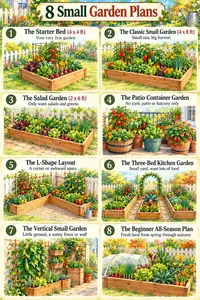
Small Vegetable Garden Plans: 8 Layouts That Maximise Space
Oct 08, 26 10:41 AM
Small vegetable garden plans are some of the most searched and most valuable resources in home food growing. -
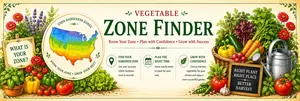
USDA Zone Finder - Find Your Vegetable Planting Dates | Vegetable-Gardening-Online.com
Oct 07, 26 03:53 PM
 Find your USDA hardiness zone, last spring frost date, and first fall frost date by state and region. Free interactive zone finder from Vegetable-Gardening-Online.com.