- Home
- Children's Corner
- Garden Story for Children
Garden Story for Children:
Ben's Year in the Vegetable Garden
This garden story for children follows Ben through one whole year in the vegetable garden, from a jar of seeds on a snowy day to a pumpkin as big as his head.
It's written for ages 4 to 7, to read aloud together, and you can print it as a picture book.
Print This Garden Story for Children
Winter: Seeds in a Jar
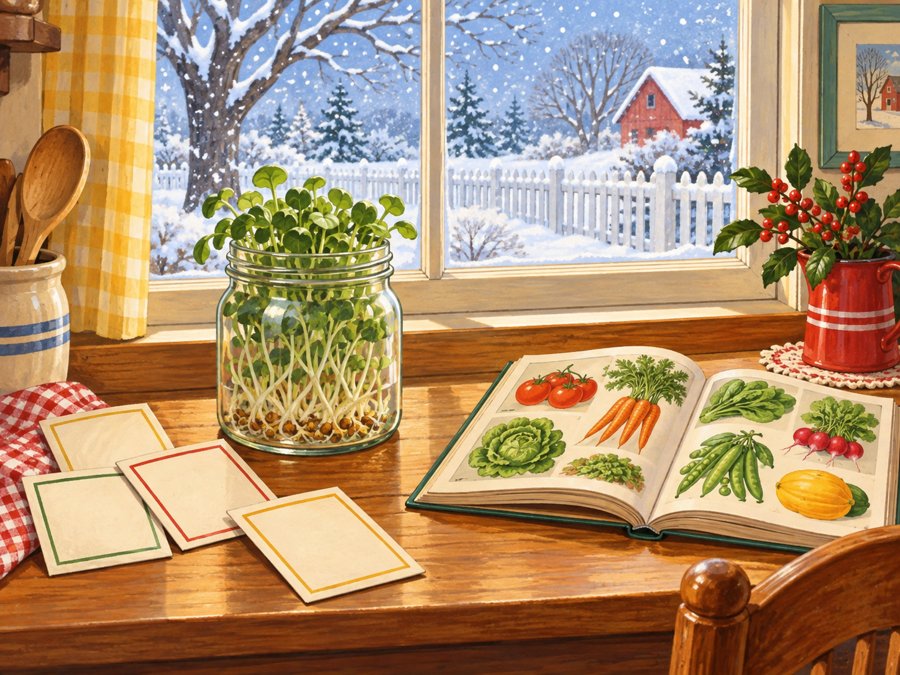
Outside, snow fell on the garden. Inside, Ben sat at the kitchen table with a jar.
In the jar were tiny seeds. Ben gave them a little water every morning.
"Nothing is happening," said Ben.
"Wait," said Mama. "Seeds take their time."
On the fourth day, the seeds cracked open. Little white roots came out. Little green leaves came out.
"They're growing!" said Ben.
And they were.
Late Winter: Seedlings Under a Light
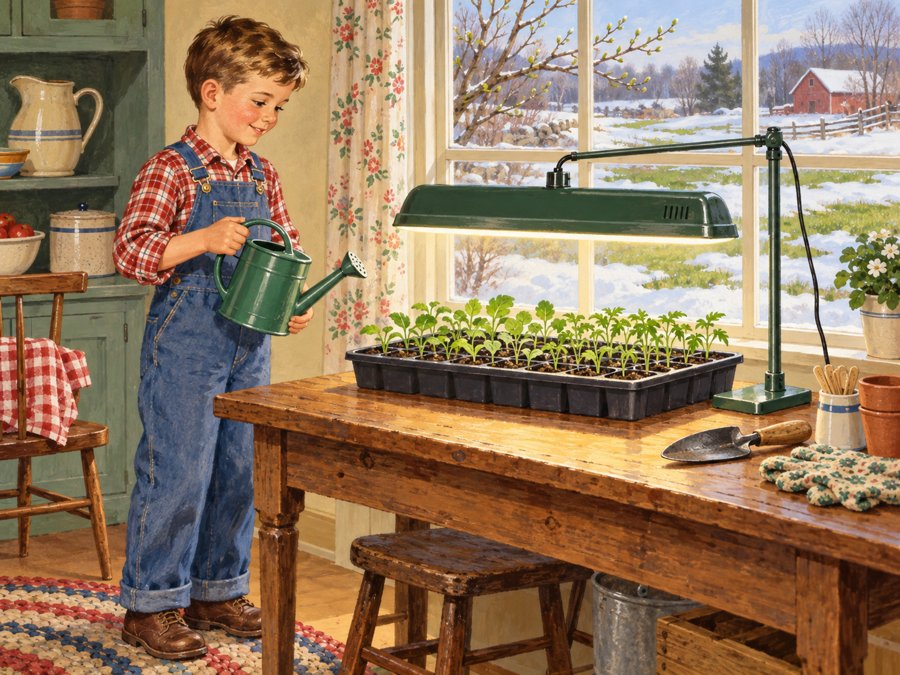
The snow was still on the ground, but Ben was already gardening.
He planted tomato seeds in a tray of dirt. He put the tray under a bright light. He gave the seeds a little water every morning.
"Nothing is happening," said Ben.
"Wait," said Mama. "Seeds take their time."
One morning, there was a row of tiny green plants standing up in the tray.
"They're growing!" said Ben.
And they were.
Spring: The Tomato Goes In
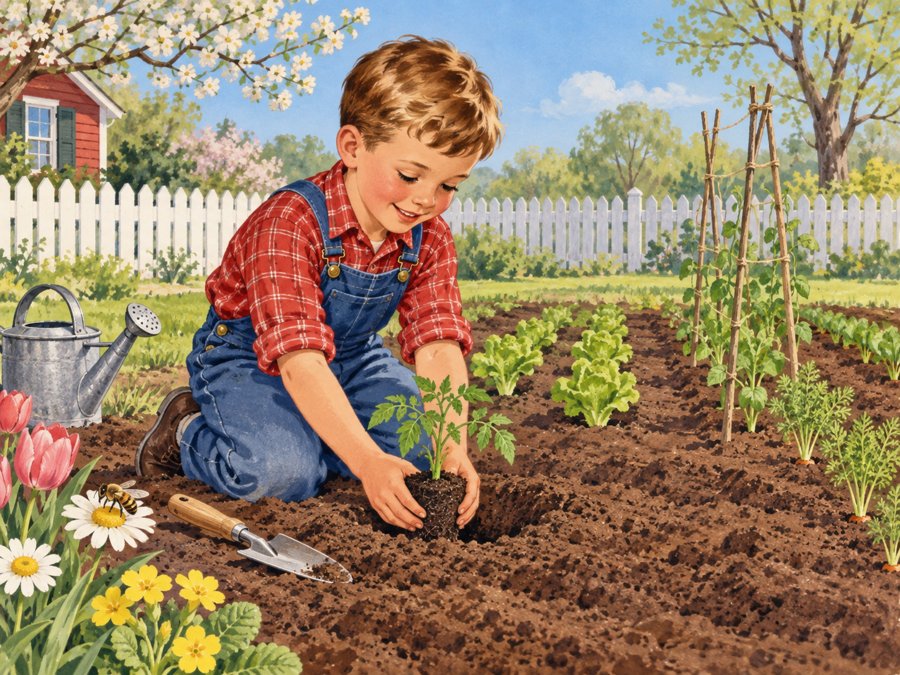
The snow was gone. The trees had flowers. The dirt was warm.
Ben dug a hole with his trowel. He put a tomato plant in the hole. He patted the dirt down all around it.
"There," said Ben. "Now grow."
He gave it a drink from the watering can.
Ben Writes It Down
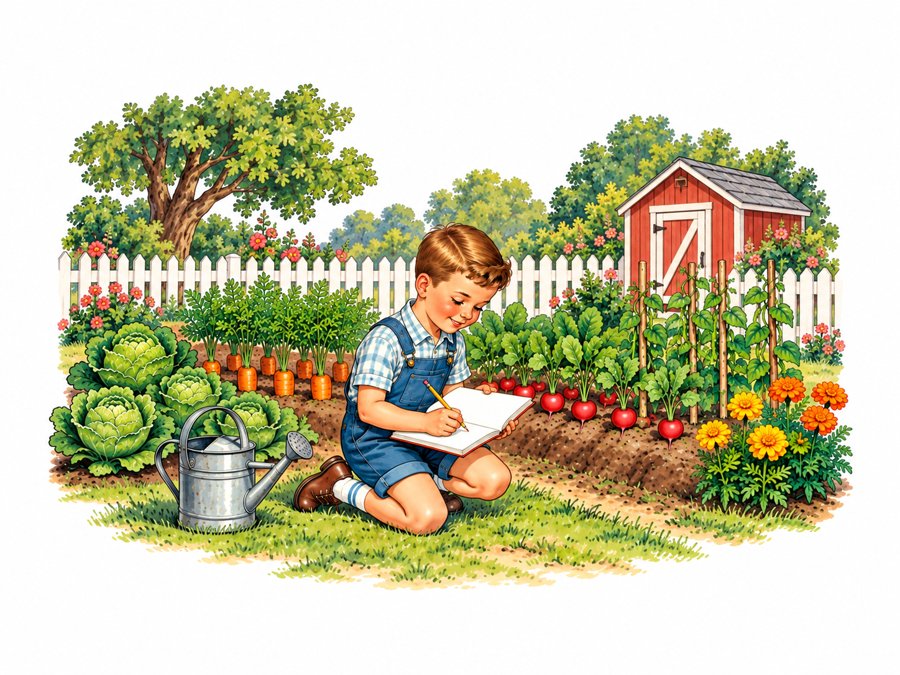
Ben had a garden notebook.
He wrote: Tomato. Planted today.
He drew a picture of the tomato plant. It was very small.
"Why do you write it down?" asked Mama.
"So I remember," said Ben.
Summer: The First Radishes
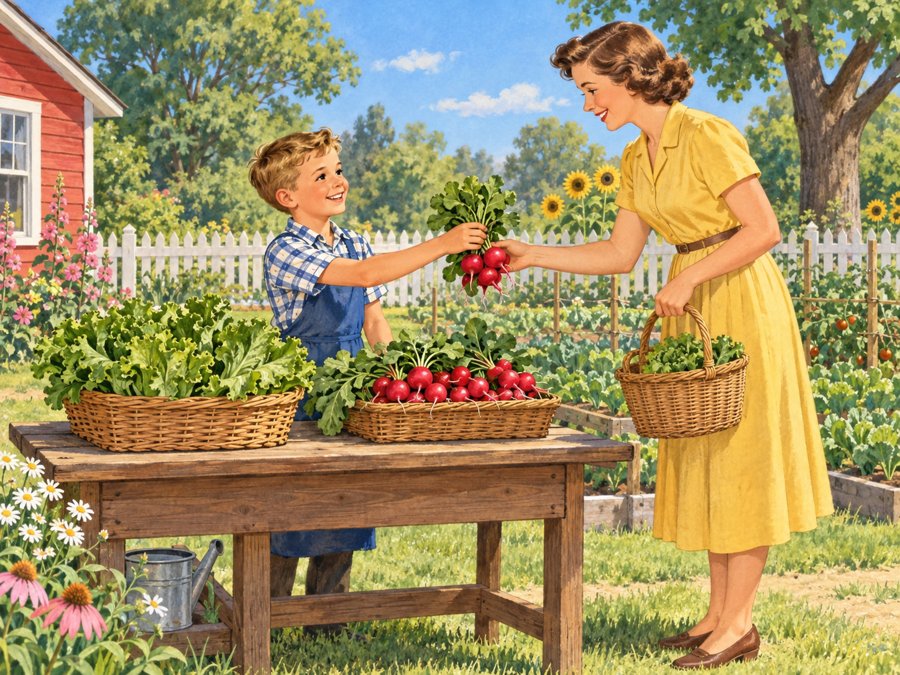
Summer came. The sun was hot. The garden was green and busy.
Ben pulled a radish out of the ground. It was round and red and cold.
He pulled another one. And another one.
"For you," said Ben, and he gave them to Mama.
They washed the radishes and ate them right there. They were crunchy. They were a little bit spicy.
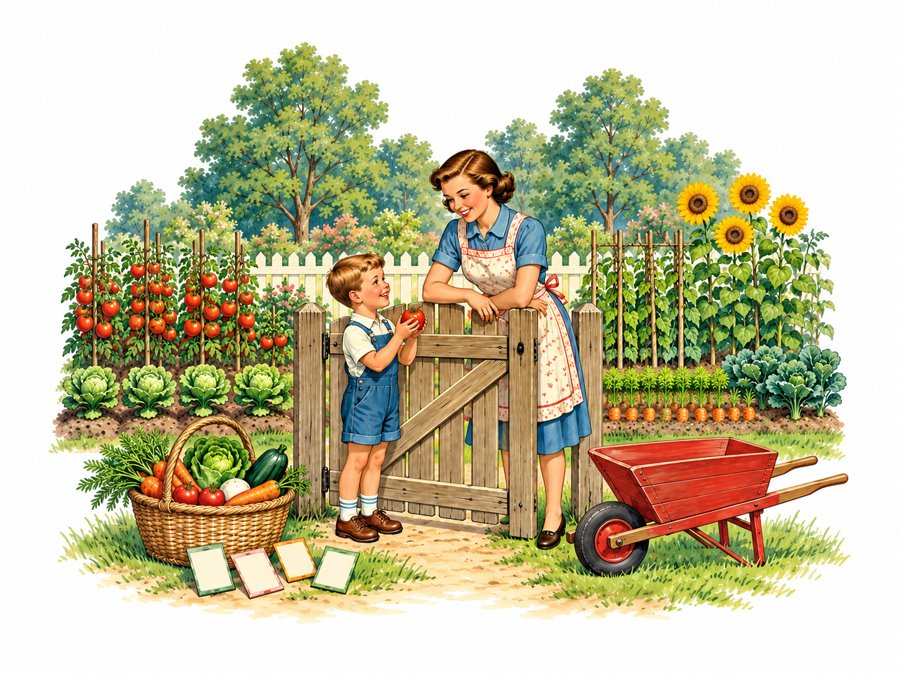
The Tomato Ben Planted
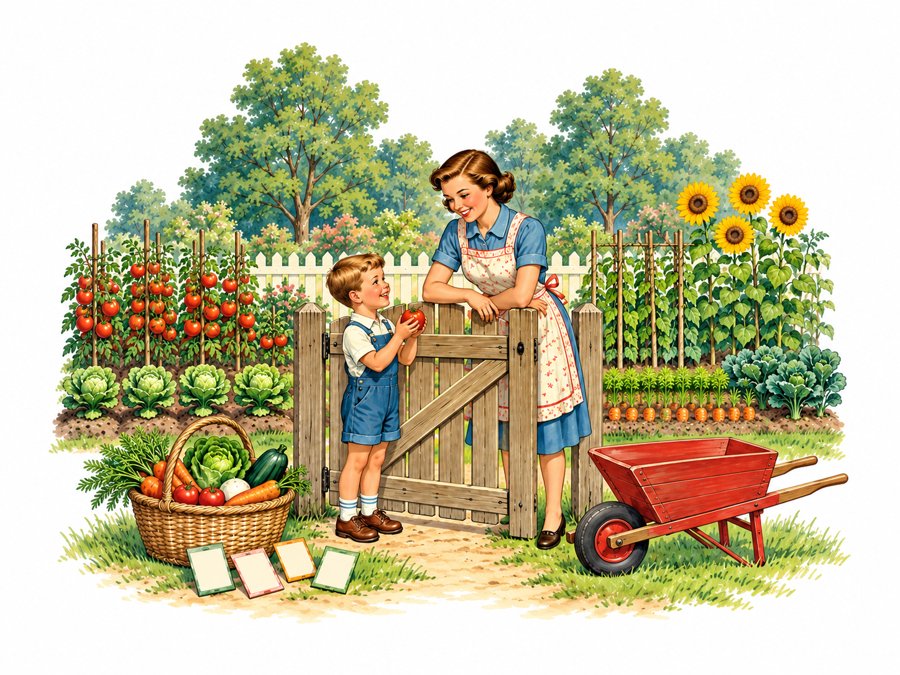
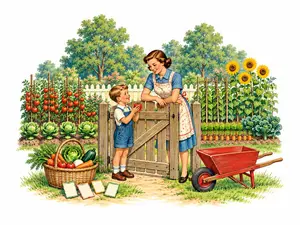
One day Ben ran to the gate.
"Mama! Mama! Look!"
In his hands was a tomato. A big one. A red one. Warm from the sun.
It was the tomato plant Ben put in the ground in spring. It had been growing all along.
"Seeds take their time," said Ben.
"They do," said Mama.
Fall: The Big Harvest
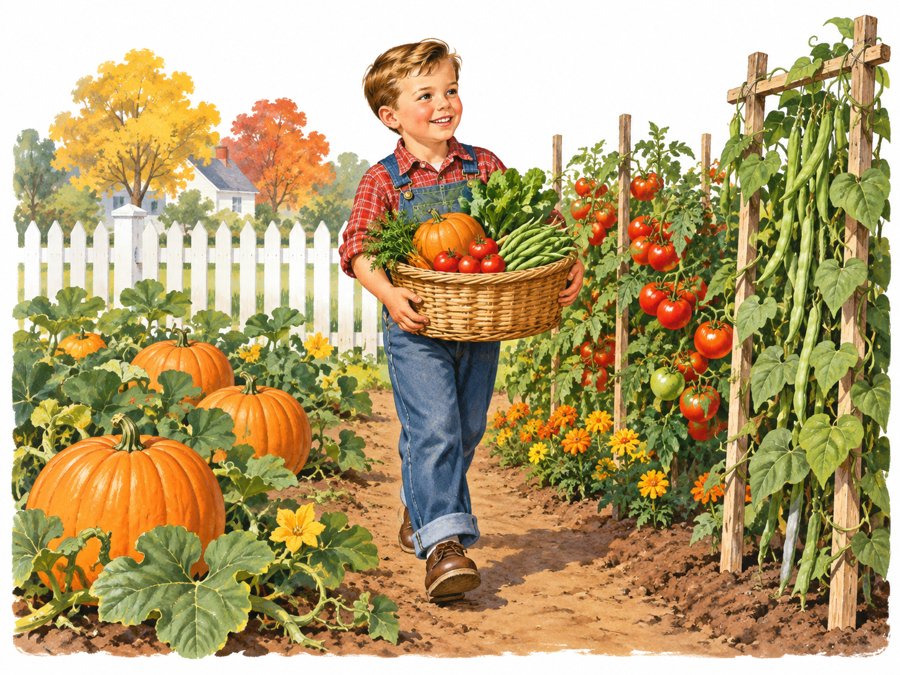
The leaves turned yellow and orange. The pumpkins turned orange too.
Ben filled a basket. Tomatoes. Beans. Carrots.
A pumpkin as big as his head.
It was heavy. He carried it anyway.
Putting the Garden to Bed
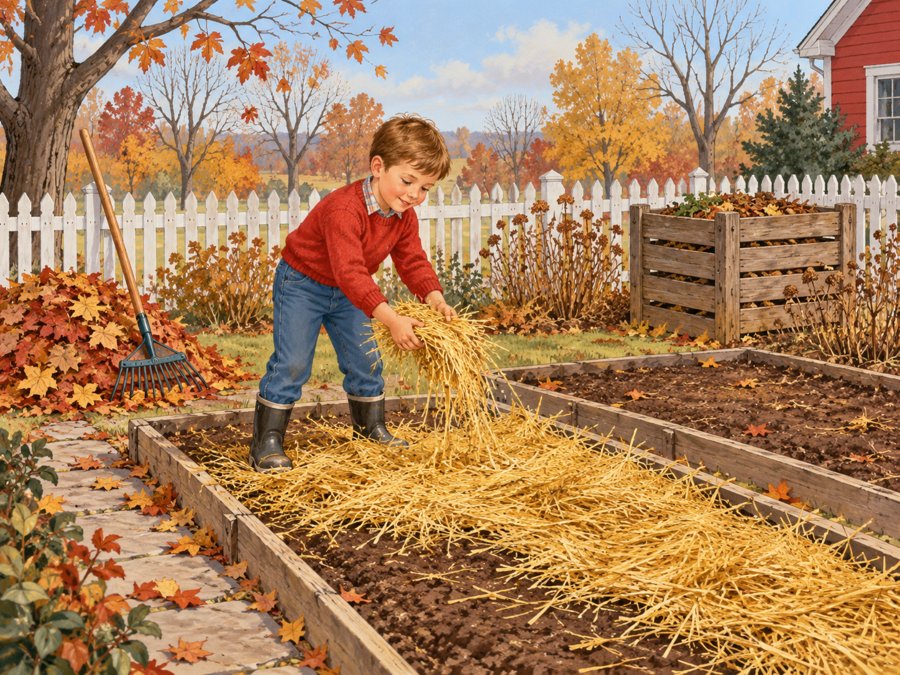
The garden was empty now. Ben raked the leaves. He spread straw over the dirt, like a blanket.
"Good night, garden," said Ben. "See you in the spring."
And then Ben went inside, and got out his jar, and got out his seeds.
Because seeds take their time.
The End
Reading This Garden Story for Children Together
Ben's year is a real garden year. Every scene matches something a child can watch happen in a garden of any size, including a pot on a porch. That's the reason for telling it as a garden story for children instead of a list of instructions: a four-year-old will not remember "start tomatoes six to eight weeks before your last frost," but she will remember Ben waiting for his seeds, and the line that comes back on every page.
Here is what each part of the story is teaching, so you can point to it as you read:
Seeds in a jar. Seeds need water, warmth, and time. The root comes out first, then the leaves. Sprouting in a jar shows this in three or four days, which is fast enough for a young child to stay interested.
Seedlings under a light. Some vegetables get a head start indoors while it's still cold outside. The light stands in for the sun.
Planting the tomato. The seedling that started indoors goes into the garden once the soil is warm. Patting the dirt down and watering it in are jobs a child can do.
Writing it down. Gardeners keep notes. Ben's notebook is the same idea as the free garden journal on this site, at a size a child can manage: what did I plant, and when?
The first radishes. Radishes are the fastest vegetable in the garden, ready in about a month, which makes them the best first crop for a child to plant and pull.
The tomato at the gate. This is the payoff for waiting since winter. If your child planted a tomato in spring, this page will land differently in August.
The big harvest. Fall is when the garden gives back everything at once.
Putting the garden to bed. Straw over the empty bed is a blanket for the soil, and the leaves go in the compost bin to become next year's dirt. Then the year starts over.
Try It at Home: Seeds in a Jar
Ben's jar of sprouts is the easiest garden there is, and it works any month of the year.
- Put a spoonful of seeds in a clean jar. Alfalfa or radish sprouting seeds are best; dried lentils from the kitchen work too.
- Cover the seeds with water and leave the jar on the counter overnight.
- In the morning, pour the water off. Rinse the seeds with fresh water and pour that off as well.
- Rinse and drain every morning. Keep the jar out of direct sun.
- In three or four days you'll have sprouts. Rinse them well and eat them on a sandwich or in a salad.
Things to talk about while you wait: What do seeds need to grow? Which part came out first, the root or the leaf? What would you plant in your garden?
If your child wants to go further, KidsGardening has good free lesson plans for home and classroom at kidsgardening.org, and the rest of the Children's Corner on this site has coloring books, worksheets, and chore charts sorted by age. Then keep going. Print the plant life cycle worksheet for your child's age, or the garden chore chart so they have garden jobs of their own. More stories, coloring books, and activities are in the Children's Corner.
Recent Articles


-
Garden Story for Children: Free Printable; Ben's Garden Year
Sep 23, 26 04:09 PM
 A free printable garden story for children ages 4-7. Read it online or print the picture book: Ben plants seeds in winter, grows a tomato, and picks radishes.
 -
Growing Cucumbers — Complete Guide to Planting, Care, and Harvest
Sep 23, 26 01:59 PM
 Complete guide to growing cucumbers: varieties, planting times, soil, spacing, trellising, watering, pests, and harvesting for a big cucumber crop.
 -
Vegetable Garden Planting Times: When to Plant Every Crop by Zone
Sep 23, 26 12:12 PM
 Vegetable garden planting times for every crop: find your frost dates, use soil temperature, cool and warm season windows, and a quick reference table by zone.
 -
Free Vegetable Garden Plans and Layouts: 8 Printable Plans + Planner
Sep 22, 26 08:49 PM
 Free vegetable garden plans to print: 10x10, 20x20, 20x40, 4x20, circular, square foot, and container layouts, plus a free interactive garden layout planner.
 -
Designing Your Vegetable Garden Layout
Sep 22, 26 07:22 PM
 Free worksheets for planning a vegetable garden layout for a raised bed, square foot, or traditional backyard garden.
 -
Planning a Vegetable Garden Layout: Free 20x40 Plan and Online Planner
Sep 22, 26 01:26 PM
 Planning a vegetable garden layout step by step: pick a garden type, download the free 20x40 plan, lay out beds in the free online planner, and build the soil.
 -
Container Vegetable Gardening--Complete Guide to Growing Food in Pots
Sep 22, 26 12:19 PM
Container vegetable gardening; everything you need to know for growing food in pots.