Vegetable Planting Calendar:
When to Plant Every Vegetable
 ★ Save
A vegetable planting calendar is the most useful planning tool a home gardener can have. It tells you when to start seeds indoors, when to sow outdoors, and when to set out transplants, so every crop goes in at the right time.
Plant too early, and cold soil or a late frost sets plants back. Plant too late, and crops run out of warm days before fall frost. This page covers both ends of the season, month by month, with free charts to print.
From My Garden
Here in the Willamette Valley, we can usually start our cool-season vegetables, and flowers like sweet peas, in February. Our spring rains are so heavy that some seeds rot before they can sprout, so raised beds with better drainage help a lot.
The warm-season crops have to wait until the end of April or the beginning of May. Sometimes it's hard to wait that long, but patience pays off with plants that flourish instead of suffering from the cold.
Charlotte
Get planting dates for your own zip code
Enter your zip code in our free personalized planting calendar, and it figures out your frost dates and the planting dates for every vegetable.
Open My Planting CalendarOn This Page
- Free charts
- Frost dates
- Key calculations
- Cool and warm crops
- Soil temperature
- Cool-season times
- Warm-season times
- January and February
- March and April
- May and June
- July and August
- September and October
- November and December
- Every crop at a glance
- Succession planting
- By zone
- Make it your own
- Questions and answers
- More planning
Free Planting Charts to Print
Click any chart to download it free. Print them, post them in the garden shed, or keep them in your garden journal.


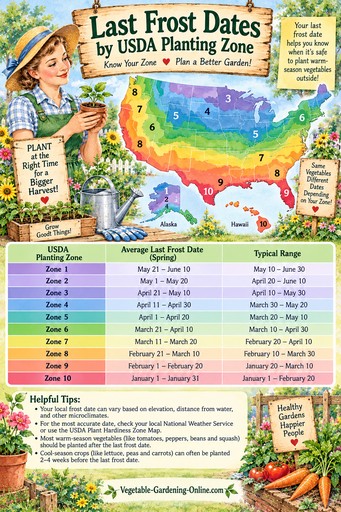
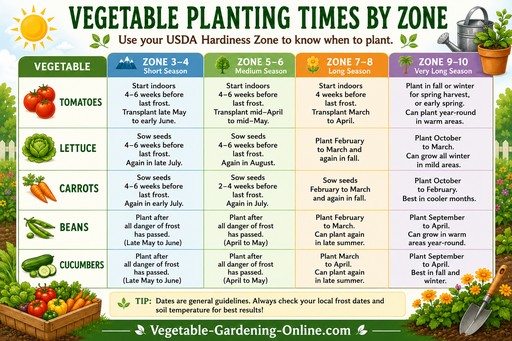
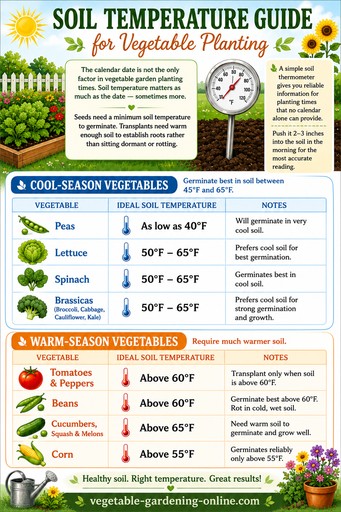


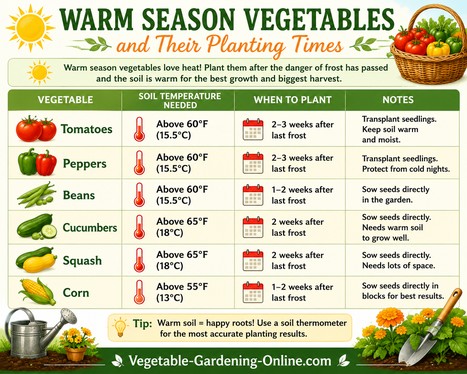


Find many more in our free vegetable garden printables.
Start With Your Frost Dates
Every planting date on a vegetable planting calendar comes from two dates: your average last spring frost and your average first fall frost. The stretch of time between them is your growing season.
- Last spring frost: Warm-season crops like tomatoes, peppers, beans, and squash go out after this date. Cool-season crops like peas, lettuce, spinach, and broccoli go out several weeks before it.
- First fall frost: Count backward from this date to know how late you can sow a crop and still harvest before cold weather arrives.
Frost dates are averages, not guarantees. In any year the last frost can come a week or two earlier or later. Watch the forecast for two weeks after your average date, and keep a frost cloth handy for tender plants.
Use our free Zone Finder to look up your zone and frost dates in seconds, or let the personalized planting calendar do the math for you.
Key Planting Calculations
Count forward or backward from your frost dates. This table shows the most common calculations, with an example garden whose last spring frost is May 1 and first fall frost is October 1.
| What you want to do | Count from | How many weeks | Example |
|---|---|---|---|
| Start peppers and eggplant indoors | Last spring frost | 8-10 weeks before | Feb 20 - Mar 6 |
| Start onions from seed indoors | Last spring frost | 10-12 weeks before | Feb 5-19 |
| Start tomatoes indoors | Last spring frost | 6-8 weeks before | Mar 6-20 |
| Start broccoli and cabbage indoors | Last spring frost | 6-8 weeks before | Mar 6-20 |
| Sow peas and spinach outdoors | Last spring frost | 4-6 weeks before | Mar 20 - Apr 3 |
| Sow lettuce, carrots, and beets outdoors | Last spring frost | 2-4 weeks before | Apr 3-17 |
| Set out tomatoes and peppers | Last spring frost | 1-2 weeks after | May 8-15 |
| Sow beans, corn, and squash outdoors | Last spring frost | At or after, warm soil | May 1 or later |
| Start fall broccoli and cabbage indoors | First fall frost | 10-12 weeks before | July 9-23 |
| Sow fall greens outdoors | First fall frost | 6-8 weeks before | Aug 6-20 |
| Plant garlic | First fall frost | 2-6 weeks after, before the ground freezes | Mid-Oct to Nov |
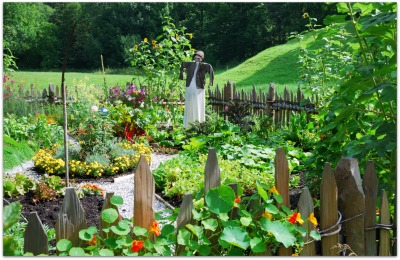
Cool-Season and Warm-Season Crops
Knowing which group a vegetable belongs to is most of what you need to find the best time to plant it.
Cool-season crops grow best between 45 and 70 degrees F, tolerate light frost, and slow down or bolt in summer heat. Some, like kale and carrots, taste sweeter after a light frost. They go in before the last spring frost, and again in late summer for fall.
Warm-season crops are damaged or killed by frost and need warm soil and warm air. They wait until after the last spring frost.
| Crop type | Examples | General timing |
|---|---|---|
| Cool-season, spring | Peas, spinach, lettuce, radishes | 2-6 weeks before last spring frost |
| Cool-season, fall | Kale, broccoli, carrots, cabbage | 6-10 weeks before first fall frost |
| Warm-season, sow outdoors | Beans, corn, squash, cucumbers | After last spring frost, once the soil is warm |
| Warm-season, start indoors | Tomatoes, peppers, eggplant | Start 6-10 weeks before last frost; set out after |
Plant about a month before your last frost
Broccoli, Brussels sprouts, cabbage, cauliflower, collards, kale, onions, parsley, peas, potatoes, radishes, and spinach. Lettuce, carrots, and beets follow two to four weeks before the last frost.
Plant after your last frost
Beans, corn, cucumbers, eggplant, melons, okra, peppers, pumpkins, squash, sweet potatoes, tomatoes, and zucchini. Wait one to two weeks after the frost date for the most tender crops, once the soil has warmed.
Seeds or transplants? Tomatoes, peppers, and eggplant need a head start indoors, or you can buy transplants at a garden center. Carrots, beans, corn, and squash prefer to be sown right in the garden, because their roots don't like being moved.

Soil Temperature: As Important as the Calendar
Seeds need warm enough soil to sprout, and transplants need warm soil to grow roots instead of sitting still or rotting. A simple soil thermometer pushed two to three inches deep in the morning tells you more than any calendar.
| Vegetable | Minimum soil temp | Best soil temp |
|---|---|---|
| Peas, spinach | 40°F | 60°F |
| Lettuce, cabbage, broccoli, cauliflower | 45°F | 60-65°F |
| Onions, carrots | 45°F | 65°F |
| Corn | 55°F | 65-75°F |
| Beans | 60°F | 70°F |
| Tomatoes, peppers | 60°F | 70°F |
| Cucumbers, squash, melons | 65°F | 75°F |
Raised beds warm up faster in spring than in-ground gardens, so you can often plant a little earlier in them.
Cool-Season Planting Times
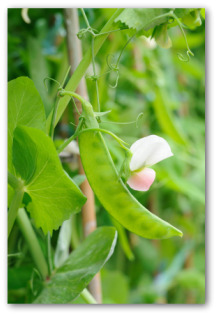
- Peas: The earliest crop of the year. Sow them four to six weeks before your last frost, as soon as the soil can be worked. Yields drop when temperatures rise above 75 degrees.
- Lettuce, spinach, and greens: Sow or transplant two to four weeks before the last frost (spinach can go in a little earlier). Sow lettuce every two to three weeks so it doesn't all bolt at once.
- Broccoli, cabbage, cauliflower, and kale: Start indoors about four weeks before setting out, then plant two to four weeks before the last frost. Light frost sweetens them.
- Carrots and beets: Sow two to four weeks before the last frost. Sow again in midsummer for a fall harvest.
- Onions: Start seeds indoors ten to twelve weeks early, or plant sets three to four weeks before the last frost.
Warm-Season Planting Times
Rushing warm-season crops is one of the most common beginner mistakes. A tomato set out in cold soil a week too early is soon passed by one planted on time.
- Tomatoes: Set out one to two weeks after the last frost, when nights stay above 50 degrees and the soil is above 60. Start seeds indoors six to eight weeks earlier.
- Peppers and eggplant: They like it a little warmer than tomatoes. Wait for 65-degree soil, about two weeks after the last frost.
- Beans: Sow after all frost danger has passed and the soil is above 60 degrees. Sow again every two to three weeks for a steady harvest.
- Cucumbers, squash, and zucchini: Sow after the last frost in soil above 65 degrees. If you start them indoors, give them only two to three weeks.
- Corn: Sow when the soil is above 55 degrees, in blocks rather than one long row for good pollination.
- Sweet potatoes: The last crop in. Plant slips two to three weeks after the last frost, in thoroughly warm soil.
Vegetable Planting Calendar: January and February

January and February feel quiet, but they set up the whole year. Review last year's notes, order seeds before favorite varieties sell out, and plan this year's beds with our free garden planner.
February brings the first seed starting. Onions, leeks, peppers, and eggplant need the longest time indoors. In the mildest zones, cool-season crops are already going into the garden.
| Task | Zones 3-5 | Zones 6-7 | Zones 8-9 |
|---|---|---|---|
| Order seeds and supplies | January | January | December / January |
| Plan the garden layout | January / February | January | January |
| Start onions and leeks indoors | February / March | January / February | Plant outdoors instead |
| Start peppers and eggplant indoors | March | February | January |
| Sow cool-season crops outdoors | Not yet | Late February in mild spots | January / February |
| Test and prepare the soil | When the ground thaws | February | January / February |
Vegetable Planting Calendar: March and April

March is tomato month. Tomato seeds started six to eight weeks before your last frost are just the right size at planting time. It's also time to start broccoli, cabbage, and cauliflower indoors.
April is one of the busiest months. Where the last frost comes in May, sow lettuce, spinach, peas, radishes, beets, and carrots outdoors. Begin hardening off tomato and pepper seedlings two weeks before you plan to plant them out.
| Task | Zones 3-5 | Zones 6-7 | Zones 8-9 |
|---|---|---|---|
| Start tomatoes indoors | Late March / early April | Mid-March | February / early March |
| Start broccoli and cabbage indoors | Late March / April | Early March | Already planted outdoors |
| Sow cool-season crops outdoors | Mid-April, with protection | March / April | Already underway |
| Start cucumbers and squash indoors | Late April / early May | Early April | Sow outdoors instead |
| Harden off seedlings | Late April / May | April | March |
| Set out broccoli and cabbage | Late April, with protection | April | Already planted |

Vegetable Planting Calendar: May and June

May is transplant month for warm-season crops in most of the country. Once the last frost has passed and nights stay above 50 degrees, set out tomatoes, peppers, eggplant, and basil, and sow beans, corn, and squash. Check the soil six inches down; a warm surface can hide cold soil below.
June brings the first harvests. Radishes, lettuce, spinach, and peas from early spring are ready. As each spring crop finishes, replant the space right away, and start planning your fall garden.
| Task | Zones 3-5 | Zones 6-7 | Zones 8-9 |
|---|---|---|---|
| Set out tomatoes and peppers | Late May / early June | May | March / April |
| Sow beans, corn, and squash | Late May / early June | May | March / April |
| Sow cucumbers outdoors | Early June | May | April |
| Harvest spring crops | June | May / June | April / May |
| Sow fast crops again | Every 2-3 weeks | Every 2-3 weeks | Every 2-3 weeks |
| Start fall broccoli and cabbage indoors | Mid-June | Late June / July | July / August |
Vegetable Planting Calendar: July and August

July and August are the months to plant your fall garden. It surprises many gardeners, but while summer crops are producing, it's time to start fall broccoli, cabbage, and Brussels sprouts, which need to be well grown before cool weather slows them down.
August is the key month for direct sowing. Six to ten weeks before your first fall frost, sow spinach, kale, lettuce, beets, carrots, radishes, and turnips. Every week of delay shortens the fall harvest.
| Task | Zones 3-5 | Zones 6-7 | Zones 8-9 |
|---|---|---|---|
| Start Brussels sprouts indoors (fall) | June | Early July | July |
| Start fall broccoli and cabbage indoors | Mid-June | Late June / July | July / August |
| Sow kale and spinach outdoors | Late July / early August | August | September |
| Sow lettuce outdoors | Early August | August | September |
| Sow carrots and beets outdoors | Mid-July | Late July / early August | August / September |
| Set out fall broccoli and cabbage | Late July / early August | August | September |
| Harvest summer crops | July / August | July - September | July - October |
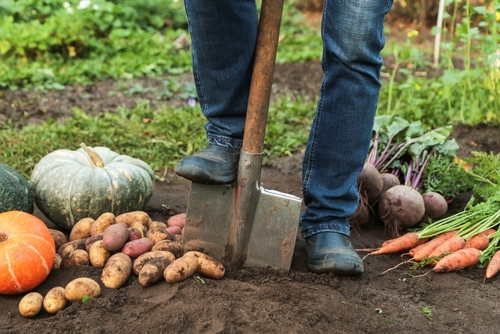
Vegetable Planting Calendar: September and October

September is harvest month in the north. Pick and preserve summer crops before frost, and protect plants on the first cold nights. In warmer zones, fall is one of the best planting seasons of the year.
October is garlic month on almost every vegetable planting calendar. Plant cloves a few weeks before the ground freezes. They grow roots over winter and give you full bulbs the next summer. Cover cold-hardy beds with row covers or cold frames, and add compost to empty beds.
| Task | Zones 3-5 | Zones 6-7 | Zones 8-9 |
|---|---|---|---|
| Plant garlic | Late September / October | October | October / November |
| Harvest and preserve summer crops | September, before frost | September / October | October / November |
| Sow fast fall crops (arugula, radishes) | With protection only | September | September / October |
| Put up row covers and cold frames | September / early October | October | November |
| Mulch root crops left in the ground | October | October / November | December |
| Clear finished crops; add compost | September / October | October | November |
Vegetable Planting Calendar: November and December

November is for final garden chores. Kale, spinach, leeks, parsnips, carrots, and garlic settle in for winter. Plant overwintering onion sets in milder zones, and mulch beds of root crops you'll dig through the winter.
December is planning and dreaming month. Seed catalogs arrive, and it's the perfect time to note what worked this year. In the warmest zones, lettuce, spinach, broccoli, and kale keep growing all winter.
Want a pretty calendar to write your planting dates on? Print our free printable garden calendar, with a watercolor garden scene and one simple garden task for every month.
| Task | Zones 3-5 | Zones 6-7 | Zones 8-9 |
|---|---|---|---|
| Harvest from cold frames and row covers | While the weather allows | November / December | All winter |
| Plant overwintering onion sets | Not recommended | November | October / November |
| Harvest root crops from the ground | Before it freezes hard | November / December | All winter |
| Browse seed catalogs; plan next year | December / January | December / January | December / January |
| Sow cool-season crops outdoors | No | Mild spots only | Yes, a great month |

Complete Vegetable Planting Calendar: Every Crop at a Glance
Every common vegetable in one table. All dates count from your own last spring frost or first fall frost, so the table works in any zone. Find your dates with our free Zone Finder.
| Vegetable | Start indoors | Spring planting | Fall planting | Days to harvest |
|---|---|---|---|---|
| Peas | Not needed | Sow 4-6 weeks before last frost | Sow 8-10 weeks before first frost | 60-70 from sowing |
| Spinach | Not needed | Sow 4-6 weeks before last frost | Sow 6-8 weeks before first frost | 40-50 from sowing |
| Lettuce | Optional, 4-6 weeks early | Sow or set out 2-4 weeks before last frost | Sow 6-8 weeks before first frost | 30-45 from sowing |
| Arugula | Not needed | Sow 2-4 weeks before last frost | Sow 4-6 weeks before first frost | 30-40 from sowing |
| Radishes | Not needed | Sow 4 weeks before last frost; again every 2 weeks | Sow 4-6 weeks before first frost | 25-30 from sowing |
| Kale | Optional, 6-8 weeks before last frost | Sow or set out 2-4 weeks before last frost | Sow 8-10 weeks before first frost | 55-65 from sowing |
| Broccoli | 6-8 weeks before last frost | Set out 2-4 weeks before last frost | Set out 8-10 weeks before first frost | 60-80 from transplant |
| Cabbage | 6-8 weeks before last frost | Set out 2-4 weeks before last frost | Set out 8-10 weeks before first frost | 70-90 from transplant |
| Cauliflower | 6-8 weeks before last frost | Set out 2-4 weeks before last frost | Set out 8-10 weeks before first frost | 55-80 from transplant |
| Brussels sprouts | 12-14 weeks before first frost | Set out in July or August | Grown mainly for fall | 90-100 from transplant |
| Carrots | Not recommended | Sow 2-4 weeks before last frost | Sow 10-12 weeks before first frost | 70-80 from sowing |
| Beets | Not needed | Sow 2-4 weeks before last frost | Sow 8-10 weeks before first frost | 55-70 from sowing |
| Onions | Seeds 10-12 weeks before last frost | Set out sets 3-4 weeks before last frost | Plant sets in fall in mild zones | 100-120 from transplant |
| Garlic | No | No | Plant cloves a few weeks before the ground freezes | Harvest next summer |
| Potatoes | No | Plant seed potatoes 2-4 weeks before last frost | No | 70-120 from planting |
| Asparagus | No | Plant crowns 2-4 weeks before last frost | No | First harvest in 2-3 years |
| Tomatoes | 6-8 weeks before last frost | Set out 1-2 weeks after last frost | No | 65-85 from transplant |
| Peppers | 8-10 weeks before last frost | Set out 2 weeks after last frost | No | 70-85 from transplant |
| Eggplant | 8-10 weeks before last frost | Set out 2 weeks after last frost | No | 70-85 from transplant |
| Basil | 4-6 weeks before last frost | Set out 1-2 weeks after last frost | No | About 30 to first harvest |
| Bush beans | Not recommended | Sow at or after last frost, warm soil | Sow about 60 days before first frost | 55-65 from sowing |
| Corn | Not recommended | Sow 1-2 weeks after last frost, soil 55°F+ | No | 60-100 from sowing |
| Cucumbers | Optional, 2-3 weeks early | Sow 1-2 weeks after last frost | No | 55-65 from sowing |
| Zucchini and summer squash | Optional, 2-3 weeks early | Sow 1-2 weeks after last frost | No | 50-60 from sowing |
| Pumpkins and winter squash | Optional, 2-3 weeks early | Sow 1-2 weeks after last frost | No | 90-120 from sowing |
| Melons | 3 weeks before setting out | Set out 2 weeks after last frost | No | 70-100 from sowing |
| Sweet potatoes | Grow slips | Plant slips 2-3 weeks after last frost | No | 90-120 from planting |
Seed packets are your best guide for each variety. Their days to harvest assume ideal conditions, so add a week or two for cool soil or transplant stress.
Succession Planting: More From Every Bed
Sow a little every two to three weeks instead of all at once, and you'll get a steady harvest instead of a flood followed by nothing. It works especially well for beans, lettuce, radishes, carrots, beets, spinach, and corn.
Replant as soon as a crop finishes. When spring lettuce bolts, pull it and plant a summer crop the same day. When early corn is done, sow a quick fall crop or a cover crop. Learn more in our guide to succession planting vegetables.
Planting Times by Zone
- Zones 3 and 4: Warm-season crops often can't go out until June. Choose fast-maturing varieties, and start long-season crops indoors early.
- Zones 5 and 6: Cool-season planting starts in March or April, and warm-season crops go in from mid-May to early June.
- Zones 7 and 8: Cool-season crops start in February or March, and warm-season crops by April. Summer heat can be a bigger challenge than frost, and fall crops often do better than spring ones.
- Zones 9 and 10: Planting goes on nearly year-round. Cool-season crops thrive in fall and winter.
Not sure of your zone? Our free Zone Finder tells you your zone and frost dates.
Make the Calendar Your Own
The best vegetable planting calendar is one fitted to your own garden. Write down your actual frost dates each year in a garden journal. After a few seasons, your own record will be more accurate than any published average.
Watch your garden's warm and cold spots. A raised bed against a sunny, sheltered wall may be ready two weeks before the rest of the garden. A low spot where cold air settles may frost a week later in spring and a week earlier in fall.
Plan around what your family eats. If you love salads, sow lettuce and spinach every few weeks. If you love cherry tomatoes, plant two or three instead of one.
Expect a few surprises. Even the best plans can be upset by a late frost, a hailstorm, or pests. Sometimes you can replant in time, and other years you try again next season.

Vegetable Planting Calendar Questions
- What is the best time to plant a vegetable garden?
- There isn't one single date. Cool-season crops like peas, spinach, and lettuce go in two to six weeks before your last spring frost, and warm-season crops like tomatoes, beans, and squash go in after it, once the soil is warm. Many crops can be planted again in late summer for fall.
- What is the most important date on a vegetable planting calendar?
- Your average last spring frost date. Indoor seed starting counts back from it, and outdoor planting is keyed to it. Our free Zone Finder or personalized planting calendar will tell you yours.
- When should I start my vegetable planting calendar each year?
- In January, when you order seeds and plan your beds. Onions, peppers, and eggplant are started indoors first, eight to twelve weeks before the last frost.
- Can I use the same planting calendar every year?
- The framework stays the same, but the weather doesn't. Use your average frost dates as a starting point, and adjust for a warm or cold spring.
- What if spring comes late?
- Push your planting dates back by the same amount. If seedlings outgrow their pots while they wait, move them into bigger pots. In an early spring, don't rush; one late frost can undo weeks of work.
- Why don't my vegetables match the days to harvest on the seed packet?
- Seed packet numbers assume ideal conditions. Cool soil, transplant stress, or uneven watering can add a week or two.
Sources: University of Maryland Extension and University of Illinois Extension.
More Garden Planning Tools and Guides
My short garden email, Get the Dirt, comes Saturday mornings.
Sign Up for My Free Newsletter