- Home
- Organic Vegetable Garden
- Organic Vegetable Gardening
Organic Vegetable Gardening: The Complete Guide to Chemical-Free Growing

Organic vegetable gardening is one of the most rewarding approaches to growing your own food - and one of the fastest-growing trends in home gardening. More people than ever are choosing organic vegetable gardening because they want to know exactly what went into their food, protect their family from synthetic chemicals, improve the health of their soil and local environment, and experience the deep satisfaction of growing truly natural food from seed to table.

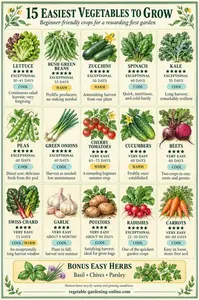
Use our Guide to the Easiest Vegetables to Grow!
The good news is that organic vegetable gardening is not significantly harder than conventional gardening. In fact, once your soil is healthy and your garden ecosystem is balanced, organic vegetable gardening often requires less intervention than chemical-dependent growing - because a healthy garden with good soil, good biodiversity, and thoughtful design manages most of its own problems naturally.
This complete guide covers everything you need to know about organic vegetable gardening, from building healthy soil to managing pests without chemicals.
According to the USDA National Organic Program, organic growing relies on the use of natural biological processes, ecosystem management, and the recycling of organic matter to maintain soil productivity - a philosophy that produces both excellent food and excellent garden health.
Source: USDA National Organic Program - Organic Growing Standards
What Is Organic Vegetable Gardening?
Organic vegetable gardening means growing food without synthetic fertilizers, pesticides, herbicides, or genetically modified organisms. But it is more than simply avoiding chemicals - it is a fundamentally different approach to how a garden works. Organic vegetable gardening treats the garden as a living ecosystem rather than a production system, and focuses on building and maintaining soil health as the foundation of everything else.
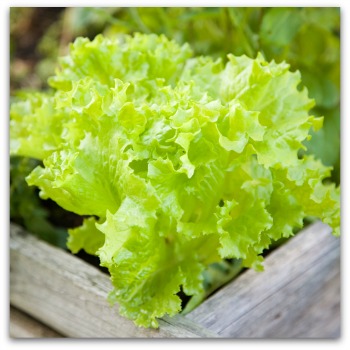
In conventional gardening, synthetic fertilizers deliver nutrients directly to plants in a quick-release chemical form. This approach bypasses the natural soil food web and over time degrades soil structure, reduces microbial life, and creates dependency on continued chemical inputs. In organic vegetable gardening, the goal is to feed the soil rather than feed the plant directly. Healthy soil teeming with bacteria, fungi, earthworms, and other organisms naturally provides plants with the full range of nutrients they need in the form they need them - slowly, continuously, and in balance.
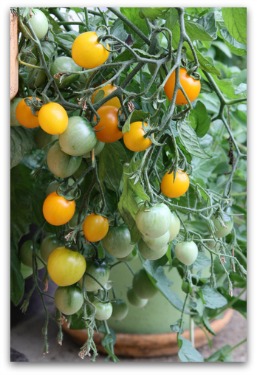
This soil-first philosophy is what makes organic vegetable gardening so sustainable over the long term. Every season of organic growing improves the soil for the next season, building a garden that becomes more productive and more self-sustaining with every passing year. It is the opposite of chemical gardening, which depletes soil with every season and requires increasing inputs to maintain the same yield.
Organic vs. conventional vegetable gardening at a glance
| Aspect | Organic Vegetable Gardening | Conventional Gardening |
|---|---|---|
| Primary focus | Feed and build the soil; work with natural processes | Feed the plant directly with synthetic nutrients |
| Fertilizers | Compost, aged manure, bone meal, kelp, fish emulsion | Synthetic NPK fertilizers; quick-release granules |
| Pest control | Beneficial insects, companion planting, physical barriers, neem oil | Synthetic pesticides and insecticides |
| Weed control | Mulch, hand weeding, close planting, crop rotation | Synthetic herbicides |
| Soil over time | Improves with every season; builds microbial life | Degrades over time; reduces biological activity |
| Cost over time | Lower; homemade compost reduces ongoing expense | Higher; continued chemical purchases required |
| Learning curve | Moderate; requires understanding of natural systems | Lower initially; high inputs substitute for knowledge |

Growing an organic vegetable garden takes a little more planning than conventional gardening, but the rewards — in flavor, nutrition, and peace of mind — are well worth it.
This page is part of our Organic Vegetable Garden hub, where you will find complete guides to organic soil building, organic fertilizers, companion planting for pest control, no-dig gardening, and sourcing organic seeds.
Organic Vegetable Garden — complete hub for growing vegetables organically at home, from soil building to pest control
Building Healthy Soil: The Foundation of Organic Vegetable Gardening

Soil health is the absolute foundation of organic vegetable gardening. Every other organic practice - composting, companion planting, pest management, mulching - ultimately exists to support and build healthy, living soil.
A garden with healthy soil is more productive, more disease resistant, and more drought tolerant than any garden maintained with synthetic inputs, regardless of how much fertilizer is applied.
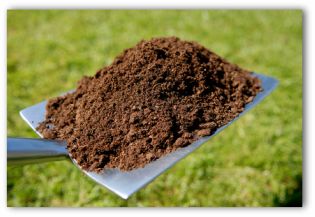
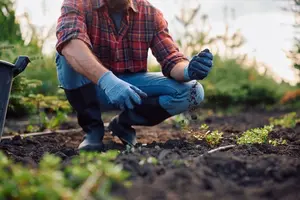
Healthy garden soil for organic vegetable gardening is dark, loose, and rich in organic matter.
It smells earthy and fresh. It is full of earthworms, bacteria, fungi, and thousands of other organisms that together form the soil food web - the underground ecosystem that converts organic matter into plant-available nutrients, creates the physical structure that roots can penetrate, and suppresses the disease organisms that damage plants.
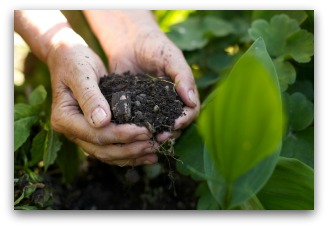
The single most important thing you can do for organic vegetable gardening is add compost.
A two to three inch layer of finished compost worked into the bed each spring provides a steady supply of organic matter, feeds the soil food web, improves drainage in clay soils, improves moisture retention in sandy soils, and gradually builds the deep, rich growing medium that makes organic vegetable gardening so productive.
There is no organic fertilizer more effective, more affordable, or more widely available than homemade compost.
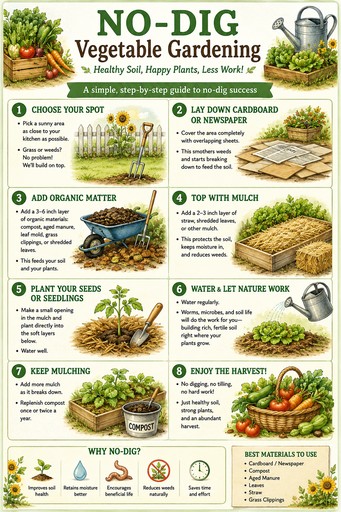
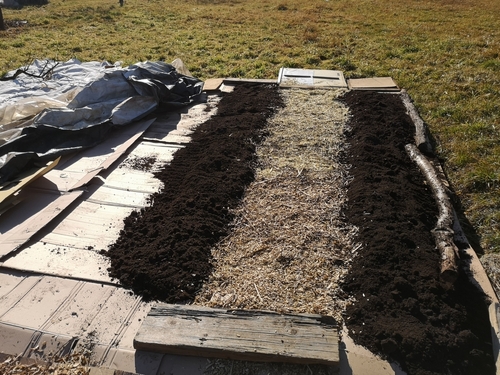
The no-dig approach is one of the most effective strategies in organic vegetable gardening for building soil health over time.
Rather than tilling and disturbing the soil structure each season, no-dig gardening layers compost and organic material on top of the bed and allows the soil food web to incorporate it naturally.
Worm activity, fungal networks, and bacterial activity do the work that tilling used to do - but without destroying the soil structure in the process.
After two to three seasons of no-dig organic vegetable gardening, most gardeners see a dramatic improvement in soil quality, earthworm populations, and plant health. See our complete no-dig vegetable gardening guide for full details.
Organic soil amendments for vegetable gardening
| Amendment | What It Provides | How to Use | Best For |
|---|---|---|---|
| Finished compost | Organic matter; slow-release nutrients; beneficial microbes | 2-3 inches on surface each spring; work in lightly | All beds; the foundation of organic vegetable gardening |
| Aged manure | High nitrogen; organic matter; microbial life | Apply in autumn; do not use fresh on food crops | Heavy feeders; beds needing a fertility boost |
| Worm castings | Concentrated nutrients; beneficial bacteria; growth hormones | Mix into planting holes; top dress around plants | Seedlings; transplants; containers |
| Bone meal | Phosphorus and calcium; supports root and flower development | Mix into soil at planting time | Root crops; fruiting vegetables at transplanting |
| Blood meal | Fast-release nitrogen; quickly available | Side dress around plants during growing season | Nitrogen-hungry crops like corn and brassicas |
| Fish emulsion | Balanced nutrients; quick-acting liquid feed | Dilute and apply as liquid feed every 2-3 weeks | General purpose organic liquid fertilizer |
| Kelp meal / seaweed | Trace minerals; growth hormones; improves stress resistance | Apply to soil or as foliar spray | All vegetables; especially in nutrient-depleted soils |
| Green manure / cover crops | Nitrogen fixation (legumes); organic matter; soil protection | Sow in empty beds; dig in before they set seed | Off-season soil improvement; winter cover |
Composting for Organic Vegetable Gardening
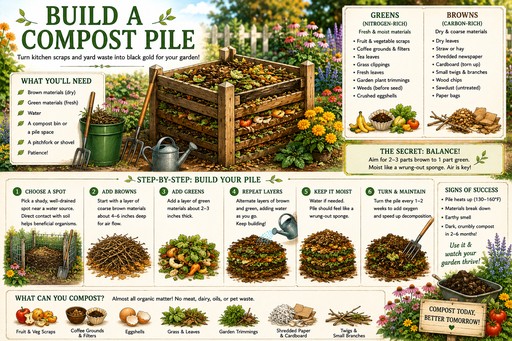
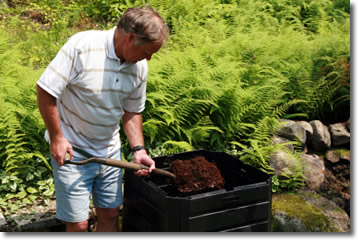
Composting is the heart of organic vegetable gardening. A compost pile turns kitchen scraps, garden waste, and organic material into the richest, most biologically active soil amendment available - for free.
Every organic vegetable gardener should have at least one active compost bin or pile. It is one of the most satisfying aspects of organic gardening: the waste from harvesting this season's crops becomes the fertility that grows next season's.
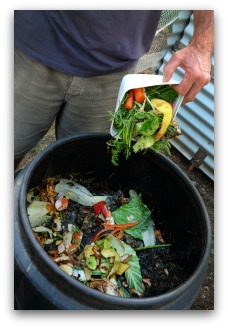
Making good compost for organic vegetable gardening requires balancing two types of materials - greens and browns.
Greens are nitrogen-rich materials including vegetable and fruit scraps, fresh grass clippings, fresh garden weeds (before they seed), and coffee grounds.
Browns are carbon-rich materials including dried leaves, straw, cardboard, paper, and wood chips.
A good compost pile uses roughly two to three parts brown material to one part green material by volume.
- Too many greens and the pile becomes wet and smelly.
- Too many browns and decomposition slows dramatically.
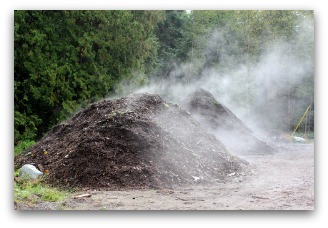
A well-managed compost pile for organic vegetable gardening reaches temperatures of 130 to 160 degrees Fahrenheit at its center - hot enough to kill most weed seeds and pathogens while accelerating decomposition by beneficial microorganisms.
Turn the pile every two to four weeks to introduce oxygen, which speeds decomposition and prevents unpleasant odors.
Keep the pile moist but not waterlogged - about as damp as a wrung-out sponge.
Finished compost is dark brown, crumbly, and smells like fresh earth. Most hot compost piles produce usable compost within two to three months in warm weather.
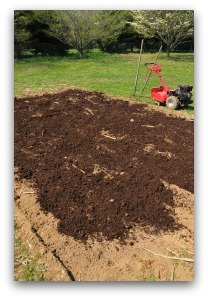
Even a simple cold compost pile - materials added and left to decompose without turning - produces excellent compost for organic vegetable gardening, though it takes longer: typically six to twelve months. Cold composting requires the least effort and is perfectly adequate for most home gardeners.
What to compost and what to avoid
| Add Freely (Browns) | Add Freely (Greens) | Add in Small Amounts | Never Add |
|---|---|---|---|
| Dried leaves | Vegetable and fruit scraps | Coffee grounds and filters | Meat, fish, or dairy products |
| Straw and hay | Fresh grass clippings | Eggshells (crushed) | Diseased plant material |
| Cardboard (uncoated) | Fresh garden weeds (unseeded) | Wood ash (sparingly) | Pet waste (dogs, cats) |
| Paper and newspaper | Plant trimmings | Seaweed (rinsed) | Weed seeds or invasive weeds |
| Wood chips and sawdust | Spent coffee grounds | Citrus peels | Synthetic chemicals or treated wood |
Organic Pest Control for Vegetable Gardens
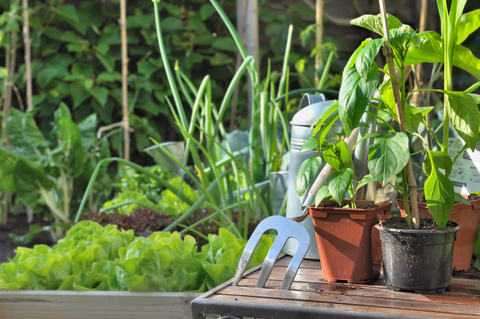
Organic pest control is often the biggest concern for gardeners considering organic vegetable gardening - and also one of the most misunderstood aspects.
Many people assume that organic vegetable gardening means accepting more pest damage and tolerating crop losses. In reality, a well-managed organic vegetable garden often has fewer serious pest problems than a chemically managed one, because the natural predator and prey balance is maintained rather than disrupted by pesticide applications.
The most effective organic pest control strategy is prevention through good garden design and soil health. Healthy plants grown in healthy soil are significantly more resistant to pest and disease attack than stressed plants in depleted soil.
This is one of the most important insights in organic vegetable gardening - the best defense against pests is a vigorous, well-nourished plant in excellent growing conditions, not a spray program.
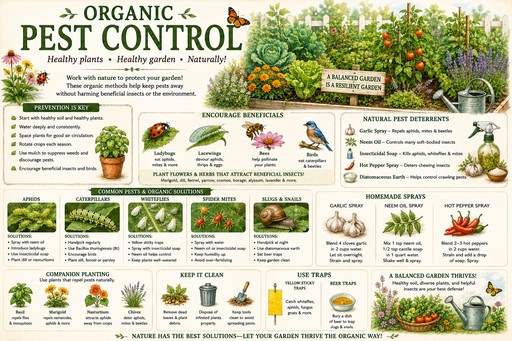
When pest management is needed in organic vegetable gardening, the approach works through layers.
The first layer is physical barriers - row cover over brassicas to exclude cabbage white butterfly, copper tape around containers to deter slugs, netting over fruit to exclude birds.
Physical barriers are the most reliable and most completely organic pest management tool available because they prevent pest access entirely rather than killing pests after damage has begun.
Beneficial Insects in Organic Gardening
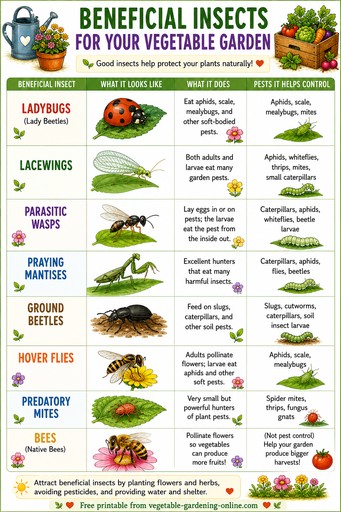
The second layer is beneficial insects - attracting and maintaining populations of natural predators that feed on common garden pests.
Ladybugs, lacewings, parasitic wasps, ground beetles, and hoverflies all prey on aphids, caterpillars, and other pests.
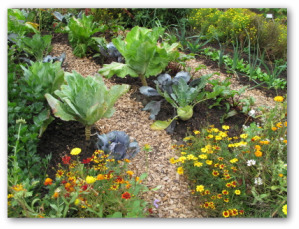
The key to encouraging beneficial insects in organic vegetable gardening is providing flowering plants with open-faced flowers that provide nectar and pollen - dill, fennel, borage, phacelia, marigolds, and yarrow all attract beneficial insects.
See our companion planting chart for vegetables for a complete guide to plants that attract beneficial insects to the organic vegetable garden.
Organic pest control methods for vegetable gardens
| Pest | Organic Control Methods | Prevention Strategy |
|---|---|---|
| Aphids | Strong jet of water; neem oil spray; insecticidal soap; ladybugs | Plant basil nearby; attract beneficial insects; avoid high-nitrogen fertilizing |
| Cabbage worms / caterpillars | Hand pick; Bt (Bacillus thuringiensis) spray; row cover | Row cover over all brassicas; plant dill and fennel nearby to attract parasitic wasps |
| Slugs and snails | Hand pick at night; diatomaceous earth; copper tape; iron phosphate bait | Avoid overhead watering; reduce mulch near stems; encourage ground beetles |
| Whiteflies | Yellow sticky traps; insecticidal soap; neem oil; reflective mulch | Plant basil and marigolds nearby; inspect transplants before purchase |
| Tomato hornworm | Hand pick; Bt spray; parasitic wasps (do not remove if parasitized) | Plant dill and borage nearby; inspect plants daily in midsummer |
| Squash vine borer | Row cover until flowering; physical removal of eggs; Bt injection | Plant borage nearby; choose resistant varieties; start successive plantings |
| Cucumber beetles | Row cover until flowering; kaolin clay; neem oil; trap crops | Plant radishes as trap crop; use row cover at planting; choose resistant varieties |
| Flea beetles | Row cover; diatomaceous earth; kaolin clay spray | Row cover on all brassicas; delay transplanting until plants are larger |
Organic Weed Management in Vegetable Gardens
Weed management is one of the most labor-intensive aspects of organic vegetable gardening, and getting the approach right from the start makes a very significant difference to how much time you spend on it. The good news is that organic weed management, done well, is highly effective - and the methods used actually improve the garden over time rather than simply suppressing weeds chemically.
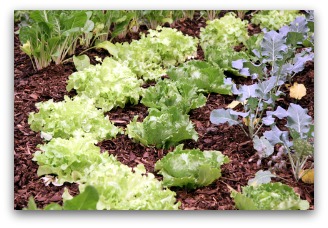
Mulching is the single most effective organic weed management strategy in vegetable gardening.
- A two to three inch layer of straw, shredded leaves, wood chips, or other organic mulch over the soil surface prevents light from reaching weed seeds, dramatically reducing germination.
- Mulch also retains soil moisture, regulates soil temperature, prevents soil compaction from rain, and gradually decomposes to add organic matter to the soil.
In an organic vegetable garden, mulch does the work of herbicides while simultaneously improving the soil - an excellent example of how organic vegetable gardening methods serve multiple purposes at once.
See our Raised Bed Vegetable Gardening guide!

See our complete No-dig Vegetable Gardening Guide!
The no-dig approach to organic vegetable gardening dramatically reduces weed pressure over time by avoiding tilling, which brings buried weed seeds to the surface where they can germinate.
A no-dig organic vegetable garden that has been established for two or three seasons has significantly fewer weeds than a tilled garden because the weed seed bank in the soil surface is gradually depleted without being replenished by digging.
Each year the garden becomes noticeably easier to manage.
Close planting is another powerful weed suppression strategy in organic vegetable gardening. When plants are spaced intensively using the square foot gardening system, their leaf canopy closes over the soil surface and shades out weed seedlings before they can establish.
This living mulch effect is particularly effective with leafy crops like lettuce, kale, and Swiss chard, whose dense growth shades almost the entire bed surface.
Crop Rotation in Organic Vegetable Gardening
Crop rotation is one of the most important practices in organic vegetable gardening and one of the most effective disease and pest prevention tools available without any chemical inputs.
Rotating crops means not growing the same plant family in the same bed location more than once every three to four years.
This prevents the buildup of soil-borne pests and diseases that target specific plant families, maintains soil balance across bed locations, and allows the natural benefits of each crop family to be distributed around the garden.
The four main crop rotation groups in organic vegetable gardening are the nightshades (tomatoes, peppers, eggplant, potatoes), brassicas (broccoli, cabbage, kale, cauliflower, Brussels sprouts), legumes (beans and peas), and roots (carrots, beets, parsnips, onions).
Each group benefits the soil in different ways and is susceptible to different pests and diseases.
By rotating these groups through different beds each year, organic vegetable gardeners systematically prevent the pest and disease buildup that would otherwise make chemical intervention seem necessary.
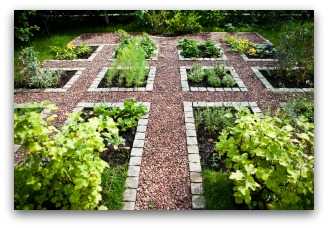
The simplest rotation system for a home organic vegetable garden uses four beds and a four-year cycle.
Each year, each crop group moves to the next bed.
The bed that grew tomatoes last year grows brassicas this year, then legumes next year, then roots the following year, then returns to nightshades in year five.
This four-year gap is sufficient to break the lifecycle of most soil-borne problems that affect each crop family.
See our Square Foot Gardening guide!
Four-year organic vegetable garden crop rotation
| Year | Bed 1 | Bed 2 | Bed 3 | Bed 4 |
|---|---|---|---|---|
| Year 1 | Nightshades (tomatoes, peppers) | Brassicas (broccoli, kale) | Legumes (beans, peas) | Roots (carrots, beets) |
| Year 2 | Brassicas | Legumes | Roots | Nightshades |
| Year 3 | Legumes | Roots | Nightshades | Brassicas |
| Year 4 | Roots | Nightshades | Brassicas | Legumes |
Companion Planting in the Organic Vegetable Garden

See our Companion Planting Chart for Vegetables!
Companion planting is a cornerstone of organic vegetable gardening - one of the most natural and effective ways to reduce pest pressure, improve soil fertility, and make the most of every square foot of growing space without any chemical inputs.
The right plant neighbors work together to create a more productive, more balanced, and more self-managing organic vegetable garden.
The most valuable companion planting relationships for organic vegetable gardening include some of the most well-researched partnerships in horticulture.
Basil planted among tomatoes and peppers repels thrips, aphids, and whiteflies through its volatile compounds - one of the most studied and consistently confirmed companion planting relationships available.
French marigolds planted throughout an organic vegetable garden bed release root exudates that suppress soil nematodes and deter a wide range of foliar pests.
The Three Sisters combination of corn, beans, and squash demonstrates companion planting at its finest: beans fix nitrogen for the corn, squash shades the soil reducing weeds and retaining moisture, and corn provides a climbing structure for the beans.
Nasturtiums are one of the most useful plants in an organic vegetable garden for pest management.
Planted at bed edges, they act as a trap crop that draws aphids away from vegetables. The aphid-loaded nasturtiums can then be knocked down with a jet of water, removing pest populations from the garden without any spray or chemical intervention.
Borage deters tomato hornworm and attracts pollinators, particularly bees, which dramatically improve fruit set on tomatoes, peppers, cucumbers, and squash.
See our complete companion planting chart for vegetables for the full guide to what to plant together in your organic vegetable garden.
Water Management in Organic Vegetable Gardening

Water management is an important aspect of organic vegetable gardening that is closely tied to soil health.
Healthy organic soil with high organic matter content retains moisture significantly better than depleted conventional soil, meaning organic vegetable gardens typically need less irrigation than chemically managed gardens - a practical advantage that reduces both labor and water costs.
The principles of water management in organic vegetable gardening are straightforward. Water deeply and infrequently rather than shallowly and often.
Deep watering encourages roots to grow deep into the soil where moisture is more stable, creating more drought-tolerant plants.
Shallow, frequent watering keeps roots near the surface where they are vulnerable to heat stress and dry spells.

Water at the base of plants rather than overhead whenever possible. Overhead watering keeps foliage wet and warm - ideal conditions for fungal diseases including blight on tomatoes, powdery mildew on cucumbers and squash, and botrytis on many vegetables.
Base watering keeps foliage dry and dramatically reduces the disease pressure that makes chemical fungicide use seem necessary in conventionally managed gardens.
Drip irrigation is the most efficient and most organic-friendly watering system for a vegetable garden.
Drip lines deliver water directly to the root zone at a slow, steady rate that the soil can absorb without runoff.
Combined with a timer and a generous mulch layer, drip irrigation can reduce water use by up to 70 percent compared to overhead sprinklers while providing superior growing conditions for organic vegetable garden crops.
Getting Started with Organic Vegetable Gardening
Starting organic vegetable gardening does not require a complete overhaul of your existing garden or a large initial investment. The most practical approach is to begin with the foundational practices and build from there season by season.
If you are converting an existing conventionally managed garden to organic vegetable gardening, the transition is simpler than most people expect.
- Stop using synthetic pesticides and herbicides immediately - there is no gradual phase-out needed.
- Replace synthetic fertilizers with compost and organic amendments.
- Start a compost pile using kitchen and garden waste.
- Add a thick mulch layer to suppress weeds and improve soil moisture.
These four steps represent the core transition to organic vegetable gardening and can all be implemented in a single season.
The soil transition takes longer than the input switch. A garden that has relied on synthetic fertilizers for years has a depleted soil food web that takes one to three seasons of organic management to rebuild fully.
During this transition period, you may see somewhat lower yields than the garden produced with synthetic inputs - this is normal and temporary.
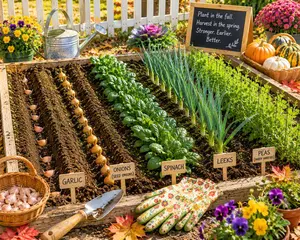
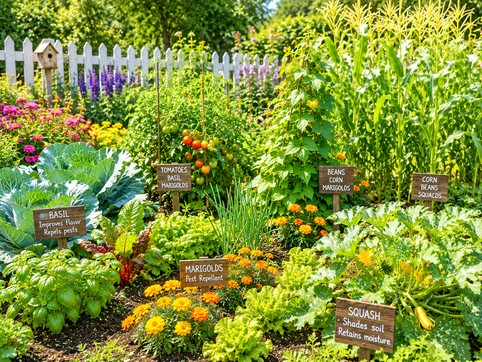 Organic garden in peak season.
By the third season of organic vegetable gardening, most gardeners see soil quality, plant health, and yields that match or exceed what synthetic inputs previously delivered - with the added benefit of genuinely healthy, chemical-free food.
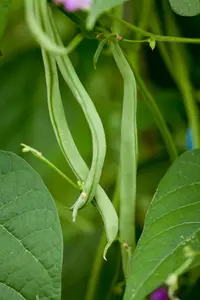
Choose the right crops for your first organic vegetable garden. The easiest vegetables to grow organically are also the easiest to grow in general - lettuce, radishes, beans, peas, kale, spinach, zucchini, and herbs.
These crops are vigorous, relatively pest-resistant, and productive in healthy organic soil with minimal additional intervention.
See our complete guide to the easiest vegetables to grow for a full list with growing advice for each crop.

Organic Certification: Do Home Gardeners Need It?

One question that comes up frequently in organic vegetable gardening is whether home gardeners need to pursue organic certification.
The short answer is no - USDA organic certification is a commercial designation required for businesses selling food labeled as organic.
Home gardeners growing food for personal use are not subject to certification requirements and can grow as organically as they choose without any formal process.
What matters for home organic vegetable gardening is your own commitment to the practices described in this guide - building healthy soil with compost and organic amendments, avoiding synthetic pesticides and herbicides, practicing crop rotation, using companion planting, and managing pests through natural methods.
You know exactly what went into your garden, which is the greatest advantage of growing your own organic vegetables: complete knowledge and control over every input from seed to harvest.
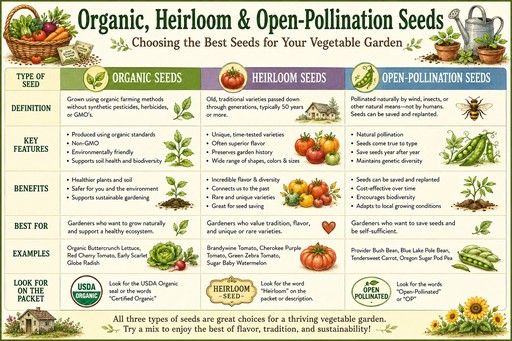
If you do want to take your organic vegetable gardening further, consider seeking out heirloom and open-pollinated seed varieties, which have not been genetically modified and can be saved from year to year.
Organizations like the Seed Savers Exchange maintain extensive collections of heirloom vegetable varieties that support biodiversity and the preservation of traditional vegetable genetics.
Growing from saved open-pollinated seed closes the organic growing cycle completely - from your own saved seed to your own organic compost, your vegetable garden becomes a genuinely self-sustaining system.
Frequently Asked Questions About Organic Vegetable Gardening
1. Is organic vegetable gardening more expensive than conventional gardening?
Initially, the transition to organic vegetable gardening may involve some upfront costs for compost, organic amendments, and tools. But over time, organic vegetable gardening is almost always less expensive because homemade compost replaces purchased fertilizers, healthy soil reduces pest and disease problems, and a more self-sustaining garden requires fewer ongoing inputs. The cost of chemical pesticides, herbicides, and synthetic fertilizers adds up significantly in a conventionally managed garden.
2. Do organic vegetables taste better than conventionally grown ones?
Many experienced gardeners and numerous research studies suggest that organically grown vegetables have more complex and intense flavor, particularly for crops like tomatoes, carrots, and leafy greens. The nutritional profile is also often superior - organic soil management builds micro-nutrient availability in the soil that conventional fertilizers do not address. Whether the difference is significant enough to detect depends on the crop, the soil quality, and individual taste sensitivity - but the general finding is consistent enough to be worth taking seriously.
3. How do I deal with slugs organically?
Slugs are one of the most common challenges in organic vegetable gardening. The most effective organic slug controls are: handpicking slugs at night by flashlight (surprisingly effective with regular practice), iron phosphate slug bait (sold as Sluggo and similar products - safe for birds, pets, and wildlife), diatomaceous earth around vulnerable plants, copper tape barriers around raised beds, and encouraging ground beetles by avoiding soil disturbance. Reducing overhead watering and keeping mulch pulled back slightly from plant stems also reduces slug habitat significantly. (Or you can let them die happy using beer traps.)
4. Can I do organic vegetable gardening in containers?
Yes - organic vegetable gardening in containers is completely practical and very popular. Use an organic potting mix rather than standard potting soil, feed with organic liquid fertilizers like fish emulsion or worm casting tea, and monitor moisture closely since containers dry out faster than in-ground beds. Container organic vegetable gardening is ideal for small spaces and gives you complete control over every input. See our complete container vegetable gardening guide for full advice.
5. What is the hardest part of organic vegetable gardening for beginners?
Most beginners find that patience is the hardest part of organic vegetable gardening. Organic soil building is a gradual process that takes seasons rather than days. Accepting that some pest damage is normal and that a healthy garden manages most of its own problems - without reaching for a spray - requires a different mindset than chemical gardening. But the gardeners who stick with organic vegetable gardening consistently report that it becomes easier and more satisfying with every season as their soil improves, their garden ecosystem matures, and their knowledge deepens.
More Vegetable Gardening Guides

Continue building your organic vegetable gardening knowledge with these related guides from Vegetable-Gardening-Online.com.
- No-Dig Vegetable Gardening - The Natural Approach to Better Soil
- Companion Planting Chart for Vegetables
- Raised Bed Vegetable Gardening for Beginners
- How to Start a Vegetable Garden from Scratch
- Easiest Vegetables to Grow - 15 Foolproof Crops
- Square Foot Gardening: The Complete Guide
- Cold Hardy Vegetables Guide
- Fall Vegetable Garden Guide
- Winter Vegetable Gardening Guide
- Growing Vegetables from Seed - Complete Guide
- Free Interactive Vegetable Garden Planner
- Free Interactive USDA Zone Finder

Recent Articles


-
How to Grow Cabbage
Sep 15, 26 12:33 PM
 How to Grow Cabbage: The Complete Guide from Seed to Harvest. This complete guide covers everything you need to know about how to grow cabbage.
 -
Easiest Vegetables to Grow: 15 Foolproof Crops for Beginners
Sep 15, 26 09:24 AM
 Easiest vegetables to grow for beginners - with advice on what makes each one easy, how to get started, and which vegetables are harder than they look.
 -
How to Grow Green Beans
Sep 14, 26 07:53 PM
 How to Grow Green Beans: The Complete Guide to Bush and Pole Beans. Green beans are one of the most forgiving crops a beginner can choose.
 -
Seasonal Vegetable Garden
Sep 14, 26 05:38 PM
 Seasonal Vegetable Garden — Growing Food Through Every Season
 -
Overwintering Vegetables: Fall-Planted Crops for Early Spring Harvest
Sep 14, 26 05:35 PM
 Learn about overwintering vegetables like garlic, fava beans, and onions, planted in fall to sit through winter and reward you with an early spring harvest.
 -
Free Vegetable Garden Journal— Printable Downloads for Home Gardeners
Sep 14, 26 01:51 PM
 Download our free Vegetable Garden Journal — choose a full 16-page version or simpler 7-page journal. Track planting, harvest, & garden notes season by season.
 -
Free Vegetable Garden Cut and Paste Activities for Kids Ages 5-7
Sep 12, 26 09:13 PM
 Free printable vegetable garden cut and paste activities for kids ages 5-7. Build your own garden, match seeds to plants, and learn what grows where.