- Home
- Planning A Garden
- Backyard Vegetable Garden Design
Backyard Vegetable Garden Design: Plans, Layouts and Ideas for Every Space

Backyard vegetable garden design is where the real excitement of home food growing begins - transforming an ordinary yard into a productive, beautiful space that feeds your family all season long. A thoughtful backyard vegetable garden design does far more than just decide where to put the tomatoes. It considers sunlight, pathways, water access, vertical space, visual appeal, and the practical reality of how you will actually use the garden day to day. By Vegetable-Gardening-Online.com | Updated May 2026 | 13 min read
Whether you have a large open backyard or a small courtyard, a first-time garden or an established plot in need of redesign, this guide covers everything you need to create a backyard vegetable garden design that is productive, manageable, and genuinely enjoyable to work in. Use our free interactive vegetable garden planner alongside this guide to bring your design to life before you dig a single hole.
See also our Planning a Vegetable Garden hub page for additional information.

What You Will Learn in This Backyard Vegetable Garden Design Guide
- The principles of good backyard vegetable garden design
- Assessing your space before you design
- The best backyard vegetable garden layouts
- Raised beds vs in-ground design
- Planning pathways that actually work
- Vertical design - growing up to grow more
- Designing for beauty as well as productivity
- Design ideas for small backyards
- Design ideas for large backyards
- Common backyard vegetable garden design mistakes
The Principles of Good Backyard Vegetable Garden Design
The best backyard vegetable garden designs all share a handful of core principles, regardless of their size, style, or layout. Get these right and almost everything else falls into place.
Sun First, Everything Else Second
No backyard vegetable garden design succeeds without adequate sunlight. Most vegetables need a minimum of six hours of direct sunlight daily - eight hours is better for fruiting crops like tomatoes, peppers, and cucumbers. Before you design anything, spend a day observing how sunlight moves across your yard at different times. Map the sunny zones and the shaded ones. Your garden design must be built around the sun, not around what looks nice or what is most convenient.
Design for Access, Not Just Area
A common mistake in backyard vegetable garden design is maximising planted area at the expense of access. If you cannot reach every part of your garden comfortably without stretching or stepping on soil, the design will fail in practice. Every bed should be reachable from the outside - no wider than four feet if accessible from both sides, two feet if accessible from one side only. Paths should be wide enough to kneel, carry a trug, or push a wheelbarrow.
Keep Water Close
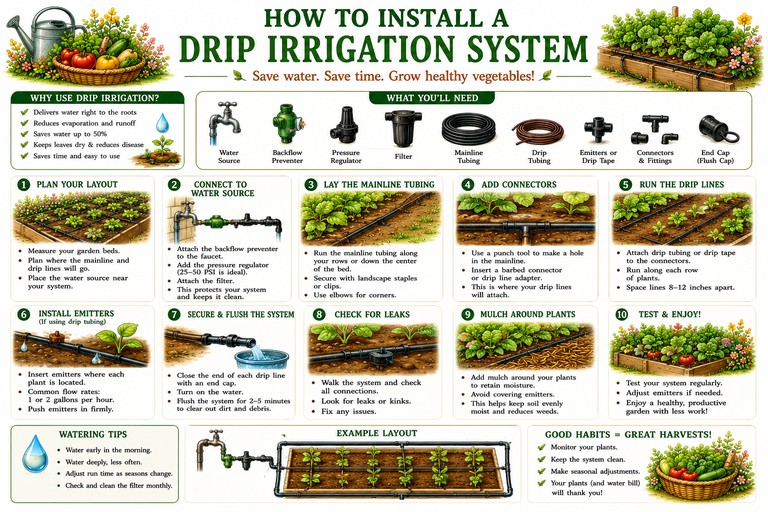
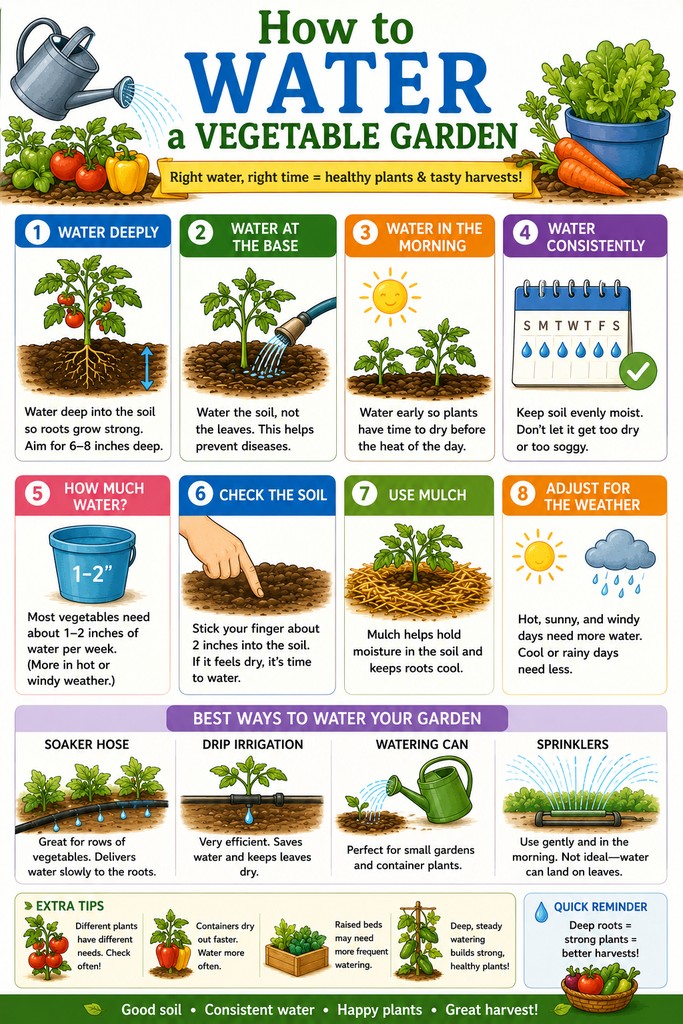
Vegetable gardens need regular watering. A backyard vegetable garden design that places beds far from a water source will be neglected. Locate beds within easy reach of a tap or outdoor hose, or design the irrigation into the plan from the start with a drip system or soaker hose layout.
Start Smaller Than You Think
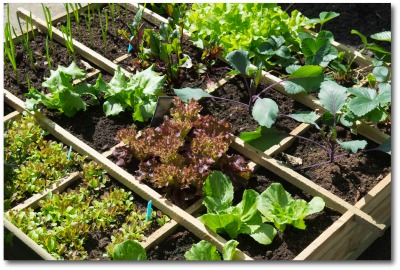
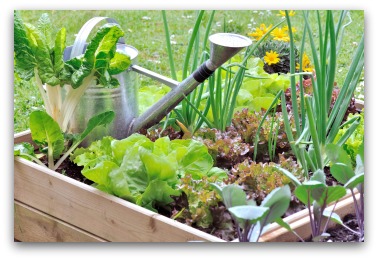
The most productive backyard vegetable garden designs are well-maintained, not large. A single 4x8 ft raised bed managed consistently will produce more food and more satisfaction than four beds that get away from you. Design for the time you actually have available, not the time you hope to have.
Design tip from The Old Farmer's Almanac: The most successful backyard vegetable garden designs treat pathways, bed orientation, and crop grouping as integral parts of the design - not afterthoughts. Planning these elements before building saves significant rework later.
Assessing Your Backyard Before You Design
A good backyard vegetable garden design begins with an honest assessment of the space you have. Before sketching layouts or ordering materials, walk your yard and note the following:
Sunlight Mapping
- Stand in your yard at 9am, 12pm, and 3pm on a sunny day and note which areas are sunny and which are shaded at each time
- Note which structures - your house, a fence, a garage, large trees - cast shade and when
- Remember that sun angles change through the season - a spot that gets good sun in May may be shaded by a neighbour's tree in July
- Mark your sunniest areas clearly - these are your prime vegetable garden real estate
Soil and Drainage
- Dig a small test hole after rain - if water pools and drains slowly your drainage is poor and raised beds are strongly recommended
- Check soil texture by squeezing a handful - good garden soil crumbles; clay soil holds its shape and is dense; sandy soil falls apart and drains too fast
- Test soil pH if possible - most vegetables prefer 6.0-7.0; a basic test kit costs $10-$15 at a garden centre
- Note any areas of compaction - often found near paths, gates, or where cars have been parked
Existing Features
- Fences and walls are assets in backyard vegetable garden design - they provide wind protection, support for trellises, and can reflect warmth onto adjacent beds
- Large trees may need to be worked around - their roots extend well beyond the canopy and compete aggressively with vegetables
- Note underground utilities before planning any deep digging or post installation
- Consider views from the house - a well-designed backyard vegetable garden can be beautiful as well as productive
Measuring Your Space
Measure your available growing area accurately before designing. Sketch it on paper to scale - one square on graph paper equalling one foot works well. Mark north on your sketch. Note where the house, fences, and any existing features are. This sketch becomes the foundation of your backyard vegetable garden design.
The Best Backyard Vegetable Garden Layouts
There is no single perfect backyard vegetable garden design - the right layout depends on your space, your goals, and how much time you have. The Old Farmer's Almanac notes that backyard vegetable garden layouts work best when they combine flexible spacing with clearly defined pathways. Here are the most effective layouts for different situations:

1. The Classic Rectangle Layout
One or more rectangular beds arranged in a simple grid with clear paths between them. This is the most popular backyard vegetable garden design for good reason - it is straightforward to build, easy to maintain, and works efficiently in almost any yard shape.
- Beds run east to west so all plants receive equal sunlight through the day
- Tall crops (tomatoes, corn, trellised climbers) placed at the north end of each bed
- Paths of at least 18 inches between beds - 24 inches if you use a wheelbarrow
- Start with one or two beds and expand in subsequent seasons
2. The U-Shape Layout
Three beds arranged in a U shape with a central path - one long bed at the back and one shorter bed on each side. This backyard vegetable garden design is excellent for small spaces because it:
- Gives access to all beds from a single central standing point
- Creates a sheltered microclimate in the centre that is slightly warmer than the open garden
- Uses corner space efficiently
- Feels like a defined garden room rather than scattered beds
3. The Border Layout
Beds arranged along one or more fence lines with a central lawn or open area. This backyard vegetable garden design works particularly well for gardeners who want to maintain most of their yard for other uses while still having meaningful food production. The fence provides a natural trellis for climbing crops and a windbreak for more tender plants.

4. The Island Layout
One or more freestanding beds positioned in the best sun in the yard, surrounded by lawn or paving on all sides. Simple, flexible, and easy to expand. Each bed is its own self-contained growing unit, which makes crop rotation straightforward and pest management easier.
5. The Potager (Kitchen Garden) Layout
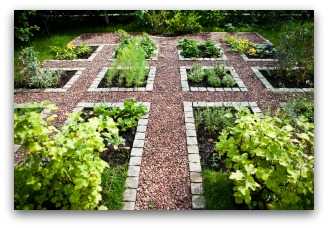
A formal, decorative backyard vegetable garden design with geometric beds, defined paths, and plants arranged for visual appeal as much as productivity. Traditionally features a mix of vegetables, herbs, and flowers - marigolds, nasturtiums, and lavender alongside tomatoes, beans, and kale. A well-designed potager is one of the most beautiful things a backyard can contain.
Design before you build: Use our free interactive garden planner to try out different bed arrangements and sizes before committing. You can test multiple layouts in minutes - far easier than rearranging built beds.
Raised Beds vs In-Ground Design - Which Is Right for Your Backyard?
One of the most fundamental decisions in backyard vegetable garden design is whether to grow in raised beds or directly in the ground. Both work well - but for different situations.
| Raised Bed Design | In-Ground Design |
|---|---|
| Complete control over soil quality from day one | Lower initial cost - no building or filling required |
| Excellent drainage - never waterlogged | Unlimited depth for deep-rooted crops |
| Fewer weeds - fresh soil has fewer weed seeds | Easier to grow large quantities of a single crop |
| Warms up faster in spring - longer growing season | Better for crops like potatoes, corn, and pumpkins that spread widely |
| Defined edges stop grass and weeds creeping in | No upfront building cost or materials sourcing |
| Best for small to medium backyards | Best for large backyards with reasonable existing soil |
Many of the best backyard vegetable garden designs combine both approaches - raised beds for intensively planted high-value crops like tomatoes, peppers, salads, and herbs, and in-ground space for sprawling crops like pumpkins, sweet corn, and potatoes that would take up too much raised bed space.

Planning Pathways in Your Backyard Vegetable Garden Design
Pathways are not wasted space in a backyard vegetable garden design - they are what makes the whole design work in practice. Poorly planned paths are one of the most common causes of gardens that look good on paper but fail in reality.
Path Width Guidelines
- Minimum path width: 18 inches - enough for one person to walk comfortably
- Working path: 24-30 inches - allows kneeling, working, and carrying a harvest basket
- Main access path: 36 inches - allows a wheelbarrow or garden cart to pass easily
- If two people need to pass each other in the garden, 48 inches is comfortable
Path Surface Options
- Bark chip / wood chip - the most popular choice; inexpensive, natural-looking, weed-suppressing, and comfortable underfoot. Top up every 1-2 years as it decomposes.
- Gravel or pea shingle - very durable and attractive; slightly more expensive; weeds can establish over time if not laid over weed membrane
- Stepping stones through grass - simple and low-cost for informal designs; grass paths need mowing but look beautiful
- Compacted crushed stone - hard-wearing main paths in larger garden designs; professional finish; higher installation cost
- Bare soil - free but compacts, muddy in wet weather, and requires constant weeding. Not recommended for permanent paths.
Design tip: Lay a simple weed-suppressing membrane under bark chip or gravel paths before filling. This 30-minute job saves hours of weeding every season and is one of the highest-return tasks in any backyard vegetable garden design.
Vertical Design - Growing Up to Grow More
Adding vertical elements to your backyard vegetable garden design is one of the most powerful ways to increase productivity without increasing footprint. A well-placed trellis can add the equivalent of several square feet of growing space to a single bed.
Best Vertical Structures for Backyard Vegetable Garden Design
| Structure | Best Crops | Design Notes |
|---|---|---|
| A-frame trellis | Cucumbers, beans, peas | Freestanding; portable; creates useful shade underneath for lettuce in summer |
| Fence trellis | Cucumbers, beans, squash, tomatoes | Uses existing fence as support; very space-efficient at the back of a border design |
| Obelisk / tripod | Pole beans, peas, nasturtiums | Beautiful focal point in a potager design; looks attractive even when bare |
| Arch or tunnel | Cucumbers, squash, beans | Creates a dramatic entranceway; doubles as a pathway cover; fruit hangs down for easy picking |
| Wall-mounted panels | Tomatoes, espalier fruit | Ideal against a south-facing wall where warmth is reflected onto the crop |
Always position vertical structures at the north end of beds or on the north side of the garden so they cast shade away from other crops. A thoughtfully placed trellis not only increases your growing capacity but adds real visual structure to a backyard vegetable garden design.
Designing for Beauty as Well as Productivity
The best backyard vegetable garden designs are not just productive - they are beautiful spaces that you want to spend time in. A garden you enjoy being in gets better care and produces more food than one that feels purely functional.
Simple Ways to Make Your Backyard Vegetable Garden Design More Beautiful
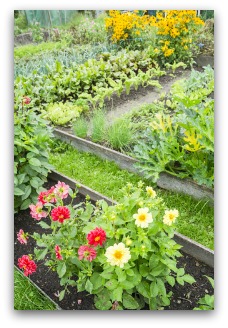
- Add edging to beds - a neat edge between soil and path makes a dramatic difference to how designed and intentional a garden looks
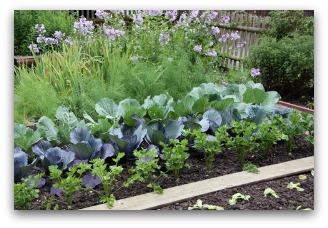
- Include flowers throughout - marigolds, nasturtiums, borage, and sunflowers are all excellent companion plants that also add colour and attract pollinators. A purely vegetable garden can look dull; flowers fix that instantly
- Use consistent materials - matching bed frames, path materials, and plant labels in a consistent style creates a coherent, designed look rather than an improvised one
- Create a focal point - an obelisk covered in beans, a half-barrel planted with herbs, or a striking sunflower at the back of a bed gives the eye somewhere to rest
- Group by colour - mixing purple basil, red Swiss chard, yellow tomatoes, and green kale creates genuinely striking combinations that are as ornamental as any flower border
- Add a seating area - a simple chair or bench in or near the garden encourages you to spend time there, notice problems early, and enjoy the harvest

Backyard Vegetable Garden Design Ideas for Small Spaces
A small backyard is not an obstacle to a productive vegetable garden design - it is a creative challenge with its own excellent solutions.
Small Backyard Design Strategies
- Go vertical wherever possible - a 6-foot trellis takes up less than 6 inches of ground space but produces as much as several square feet of horizontal planting
- Use the square foot gardening method - intensive spacing in raised beds produces two to three times more food from the same footprint as traditional row planting. See our complete square foot gardening guide.
- Integrate the garden into the existing design - raised beds alongside a deck, containers on steps, herbs in a window box, climbers on a fence. The garden does not have to be in a separate zone.
- Choose compact and dwarf varieties - most vegetable types now have compact varieties bred specifically for small spaces. Bush tomatoes, dwarf kale, compact peppers, and patio cucumbers all perform well in tight designs.
- Think in layers - tall crops at the back, medium crops in the middle, low crops and trailing plants at the front. A layered small garden uses its vertical dimension as well as its horizontal one.
Backyard Vegetable Garden Design Ideas for Large Spaces
A large backyard offers the luxury of space - but also the risk of overextension. The most successful large backyard vegetable garden designs grow in planned phases rather than trying to use all the space at once.
Large Backyard Design Strategies
- Zone by use - divide the space into a productive zone (raised beds, main crops), a utility zone (compost bins, tool storage, potting area), and a relaxation zone (seating, lawn, ornamental planting). Each zone works better when it has its own defined space.
- Build in phases - start with two or three beds in the best position, master them, then expand in subsequent seasons. A large garden built all at once often becomes unmanageable by midsummer.
- Dedicate space to perennials - a large backyard vegetable garden design has room for perennial crops that produce year after year without replanting: asparagus, artichokes, rhubarb, soft fruit bushes, and herbs like thyme, rosemary, and chives.
- Include a dedicated compost area - a large garden generates significant green waste. Two or three compost bays in an out-of-the-way corner turn that waste into the compost you need to feed all your beds.
- Consider a fruit area - a large backyard has space for apple or pear trees trained as espaliers against a fence, a strawberry bed, or soft fruit bushes like currants and gooseberries that require minimal maintenance once established.

10 Common Backyard Vegetable Garden Design Mistakes
- Ignoring sunlight. The most productive backyard vegetable garden design in the world will fail in the wrong spot. Always place beds in the sunniest available location, even if that means an unconventional arrangement.
- Making paths too narrow. An 18-inch path looks fine on paper but feels cramped in practice. Go wider than you think you need - you will never regret it.
- Building too many beds in year one. Start small, succeed, and expand. Three beds managed well will produce more than six beds that are half-maintained.
- No water access nearby. If watering requires carrying a watering can across the yard, it will not happen consistently. Design water access into the plan from the start.
- Placing tall crops in the wrong position. Tall crops at the south end of the bed shade everything behind them. Always position tall plants at the north side.
- Forgetting crop rotation. Growing the same crop family in the same bed year after year builds up soil pests and diseases. Design your beds with rotation in mind - ideally 4 beds for a 4-year rotation of roots, brassicas, legumes, and fruiting crops.
- No compost storage in the design. Every vegetable garden needs compost. If you do not design in a space for making or storing it, you will spend money buying it every year.
- Underestimating spacing. Vegetable plants need room. Overcrowded plants produce less, suffer more from disease, and are harder to harvest. Follow spacing guidelines carefully - our free garden planner shows spacing requirements for all 20 vegetables.
- No tool storage nearby. Tools left in the shed at the far end of the garden are tools that do not get used. A simple hook or small tool store near the garden makes daily maintenance far more likely.
- Designing for appearance but not practicality. A beautiful design that is awkward to maintain will be abandoned within a season. Prioritise practicality first - a well-maintained simple design always outperforms a beautiful neglected one.


Frequently Asked Questions About Backyard Vegetable Garden Design
How much space do I need for a backyard vegetable garden?
You need far less than most people expect. A single 4x8 ft raised bed - just 32 square feet - can produce a meaningful supply of salads, herbs, and vegetables for one to two people throughout the growing season. For a family of four, three to four 4x8 ft beds growing a mix of warm and cool season crops with succession planting will provide regular harvests. Quality of design and management matters far more than total area.
How do I design a vegetable garden on a slope?
Slopes present real challenges for backyard vegetable garden design - water runs off rather than soaking in, and working on a slope is physically difficult. The best solution is to build terraced raised beds across the slope, with each bed level within its own frame. This retains water, prevents erosion, and creates flat working surfaces. Use sturdy materials for the downhill side of each bed as they bear more pressure from the soil above.
How do I keep my backyard vegetable garden looking tidy?
Good design is the biggest contributor to a tidy-looking garden. Defined bed edges, consistent path materials, matching supports and labels, and a place for everything (tools, hoses, pots) all make the garden look intentional and cared-for. In terms of maintenance, spending 15-20 minutes per day on small tasks - harvesting, weeding, tying in, dead-heading - keeps a garden looking good far better than one large session per week.
Should I include a greenhouse in my backyard vegetable garden design?
A greenhouse or cold frame is a worthwhile addition to a backyard vegetable garden design if you want to start seeds early, overwinter tender plants, or extend your season in autumn. Even a small cold frame against a sunny fence makes a significant difference. A full greenhouse requires a level base, planning consideration in some areas, and regular ventilation management - but for serious food growers it is an invaluable addition.
What is the best orientation for vegetable garden beds?
In the Northern Hemisphere, beds running east to west with tall crops at the north end give all plants the most equal sunlight exposure through the day. North-south orientation works well too, particularly for crops of uniform height. The most important factor is that tall crops do not shade shorter ones - orient beds and arrange crops accordingly.
Design Your Backyard Vegetable Garden Online
Use our free interactive planner to try out different bed sizes and layouts, choose your vegetables, and check companion planting - all before you spend a penny on materials.
Open the Free Garden Planner
Download Free Design Worksheets