Vegetable Garden Fence:
Keep Deer, Rabbits, and Critters Out
 ★ Save
A good vegetable garden fence stops the damage before it happens. Deer, rabbits, groundhogs, and the neighbor's dog can undo a whole season of work in one night.
The right fence depends on who is coming to dinner. A rabbit fence can be 2 feet tall, but deer need 8 feet. Groundhogs dig, and raccoons climb. Use the chart below to match your fence to your visitors, then choose a style you'll enjoy looking at.
From My Garden
When I was a child, my grandparents had a very tall wire fence, perhaps 8 feet, to keep the deer out of their garden in the central Willamette Valley near Corvallis, Oregon. That is the first garden I remember "helping" with.
When my family moved to our present farm in 1960, we didn't have deer, rabbits, or any other garden thieves to deal with. We usually had a simple wire fence around the garden, in case the sheep or cows got out of their pastures and came looking for something special to eat.
My mother loved split-rail fences, so my father built one for her around our front yard. It was decorative rather than functional, and she loved it!
Charlotte
Ready to build?
Our Garden Fence Plans page shows how to build a simple, sturdy fence step by step, with cheap and wooden fence ideas.
See the Garden Fence PlansOn This Page
Which Fence Keeps Out Which Animal?
Match your vegetable garden fence to the animal. Height stops jumpers, a buried edge stops diggers, and an electric wire stops climbers.
| Animal | How tall | Below ground | What works |
|---|---|---|---|
| Deer | 8 feet | Not needed | Tall woven wire or plastic deer mesh. Or two 4- to 5-foot fences about 4 feet apart; deer won't jump into the narrow space. |
| Rabbits | 2 to 3 feet | Bury or bend out 4 to 6 inches | Chicken wire or welded wire with 1-inch or smaller holes. Young rabbits slip through bigger holes. |
| Groundhogs | 3 to 4 feet | Bury 10 to 12 inches, bent outward in an "L" | Sturdy welded wire. Leave the top 12 inches loose and floppy, or add an electric wire on top, since groundhogs climb. |
| Raccoons | Any fence they can climb won't stop them | Not needed | Two electric wires, about 6 and 12 inches above the ground, especially around sweet corn. |
| Skunks and opossums | 2 to 3 feet | Bury 6 to 12 inches | Welded wire with a buried edge, like a groundhog fence. |
| Dogs | 3 to 4 feet | Bury a few inches if they dig | Welded wire, picket, or a wooden fence with a gate that latches. |
| Cats | Fences rarely stop them | Not needed | Lay chicken wire flat on the soil between plants; cats won't dig there. |
| Gophers, moles, and voles | Not needed | Line the bottom of raised beds | ½-inch hardware cloth under the soil of raised beds. |
Not sure who is eating your garden? Look for clues. Deer leave ragged, torn leaves high on the plants and hoof prints. Rabbits make clean, slanted cuts low to the ground. Groundhogs leave large holes nearby and eat plants down to the stems.
Choosing Fence Materials
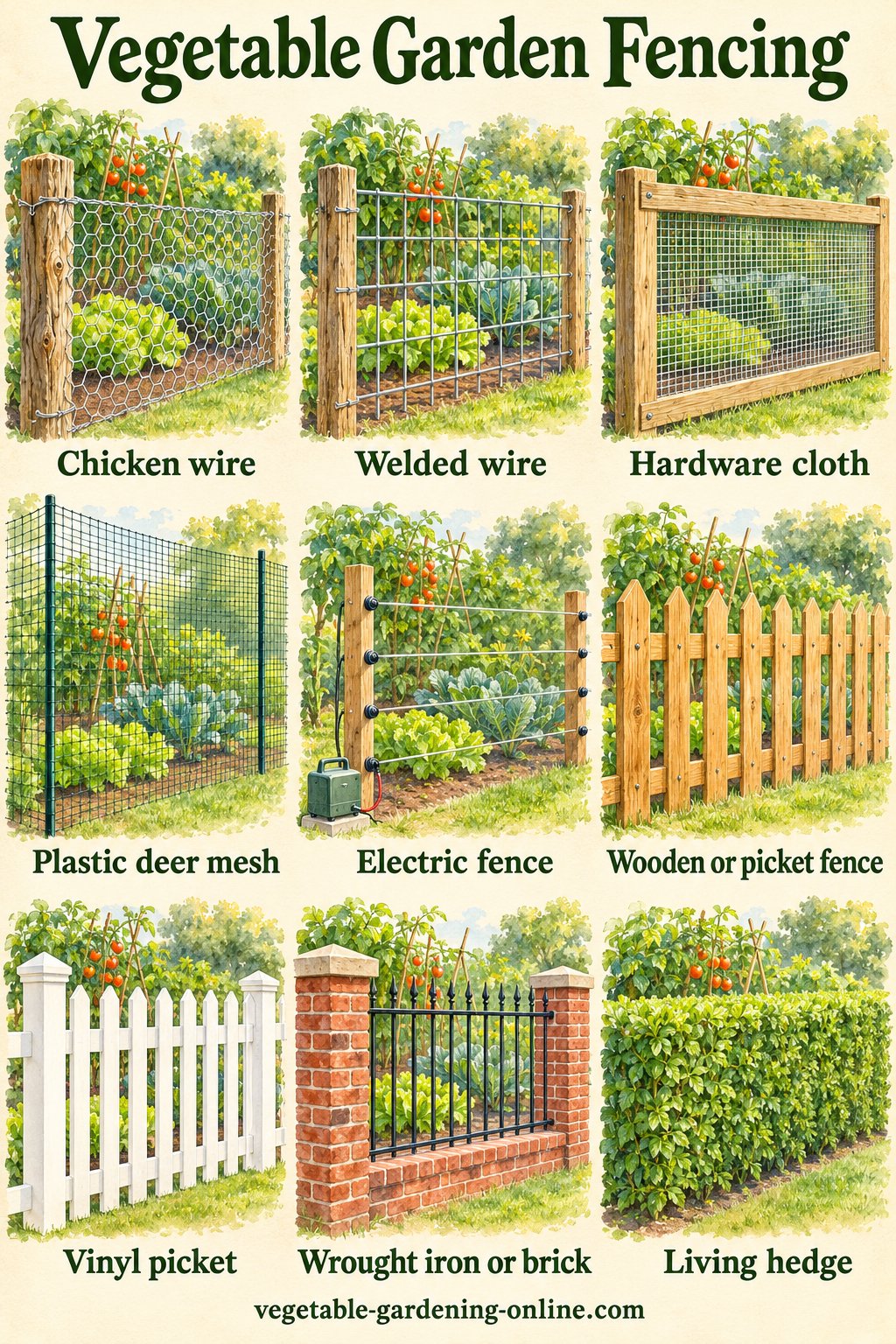
Vegetable Garden Fencing: 9 Kinds of Fences
 ★ Save
Wire is the most practical vegetable garden fence for keeping animals out. It's affordable and easy to put up, and you can move it later.
| Material | Best for | Cost | Notes |
|---|---|---|---|
| Chicken wire | Rabbits, cats | Low | Light and easy to bend. Rusts in a few years. |
| Welded wire | Rabbits, groundhogs, dogs | Low to medium | Stiffer and longer-lasting. Choose small openings at the bottom for rabbits. |
| Hardware cloth | Burrowers, small animals | Medium | Strong ½-inch mesh. Great under raised beds and around the bottom of fences. |
| Plastic deer mesh | Deer | Low to medium | Nearly invisible from a distance. Needs tall posts. |
| Electric fence | Raccoons, deer, groundhogs | Medium | Very effective. Follow the kit directions, and keep children in mind. |
| Wooden or picket fence | Dogs, people, looks | Medium to high | Charming. Add wire along the bottom to keep out rabbits. |
| Vinyl picket | Looks, low upkeep | High | Never needs painting. Add wire along the bottom for rabbits. |
| Wrought iron or brick | Looks, wind | Highest | Beautiful and long-lasting, but rabbits slip between the bars. |
| Living hedge | Wind, privacy, looks | Low to medium | Takes a few years to grow and needs yearly trimming. |
A note on treated wood: Lumber treated before 2004 contained arsenic, so don't reuse old treated wood in the garden. Today's treated lumber uses copper-based preservatives. For posts outside the beds it's fine, but many gardeners still choose cedar or untreated wood where it touches the soil near food.
How to Deer-Proof a Vegetable Garden

Deer can jump a 6-foot fence, so a single deer fence needs to be about 8 feet tall. Use tall wooden or metal posts with woven wire or plastic deer mesh.
Two shorter fences also work. Deer won't jump into a narrow space where they can't see a safe place to land. Two 4- to 5-foot fences set about 4 feet apart keep most deer out.
Electric fences work well too. Some gardeners smear a little peanut butter on foil tabs on the wire, so curious deer touch it with their noses and learn to stay away.
Start small if you can. If you're not sure deer will find your garden, try a season with a simple fence and see how popular your vegetables are with the locals!
How to Stop Rabbits and Groundhogs from Digging Under

Diggers go under a fence, not over it. An "L" footer at the bottom of the fence stops them.
- Dig a trench about 6 inches deep along the fence line (10 to 12 inches for groundhogs).
- Run the wire fence down into the trench, then bend the bottom 6 to 12 inches outward, away from the garden, like the letter L.
- Fill the trench back in. When an animal digs at the fence, it hits the buried wire and gives up.
- For groundhogs, leave the top 12 inches of wire loose and unattached, so it bends back when they try to climb over.
No time to dig? Lay a 12- to 18-inch strip of wire flat on the ground along the outside of the fence and pin it down with landscape staples. The grass grows through it in a few weeks.
Pretty Vegetable Garden Fence Ideas
 ★ Save
Nothing beats the old-fashioned charm of a white picket fence around the garden. Instead of the kind Tom Sawyer had to whitewash, today you can choose vinyl pickets that never need painting.

Rustic fences can be made from branches, poles, or old lumber. They suit a country garden and cost very little.
 ★ Save
A living hedge is a beautiful garden border. It blocks wind and hides the garden when it isn't looking its best. It needs yearly trimming, and a hedge alone won't stop rabbits, so run wire along the bottom.

Be creative with recycled materials. Old windows, doors, bottles, and lattice can become a one-of-a-kind fence. Brick, stone, and wrought iron are lovely and last a lifetime, but they cost the most.
Vegetable Garden Fence Ideas Guide
 ★ Save
More Ways a Fence Helps Your Garden

- Support for climbing crops: Peas, pole beans, cucumbers, and small melons can climb a wire fence, which saves space and keeps the fruit clean.
- More light: A light-colored fence on the north side of the garden reflects sunlight back onto the plants. See our tips for a vegetable garden in partial shade.
- Wind protection: A hedge or a solid fence on the windy side protects tall plants like corn and tomatoes.
- Keeping pets out: No one wants the garden to be the neighborhood's public restroom!
Vegetable Garden Fence Questions
- How tall should a fence be to keep deer out?
- About 8 feet for a single fence. Two 4- to 5-foot fences set about 4 feet apart also work, because deer won't jump into the narrow space between them.
- Will chicken wire keep rabbits out?
- Yes, if it's 2 to 3 feet tall, has 1-inch or smaller holes, and the bottom is buried or bent outward 4 to 6 inches so rabbits can't dig under.
- How deep should I bury a garden fence?
- About 6 inches for rabbits and 10 to 12 inches for groundhogs, with the bottom bent outward in an "L" shape.
- Will a fence keep raccoons out?
- Not by itself, because raccoons climb. Two electric wires about 6 and 12 inches above the ground work best, especially around sweet corn.
- What is the cheapest vegetable garden fence?
- Chicken wire or welded wire on metal T-posts or wooden stakes. Recycled lumber, lattice, and branches also make low-cost fences. See our garden fence plans.
- Do I need a fence around my vegetable garden?
- Not always. If you aren't sure animals will find your garden, start with a simple, low-cost fence and add more if you see damage.
More Garden Care Guides

My short garden email, Get the Dirt, comes Saturday mornings.
Sign Up for My Free Newsletter