Planning a Vegetable GardenLayouts, Raised Beds, Containers, and More
Planning a vegetable garden before you plant saves time, money, and frustration. This page is your starting point: garden types, layouts, planting dates, and free planning tools.
 ★ Save
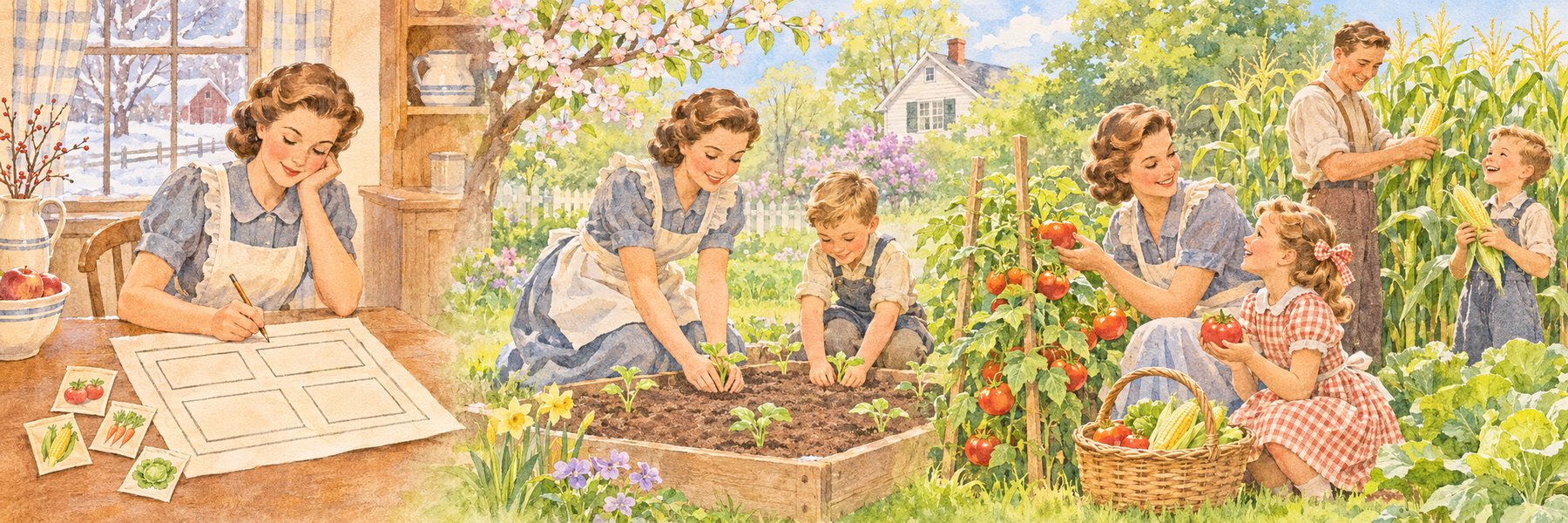
A well-planned garden makes the most of your space. It matches your crops to your climate and avoids the most common beginner mistakes.
Three Main Types of Vegetable Gardens
 ★ Save
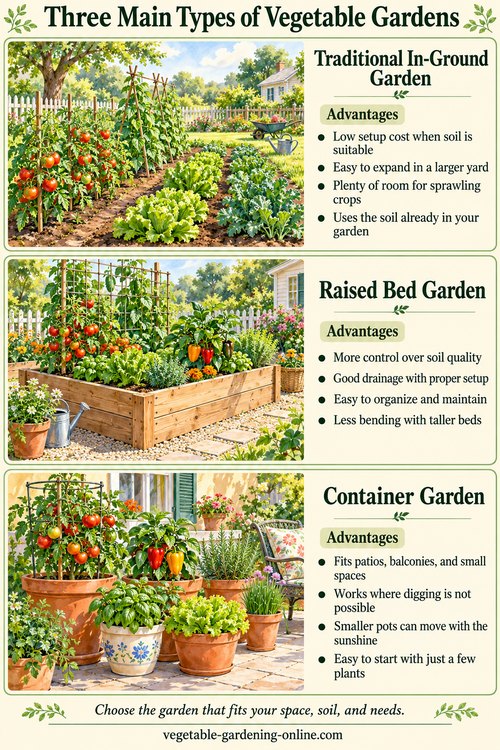
When planning a vegetable garden, the first big choice is the type of garden.
Raised beds are the favorite of most beginners: you control the soil, and there's less bending.
In-ground gardens cost the least and suit big crops like corn, squash, and pumpkins.
Container gardens fit a patio, porch, or balcony, so you can garden with no yard at all.
- Vertical Vegetable Garden – grow up a trellis to save room
- No-Dig Vegetable Gardening – start a new bed without digging
Free Garden Tools for Your Zip Code
Start with your own zip code. These free tools tell you when to plant, what still has time to grow, and how to lay out your beds.
Garden Layouts and Free Plans
 ★ Save
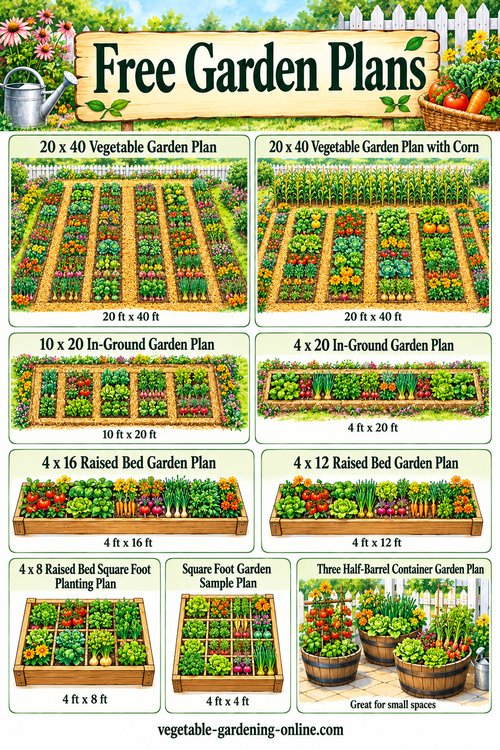
A good layout is the heart of planning a vegetable garden. It puts the right plants in the right spots, so nothing gets shaded or crowded.
Put tall crops on the north side, keep paths wide enough to work, and give sprawling crops like squash room to spread.
Start with one of our free plans, or try a layout idea that fits your yard.
- Free Vegetable Garden Plans: nine printable plans, from a 4 x 4 bed to a family garden.
- Small Vegetable Garden Plans: layouts for small yards and tight spaces.
- Planning a Vegetable Garden Layout: step by step, with sample plans.
- Vegetable Garden Layout Ideas: creative layouts for gardens of every size and shape.
- Basic Vegetable Garden Design: five backyard layouts, paths, and the four-square rotation.
- Vegetable Garden Shade: what to grow with less sun.
When to Plant Your Vegetable Garden
 ★ Save
Timing is a big part of planning a vegetable garden. Your last spring frost and first fall frost decide when each crop goes in.
Cool-season crops like peas, lettuce, and spinach go in early, before the last frost. Tender crops like tomatoes, peppers, and squash wait until after it.
Plan for a fall garden, too. Many crops grow even better in the cool weather of autumn.
- Vegetable Planting Calendar: what to plant every month, with planting dates from your frost dates.
- Personalized Planting Calendar: planting dates for your own zip code.
- What Can I Still Plant? what still has time to grow before frost.
- Succession Planting: keep the harvest coming all season.
- Fall Vegetable Garden Guide: what to plant for a fall harvest.
Free Planning Printables
 ★ Save
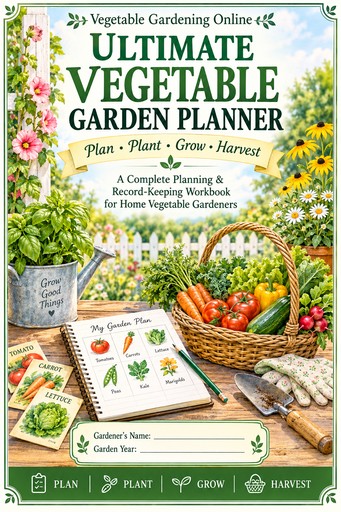
Planning a vegetable garden is easier with the right tools, and ours are all free.
Design your bed on screen, print a planner to fill in by hand, or keep a journal of what grew well this year.
- Printable Garden Planner: an 8-page planning workbook.
- Garden Journal: a record of your garden year.
- Companion Planting Chart: which vegetables grow well together.
- 2027 Garden Calendar: a watercolor garden scene for every month.
- All Free Printables: everything in one place.
Planning a Vegetable Garden in 5 Steps
 ★ Save
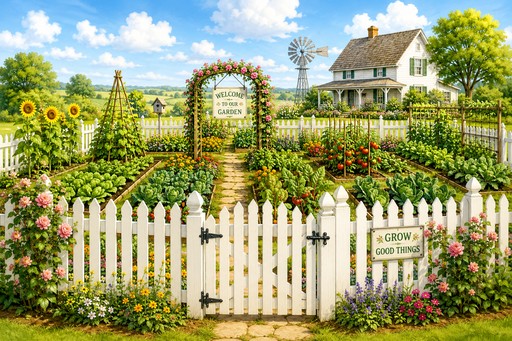
Planning a vegetable garden doesn't have to take long. A few hours with a pencil and paper on a winter evening is enough for a first garden.
- Pick the spot. Full sun (6 to 8 hours), good drainage, close to water, and away from big trees.
- Decide the size. Start small: one 4 x 8 raised bed or a 10 x 10 plot is plenty for a first year.
- Choose the type. In-ground, raised beds, or containers, depending on your space and soil.
- Draw the layout. List the vegetables your family eats, then sketch where each goes, with tall crops on the north side.
- Plan the timing. Mark your frost dates, then plan spring, summer, and fall plantings so the garden stays full.
New to vegetable gardening? Our step-by-step guide, How to Start a Vegetable Garden, walks you through 10 easy steps, from finding a sunny spot to your first harvest.
From My Garden
Over the many years I have been gardening, I have had large in-ground traditional garden beds, raised beds, and container gardens.
Each has its advantages and disadvantages, but they all get the job done!
The right choice depends on your space and on how much time and energy you have to spend on gardening.
Charlotte
Common Mistakes When Planning a Vegetable Garden
 ★ Save
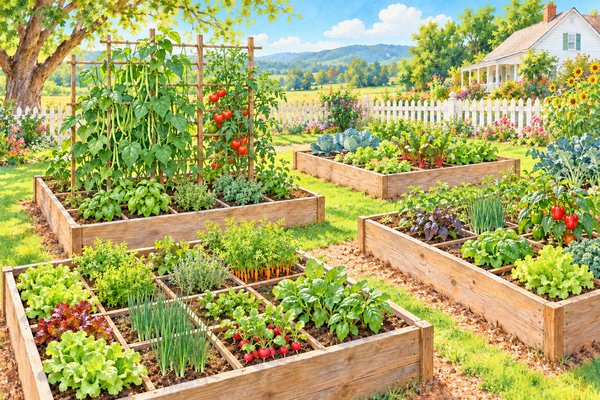
Most of these mistakes are easy to avoid once you know about them.
- Starting too big: a plot that looks easy in March can be overwhelming by July.
- Forgetting how big plants get: a tiny tomato seedling can spread 4 feet wide by August.
- No paths: without them, you end up stepping on the beds and packing down the soil.
- Checking the sun only in June: a spot that is sunny in summer can be shady in spring and fall, when the sun is lower.
- Planning only for spring: a fall planting can give you a second harvest from the same beds.
Questions About Planning a Vegetable Garden
 ★ Save
How long does planning a vegetable garden take?
For a first garden, a few hours is enough: measure your spot, sketch a layout, and list the vegetables you want to grow.
When should I start planning?
Winter is the best time. Seed catalogs arrive, and you have time to plan before any seeds need to be started indoors, about 10 weeks before your last frost.
Do I need special software?
No. Graph paper and a pencil work fine. Our free garden planner just makes it faster, and it checks spacing and companion plants for you.
Should my plan change every year?
Your layout can stay the same, but rotate your crops, so the same plant family isn't in the same spot two years in a row. A garden journal helps you keep track.
What matters most when planning a vegetable garden?
Choosing the right spot. Plenty of sun, good drainage, and water close by make up for almost anything else.
For more ready-made layouts, the Old Farmer's Almanac has a free library of garden plans for raised beds, containers, and small spaces.
My short garden email, Get the Dirt, comes Saturday mornings.
Sign Up for My Free Newsletter