Growing Green Beans In
Your Home Garden

Here are a few easy tips for growing green beans in your backyard vegetable garden!
Learn how to plant green bush or pole beans, and how to care for them for best gardening results.
Design Your Own Vegetable Garden Layout Using our Free "Vegetable Garden Planner" Software!
As green beans are always favorites for holiday meals, pot luck gathering, and weekly family dinners, it is hard to take a wrong turn planting green beans!
Our focus for this vegetable gardening exercise is how to grow pole beans which are a low maintenance vine plant that can grow even in small spaces.
Many growers pick these plants because they are easy to grow and produce continuously after planting. Pole beans have a nuttier taste than bush types.
Kentucky Wonder, Kentucky Blue, Blue Lake, and Romano Italian are some of the most popular types of pole beans.
Download Free Garden Planning Worksheets, Garden Diary, Zone Chart, Or Planting Guide
When to Plant Green Beans
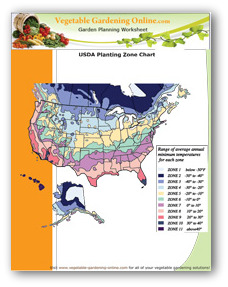
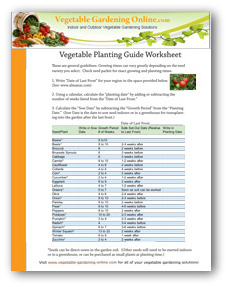
Use our free zone chart and planting guide to determine when to plant your green bean seeds in the garden.
Green beans are a warm-weather crop.
The time for growing green beans is after all dangers of a late frost is past for your region.
Experiment with different varieties to discover which types of pole beans grow best in your soil type and climate.
Growing Green Beans from Seed

When planting green beans from seed, mound up a small pile of dirt around two to four inches tall and six to eight inches wide.
Plant several seeds inside the mounded earth. The seeds should germinate in about a week.
After the plants begin to grow, mound a small dirt hill surrounding the base of the plant.
Pole beans grow best with support. You can purchase a pre-fabricated wooden lattice or design a unique structure.
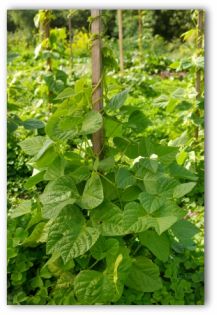
Most gardeners construct a teepee for growing various types of pole beans.
Use four eight-foot tall bamboo stakes. Place together to form a cone shape over the pole beans.
Wrap string around the poles to form the tepee.
The beans will be trained to grow up on a pole by placing the growing vine stems onto the lattice or twine.
The little tendrils that grow from the plant will cling to the trellis, and find their way up.

Soil for Growing Green Beans
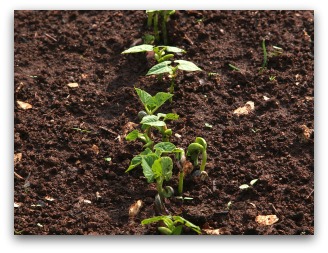
All types of pole beans need to be planted in a sunny location. Beans will grow in any prepared soil.
Mulch to keep soil from splashing onto crop. Mulching with dried weed-free grass clippings or straw prevents weeds and retains soil moisture.
• Soil bacteria supplies bean plants with nitrogen.
• Apply nitrogen rich fertilizers from either an organic product or compost.
• Use additional fertilizer during the 2nd and 5th weeks of growth.
Watering Green Beans in the Garden
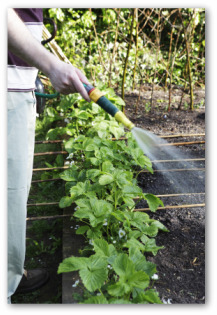
Water enough to keep soil consistently moist until seeds germinate.
Give the plants a deep watering once a week.
Continue watering schedule when soil surface begins drying.
Green Beans Pests and Diseases
Many bean diseases are kept at bay by growing on poles.
Rust and rhizoctonia stem rot are the major diseases. The main pest of various types of pole beans is nematodes.
Prevention
If your growing green beans are suffering from rust disease, the leaves have noticeable brown spots and the spores look rusty like an old steel pipe.
This condition is prevalent during warm, moist temperatures.
When the disease strikes near harvest time, no control is necessary.
If rust begins while plants are maturing, leaves should be sprayed with a sulfur fungicide.
Make a note of the dates of application and wait the recommended interval before harvesting.
Next season; avoid the problem by planting a rust-resistant variety. Harvester is a disease resistant type of pole bean.
The fungus organism called rhizoctonia stem rot spreads through the stems of young plants, especially where beans have been previously grown.
Treat soil with the fungicide.
To prevent the number one pest, nematodes, fumigation of suspect soil must be done before planting green beans because chemicals should not be applied once crops are planted.
Harvesting Green Beans

Whichever types of pole beans you choose, in 65-80 days you will be harvesting a delicious bounty from the garden.
Gardeners often select pole beans because they can enjoy a long harvest using limited space.
Southerners prize pole beans because of the extended season from a single planting.
In the Northern states, expect several weeks of harvesting from your growing green beans.
Pole beans are typically what gardeners cultivate when planting green beans.
Bush beans, which are of the same species, grow on a bushy plant as the name suggests.
Bush types tend to produce at once, and then stop, whereas pole beans continue production for several weeks.

You Might Also like to Read:
Recent Articles


-
Growing Dill In a Backyard Vegetable Garden
Nov 20, 18 11:40 PM
 Easy tips for growing dill in a home vegetable, kitchen, or herb garden. Learn how to plant, grow, care for, and harvest dill plants when backyard vegetable gardening.
 -
Vegetable Garden Pictures to Help Plan Your Garden
Nov 20, 18 09:53 AM
 Vegetable garden pictures and videos to help you get started planting a garden. Gardening pictures can help you plan your garden whether a raised bed, container, or traditional backyard home garden.
 -
Vegetable Gardening Planting Times, Zone Chart, and Guide for When to Plant
Nov 20, 18 09:51 AM
Use our free zone chart and guide for vegetable gardening planting times, to plan your next garden. Whether planting seeds or transplants, learn when to start.