- Home
- Planning A Garden
- Basic Vegetable Garden Design
Basic Vegetable Garden Design: Layouts, Plans, and Ideas for Any Yard

A basic vegetable garden design decides where the beds go, how you reach them, where the water comes from, and which crops go where.
Get those four things right and almost everything else falls into place.
This guide walks through each one, shows five layouts that work in real yards, compares raised beds with in-ground beds, and gives you free plans and an online planner to lay out your own garden before you dig.
Whether you have a large open backyard, a small courtyard, a first garden, or an old plot that needs a rethink, the same principles in basic vegetable garden design apply.
If you'd rather start from a finished plan, the free 20 x 40 plan, and the 4 x 4 square foot plan are all on this page, and our interactive planner lets you try bed sizes and spacing on screen.
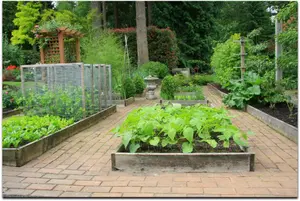
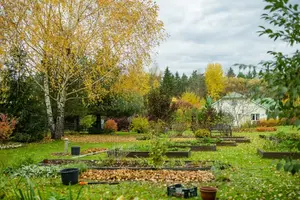
In my lifetime, we have had several different garden styles. My parents' garden was always a huge in-ground garden with a large area that included growing corn. More recently, my husband and I have built and used raised bed gardens, as here in chilly, rainy Oregon, this type of garden drains better than our clay soil, and warms earlier than does the ground. It's also nice to have an edge to sit on when planting, tending, or harvesting, instead of bending or being right on the ground!
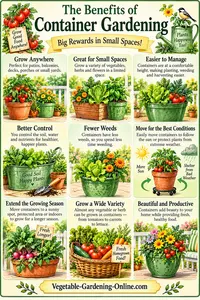
One year we also had a container vegetable garden on our sunny front porch. We also always have a container flower garden on our porch, as it is uplifting to see the bees, butterflies, and hummingbirds visiting and busily working away.
Free garden tools for your own zip code
 Planting Calendar |
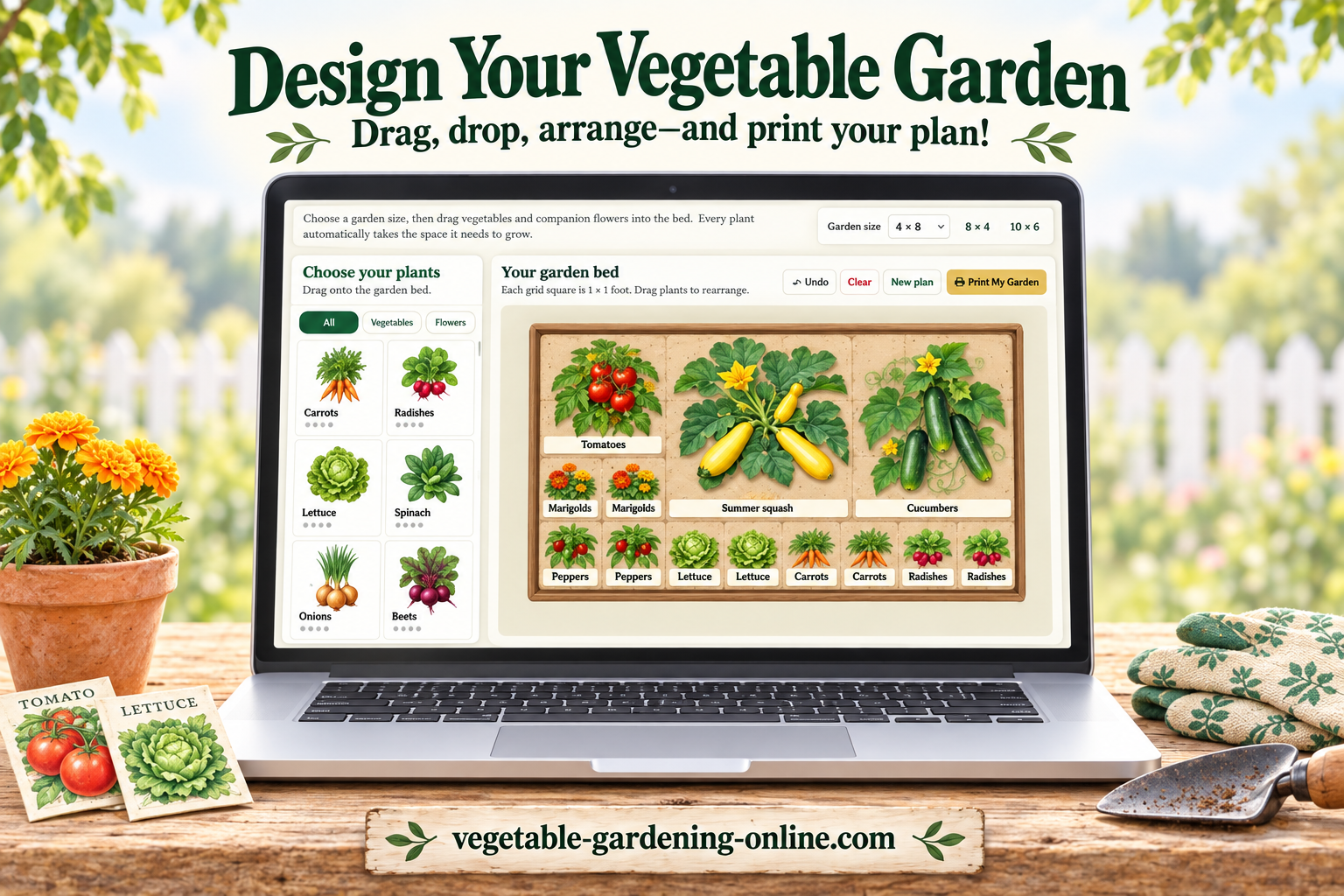 Garden Planner |
 Zone Finder |
On this page
The Four Principles
of Basic Vegetable Garden Design
Sun first, everything else second
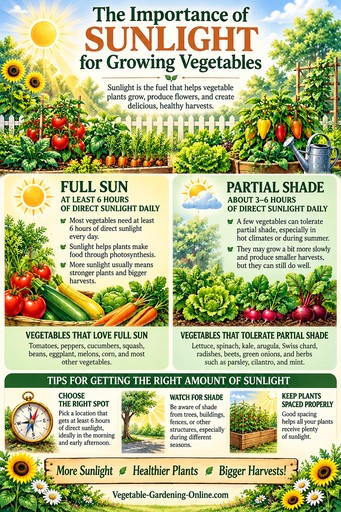 Most vegetables in the garden require at least 6 hours of direct sunlight each day. A few vegetables such as lettuce and spinach will grow in partial shade.
No basic vegetable garden design succeeds without direct sunlight for most of the day.
Most vegetables need at least six hours of direct sun a day; eight is better for fruiting crops such as tomatoes, peppers, and cucumbers.
Before you design anything, spend one day watching how the sun moves across your yard.
Map the sunny areas and the shaded ones.
The garden goes where the sun is, not where it looks nice or is most convenient.
Design for reach, not just area
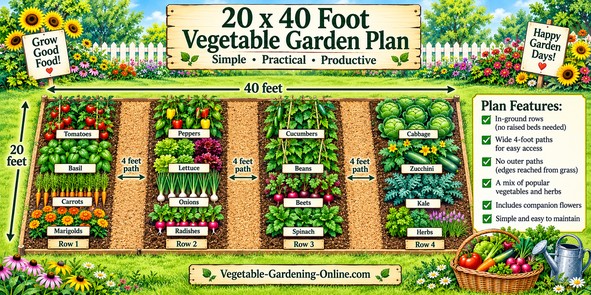
A common mistake in basic vegetable garden design is filling every square foot with plants and leaving no room to work.
If you can't reach every part of a bed without stepping on the soil, the design will fail in practice.
Keep beds no wider than four feet when you can reach them from both sides, and two feet when you can reach from one side only.
Paths need to be wide enough to kneel, carry a basket, or push a wheelbarrow.
Keep water close
A garden placed far from a faucet gets neglected, unless you have a very long hose.
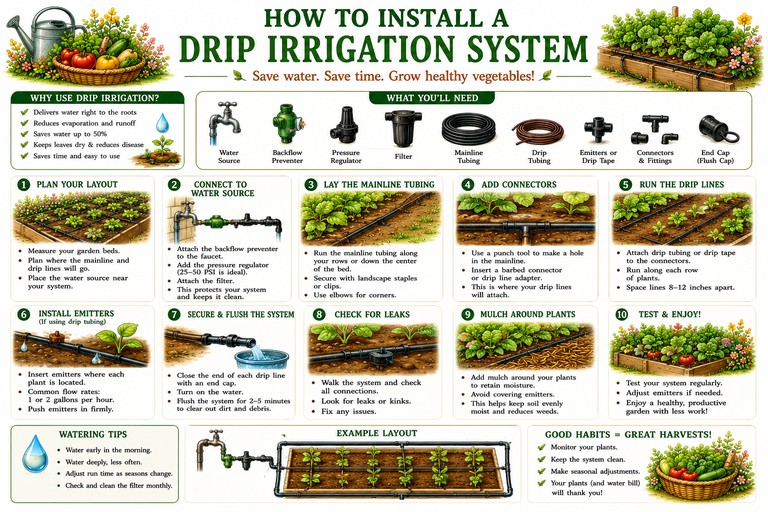
Put the beds within easy reach of a hose, or design the watering in from the start with a drip line or soaker hose.
We usually have our vegetable garden on a drip system with a timer, so that we can leave for a few days and not have to worry about watering. It is more work up front, but adds a lot of convenience and peace of mind to our gardening.
Plant away from tree and shrub roots that will take the moisture first.
Start smaller than you think
The most productive gardens are the well-kept ones, not the big ones.
One 4 x 8 raised bed tended every few days will feed you better than four beds that get away from you by July.
Design for the time you have, not the time you hope to have.
Assess Your Yard Before You Design
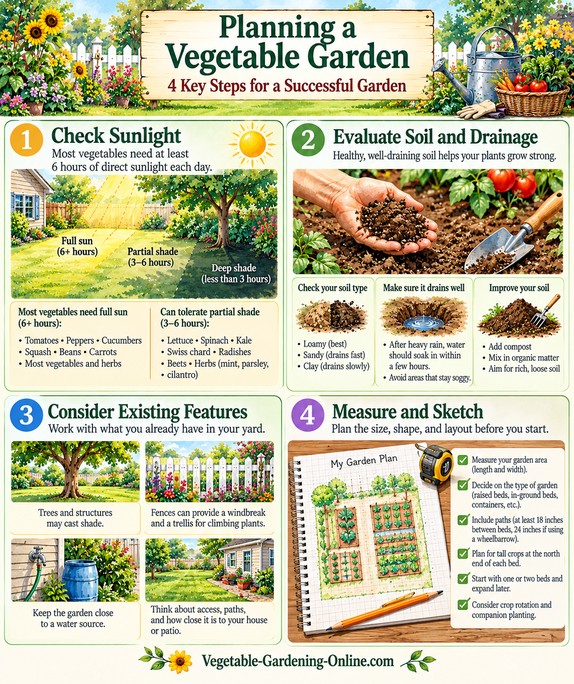
Before sketching anything, walk the yard with a notebook and check four things.
Sunlight
- Stand in the yard at 9 a.m., noon, and 3 p.m. on a sunny day and note which areas are in sun each time.
- Note which structures cast shade: the house, a fence, the garage, big trees.
- Sun angles change through the season. A spot in full sun in May can be shaded by a neighbor's tree in July.
- Mark the sunniest areas. That is where the vegetables go.
Soil and drainage
- Dig a small hole after a rain. If water pools and drains slowly, drainage is poor and raised beds are the answer.
- Squeeze a handful of soil. Good garden soil crumbles; clay holds its shape; sand falls apart and drains too fast.
- Have the soil tested before the first season. Your county extension office does it for free or a small fee and the results are more reliable than a home kit. Then add compost, and only the amendments the test calls for.
- Note compacted areas, usually near paths, gates, and anywhere cars have parked.
Existing features
- Fences and walls are assets: wind protection, trellis support, and reflected warmth for the bed beside them.
- Large trees need working around. Their roots run well past the canopy and compete hard with vegetables.
- Locate underground utilities before any deep digging or post-setting.
- Consider the view from the house. A well-designed vegetable garden can be beautiful as well as productive.
Measure and sketch
- Measure the growing area and sketch it to scale on graph paper, one square to a foot.
- Mark north. Mark the house, fences, faucet, and anything else that stays put.
- This sketch is the foundation of your design, and it is what you'll copy into the online planner.
Five Basic Vegetable Garden Layouts That Work
There is no single best basic vegetable garden design. The right one depends on your space, your goals, and your time. These five cover almost every yard.
The classic rectangle
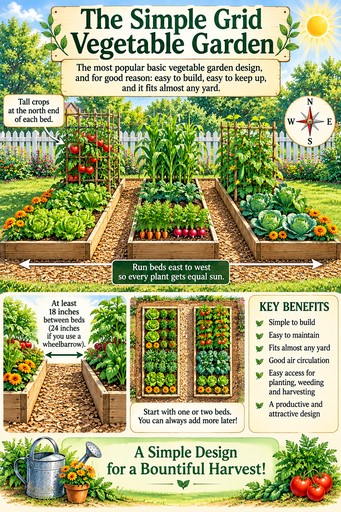
One or more rectangular beds in a simple grid with paths between.
It is the most popular basic vegetable garden design, and for good reason: easy to build, easy to keep up, and it fits almost any yard.
Run beds east to west so every plant gets equal sun, put tall crops at the north end of each bed, leave at least 18 inches between beds (24 if you use a wheelbarrow), and start with one or two beds.
The traditional row garden

The in-ground garden most of us grew up with: long straight rows, running north to south.
Anything tall, such as corn, pole beans, or peas, goes on the north side so it doesn't shade the shorter crops.
Medium plants such as tomatoes, cabbage, broccoli, and squash go in the middle, and the low crops, carrots, beets, lettuce, radishes, and onions, along the south.
Rows make cultivating, weeding, and harvesting simple, and this is still the best design for a big sunny yard and space-hungry crops such as corn, winter squash, and melons.
The U-shape
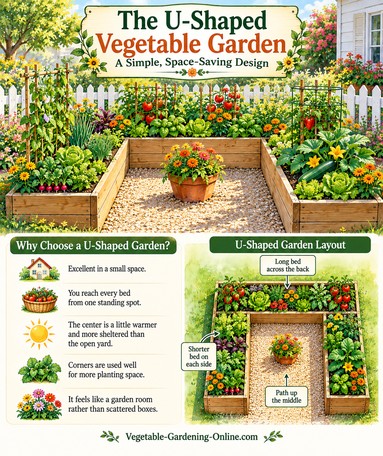
Three beds in a U with a path up the middle: one long bed across the back and a shorter bed on each side.
Excellent in a small space.
You reach every bed from one standing spot, the center is a little warmer and more sheltered than the open yard, corners are used well, and it feels like a garden room rather than scattered boxes.
The border layout
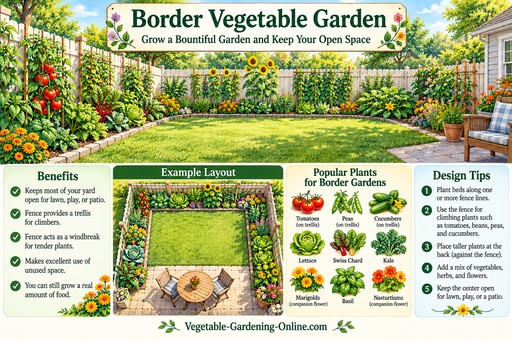
Beds along one or more fence lines with the lawn or patio left open in the middle.
This suits anyone who wants most of the yard for other things while still growing a real amount of food.
The fence becomes a trellis for climbers and a windbreak for tender plants.
The island layout
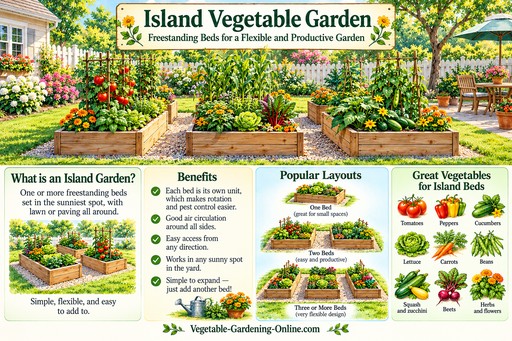
One or more freestanding beds set in the sunniest spot, with lawn or paving all around. Simple, flexible, and easy to add to.
Each bed is its own unit, which makes rotation and pest control easier.
A sixth option, the potager or kitchen garden, is any of the above made formal: geometric beds, defined paths, and vegetables mixed with herbs and flowers for looks as much as yield.
If you enjoy the garden as a place to be, it's worth the extra planning.
Design before you build. The free interactive garden planner lets you try bed sizes and arrangements in minutes, with correct spacing for each vegetable, which is far easier than moving built beds.
Raised Beds or In-Ground:
Which Is Right for Your Yard?
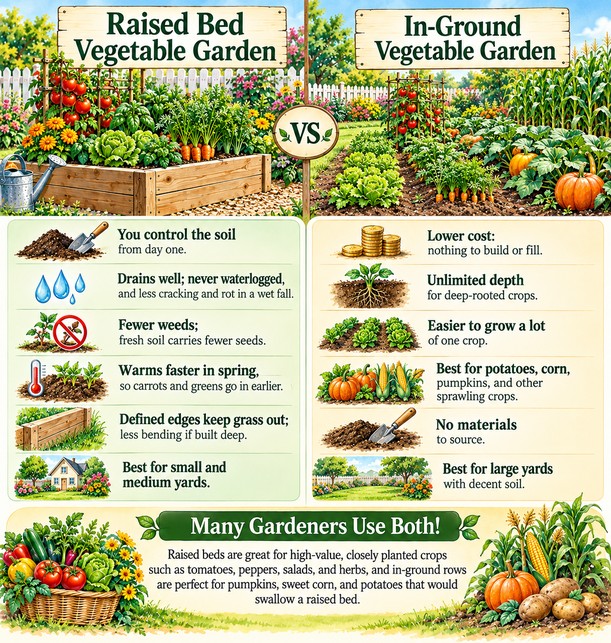
This is the most basic decision in any vegetable garden design. Both work; they suit different situations.
| Raised bed | In-ground |
|---|---|
| You control the soil from day one | Lower cost: nothing to build or fill |
| Drains well; never waterlogged, and less cracking and rot in a wet fall | Unlimited depth for deep-rooted crops |
| Fewer weeds; fresh soil carries fewer seeds | Easier to grow a lot of one crop |
| Warms faster in spring, so carrots and greens go in earlier | Best for potatoes, corn, pumpkins, and other sprawling crops |
| Defined edges keep grass out; less bending if built deep | No materials to source |
| Best for small and medium yards | Best for large yards with decent soil |
Many of the best basic vegetable garden designs use both: raised beds for the high-value, closely planted crops such as tomatoes, peppers, salads, and herbs, and in-ground rows for pumpkins, sweet corn, and potatoes that would swallow a raised bed.
Sizing and building a raised bed
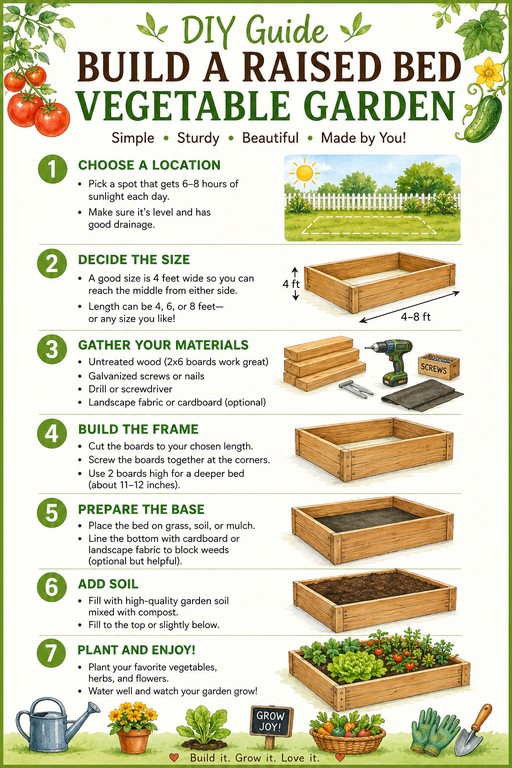
A 4 x 20 foot bed grows enough for two people.
Keep the width to four feet so you can reach the center from either side, and allow an extra foot or two around it for the frame and path.
Most raised beds are 8 to 15 inches deep; the deeper the bed, the more comfortable it is to sit on the edge while you plant, weed, and pick.
Frame it with 2 x 6 or 2 x 4 lumber, brick, stone, or cement blocks.
We used decorative cement blocks from the local home center and they went in easily. Avoid railroad ties and pressure-treated wood, which can leach into the soil.
Short lengths of log or pole driven into the ground also make an attractive edge.
The Four-Square Rotation:
The Simplest Basic Vegetable Garden Design
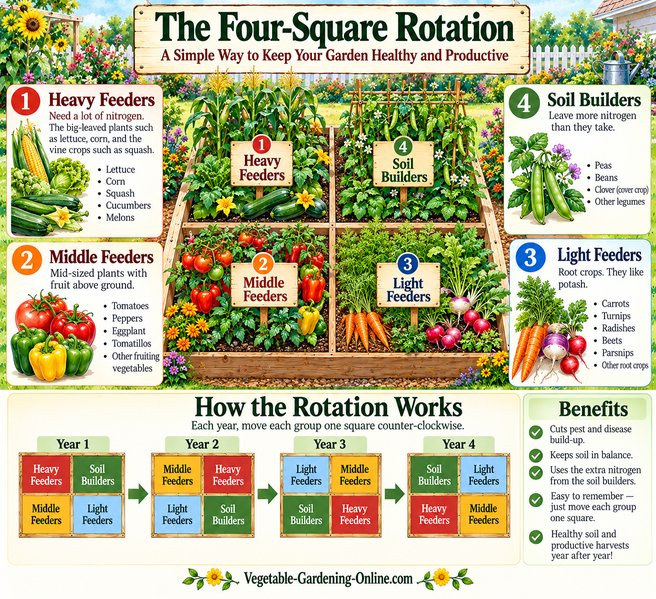
Draw a square and divide it into four with a cross. Those four squares are four beds, and each one holds one group of crops, grouped by how much they take from the soil.
- Heavy feeders need a lot of nitrogen: the big-leaved plants such as lettuce, corn, and the vine crops such as squash.
- Middle feeders are the mid-sized plants with fruit above ground: tomatoes and peppers.
- Light feeders are the root crops, turnips and carrots among them. They like potash.
- Soil builders leave more nitrogen than they take: peas, beans, and other legumes.
Going counter-clockwise from the top left, plant heavy feeders, middle feeders, light feeders, then soil builders.
Every season, when you replant, move each group one square clockwise. The heavy feeders take over the square the soil builders just left, which is exactly where the extra nitrogen is.
Think of it as a baseball game where every player moves up one base each year. The rotation cuts pest and disease build-up and keeps the soil in balance without you having to remember what grew where.
Succession Planting and Intercropping in Your Design

The most productive basic vegetable garden designs never leave a bed empty.
Plan on paper for a second and third planting so something is going in as something else comes out.
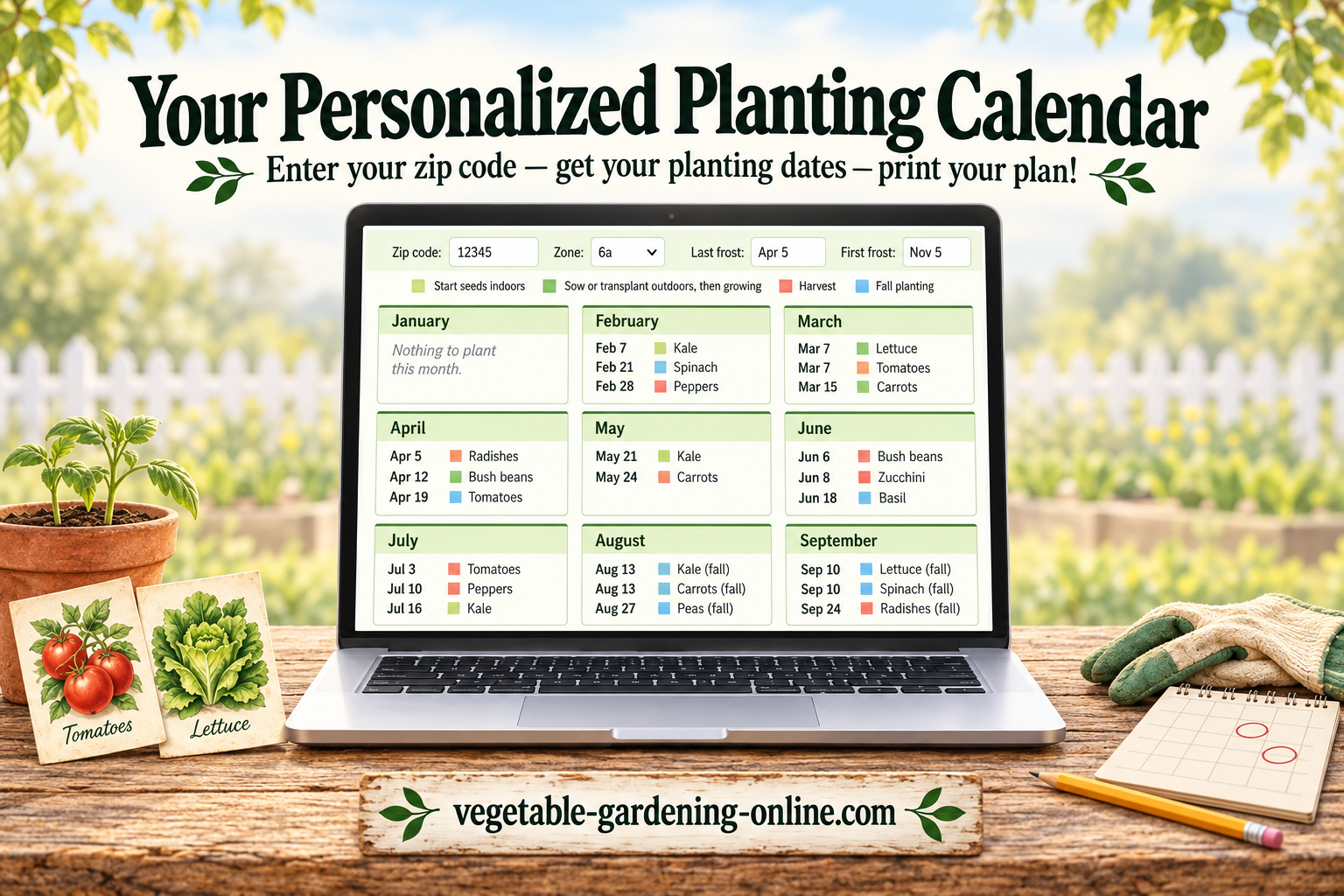
Start dates depend on your zone; the personalized planting calendar above gives them for your zip code.
- Set lettuce transplants in the shade of bush or pole beans.
- Scatter turnip seed between the cabbages.
- Tuck green onion sets in almost anywhere.
- Thin lettuce, then transplant the thinnings for a later crop.
- Grow radishes alongside nearly anything; they're out before the neighbor needs the room.
- Keep a few potted starts on a stand nearby, ready to drop into any space that opens up.
Planning Paths That Work
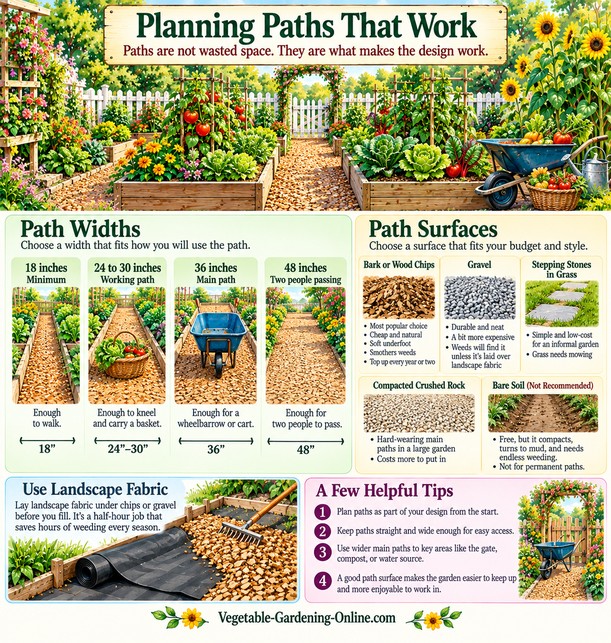
Paths are not wasted space. They are what makes a basic vegetable garden design work once it's built, and narrow paths are the most common reason a garden that looked fine on paper is miserable to work in.
Path widths
- Minimum: 18 inches, enough to walk.
- Working path: 24 to 30 inches, enough to kneel and carry a basket.
- Main path: 36 inches, enough for a wheelbarrow or cart.
- Two people passing: 48 inches.
Path surfaces
- Bark or wood chips: the usual choice; cheap, natural, soft underfoot, and they smother weeds. Top up every year or two.
- Gravel: durable and neat; a bit more expensive; weeds will find it unless it's laid over landscape fabric.
- Stepping stones in grass: simple and low-cost for an informal garden; the grass needs mowing.
- Compacted crushed rock: hard-wearing main paths in a large garden; costs more to put in.
- Bare soil: free, but it compacts, turns to mud, and needs endless weeding. Not for permanent paths.
Lay landscape fabric under chips or gravel before you fill. It's a half-hour job that saves hours of weeding every season.
Going Vertical: Grow Up to Grow More

A trellis adds the equivalent of several square feet of bed without adding footprint, and it's the biggest single gain a small garden can make.
Put every vertical structure on the north side of a bed or the north edge of the garden so it casts its shade away from the other crops.
| Structure | Best crops | Notes |
|---|---|---|
| A-frame trellis | Cucumbers, beans, peas | Freestanding and movable; lettuce grows in its shade in summer |
| Fence trellis | Cucumbers, beans, squash, tomatoes | Uses a fence you already have; the most space-efficient of all |
| Obelisk or tripod | Pole beans, peas, nasturtiums | A focal point that looks good even bare |
| Arch or tunnel | Cucumbers, squash, beans | Covers a path; fruit hangs down for easy picking |
| Wall panel | Tomatoes, espaliered fruit | Best on a south-facing wall that reflects warmth |
The full guide to supports, climbers, and small-space ideas is on the vertical vegetable garden page.
Small-Yard and Large-Yard Design Ideas
Small yards, patios, and balconies

- Go vertical wherever you can. A six-foot trellis uses six inches of ground.
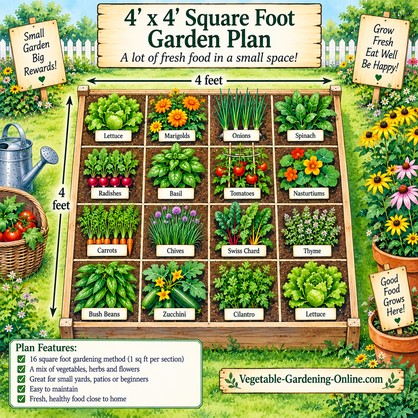
- Use square foot spacing in raised beds; it yields two to three times what rows do from the same footprint. A square foot garden is a 4 x 4 bed, 6 to 12 inches deep, marked into 16 squares with string, one crop per square. Complete square foot gardening guide.
- Fold the garden into what's there: a bed beside the deck, pots on the steps, herbs in a window box, climbers on the fence.
- Choose compact varieties: bush tomatoes, dwarf kale, patio cucumbers, compact peppers.
- Plant in layers: tall at the back, medium in the middle, low and trailing at the front.
- No ground at all? A 24 x 30 inch box, 6 to 12 inches deep, closely planted with carrots, green onions, beets, chives, leaf lettuce, radishes, and turnips gives a steady supply of salad crops. Plan a balcony or patio as a series of such boxes, tubs, and pots; there's no need to leave walking room inside a garden that size, and shelves and hanging pots add space upward.
Large yards
- Zone it: a growing zone (beds and main crops), a work zone (compost, tools, potting), and a sitting zone. Each works better with its own defined space.
- Build in phases: two or three beds in the best sun the first year, then expand. A big garden built all at once is usually out of control by midsummer.
- Give perennials their own space: asparagus, rhubarb, artichokes, berries, and herbs such as thyme, rosemary, and chives produce for years without replanting.
- Plan the compost in: two or three bays in a back corner turn the garden's own waste into next year's soil.
- Add fruit: espaliered apples or pears on a fence, a strawberry bed, or currant and gooseberry bushes that need little care once established.
Designing for Beauty as Well as Food
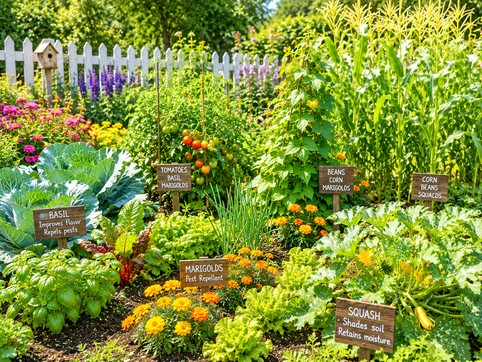
A garden that you like being in gets better care and grows more. None of this costs much.
- Edge the beds. A clean line between soil and path makes any garden look intentional.
- Mix in flowers. Marigolds, nasturtiums, zinnias, borage, and sunflowers bring pollinators, and marigolds and nasturtiums help with pests. A garden of nothing but vegetables looks dull; flowers fix it at once.
- Use edible color. Eggplant with its purple fruit, the yellow flowers on zucchini and cucumbers, ruby lettuce, peppers in yellow, orange, red, and brown, okra pods, purple basil, and red chard are as ornamental as any border.
- Match your materials. The same bed frames, path surface, and plant labels throughout read as designed rather than improvised.
- Give the eye a place to rest: a bean tepee, a half-barrel of herbs, one tall sunflower at the back of a bed.
- Put a chair in it. You'll spend more time there, spot trouble sooner, and enjoy the harvest.
Watering Built Into the Design
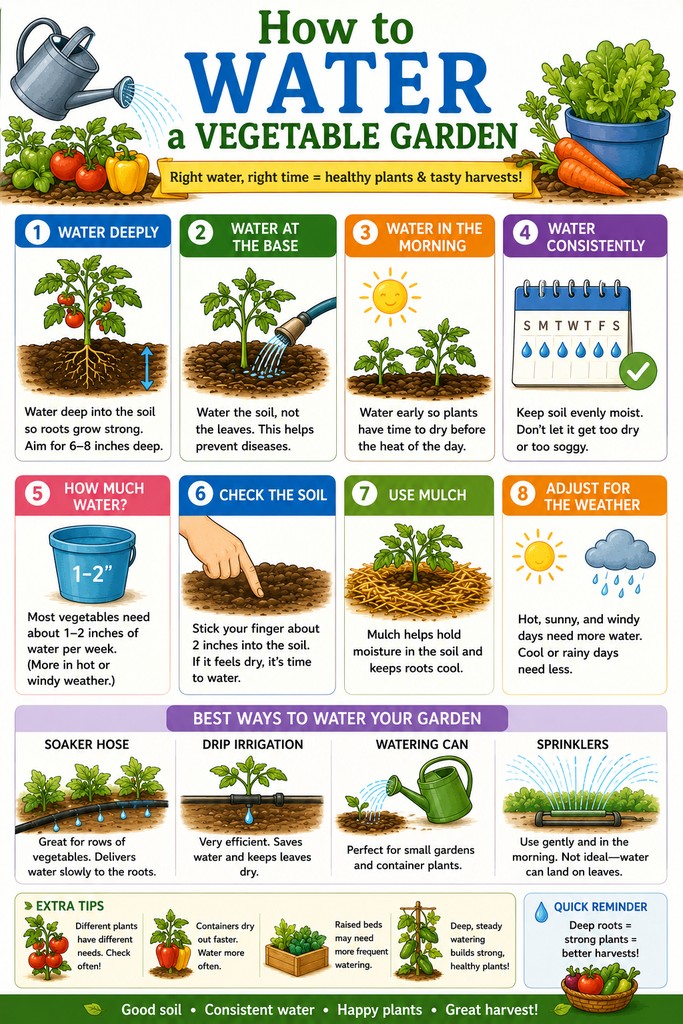
In a basic vegetable garden design, decide on watering before you build, not after.
A drip system puts water at the roots and wastes almost none to runoff or evaporation; a soaker hose does much the same for less money.
Sprinklers are fine for a row garden but wet the leaves, which invites disease.
Water in the early morning; evening watering leaves plants damp overnight and encourages mold and mildew, and midday watering loses much of it to the heat.
New transplants and seedlings need frequent light watering while their roots are small; once established, a deep soak once or twice a week is better.
The rule of thumb is one to two inches of water a week, rain included.
A simple timer, or a rain sensor that skips watering after a storm, takes the guesswork out.
Ten Basic Vegetable Garden Design Mistakes
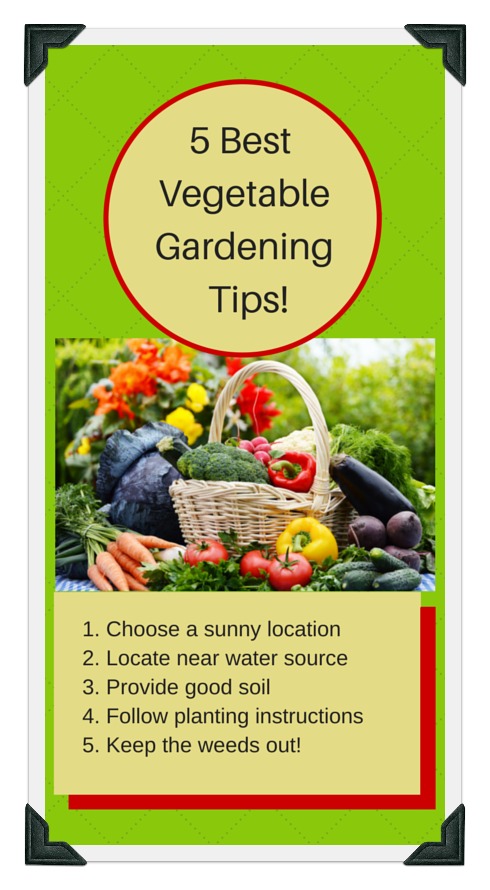
- Ignoring the sun. Put beds in the sunniest spot even if the arrangement looks odd.
- Paths too narrow. Eighteen inches looks fine on paper and feels cramped in July. Go wider than you think.
- Too many beds the first year. Three beds kept up beat six half-tended.
- No water nearby. If watering means carrying a can across the yard, it won't happen.
- Tall crops in the wrong place. Tall plants at the south end shade everything behind them. North side, always.
- No rotation. The same family in the same bed year after year builds up pests and disease. Four beds and the four-square rotation above solve it.
- No place for compost. Every garden needs it; design in a spot to make it or you'll buy it every year.
- Crowding. Overcrowded plants yield less, get sick more, and are harder to pick. The planner shows the spacing for every vegetable.
- Tools stored far away. A hook or small box near the garden makes the daily ten minutes far more likely.
- Designing for looks, not work. A beautiful garden that's awkward to tend gets abandoned. Practical first; beauty follows.
Basic Vegetable Garden Design Questions
How much space do I need?
Less than you'd think. One 4 x 8 raised bed, 32 square feet, gives one or two people a steady supply of salads, herbs, and vegetables through the season. Three or four such beds, with succession planting, feed a family of four. Design and upkeep matter far more than square footage.
How do I design a garden on a slope?
Terrace it. Build raised beds across the slope with each bed level inside its own frame. That holds water, stops erosion, and gives you flat places to work. Use heavier material on the downhill side of each bed, which carries the weight of the soil.
What is the best direction for beds?
In North America, beds running east to west with tall crops at the north end give every plant the most equal sun. North to south works too, especially for crops of similar height. What matters is that tall crops never shade short ones.
How do I keep the garden looking tidy?
Good design does most of it: edged beds, one path material, matching supports and labels, and a place for tools, hoses, and pots. After that, fifteen to twenty minutes a day of picking, weeding, and tying in beats one big session a week.
Should I add a greenhouse or cold frame?
A cold frame against a sunny fence is worth it for anyone who wants to start seeds early or keep greens going into winter. A greenhouse needs a level base, regular venting, and sometimes a permit; for serious growers it's a real asset, but start with a cold frame.
Free Plans, Worksheets, and the Online Planner
Try out a basic vegetable garden design on screen before you dig. In the free garden planner, set your bed size, drag in your vegetables with correct spacing, and print the plan.
Prefer paper? Download eight free printable garden plans (10x10, 20x20, 20x40, 4x20 raised bed, circular, square foot, and container), plus the free planning worksheets, garden diary, zone chart, and planting guide.
More Planning Guides
- Planning a Vegetable Garden (the hub)
- Planning a Vegetable Garden Layout: Free 20x40 Plan
- Raised Bed Vegetable Garden: Build, Fill, and Plant
- Square Foot Gardening: The Complete Guide
- Container Vegetable Garden
- No-Dig Vegetable Gardening
- Companion Planting Chart
- How to Start a Vegetable Garden from Scratch
Return to our Planning a Vegetable Garden hub for complete guides to garden design, layout, raised beds, containers, and planning tools.

Recent Articles


-
Free Vegetable Garden Cut and Paste Activities for Kids Ages 5-7
Sep 29, 26 05:29 PM
 Free printable vegetable garden cut and paste activities for kids ages 5-7. Build your own garden, match seeds to plants, and learn what grows where.
 -
Free Preschool Vegetable Garden Cut and Paste Activities
Sep 29, 26 03:12 PM
 Free preschool vegetable garden cut and paste activities for ages 3-4. Build your own backyard, container, or seed packet garden scene, and sticker sheets.
 -
Preschool Art Activities: Free Garden Crafts and Coloring Pages
Sep 29, 26 03:00 PM
Free preschool art activities with a garden theme: vegetable coloring pages, a seed packet craft, and paper plate scarecrows to print for home or school. -
Raised Bed Vegetable Garden: Plans, Layouts, and How to Build One
Sep 27, 26 09:37 PM
 A raised bed vegetable garden step by step: where to put it, size and depth, materials, how to build and fill it, a free 4x8 planting plan, and what to grow.
 -
Container Vegetable Gardening: Ideas, Designs, and Growing Tips
Sep 27, 26 05:56 PM
 Container vegetable gardening made easy: best pots and soil, what to grow, pot sizes, watering and feeding, plus container garden designs, ideas, and pictures.
 -
Fall Vegetable Garden Guide: The Complete Guide to Autumn Growing
Sep 26, 26 11:28 AM
 This fall vegetable garden guide covers the best crops, timing, frost protection, and planting charts for a productive autumn harvest.
 -
Garden Story for Children: Free Printable; Ben's Garden Year
Sep 25, 26 12:50 PM
 A free printable garden story for children ages 4-7. Read it online or print the picture book: Ben plants seeds in winter, grows a tomato, and picks radishes.