Planting Sweet Corn
in Your Garden

These easy tips for planting sweet corn in your backyard vegetable garden will ensure a bountiful harvest every year!
Learn how to plant, grow, water, and harvest sweet corn plants when vegetable gardening.
Design Your Own Vegetable Garden Layout Using our Free "Vegetable Garden Planner" Software!
When planting corn, make certain the soil is not too loose.
Plant the seed corn kernals 1 to 1 1/2 inches deep.
Firm the ground by stepping on it lightly after you have planted 3-4 corn kernels per hill.
Avoid sowing corn seeds too deep because it forces the young seedlings to struggle their way to the surface, which depletes vital energy they need to grow and thrive.
In early spring, you can try an old gardener's trick by putting your bare elbow down to the ground to determine if the soil is too cold for planting sweet corn.
If you want to make a nice straight seed trench before planting sweet corn, use an old broom handle. Lay it flat and tread it into the earth.
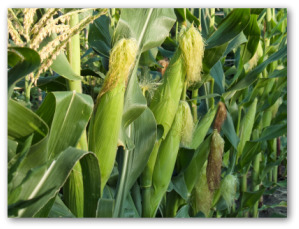
Planting Corn
- Apply well-aged manure two weeks prior to planting sweet corn.
- Leave a distance between plants of 15 inches.
- Space rows 2 ½ feet apart.
- Average maturity is 80- 90 days.
- An expected yield from a 100 foot row is 50 ears of corn.
Download Free Garden Planning Worksheets, Garden Diary, Zone Chart, Or Planting Guide
How to Grow Sweet Corn
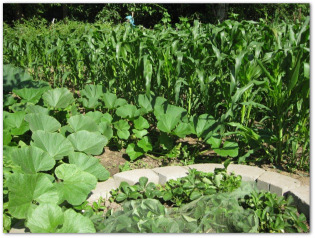
A big garden plot is the best place for growing sweet corn, although it isn't impossible if you have only 30 by 30 feet.
Corn should always be planted in blocks of at least three rows of the same variety in order for pollination to occur!
Corn plants are generally robust and quite adaptable.
An occasional bit of dry weather may even be to their benefit in encouraging roots to dig deeper in search of moisture, thereby making them stronger.
Corn can deplete the soil of essential nutrients.
Fertilizer, particularly one rich in nitrogen, should be used liberally.
A winter crop of clover is ideal for the corn patch.
Mulching is always a worthwhile exercise in the cornfield.
Vegetable Gardening Tips for Planting Sweet Corn
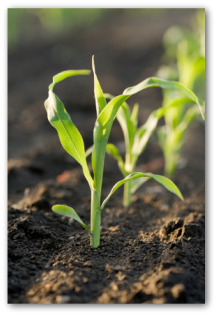
Soil needs to breathe.
To avoid compacting the earth in a vegetable plot without implementing stepping stones or pathways, walk along old wood planks laid down between the rows so that your weight is spread across a larger area, causing less damage.
Feed the soil around the plant so that its roots absorb the nutrients.
Don't fertilize at the foot of the stem, as this encourages "soft" growth, which makes the plants susceptible to pests and diseases.
It is a regrettable truth that the better quality of the soil, the bigger and more productive the weeds.
Hoe gently because the seeds from weeds will germinate again if you dig up too much soil and bury them in the process.
Harvesting Sweet Corn
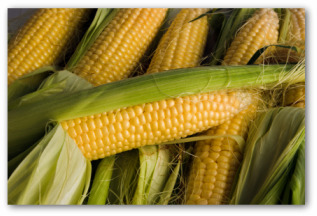
Sweet corn should be harvested in the milk stage, at the last possible minute before dinner because the sugar content rapidly decreases from the moment it is picked.
Break a kernel with your fingernail; if the inside is milky liquid, it is ready for picking.
Harvesting early, before the kernels reach the dough stage, is especially important if there are many crows in your area.
Project for Children Involving Planting Corn
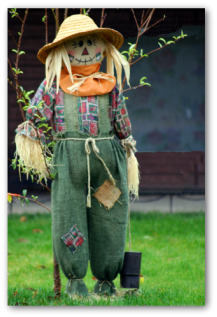
How to Make a Scarecrow
Birds can be a major problem in vegetable gardening.
Borrow a trick that farmers have used for centuries by making a scarecrow to deter the pests.
For the scarecrow's body, make the shape of a cross by tying together two poles.
Dig some old clothes out of your closet and dress the scarecrow in any fashion you choose.
For the head, stuff an old T-shirt with cloth, held together with safety pins.
Draw on face with a permanent felt-tip markers.
Stuff the scarecrow with straw or discarded rags and put a straw hat on its head.
"A tax rebate is good but not as good as planting corn!"~ Charlotte
Planting Sweet Corn to Vegetable Gardening
You Might Also like to Read:
Planting Sweet Corn to Growing CornRecent Articles


-
Growing Dill In a Backyard Vegetable Garden
Nov 20, 18 11:40 PM
 Easy tips for growing dill in a home vegetable, kitchen, or herb garden. Learn how to plant, grow, care for, and harvest dill plants when backyard vegetable gardening.
 -
Vegetable Garden Pictures to Help Plan Your Garden
Nov 20, 18 09:53 AM
 Vegetable garden pictures and videos to help you get started planting a garden. Gardening pictures can help you plan your garden whether a raised bed, container, or traditional backyard home garden.
 -
Vegetable Gardening Planting Times, Zone Chart, and Guide for When to Plant
Nov 20, 18 09:51 AM
Use our free zone chart and guide for vegetable gardening planting times, to plan your next garden. Whether planting seeds or transplants, learn when to start.