- Home
- Container Vegetable Gardening
Container Vegetable Gardening: Ideas, Designs, and How to Grow Food in Pots
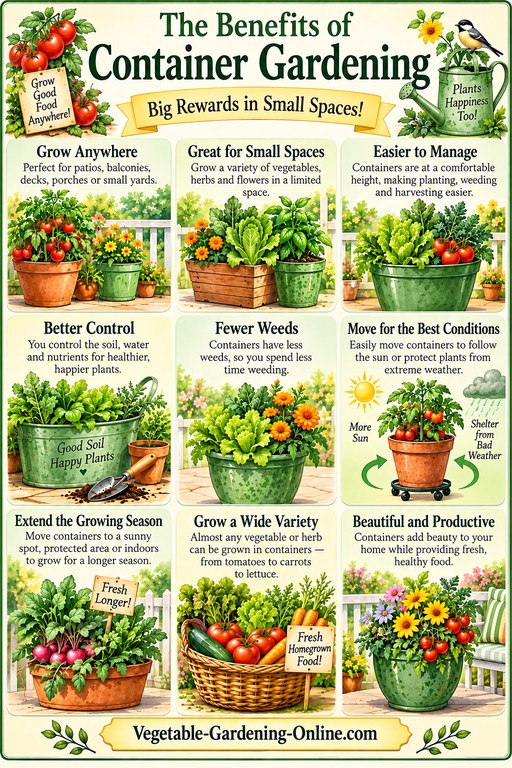
I love container vegetable gardening! If you are short of time or energy, container gardening is a great solution to both problems.
Here in the Willamette Valley in Oregon, our gardening season can be rather short because of early or late frosts.
Container soil warms more quickly than the ground, so your vegetables start growing sooner. That can be a big help when the season is short.
You never have to hoe a container garden! To me, that is a huge benefit; weeds are few, and easily eliminated. Container gardens are much easier to plant, care for, and harvest.
Free garden tools for your own zip code
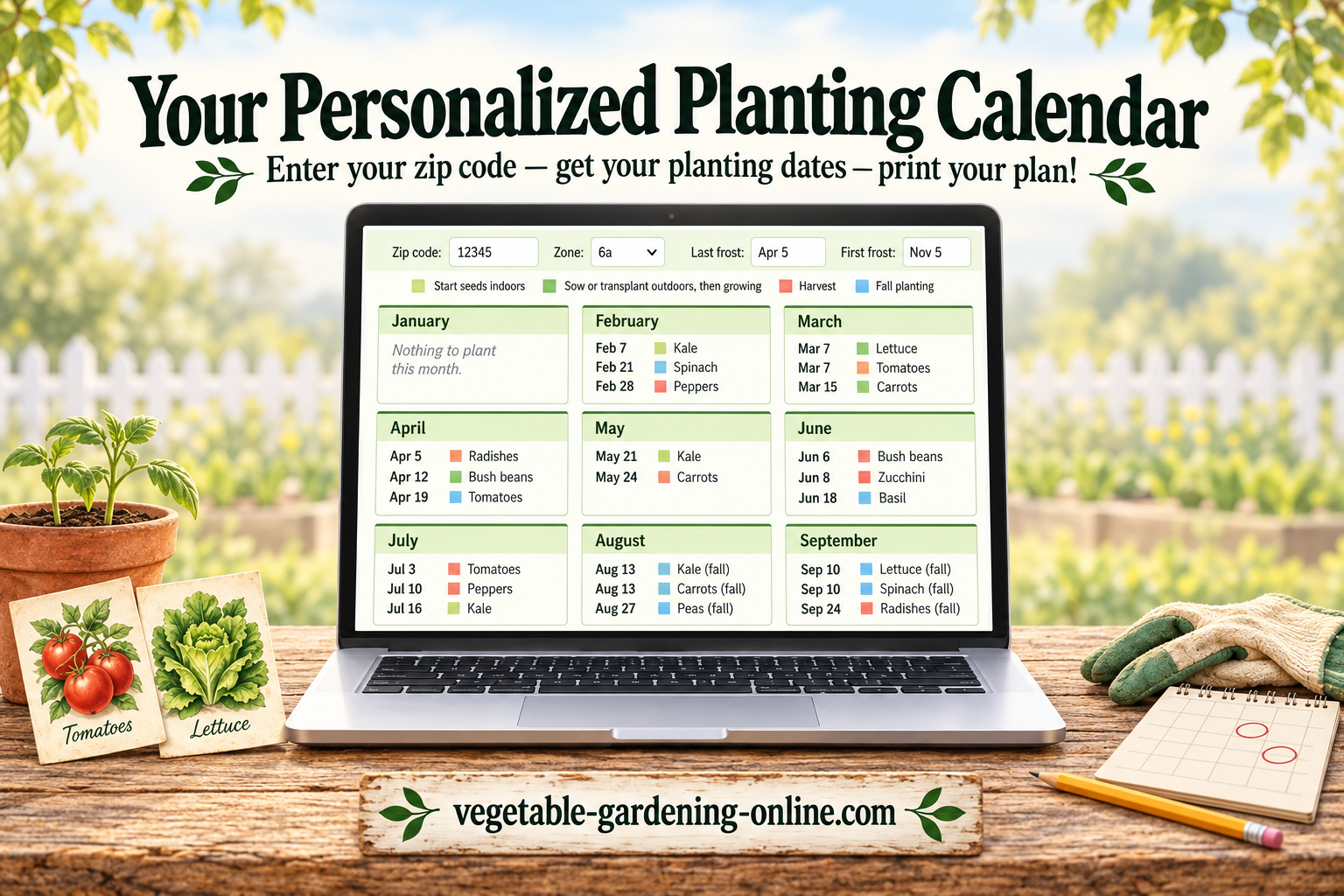 Planting Calendar |
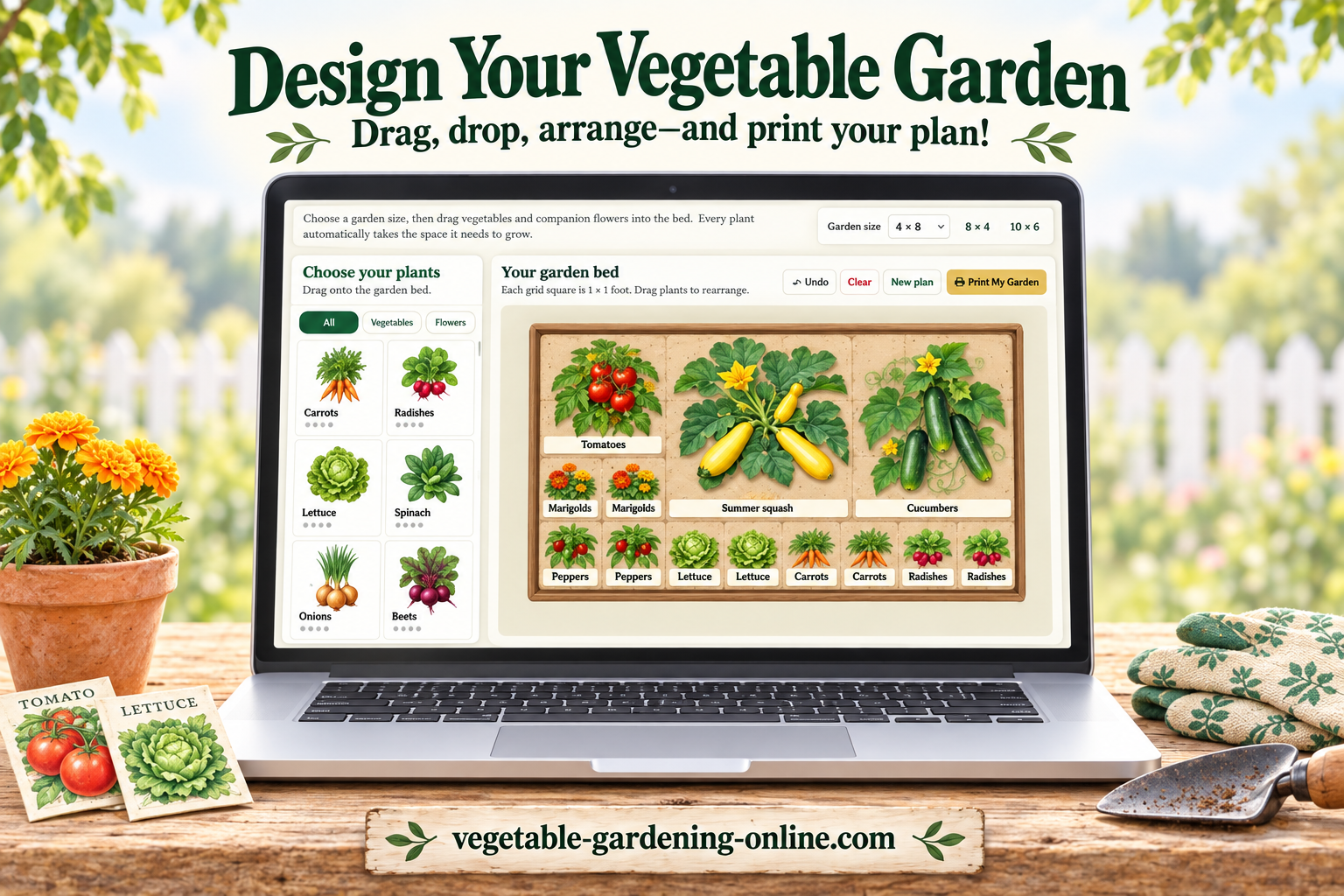 Garden Planner |
 Zone Finder |
On this page
Why Container Vegetable Gardening Works - and Who It Is Perfect For

Container vegetable gardening suits a surprisingly wide range of gardeners. You do not have to be a city dweller or apartment renter to benefit from growing in pots. Even gardeners with large yards find containers invaluable for extending the season, growing tender crops in cold climates, and keeping herbs close to the kitchen door.
Container vegetable gardening is ideal if you:
- Live in an apartment, condo, or rented home without a garden
- Have a small patio, balcony, rooftop, or courtyard
- Have poor, compacted, or contaminated native soil
- Want to garden without digging or heavy physical effort
- Want to start a garden quickly without major preparation
- Are older or have mobility challenges; containers at table height eliminate bending
- Want herbs and salad greens just outside the kitchen door
- Live in a short-season climate and want to move tender plants indoors before frost
Choosing the Right Containers for Container Vegetable Gardening
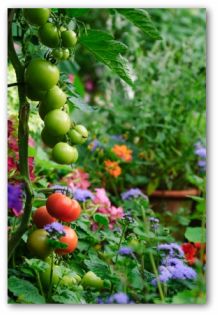
The most important rule of container vegetable gardening is simple: bigger is almost always better.
Larger containers hold more soil, which means more root space, better moisture retention, more stable temperatures, and less frequent watering.
Beginners consistently underestimate how large a pot needs to be. A tomato plant in a 1-gallon pot will survive but never thrive.
The second rule: drainage is non-negotiable. Every container must have drainage holes. Roots sitting in waterlogged soil will rot and kill the plant within days.
If you fall in love with a container that has no drainage holes, either drill some or use it as a decorative outer pot with a properly drained pot inside.
Best Container Types for Container Vegetable Gardening
| Container type | Pros | Cons | Lifespan |
|---|---|---|---|
| Terracotta / clay | Excellent drainage; attractive; heavy, so stable in wind | Heavy; fragile; dries out faster; expensive in large sizes | Many years if not frozen |
| Plastic pots | Lightweight; holds moisture longer; inexpensive; durable | Less attractive; can overheat in direct sun | 3–10 years |
| Fabric grow bags | Excellent drainage; air-prunes roots; portable; cheap; folds for storage | Dries out quickly; less decorative; wears out after 2–3 seasons | 2–4 seasons |
| Wooden boxes | Excellent insulation; attractive; large sizes; easy to build | Heavy; can rot over time (use cedar or composite lumber) | 5–15 years |
| Half barrels | Very large root space; beautiful; excellent for tomatoes and potatoes | Very heavy once filled; hard to move; expensive | 10–20 years |
| Window boxes | Perfect for lettuce, herbs, and radishes on railings and windowsills | Shallow, so fewer crop choices; needs frequent watering | 3–10 years |
Fabric grow bags are one of the best discoveries in modern container gardening. When a root reaches the porous side of the bag, air stops its growth, so the plant makes more side roots instead of circling and becoming root-bound.
The result is a healthier, more productive plant. 5-gallon and 10-gallon grow bags are ideal for tomatoes, peppers, potatoes, and cucumbers.
Containers to avoid: never use containers made from treated wood that contains arsenic or other chemical preservatives; they leach into the soil and into your food.
Also avoid dark-colored metal containers in hot climates. They absorb heat and can cook roots on a sunny day.
Oregon State University Extension recommends five-gallon containers for tomatoes, peppers, and eggplant, and reminds gardeners that daily watering is often needed. Read their guide, Container gardening: Grow vegetables even without yard space.
Creative Containers and Small-Space Ideas

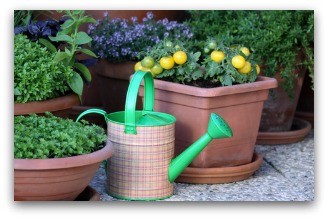
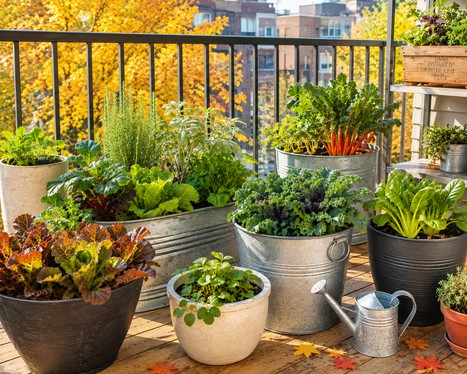
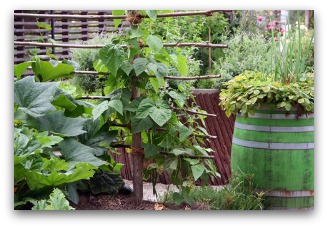
Almost anything that holds soil and drains can become a container garden. Buckets, kettles, washtubs, half barrels, wicker baskets, a child's wagon, or an old wheelbarrow all make charming vegetable planters.
Check your garage and garage sales before you buy new pots.
- Drainage first. Drill holes in the bottom of anything that doesn't have them. A layer of rocks or gravel in the bottom does not replace drainage holes; it actually keeps the soil above it wetter. Cover the holes with a bit of window screen or a coffee filter so the soil stays in.
- Wicker baskets are light and pretty. Line them with moss or a plastic bag with a few holes punched in the bottom.
- Metal tubs and buckets heat up in summer sun and chill in cold weather. Line the inside with bubble wrap to protect the roots.
- Wooden boxes last longer lined with plastic. For a planter box, 12 to 15 inches deep and 18 to 36 inches wide is ideal; make it as long as your space allows.
- Stone or concrete troughs are heavy but last a lifetime and suit a patio or courtyard.
- Wash recycled pots in 1 part bleach to 9 parts water before planting, to kill disease from the last plant.
Empty clay and ceramic pots before freezing weather. Wet soil expands as it freezes and cracks the pot.
This is a lesson I learned the hard way, and then learned all over again!
When space is tight
- Put pots on wheels. A wagon, wheelbarrow, or plant caddy can follow the sun, and you can turn it so both sides ripen.
- Go up a sunny wall: shelves for small pots, hooks for hanging baskets, and a string trellis for peas, beans, or cucumbers.
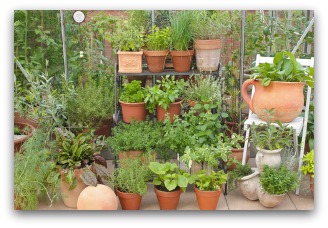
- Stair-step planters or tiers of pots on risers put herbs and greens right outside the kitchen door.
- A six-foot A-frame planter with shelves on both sides grows a surprising variety in a few square feet.
- Window boxes and hanging baskets use railings and the roof overhang. Support boxes at least 6 inches deep with posts, chains, or strong cord.
- Stand pots on feet, bricks, or wood wedges so they never sit in a puddle.
The Right Soil for Container Vegetable Gardening
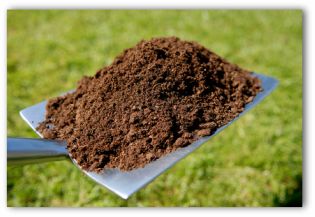
This is the mistake that dooms more container gardens than any other: filling pots with garden soil or topsoil from the yard. Never use garden soil in containers.
In a pot, garden soil packs down, drains poorly, and quickly becomes a dense, waterlogged block that suffocates roots. It may also carry weed seeds, pests, and disease.
Container vegetable gardening needs a potting mix made for containers: light, loose, and free-draining. Look for bags labeled potting mix, container mix, or raised bed mix. Avoid bags labeled simply topsoil or garden soil.
The Best DIY Potting Mix for Container Vegetable Gardening
A simple, reliable homemade mix is equal parts of:
- Good-quality compost for nutrition and moisture
- Coir (coconut fiber) or peat moss for structure and moisture
- Perlite or coarse vermiculite for drainage and air
Refresh your mix each season. After a season, potting mix packs down and runs out of nutrients.
Instead of buying all new mix, combine last year's mix 50/50 with fresh compost and add a little perlite. It saves money and restores the mix. Throw out mix from any pot where a plant had a serious disease.
The Best Vegetables
for Container Vegetable Gardening
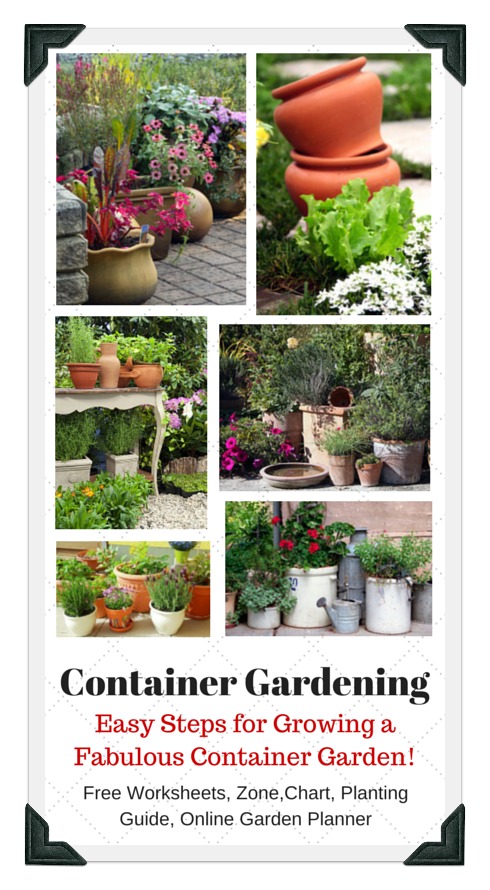
Almost every vegetable can be grown in a container given the right pot size, but some are far better suited than others.
The best choices are compact and productive and don't need huge root systems. Look for varieties described as dwarf, bush, patio, compact, or container on the seed packet.
| Vegetable | Why it works in a container | Best varieties | Season |
|---|---|---|---|
| Cherry tomatoes | The top container crop; produces all summer. Use a cage or stake. | Tumbling Tom, Patio, Tiny Tim | Warm |
| Peppers | Naturally compact. Bell, chili, and sweet peppers all thrive; love heat from a sunny wall. | Any bell or sweet pepper | Warm |
| Lettuce and salad greens | The easiest container crop. Shallow roots, so even window boxes work. Tolerates part shade. | Any loose-leaf variety | Cool |
| Herbs | Basil, parsley, chives, and thyme all excel. Keep mint in its own pot. | All types | Both |
| Radishes | The fastest crop: harvest in 25 days. Needs only 6 inches of soil. | Cherry Belle, French Breakfast | Cool |
| Carrots | Choose short varieties for shallower pots. | Chantenay, Paris Market, Thumbelina | Cool |
| Bush cucumbers | Train up a small trellis. Needs steady water. | Spacemaster, Bush Pickle | Warm |
| Spinach and kale | Both thrive in cool weather. Pick outer leaves for weeks. | Baby leaf varieties | Cool |
| Potatoes | A satisfying crop. Harvest by tipping out the grow bag. | Any early or salad variety | Cool |
| Strawberries | Spill beautifully over the edges of pots. | Everbearing varieties | Cool |
| Bush zucchini | One plant keeps a family supplied. Needs a large container. | Bush Baby, Patio Star | Warm |
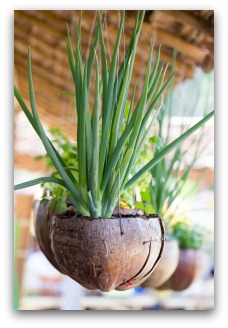
| Green onions | Easy in any container. Can regrow from kitchen scraps. | Any bunching variety | Cool |
Container Vegetable Gardening Size Guide
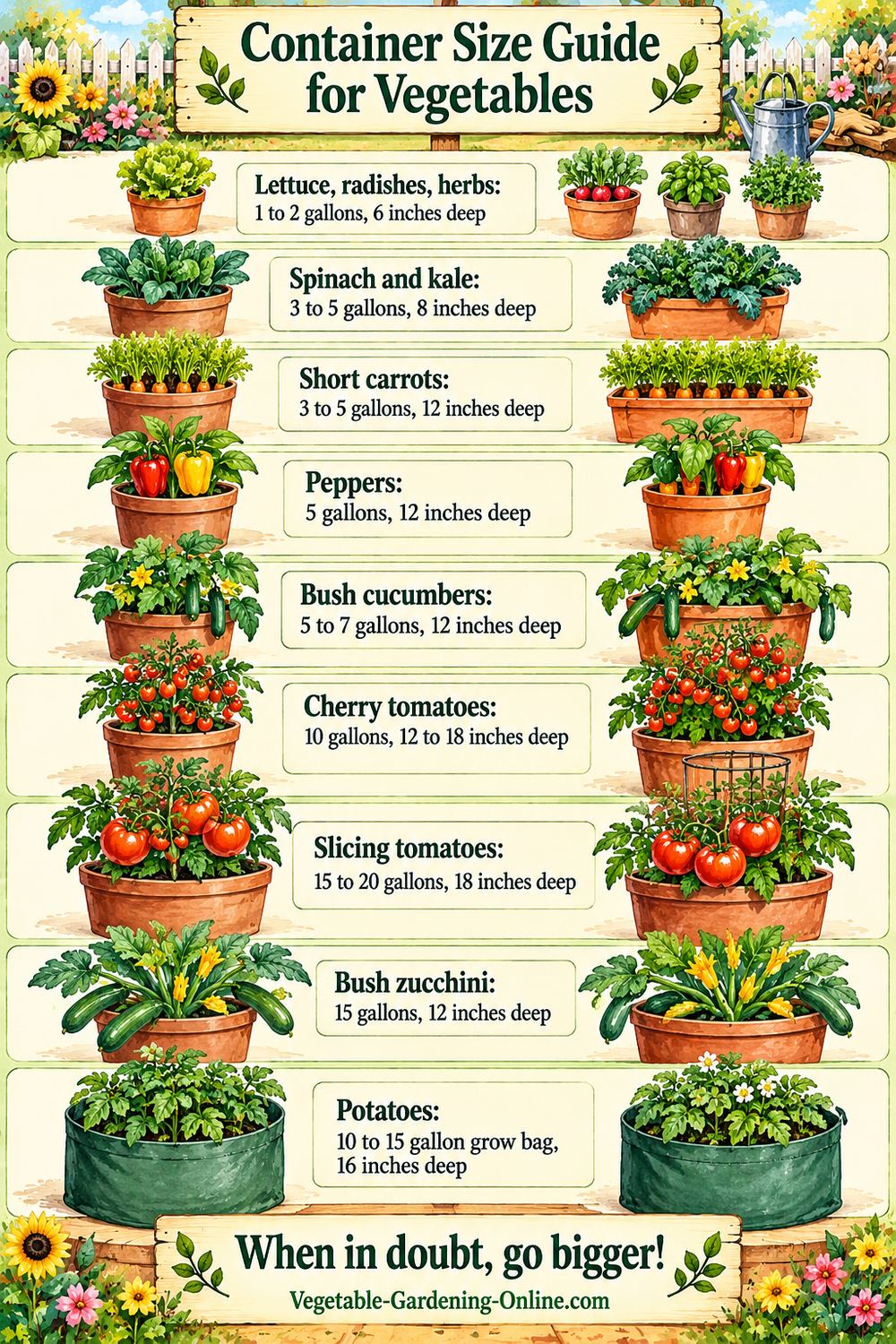
Getting container size right is one of the most important decisions in container vegetable gardening. Too small and your plants will be stunted, dry out constantly, and produce poorly. As a general rule in container vegetable gardening: when in doubt, go bigger.
| Vegetable | Minimum Size | Recommended Size | Minimum Depth |
|---|---|---|---|
| Lettuce / Salad greens | 1 gallon | 2-3 gallon window box | 6 inches |
| Radishes | 1 gallon | 2 gallon | 6 inches |
| Spinach / Kale | 2 gallon | 3-5 gallon | 8 inches |
| Herbs (most) | 1 gallon | 2-3 gallon | 6-8 inches |
| Carrots (short varieties) | 2 gallon | 3-5 gallon | 12 inches |
| Strawberries | 1 gallon per plant | 2 gallon per plant | 8 inches |
| Peppers | 3 gallon | 5 gallon | 12 inches |
| Bush cucumbers | 5 gallon | 5-7 gallon | 12 inches |
| Cherry tomatoes | 5 gallon | 10 gallon | 12-18 inches |
| Slicing tomatoes | 10 gallon | 15-20 gallon | 18 inches |
| Zucchini (bush variety) | 10 gallon | 15 gallon | 12 inches |
| Potatoes | 10 gallon | 10-15 gallon grow bag | 16 inches |
Seeds or Transplants for Your Container Garden?

Buy tomatoes, peppers, and eggplant as young plants if you live where there's frost. They take ten weeks or more from seed, so transplants put you weeks ahead.
Sow lettuce, radishes, green onions, carrots, beans, and peas right in the container. They grow quickly and seed costs pennies.
Starting your own seeds indoors lets you grow varieties the garden center never carries. Most vegetables are ready to transplant in four to six weeks.
How to choose healthy transplants
- Look for stocky plants with dark green leaves and strong stems. Pass on tall, spindly, or pale plants.
- Two or three true leaves above the first seed leaves is the right size.
- Skip plants that already have flowers or small fruit; they are slow to settle into a new pot.
- Roots circling the pot mean the plant is root-bound. Choose another.
- Look under the leaves for spots, holes, or insects.
- Don't leave transplants in a hot car. A closed car can pass 140°F in minutes and scorch them.
How to transplant into a container
- Fill the pot with potting mix and water it well. If it's new mix, let it settle a day or two and top it up.
- If you're using a clay pot, soak it in water first so it doesn't pull moisture out of the soil.
- Gently slide the plant out. If the roots are tightly wound, loosen them with your fingers or score the root ball lightly with a fork.
- Set the plant at the depth it was growing (tomatoes can go deeper). Leave the soil about an inch below the rim so water can pool instead of running off.
- Firm the mix around the roots and water thoroughly.
What your plants are telling you
- Tall, spindly growth: not enough light. Move the pot to a sunnier spot.
- Wilting: usually too little water. Check the soil every day in summer.
- Purple-tinged leaves: often a shortage of phosphorus, or cold soil early in the season.
- Stunted plants: the container is too small. Move up a size.
Planting and Spacing in Container Vegetable Gardening

Container gardening follows the same spacing rules as a garden bed, but with a fixed amount of root space, so crowding hurts even more.
The square foot method works well: one tomato or broccoli per square foot, four lettuces, nine spinach plants, or sixteen carrots. Use our free interactive garden planner to check spacing before you plant.
Good Combination Plantings for Containers
- Tomato + basil + parsley: the classic trio; they share the same water needs.
- Lettuce + radishes + chives: all cool-season and quick; chives help keep aphids away.
- Pepper + basil + marigold: the marigold helps with pests, and many gardeners say basil improves pepper flavor.
- Kale + spinach + green onions: all cool-season and very productive in a large tub.
Succession plant your containers. When lettuce or radishes finish, don't let the pot sit empty.
Refresh the top inch with compost and sow the next crop right away. A well-managed container can grow three or four crops in one season.
Watering - The Most Critical
Container Vegetable Gardening Skill

Watering is where most container vegetable gardening failures begin. Containers dry out much faster than garden beds - sometimes needing water every single day in hot summer weather. But overwatering is equally damaging. Mastering container watering is the single skill that will make the biggest difference to your container vegetable gardening results.
How to Know When to Water in Container Vegetable Gardening
- The finger test: Push your finger 1-2 inches into the soil. If it feels dry, water. If moist, wait.
- The lift test: Lift the container. A light pot needs water; a heavy pot has moisture in reserve.
- Leaf signals: Slight wilting in the early morning before the sun gets hot is a sign the plant needs water.
How to Water Correctly in Container Vegetable Gardening
- Water slowly and thoroughly until water runs freely from the drainage holes
- Water at the base of plants, not over the foliage - wet leaves promote fungal disease
- Water in the morning so foliage has time to dry before evening
- In hot weather, terracotta pots and grow bags may need watering twice a day
Self-watering containers: Self-watering containers have a reservoir in the base that wicks water up to the roots as needed. They can dramatically reduce watering frequency - sometimes lasting 3-5 days between refills - making them ideal for busy gardeners. They are particularly good for tomatoes and peppers in container vegetable gardening, which need consistent moisture to prevent blossom end rot and skin splitting.
Feeding Your Container Vegetable Garden
Container vegetables need regular feeding. Every time you water, some nutrients wash out through the drainage holes.
A garden bed draws on a large bank of soil, but a pot has a small, fixed supply that must be replenished. This is one of the most overlooked parts of container gardening.
Two Ways to Feed Container Vegetables
Slow-release granular fertilizer: mix it into the potting soil at planting and sprinkle more on top mid-season. It feeds gradually over several months.
Liquid fertilizer: a liquid tomato or vegetable fertilizer every week or two through the season. Start once plants begin flowering. It matters most for heavy producers like tomatoes, peppers, and cucumbers.
Cool-Season and Warm-Season
Container Vegetable Gardening
One of the great advantages of container gardening is that something can be growing from early spring to late fall, or even year-round in mild climates.
The key is switching between cool-season and warm-season crops as the weather changes.
| Cool-season containers | Warm-season containers |
|---|---|
| Lettuce and salad greens | Cherry and patio tomatoes |
| Spinach and kale | Peppers (all types) |
| Radishes | Bush cucumbers |
| Carrots (short varieties) | Bush zucchini |
| Green onions and chives | Basil |
| Peas (with a small trellis) | Bush beans |
| Parsley and cilantro | Marigolds (pest control) |
| Strawberries | Thyme and oregano |
| Potatoes | Eggplant |
Extend your season: move containers indoors or under cover when frost threatens.
A pepper plant brought indoors in fall can survive the winter and give you a big head start the next spring.

Container Garden Designs and Ideas

Before you buy a single pot, decide how much space and how much time you have. Then sketch where each container will sit and what will grow in it.
Start with the vegetables your family likes to eat, and trim the list to fit.
The three half-barrel garden
Three half barrels in a sunny spot grow a surprising amount of food. Put a caged tomato in one, peppers and basil in the second, and lettuce, radishes, and a trellised cucumber in the third.
The salad planter
One good-sized planter box can grow everything for a salad: lettuce, green onions, a cherry tomato, chives, and basil. Put the tomato at the back and the lettuce at the front.
A kitchen window box
- Choose a wooden window box at least 10 inches deep, and drill drainage holes in the bottom.
- Line it with a plastic bag stapled in place, and poke holes through the bag over the drainage holes.
- Fill it two-thirds full of potting mix, with a slow-release fertilizer if the mix doesn't have one.
- Plant the tallest herbs along the back (parsley, fennel) and the low ones in front (thyme, lettuce, everbearing strawberries).
- Fill in around the plants, water well, and hang it in full sun. It will need water every day in summer.
The patio vegetable garden
A sunny patio is one of the best places for a container garden. The house wall shelters tender plants and holds warmth into the evening.
Use the biggest containers your patio allows: half barrels, two-foot-square wooden boxes 18 inches deep, oversized clay pots, and nursery tubs.
A small raised bed along the edge of the patio works well alongside the pots.
Tuck in pots of marigolds, zinnias, geraniums, or nasturtiums for color. Nasturtiums draw aphids away from your vegetables, and marigolds help keep other pests down.
Fruit that doubles as decoration
Blueberries and figs grow well in large pots and look beautiful all year. In warm climates, a potted citrus tree does the same.
A fall container garden
When summer crops finish, replant the same pots with lettuce, radishes, kale, spinach, and parsley. See the full fall vegetable container gardening guide.
A gift container garden
A clay pot planted with a tomato, a pepper, or a few herbs makes a wonderful Mother's Day or birthday gift, and it keeps giving all summer.
Almost anything will grow in a container if you give it enough room. Gardeners have even grown watermelons on sunny decks in redwood boxes about 18 by 14 inches and 16 inches deep.
Container gardens aren't new
During World War II, about 20 million American families planted Victory Gardens in backyards, vacant lots, and on city rooftops, and they grew a large share of the country's fresh vegetables.
A few pots on a balcony carry on that tradition.
Container Garden Pictures
 Tomatoes and basil grow well side by side. Tomatoes and basil grow well side by side.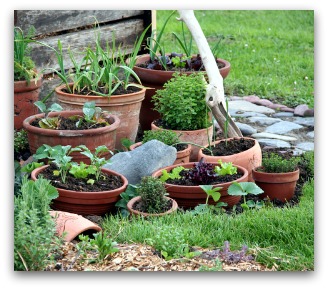 Grouping pots together makes watering easier. Grouping pots together makes watering easier. |
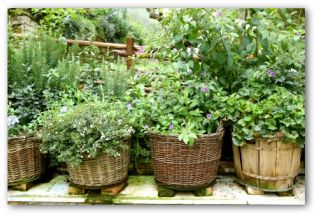
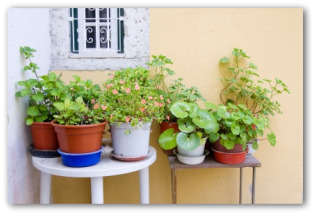
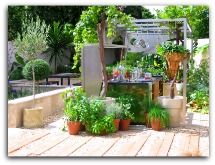 Terracotta pots give a deck a Mediterranean look. Terracotta pots give a deck a Mediterranean look. Parsley is one of the easiest herbs to grow in pots. Parsley is one of the easiest herbs to grow in pots. Shelves and tiers fit many pots into a small space. Shelves and tiers fit many pots into a small space. |




Dwarf Fruit Trees and Caring for Pots in Winter
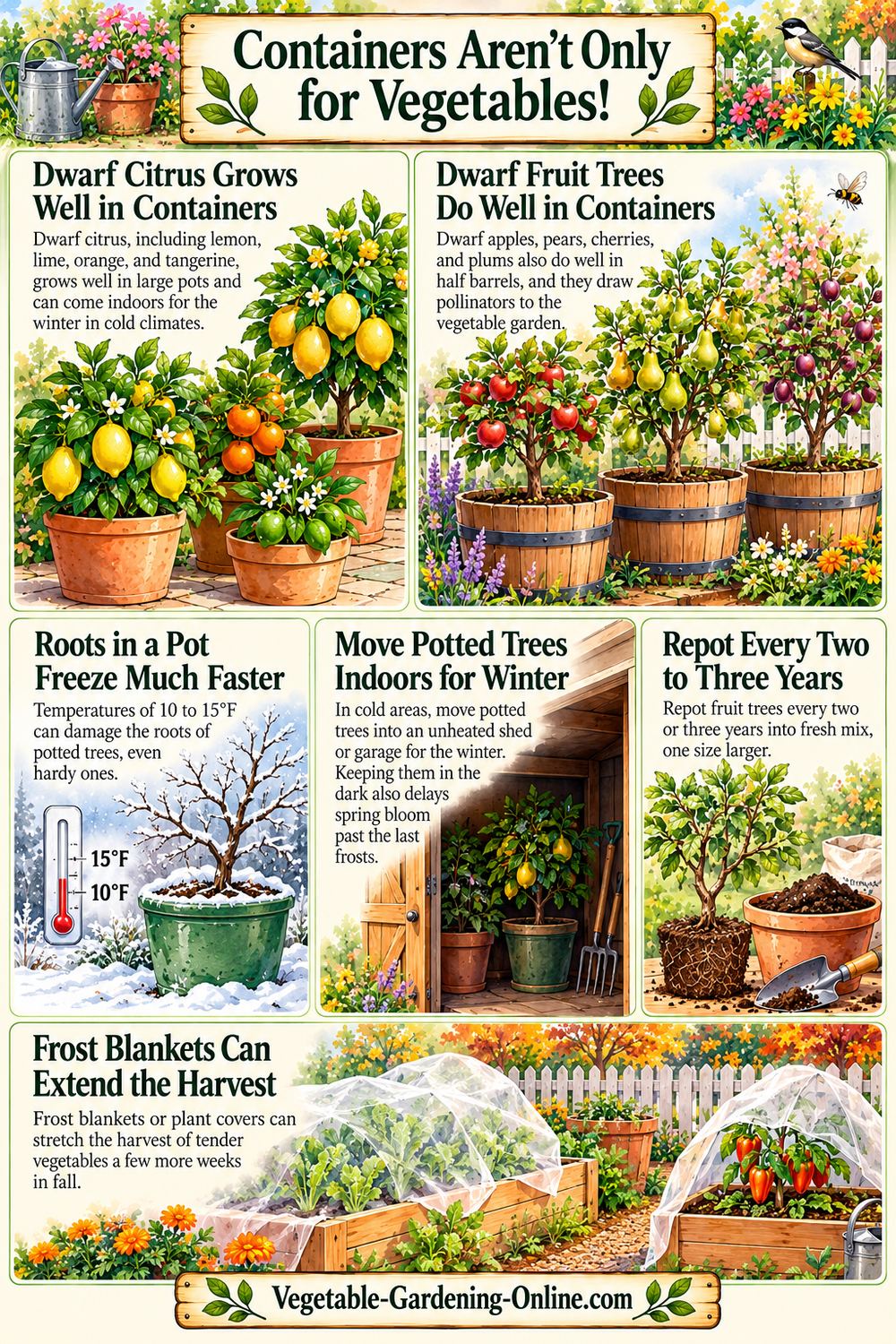
Containers aren't only for vegetables. Dwarf citrus, including lemon, lime, orange, and tangerine, grows well in large pots and can come indoors for the winter in cold climates.
Dwarf apples, pears, cherries, and plums also do well in half barrels, and they draw pollinators to the vegetable garden.
Roots in a pot freeze much faster than roots in the ground. Temperatures of 10 to 15°F can damage the roots of potted trees, even hardy ones.
In cold areas, move potted trees into an unheated shed or garage for the winter. Keeping them in the dark also delays spring bloom past the last frosts.
Repot fruit trees every two or three years into fresh mix, one size larger.
Frost blankets or plant covers can stretch the harvest of tender vegetables a few more weeks in fall.
You can grow some vegetables in partial shade (4–6 hours of sun), but your choices are limited. Lettuce, spinach, kale, radishes, parsley, cilantro, and green onions all tolerate partial shade reasonably well. Tomatoes, peppers, cucumbers, and most warm-season crops need 6–8 hours of full sun to produce well. One tomato plant per container, always. Even in a large 15-gallon pot, two tomato plants compete for root space and nutrients, and together they produce less than one well-grown plant. Grow bags are made from breathable fabric rather than solid material. The porous walls air-prune roots, which makes a dense, productive root system. They also drain very well and are cheaper and lighter than hard pots. Many experienced container gardeners now prefer grow bags for tomatoes, peppers, and potatoes. Yes, with some refreshing. Mix last year's potting soil 50/50 with fresh compost, and add a handful of perlite if the mix feels compacted. Don't reuse mix from a container where a plant had a serious disease. Yes, more so than with plants in the ground. The soil in a container freezes faster because it is exposed on all sides. Move tender plants indoors when frost threatens, or wrap containers with a frost blanket for extra protection on cold nights. Lettuce. It sprouts quickly, grows fast (harvest in 30–45 days), tolerates partial shade, and is almost impossible to kill. Sow a small pot of mixed salad leaves, and within a month you'll be cutting fresh salad from your own container garden. Once that works, add a pot of cherry tomatoes and some herbs. Container vegetable gardening removes almost every barrier to growing your own food. No yard, no good soil, no digging, and no big investment: just a pot, good potting mix, a sunny spot, and a handful of seeds or transplants. Start with one container of lettuce and a pot of herbs. Add cherry tomatoes when summer arrives. Before long you'll have a productive container garden that gives you fresh food from spring through fall. The keys are simple: the right size container, good potting mix, steady watering, regular feeding, and varieties bred for pots. Get those right and container gardening is one of the most satisfying ways to garden. Return to our Planning a Vegetable Garden hub for complete guides to garden design, layout, raised beds, containers, and planning tools.8 Common Container Vegetable Gardening
Mistakes and How to Fix Them
It compacts, drains poorly, and smothers roots. Always use a purpose-made potting mix. This single change fixes more container vegetable gardening failures than any other.
Undersized pots dry out hourly and restrict root growth. When in doubt, go one size bigger than you think you need.
Every container must have drainage holes. Drill them if necessary.
Irregular watering causes blossom end rot in tomatoes and peppers, cracking of tomato fruits, and bitter cucumbers. If you struggle to water consistently, invest in self-watering containers or a simple drip system on a timer.
Container nutrients deplete rapidly. Begin liquid feeding when flowers appear and keep it up throughout the season.
Most container vegetable gardening crops need 6–8 hours of direct sun. Moving a pot out of shade is one of the great advantages of container vegetable gardening, so use it.
Full-size beefsteak tomatoes and vining cucumbers are too large and vigorous for most containers. Always choose varieties specifically recommended for container vegetable gardening.
Pots need to drain freely. Use pot feet, bricks, or a slatted stand to lift containers slightly off the ground.
Frequently Asked Questions About Container Vegetable Gardening
Can I do container vegetable gardening on a shaded balcony?
How many tomato plants can I fit in one container?
What is the difference between a grow bag and a regular pot?
Can I reuse potting mix from last year?
Do I need to worry about frost in container vegetable gardening?
What is the best vegetable for a complete beginner?
Start Your Container Vegetable Garden Today

More Vegetable Gardening Guides
Recent Articles


-
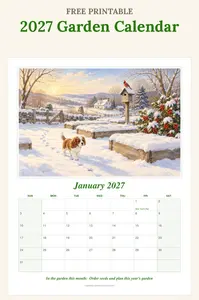
Free Printable Pet Calendar: Your Pet or Family Photos in the Garden
Oct 17, 26 05:22 PM
Free printable pet calendar: add your dog, cat, or family photos to 12 watercolor garden scenes, type in birthdays, and print a 2027 calendar at home. -
Free Vegetable Garden Printables — Downloads for Every Gardener
Oct 17, 26 03:28 PM
 Browse our complete library of free vegetable garden printables, from planning worksheets and growing charts to kids' activities, all free to download & print.
 -
Free Printable Garden Calendar 2027: 12 Watercolor Months (PDF)
Oct 17, 26 11:15 AM
 Free printable garden calendar for 2027: 12 watercolor garden scenes, a monthly garden task, and room to write. Print the whole year or one month at a time.
 -
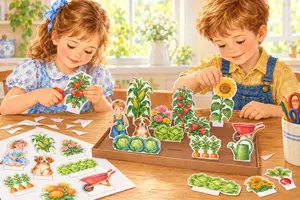
Paper Garden Craft for Kids: How Does Your Garden Grow? Free Printable
Oct 15, 26 11:05 AM
 Free printable paper garden craft for kids: cut out plants, children, a puppy, and a kitten, then plant them in a paper raised bed that stands on the table.
 -
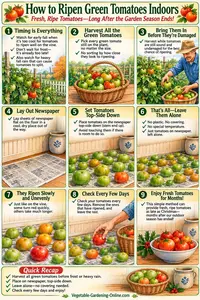
How to Ripen Green Tomatoes Indoors
Oct 14, 26 04:11 PM
 Ripen green tomatoes indoors with a simple newspaper method. Learn when to pick, where to place them, and how to keep fresh ripe tomatoes coming for weeks.
 -
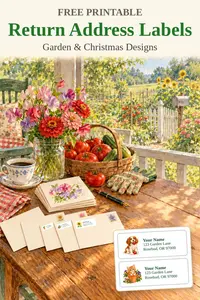
Free Printable Return Address Labels: Garden and Christmas
Oct 14, 26 12:11 PM
Free printable return address labels with watercolor garden and Christmas designs. Type your address, pick a picture, and print on Avery 5160 label sheets. -
Free Printable Gift Stickers: Christmas and Garden Designs
Oct 14, 26 11:58 AM
Free printable round gift stickers with watercolor garden and Christmas pictures. Add a message or To and From, and print on 2-inch labels at home.