Growing Pole Beans
at Home

Try our easy method for planting pole beans, growing and caring for green beans in home vegetable gardens!
Learn how to plant, and grow green beans using a bean tunnel, arbor, or tepee for them to climb.
Design Your Own Vegetable Garden Layout Using our Free "Vegetable Garden Planner" Software!
You may already have experience growing green beans from trellises or tepees but there are other vegetable gardening methods including building a bean tunnel or arbor to support the crops.
Snap and pole beans are often called green beans because they are picked while still relatively young and they are well...green!
Using a Bean Tunnel when Growing Pole Beans
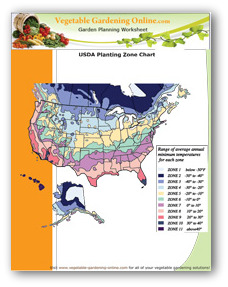
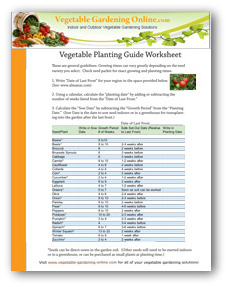
Download Free Garden Planning Worksheets, Garden Diary, Zone Chart, Or Planting Guide
Materials include three galvanized steel cattle panels, which are lengths of fencing made of flexible steel rods spaced six inches apart.
Each panel is 4 x 16 feet.
The panels are galvanized steel so they won't rust.
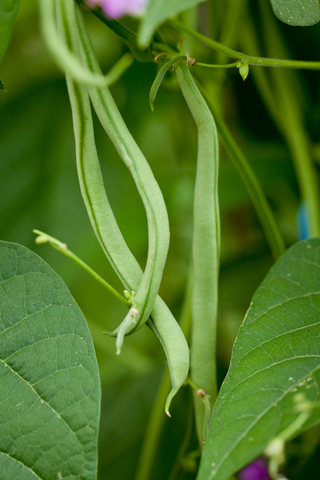
To make a tunnel:
* Bend a panel to form an arch.
* Drive in a stake at each corner.
* Tie the panels to the stakes.
A series of three panels form a 12 foot long bean tunnel.
Beware when bending the panels into arches that they might spring back suddenly if you aren't careful!
Once you have set up your tunnel, plant the beans along the outside of both tunnel walls.
The growing green beans will climb up the walls and meet in the middle.
Beans are easy to pick from this structure since they hang down.

Favored Pole Bean Varieties
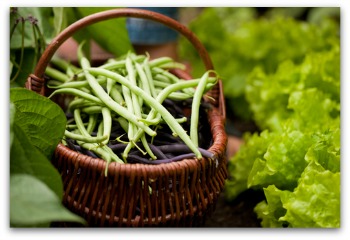
A favored bean variety often recommended is Tendercrop.
Northeaster poles get high marks from growers for hardiness as well as flavor.
They are known to stand up to temperatures as low as 32 degrees F! For a sun-loving crop, that's cold!
Blue Lake is another very popular climbing green bean variety that is easy to grow.
Kentucky Wonder and Kentucky Blue are also favorites with many vegetable gardeners.
Planting Beans using a Bean Arbor
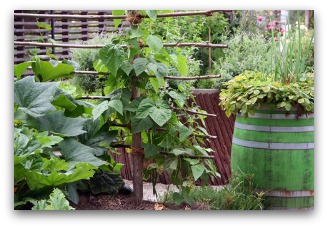
A variation on a bean trellis is a low-cost bean arbor made from old lath strips. Here's how to copy the design:
* Nail the lath together in a widely spaced cross-hatch pattern to make the arbor rooftop.
* Measure the dimensions of the roof.
Pound two rows of stakes that are each about 6 to 8 feet long into place at the gardening site where you plan to erect the arbor.
The two rows should be the same distance apart as the width of the roof piece.
Make each row as long as the length of the roof piece, spacing the stakes about six inches apart.
* Use twine or nails to attach the roof to the supporting stakes.
* Plant green beans at the base of the stakes.
Planting Pole Beans Using a Bean Tepee

To make the crop of growing green beans more accessible and less likely to have disease problems, here is a fresh take on the traditional tepee design.
The idea is to cross the poles at waist level rather than at the top.
Choose wooden stakes or poles about eight feet long and use twine to tie them together at a central point.
This slight difference gives the beans greater air circulation, which in turn helps the plants resist diseases.
The main goal of the new twist on an old style is by having the pods spread out more makes harvesting quicker and more efficient.
Tips for Growing Green Beans
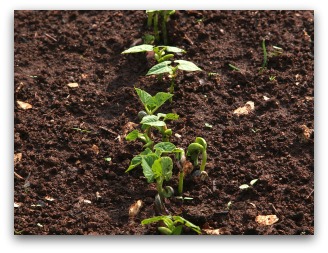
* Soaking seeds for more than 3-4 hours may cause them to rot. It is not necessary to soak green bean seeds before planting. Just water them well after planting them in the ground. Too much moisture will cause the seeds to rot.
* Unless growing the crop where beans were planted before, dust seeds with bacterial inoculants to boost nitrogen fixing.
* Wait until soil temperature reaches 60 degrees F. before planting.
* Green bean plants are sensitive to frost.
* Keep plants evenly watered during germination and flowering or harvest may suffer.
* Beans yield about 50 quarts per 100 feet of row.
* Harvest growing green beans almost daily to encourage production.
* For eating fresh, pick green beans when pods are plump yet tender.
You Might Also like to Read:
Growing Green Beans
Recent Articles


-
Growing Dill In a Backyard Vegetable Garden
Nov 20, 18 11:40 PM
 Easy tips for growing dill in a home vegetable, kitchen, or herb garden. Learn how to plant, grow, care for, and harvest dill plants when backyard vegetable gardening.
 -
Vegetable Garden Pictures to Help Plan Your Garden
Nov 20, 18 09:53 AM
 Vegetable garden pictures and videos to help you get started planting a garden. Gardening pictures can help you plan your garden whether a raised bed, container, or traditional backyard home garden.
 -
Vegetable Gardening Planting Times, Zone Chart, and Guide for When to Plant
Nov 20, 18 09:51 AM
Use our free zone chart and guide for vegetable gardening planting times, to plan your next garden. Whether planting seeds or transplants, learn when to start.