Planting Sweet Potatoes
in Your Garden
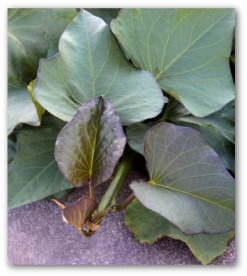
Here are six great tips for planting sweet potatoes in home vegetable gardens to ensure your success!
Learn how to grow and care for sweet potato plants in just 6 easy steps...
Design Your Own Vegetable Garden Layout Using our Free "Vegetable Garden Planner" Software!
Growing Sweet Potatoes
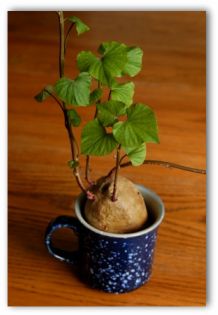
A long hot season is required when growing sweet potatoes. In fact, no other vegetables are as heat tolerant as the sweet potato plant.
This warm season vegetable crops should be planted in a minimum soil temperature of 60 degrees F although the ideal is 85 degrees F.
The perennial tuber is a relative of the morning glory. The plants resemble tropical vines with colorful pink to purple flowers.
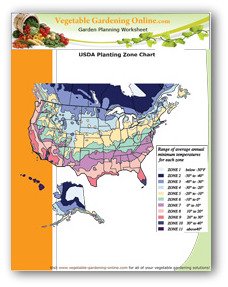
Download Free Garden Planning Worksheets, Garden Diary, Zone Chart, Or Planting Guide
Best Time for Planting Sweet Potatoes
- In springtime, plant when soil has warmed but not exceeding 85 degrees F.
- In cold winter regions, start seed tubers indoors 6-8 weeks before soil is expected to warm.
- Dust the cut surfaces with garden lime, then cover each cutting with 4 inches of moist sand and maintain a temperature of 80 degrees F for several weeks.
- Reduce the temperature to 70 degrees F when sprouts are 3-4 inches long.
- Add low nitrogen 5-10-10 fertilizer to garden bed for growing sweet potatoes, working it into the soil to a depth of 6-8 inches a couple of weeks before planting.
Planting Sweet Potatoes in 6 Easy Steps
• 1. Plant seed potatoes 2 to 3 inches deep.
• 2. Spacing of sweet potato plants should be 36 to 48 inches between rows.
• 3. Space potatoes 10 to 18 inches apart.
• 4. Leave growing sweet potatoes in hills spaced at 36 inches.
• 5. Other long cycle root vegetables such as beets, parsnips, and salsify make good companion plantings for growing sweet potatoes.
• 6. Avoid using high-nitrogen fertilizers, which result in lush foliage but poorly developed spuds.
By the Light of the Harvest Moon...
Many seasoned gardeners have believed through the ages that vegetables should be planted during specific moon phases for best flavor and growth.
For example, the New Zealand Maori culture only begins growing sweet potatoes on the 11th, 27th, and 28th days of the lunar month.
The moon influences all water on Earth; from the tides of the oceans to the movement of water in plants' cells.
A widespread belief among successful planters is that vegetables grown underground, such as sweet potatoes, should be planted in the dark of the moon, when it is waning.
This may sound superstitious; but following practical advice has been tried, tested, and works is not necessarily believing in superstition, but using common sense!
Caring for Sweet Potato Plants
Harvesting Sweet Potatoes
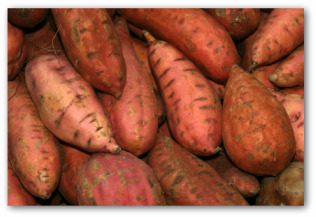
- In an average of 110 to 120 days, growing sweet potatoes will be ready for harvest.
- Beginning at four months, sweet potatoes can be harvested when test diggings reveal fully developed produce.
- If vines begin to wither, turn yellow, or there is a frost, start harvesting immediately.
- Dig carefully with a garden fork, 8-10 inches away from the plant.
- Pull tubers gently from the vines to prevent bruising.
Storage of Sweet Potatoes
- Cure harvested sweet potatoes in a sunny protected garden area for 3-4 hours.
- Afterward, move the potatoes to a humid storage place between 80-85 degrees F. for around 2 weeks.
- Then, store in a dry cool space for 2-6 months or longer.
Vegetable Gardening Tip for Sweet Potatoes
Growing sweet potatoes is an excellent source for providing vitamin A and C to your family.
Sweet potatoes can be baked, boiled, steamed, mashed, made into holiday pies, or even sliced for making delicious home fries.
"Planting sweet potatoes when the moon is on the wane, they want to grow down that is plain." ~ Vegetable Gardening Folklore
Recent Articles


-
Growing Dill In a Backyard Vegetable Garden
Nov 20, 18 11:40 PM
 Easy tips for growing dill in a home vegetable, kitchen, or herb garden. Learn how to plant, grow, care for, and harvest dill plants when backyard vegetable gardening.
 -
Vegetable Garden Pictures to Help Plan Your Garden
Nov 20, 18 09:53 AM
 Vegetable garden pictures and videos to help you get started planting a garden. Gardening pictures can help you plan your garden whether a raised bed, container, or traditional backyard home garden.
 -
Vegetable Gardening Planting Times, Zone Chart, and Guide for When to Plant
Nov 20, 18 09:51 AM
Use our free zone chart and guide for vegetable gardening planting times, to plan your next garden. Whether planting seeds or transplants, learn when to start.