Best Tips for How
to Grow Cilantro
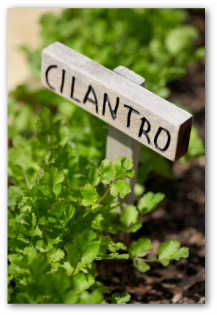
The best tips for how to grow cilantro in both indoor container gardens and outdoor vegetable gardens.
Easy steps for planting,
growing, harvesting and preserving cilantro plants.
It is easy to learn to grow cilantro, especially in container gardens.
One of the main growing requirements for the culinary herb is to provide wind protection.
Cilantro is also called coriander and Chinese parsley.
Several centuries after the departure of the Romans from Britain, herb and vegetable gardens began to reappear.
Rather than being grown only in the villas of the rich and powerful as before, herbs and vegetables sprang up and became a common sight in monasteries.
Gardening allowed the monks self-sufficiency and aided in the treatment for the sick and disabled.
By Elizabethan times, all large estate owners grew elaborate walled or edged herb gardens.
Then as now, most plants were cultivated for medicinal and culinary uses.
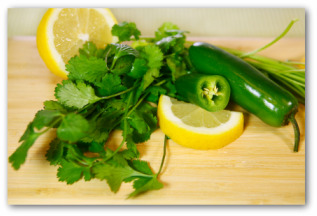
How to Grow Cilantro
1. Plant cilantro seeds or transplants in rich, well-drained soil in full sun.
2. Follow planting instructions on cilantro seed packet for depth and spacing information when planting from seed.
3. Cilantro plants are easily blown over so be sure to protect the herbs from wind damage.
4. The plant grows an average 24 to 36 inches in height.
5. Sow seed once the soil is warm in the spring.
6. Cilantro can be grown suitably in container gardens as well.
The bright green lacy leaves of cilantro grow on the lower part of the plant and look similar to the flat-leaved Italian parsley. The large sized annual has a leaf and root flavor that is a cross between sage and citrus.
How to Grow Cilantro Indoors
If you plan to grow herbs indoors on your windowsill, keep in mind that the humidity is often low in homes equipped with central heat and air units.
Avoid the dehydrating effects by squeezing as many plants onto the sill as possible.
The herbs and their compost both will slowly release moisture.
Since you are growing your own vegetables, include several major culinary herbs to complement in the vegetable garden and homemade dishes.
Herbs supply big taste without requiring a lot of growing space.
Planting Cilantro in the Garden
Download Free Garden Planning Worksheets, Garden Diary, Zone Chart, Or Planting Guide
A patch near the kitchen entrance is convenient, or you can add herb plants into your vegetable garden.
Group herbs on either side of a garden path, or make an edging of several types along the pathway.
- Another handy place to grow herb plants is in the section devoted to
lettuce and other greens.
- Include a row of annuals such as parsley,
cilantro, chervil, basil, dill, and sweet marjoram.
- The perennial herbs like chives, thyme, tarragon, oregano, sage, and mint should be planted in a location where they are not disturbed by annual garden cultivation.
One of the easiest ways to enjoy cilantro and other herbs is to buy several small plants and grow them all together in a container situated on a patio or deck.
Cilantro prefers a place in the sun but can be grown successfully in partial shade.
Herbs and vegetables make compatible bedfellows in the garden, as they can grow in the same enriched soil.
Harvesting Cilantro
Cut the leaves to use fresh as you need them. You can dry herbs for winter use in bunches suspended from rafters indoors or near a hot-air vent.
Uses for Cilantro
Use the fresh or frozen cilantro leaves in potatoes, clams, and oysters. Fresh cilantro leaves can be used for salads, salsa, guacamole, and relishes.
Preservation of Cilantro
Harvest fresh, young cilantro leaves and freeze them promptly. Frozen cilantro leaves are about equal to fresh leaves in taste. Dried herbs are about twice as strong as fresh. The intensity of the flavor depends somewhat on the condition of the leaves when dried, the care used during the drying process, and storing conditions.
Recent Articles


-
Growing Dill In a Backyard Vegetable Garden
Nov 20, 18 11:40 PM
 Easy tips for growing dill in a home vegetable, kitchen, or herb garden. Learn how to plant, grow, care for, and harvest dill plants when backyard vegetable gardening.
 -
Vegetable Garden Pictures to Help Plan Your Garden
Nov 20, 18 09:53 AM
 Vegetable garden pictures and videos to help you get started planting a garden. Gardening pictures can help you plan your garden whether a raised bed, container, or traditional backyard home garden.
 -
Vegetable Gardening Planting Times, Zone Chart, and Guide for When to Plant
Nov 20, 18 09:51 AM
Use our free zone chart and guide for vegetable gardening planting times, to plan your next garden. Whether planting seeds or transplants, learn when to start.