Growing Lettuce
in Hot Weather

Helpful quick tips for growing lettuce in hot weather.
Learn where to plant summer lettuce plants for best results, and how to discourage lettuce plants from bolting during hot summer weather.
Design Your Own Vegetable Garden Layout Using our Free "Vegetable Garden Planner" Software!
No vegetable garden is solely the work of one person.
Even if you find yourself alone trying to raise lettuce in hot weather or other summer crops, you have all the knowledge gathered from other gardeners over your lifetime.
Take what you learn and share it with others so that the entire planet benefits from each individual gardener as a whole.
Lettuce Flourishes in Cool Weather
Lettuce planted in March will be ready for harvest in May.
To keep the leafy vegetable fresh for several days after harvesting, dig up the entire plant and put the roots into a flowerpot or plastic bag, then treat it as a houseplant.
The plant will continue to grow if given bright light and you can harvest the leaves for garden salads as needed.
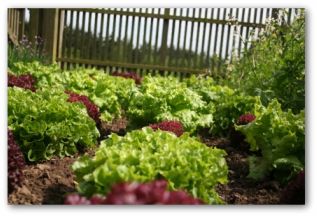
Additional varieties of lettuce are grown in April and May.
In May, sow a few seeds every week to insure a prolonged harvest during the summertime.
Plants sown in May mean you will be growing lettuce in hot weather.
Since the crops will mature quickly under the hottest conditions, it is a good idea to plant types that will be able to stand up to the summer sun such as heat-resistant Oakleaf, Summerbib, Slobolt, and Matchless.
Download Free Garden Planning Worksheets, Garden Diary, Zone Chart, Or Planting Guide
How to Grow Lettuce in the Summer
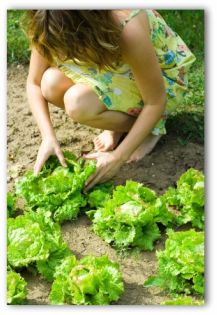
Depending on your climate, leaf lettuce may be planted in July as well.
A vegetable gardening tip for growing lettuce in hot weather is to plant varieties that are suitable to warm conditions.
During the hottest months, lettuce does best if given some shade.
For example, plant the vegetable on the north side of the corn patch or some other shady area where the intense midday sun will not hit it directly.
Lettuce also grows well in a container garden on a lightly shaded porch, patio, or balcony. Harvest lettuce leaves or heads promptly; this will ensure the best flavor.
Also, lettuce plants will grow quickly, and attempt to "bolt", or go to seed in hot weather. Again, prompt harvest will prevent this problem.
Growing Lettuce in Hot Weather
Many first time gardeners are disappointed to discover that head lettuce commonly known as Iceberg will not grow successfully in most parts of the United States because the summer night are too hot, which causes the plants to bolt to produce flowers and seeds rather than developing heads.
As a consolation, the results are spectacular when growing leaf lettuce. During mid-summer, switch to leaf lettuce varieties.
Vegetable Gardening Tips for Growing Lettuce
* Sow lettuce seed directly in the garden.
* Always have a new generation of seedlings waiting in the wings to be transplanted.
* Set lettuce in as transplants whenever you can find the space for one or more plants. (There is always room for one more!)
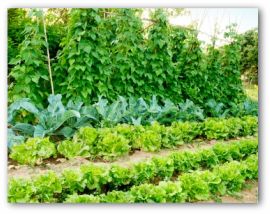
For instance, in April, the March sowing is ready to be transplanted to the vegetable garden at 10 inch spacing.
Spray the newly set out seedlings with a mixture of foliar fertilizer and water to quickly get the lettuce in hot weather producing.
It is not necessary for the average home vegetable gardener to plant enormous lettuce crops.
Leaf lettuce does not store well and chances are if you do harvest extra heads, they will only end up going in the compost pile.
When growing lettuce in hot weather, you can have a supply of the vegetable all summer long by planting small rows of about 4 feet long every week or ten days.
Prepare the seedbed by adding a handful of 10-10-10 fertilizer and lime if a soil test indicates a need.
Drop in 4 or 5 seeds into a ½ inch furrow at 10 inch spaces. Avoid planting too many seeds in each row or thinning out the plants could become a chore. After firmly covering the seeds with soil, water the row. Continue watering frequently to prevent the seedlings from drying out.
Back To Top
Growing Lettuce in Hot Weather to Vegetable Gardening
You Might Also like to Read:
Recent Articles


-
Growing Dill In a Backyard Vegetable Garden
Nov 20, 18 11:40 PM
 Easy tips for growing dill in a home vegetable, kitchen, or herb garden. Learn how to plant, grow, care for, and harvest dill plants when backyard vegetable gardening.
 -
Vegetable Garden Pictures to Help Plan Your Garden
Nov 20, 18 09:53 AM
 Vegetable garden pictures and videos to help you get started planting a garden. Gardening pictures can help you plan your garden whether a raised bed, container, or traditional backyard home garden.
 -
Vegetable Gardening Planting Times, Zone Chart, and Guide for When to Plant
Nov 20, 18 09:51 AM
Use our free zone chart and guide for vegetable gardening planting times, to plan your next garden. Whether planting seeds or transplants, learn when to start.