All About Growing Eggplant
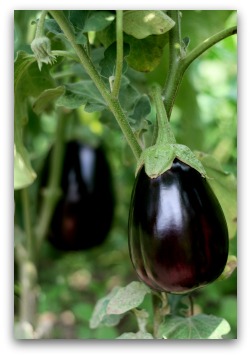
Learn all about growing eggplant in a backyard or container vegetable garden!
Learn how to plant, care for, and harvest eggplants when vegetable gardening.
In Asia where eggplants are native they are among the most prized of all vegetables.
Design Your Own Vegetable Garden Layout Using our Free "Vegetable Garden Planner" Software!
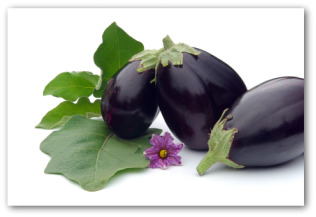
Eggplant, which are known to the British as aubergines, typically have deep purple skins.
However there are also some very beautiful white, pink, and striped varieties of eggplants to add extra color to your garden!
Growing Eggplants at Home
- Eggplant is a warm-weather crop and should not be set out in the vegetable garden until the evening temperatures can be expected to stay above 55 degrees.
- Start the seeds indoors in the spring to gain a good six weeks on the growing season.
Download Free Garden Planning Worksheets, Garden Diary, Zone Chart, Or Planting Guide
- Sow 2 seeds to a pot, ½ inch deep.
- The seedlings will be up in about a week and a half.
- When it is apparent which seedling is the stronger, clip off the weaker of the two so that there will be only one eggplant growing in each pot.

How to Grow Eggplant
- Eggplants like to be bedded in rich, warm, and moist soil.
- Depending on your climate, most gardeners wait until early June to set out seedlings sown in April.
- A good rule of thumb is to set out eggplant seedlings when there is no danger the night temperatures will drop below 55 degrees.
- Even though your vegetable gardening site's soil has already been fertilized for other crops, it never hurts to add a bit more.
- Dig 5-10-5 fertilizer into the plot at a rate of 4 pounds to 100 square feet before setting the plants in at 2 foot spacing.
- Water the plants after transplanting.
Eggplants in Container Gardens
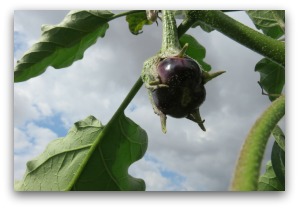
Eggplants are good candidates for container grown vegetables because of their shallow root systems.
Plant one eggplant per medium-sized container, or several plants in a large container.
Fertilize every week or two with liquid garden fertilizer according to the directions on the container.
Be sure to place the containers in a sunny location.
Vegetable Gardening Tips for Eggplant
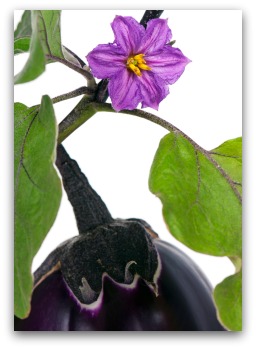
Always be on the alert for signs of distress from eggplants.
If the plants develop pale foliage after a few weeks in the ground, it can be a sign they need a boost with 5-10-5 fertilizer.
Scatter a small handful on the earth around each plant, covering an area of about 2 feet in diameter.
When you scratch in the fertilizer, do not dig any deeper than a half-inch to avoid damaging the eggplant's shallow roots.
 Eggplant Ready for Stir Fry
Eggplant Pests & Diseases
Growing eggplant is a favorite of the cutworm. Use a cutworm collar over each plant.
With a gardener's ever watchful eye, you can solve a simple problem before it turns into a catastrophe for the vegetable garden.
If you notice that the eggplant foliage is turning yellow and brown, this is a symptom of verticillium wilt.
This plant disease is often fatal to tomatoes and peppers and cuts down severely on the production of eggplants.
The wilt stays active in the soil at least fifteen years. The most that the home vegetable gardener can generally do is to rotate the susceptible crops to keep them out of harm's way.
If you have a small garden plot that you use year after year, the easiest way of growing eggplant is to sow the seeds in a sterile potting soil and transfer the seedlings into large containers.
Best Eggplant Varieties

Black Beauty variety is ready for harvest in 80 days. This is one of the most popular growing eggplant for home vegetable gardens. Fruits are nearly black and almost round. Pale yellow flesh is excellent for breading and frying.
Black Jack and Superhybrid are two varieties that are partially tolerant to verticillium wilt.
Harvesting Eggplant
Eggplant transplanted in June will be ready to pick by the end of July.
Harvest when their outer skin is still shiny but before they grow any larger than an orange.
This is only half the size of the eggplants sold in grocery stores and at this tender age they are far superior tasting than any store bought produce.
Recent Articles


-
Growing Dill In a Backyard Vegetable Garden
Nov 20, 18 11:40 PM
 Easy tips for growing dill in a home vegetable, kitchen, or herb garden. Learn how to plant, grow, care for, and harvest dill plants when backyard vegetable gardening.
 -
Vegetable Garden Pictures to Help Plan Your Garden
Nov 20, 18 09:53 AM
 Vegetable garden pictures and videos to help you get started planting a garden. Gardening pictures can help you plan your garden whether a raised bed, container, or traditional backyard home garden.
 -
Vegetable Gardening Planting Times, Zone Chart, and Guide for When to Plant
Nov 20, 18 09:51 AM
Use our free zone chart and guide for vegetable gardening planting times, to plan your next garden. Whether planting seeds or transplants, learn when to start.