Growing Bush Beans
in Your Backyard
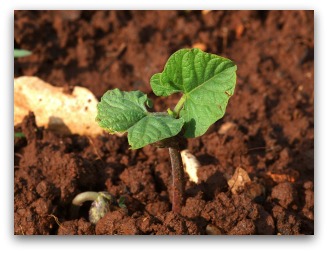
Free plans for growing bush beans in small home vegetable gardens.
Learn how to plant, grow, water, and harvest bush green bean plants when vegetable gardening.
Design Your Own Vegetable Garden Layout Using our Free "Vegetable Garden Planner" Software!
Green bean plants grow as bushes or vines.
Of the two types, bush beans are generally easier to cultivate and mature earlier.
The bush bean plants are only one to two feet tall when fully grown.
Leaves are typically made up of a trio of leaflets with flowers of white, pale yellow, or lavender.
The color and size of the seeds and pods vary.
Growing Bush Beans vs. Pole Beans?

- How do you decide whether to grow bush varieties or the climbing pole types?
- If you don't want to install poles or other devices for your
beans to climb in your garden, then bush green beans
are for you.
- The choice can also depend on the size of your garden
plot: average or larger vegetable gardens typically have enough room for
both kinds.
- Gardeners with smaller vegetable gardening space generally choose pole varieties to maximize productivity by growing vertically.
Bush bean varieties have been developed for commercial harvest purposes, and tend to have most of their fruits ripen to maturity at the same time.
Pole bean varieties mature over a period of 4-5 weeks and can be harvested continuously during this time.
Download Free Garden Planning Worksheets, Garden Diary, Zone Chart, Or Planting Guide
Bush Bean Plant Requirements
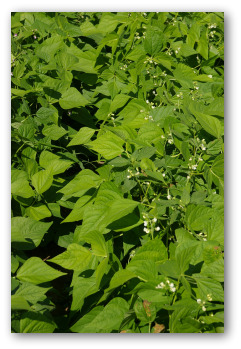 Bush Beans Growing in the Garden
- Bush beans generally require a shorter growing time of around sixty days
of average temperatures from planting seed to harvesting first crop.
- They can grow successfully anywhere in the US and are easily cultivated
for even an inexperienced vegetable gardener.
- Growing bush beans need warm soil to germinate and should be planted on the average date of last expected frost.
You can plant bush beans every two weeks to extend the harvest, or start with bush beans and follow up with planting pole beans.
Planting Green Beans
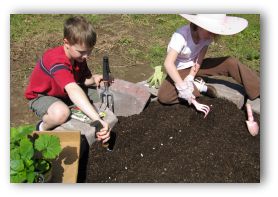 My Grandkids Planting Bush Bean Seeds in our Raised Bed
Sow seeds an inch deep, directly in the garden bed.
For growing bush beans, plant the seeds 2 inches apart in single rows or wide rows.
Keep the soil even moisture level until the bush beans have made their way through the ground.
Growing Beans
When seedlings are growing well, thin the bush beans to 4-6 inches apart.
Plants can be thinned by cutting excess seedlings with garden scissors to avoid disturbing the roots of neighboring seedlings.
Watering Green Beans
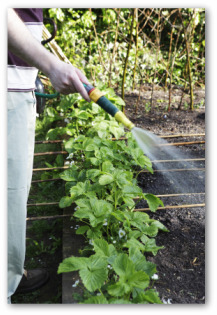 Hand-Watering Bush Bean Seeds
Correct amount of water and air allows nutrients to be absorbed by roots.
Too much water forces the air out of the soil and the roots cannot function properly.
Soil should be kept evenly moist especially when bean seeds are sprouting and have small root systems.
Approximately 1 inch of water per week is usually adequate for established bean plants.
Popular Bush Bean Varieties
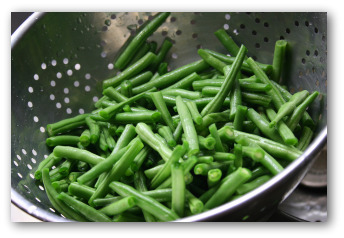 Fresh Bush Beans Harvested From the Garden
• Burpee's Tenderpod, harvested in 50 days, has 5 inch long green pods.
• Blue Lake, ready in 58 days, has green, 6 ½ inch pods with white seeds.
• Roma II, takes 53 days to grow until harvest, and has flattened, green pods, 4 ½ inches long.
• Brittle Wax, picked in 52 days, has yellow, rounded pods, 7 inches long.
• Harvest Royal Burgundy, in 51 days, it has purple 6 inch long pods.
Snap beans are most people's favorite, but Lima beans are a taste treat not to be overlooked. Lima beans are available in both bush and pole varieties. However, they do require a longer growing season than snap beans. Consider growing bush beans of this type if you have adequate gardening space.
Harvesting Green Beans
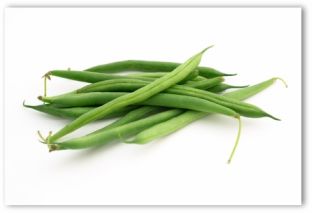 Harvest Bush Beans While They are Small and Tender
A single sowing of bush snap beans should produce abundantly for approximately 20 days.
The immature pod is the part that is harvested for eating. (For any of you city slickers!)
When pods are large enough to eat, harvest by pulling the pods off the plant, taking due care not to break the stem.
Smaller pods are more tender.
Growing bush beans will flower twice and provide a second harvest, offering a double delight!
Free Vegetable Garden Plans with Green Beans
Click Here for 4X20 Sample Vegetable Garden Plan
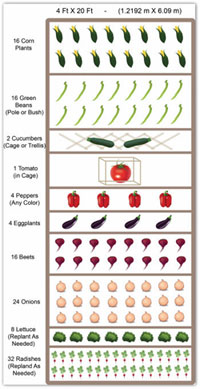
Download our free vegetable garden layout plans to help plot your garden.
We have several sizes and shapes of free garden plans available to help you get started!
The snap green beans you serve from your vegetable garden will be crisp, yet tender.
"A plant is like a self-willed man, out of whom we can obtain all which we desire, if we will only treat him his own way".
~ Goethe said that well over 200 hundred years ago but it still holds true today!
Snap beans have green or yellow pods that can be nearly flat or rounded, according to variety, and they grow on bushes or as climbing plants.
You Might Also like to Read:
Recent Articles


-
Growing Dill In a Backyard Vegetable Garden
Nov 20, 18 11:40 PM
 Easy tips for growing dill in a home vegetable, kitchen, or herb garden. Learn how to plant, grow, care for, and harvest dill plants when backyard vegetable gardening.
 -
Vegetable Garden Pictures to Help Plan Your Garden
Nov 20, 18 09:53 AM
 Vegetable garden pictures and videos to help you get started planting a garden. Gardening pictures can help you plan your garden whether a raised bed, container, or traditional backyard home garden.
 -
Vegetable Gardening Planting Times, Zone Chart, and Guide for When to Plant
Nov 20, 18 09:51 AM
Use our free zone chart and guide for vegetable gardening planting times, to plan your next garden. Whether planting seeds or transplants, learn when to start.