Vegetable Garden Layout Ideas:
11 Designs That Work for Any Space
The right vegetable garden layout ideas can make the difference between a garden that thrives and one that frustrates. Whether you have a large backyard, a small patio, or just a few square feet of sunny ground, there are ideas here that will help you grow more food with less effort.
 ★ Save
This guide covers eleven proven designs, from classic row gardens to creative knot gardens, with practical advice on which works best for your situation.
The best vegetable garden layout ideas all share a few things: they make the most of sunlight, keep upkeep manageable, and fit the space you actually have. Get the layout right and everything else becomes easier.
On This Page
Why Your Garden Layout Matters More Than You Think
Most gardening guides focus on soil, watering, and plant choice, and those things matter. But the layout of your garden affects almost everything else.
Poor layouts lead to shaded plants, packed-down soil, wasted space, and gardens that are awkward to care for. Good layouts do the opposite: they make the most of sunlight, simplify upkeep, and use every square foot.
 ★ Save
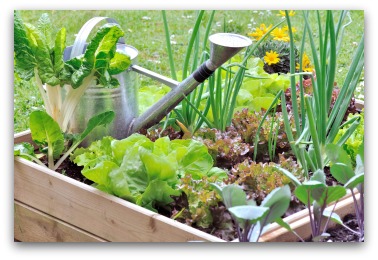
A well-planned layout is also more enjoyable to work in. Wide enough paths, beds you can reach across without straining, and plants with similar needs grouped together all add up to a garden that feels like a pleasure instead of a chore.
Try your layout before you dig. Our free tools work out your planting dates, bed layout, and frost dates for your own zip code.
See our Planning a Vegetable Garden guide for complete information on planning your garden.
The 4 Golden Rules of Good Vegetable Garden Design
Whatever vegetable garden layout ideas appeal to you, these four rules apply to all of them:
- Sun comes first. Place your beds where they get the most sun, at least 6 hours a day for most crops. No layout, however clever, can make up for too little sunlight.
- Never make beds wider than 4 feet. You should be able to reach the center from either side without stepping in. Stepping on garden soil packs it down and undoes your soil preparation.
- Plan your paths before your beds. Leave at least 18 inches between beds, or 24 inches if you use a wheelbarrow. Cramped paths are one of the most common layout regrets.
- Tall crops go at the north end. Put tomatoes, corn, and trellised cucumbers at the north end of the bed, so they cast shade away from shorter plants instead of over them.
 ★ Save
Colorado State University Extension notes that planting in blocks instead of single rows can raise yields as much as five-fold. Their guide recommends the same 3- to 4-foot beds and 18- to 24-inch paths: Block Style Layout in Raised Bed Vegetable Gardens.
Layout Idea 1: The Classic Raised Bed Layout
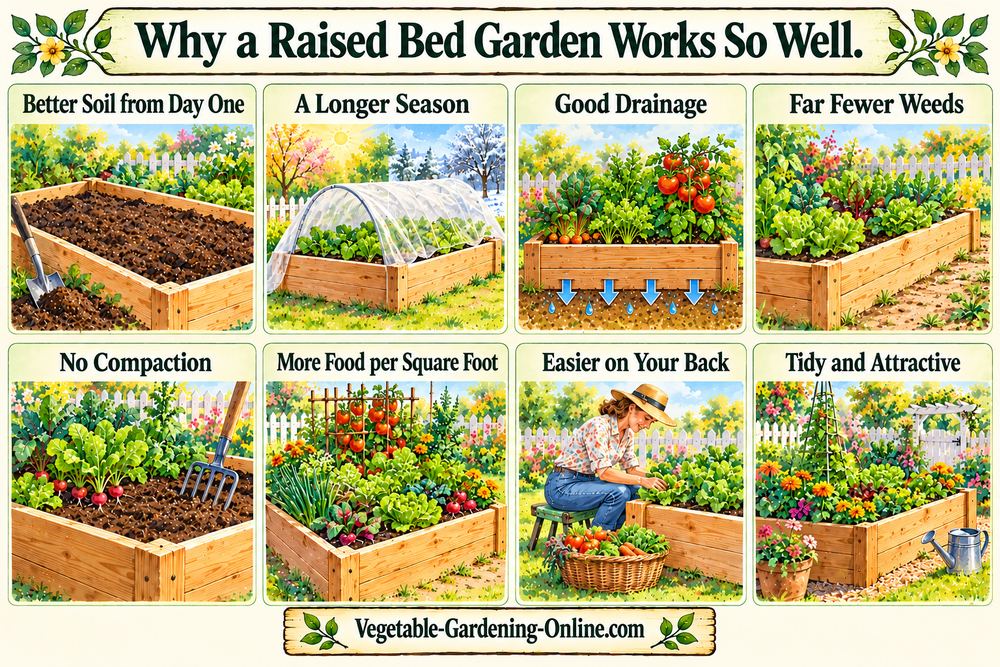
The raised bed layout is the most popular of all vegetable garden layout ideas right now, and for good reason. You build frames from cedar, galvanized steel, or composite lumber, fill them with a good soil mix, and grow intensively inside them. The edges keep grass out, the loose soil lets roots grow easily, and the beds warm up faster in spring than the ground does.
 ★ Save
Standard size: 4 feet wide, 8 feet long, and 12 inches deep. You can reach the center from either side, the length is practical, and the depth suits almost every vegetable.
| At a glance | |
|---|---|
| Pros | Complete soil control; fewer weeds; great drainage; warms up fast in spring |
| Cons | Costs money to build and fill; needs topping up with compost each year |
| Best for | Most beginners; poor native soil; small to medium yards |
Layout tip: arrange several raised beds with the long sides running east to west, with 24-inch paths between them. Plant tall crops, like tomatoes and trellised cucumbers, along the north edge of each bed. See our raised bed vegetable garden guide for building and filling one.
 ★ Save
Layout Idea 2: The Square Foot Garden Layout
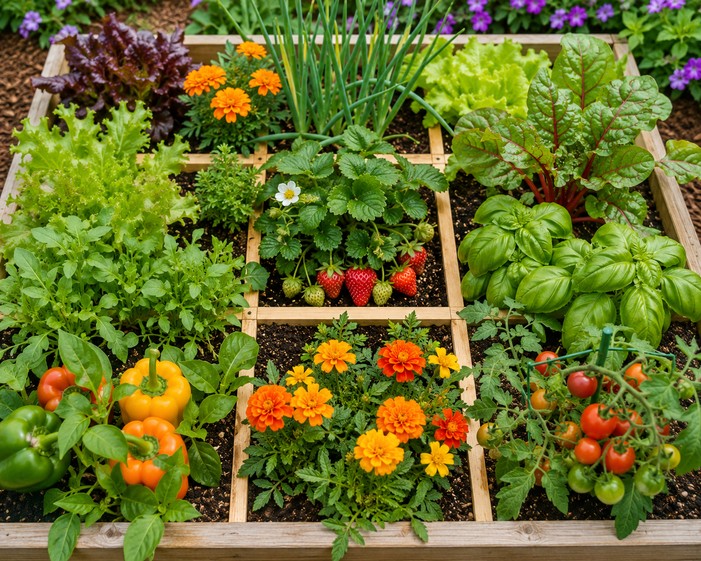
Square foot gardening is one of the most structured vegetable garden layout ideas, and one of the most space-efficient. Instead of long rows, you divide a raised bed into a grid of 1-foot squares and plant each square with the right number of plants for that crop.
 ★ Save
Plants per square: 1 tomato or broccoli, 4 lettuces or basil plants, 9 spinach or bush beans, or 16 carrots or radishes. Our interactive garden planner uses this same system and shows how many plants fit as you design.
| At a glance | |
|---|---|
| Pros | Most food from the least space; very organized; easy to track what is planted where; little weeding |
| Cons | Needs careful planning up front; not ideal for sprawling crops like pumpkins |
| Best for | Small gardens; beginners who like structure; raised beds |
Quick win: a 4x4 square foot garden can grow one tomato, four lettuces, one broccoli, one pepper, one cucumber on a small trellis, and nine bush beans, with squares left over for radishes and herbs. See square foot gardening for the complete method.
Layout Idea 3: The Traditional Row Garden Layout
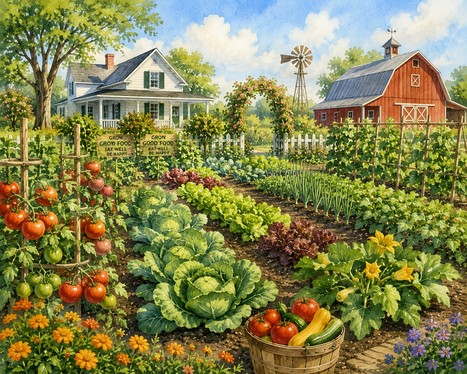
The traditional row garden is one of the oldest vegetable garden layout ideas: long parallel rows with walking paths between them. It's the layout you see on farms and in large community garden plots, and it works best when you have plenty of space.
 ★ Save
Run the rows north to south so every plant gets equal sunlight through the day, and put tall crops at the north end.
| At a glance | |
|---|---|
| Pros | Easy to set up; works well with a tiller or hoe; simple to manage large amounts of one crop |
| Cons | Wastes space between rows; more weeding; paths get packed down; less food per square foot than raised beds |
| Best for | Large yards; growing corn, potatoes, and pumpkins in quantity; rural properties |
Layout Idea 4: The Vertical Garden Layout
A trellis, fence, or A-frame lets vining crops like cucumbers, beans, and peas grow up instead of out, which frees ground space for other vegetables. A classic vertical layout puts tall trellised plants at the back and shorter plants at their feet.
 ★ Save
Cucumbers on a trellis can be underplanted with lettuce, which enjoys the light summer shade. Beans on a tripod of poles can be ringed with low nasturtiums. The result is a layered, productive planting in a small space.
| At a glance | |
|---|---|
| Pros | Much more food from limited space; better air flow; easier harvesting; looks great |
| Cons | Needs sturdy supports; not suitable for all crops; can shade nearby beds if not planned carefully |
| Best for | Small gardens; city spaces; raised beds; anyone growing cucumbers, beans, or peas |
Best vertical crops: cucumbers, pole beans, peas, tomatoes (caged or staked), squash and small pumpkins on strong supports, and trailing nasturtiums. See our vertical vegetable garden guide for more.
Layout Idea 5: The Salad Garden Layout
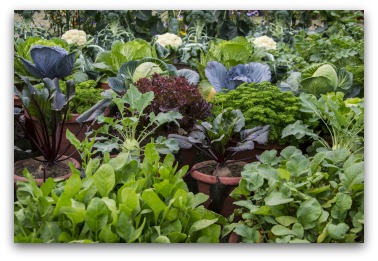
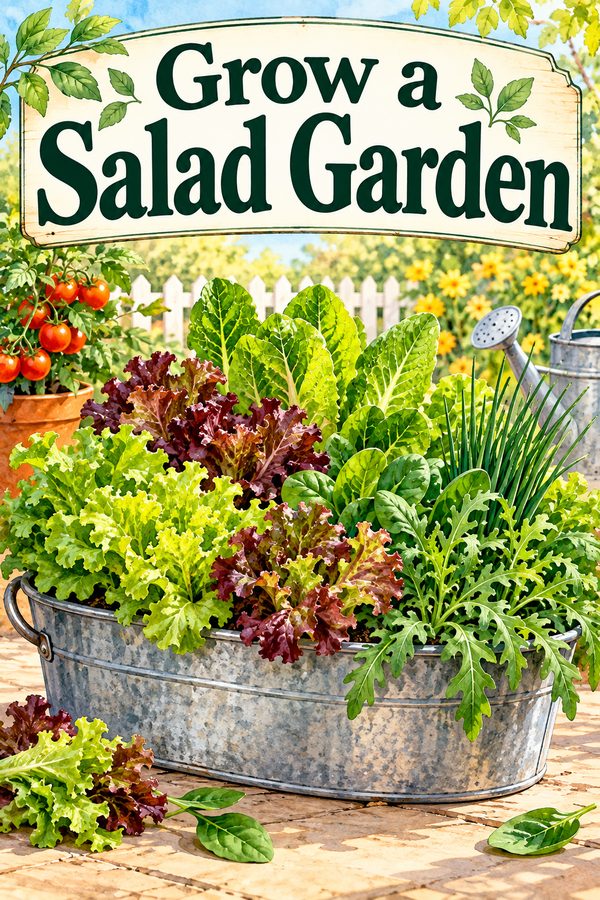
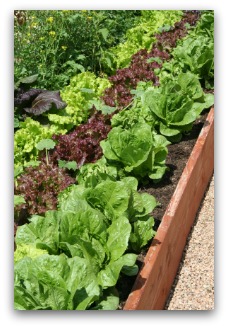
A salad garden is one of the most practical vegetable garden layout ideas for beginners: a bed or group of containers planted entirely with quick-growing salad crops. Because most salad crops mature quickly, you can replant several times through the season.
 ★ Save
A 4x4 salad bed might hold three or four kinds of lettuce, a row of radishes, some spinach, green onions, and a clump of chives. Most are ready to pick within 4 to 6 weeks. As each section finishes, replant it. A well-managed salad garden gives you fresh salad from early spring right through fall.
| At a glance | |
|---|---|
| Pros | Fast results; continuous harvest; grows well in partial shade; low maintenance; ideal for containers |
| Cons | Doesn't produce heavy staple crops; needs succession planting to stay productive |
| Best for | Beginners wanting quick results; small spaces; anyone who eats a lot of salad |
 ★ Save
Layout Idea 6: The Salsa Garden Layout
Themed gardens, where you plant everything for one favorite dish, are fun and practical, especially for beginners. A salsa garden groups the vegetables you need for fresh salsa. Put tomatoes along the back, since they grow tall, and peppers in the middle. Plant onions or green onions near the front, and tuck a patch of cilantro in a corner where you can reach it easily.
 ★ Save
Other themed gardens to try:
- Pizza garden: tomatoes, peppers, basil, onions, oregano
- Stir-fry garden: bok choy, snap peas, green onions, garlic
- Soup garden: carrots, celery, onions, leeks, potatoes, kale
- Herb garden: basil, parsley, chives, thyme, rosemary, and mint in its own pot
Themed gardens are motivating because every harvest has an obvious purpose. They also make wonderful gifts: a friend who loves Mexican food would be delighted with a salsa garden.
Layout Idea 7: The Three Sisters Layout
The Three Sisters is one of the most historic layouts, a Native American companion planting system used for centuries. Corn, beans, and squash grow together and help each other. Corn gives the beans something to climb, beans add nitrogen to the soil, and squash spreads its big leaves to shade out weeds and hold in moisture.
 ★ Save
This layout needs more room than most: at least a 4x8 bed, and larger is better.
Planting order: plant the corn first. Add beans about two weeks later, when the corn is 4 to 6 inches tall, then add squash once the beans have sprouted.
| At a glance | |
|---|---|
| Pros | Beans add nitrogen; natural weed control; high yield; historically proven; fascinating to grow |
| Cons | Needs a lot of space; requires careful timing; corn must be planted in a block, not a single row, for good pollination |
| Best for | Medium to large gardens; gardeners interested in companion planting; families who eat a lot of corn, beans, and squash |
See our companion planting chart for more good partners.
Layout Idea 8: The Container and Patio Layout
Container vegetable garden layout ideas are now one of the most common choices for city and suburban gardeners. This layout works well if all you have is a patio, balcony, or small paved area.
 ★ Save
Use large containers for tomatoes and peppers, since they need more soil. Medium containers work for herbs, lettuce, and compact greens. Group pots by their sun needs: tomatoes and peppers in the sunniest spot, lettuce and herbs where the sun is gentler. Set the biggest, heaviest containers against walls or in corners where they won't need moving.
| At a glance | |
|---|---|
| Pros | Works anywhere with sun; no digging; portable; easy to expand; great for renters |
| Cons | Dries out faster; needs regular feeding; limits root space for large crops |
| Best for | Balconies; patios; renters; anyone without a yard; beginners who want to start small |
See our complete container vegetable gardening guide for pot sizes, soil, and the best vegetables for pots.
 ★ Save
Layout Idea 9: The Keyhole Garden Layout
The keyhole layout is one of the more creative vegetable garden layout ideas, and it makes good use of round or curved spaces. Instead of a rectangle, you build a circular bed with a narrow path cut into it, like the keyhole of a lock. From that path you can reach every part of the bed without stepping on the soil.
 ★ Save
A typical keyhole garden is about 6 feet across, with an 18-inch path. Many have a compost basket in the center, an idea from gardeners in Africa, which feeds the bed as it breaks down.
| At a glance | |
|---|---|
| Pros | Great use of round or corner spaces; no stepping on soil; attractive; built-in composting |
| Cons | Uses space less efficiently than rectangular beds; harder to cover with netting or frames |
| Best for | Awkward spaces; gardeners interested in permaculture; decorative kitchen gardens |
Layout Idea 10: The No-Dig Garden Layout
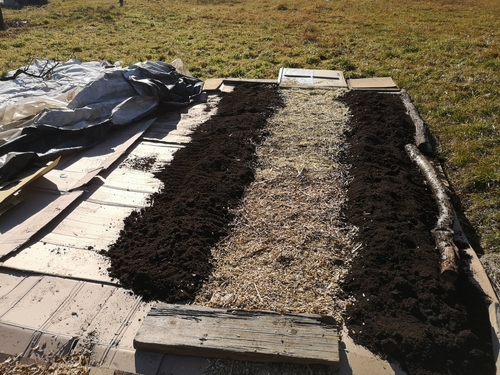
The no-dig layout is one of the most practical ways to turn lawn or weedy ground into a garden without any digging. Lay cardboard right over the existing ground, then build up layers of compost and organic matter on top. The cardboard smothers what's underneath, and the compost becomes rich growing soil.
 ★ Save
No-dig beds work as raised beds or as simple beds on the ground. The keys are a thick layer of cardboard and a generous layer of compost on top.
| At a glance | |
|---|---|
| Pros | No digging; turns lawn into garden quickly; builds excellent soil; very few weeds after the first year |
| Cons | The first year takes a lot of cardboard and compost; deep-rooted weeds may push through at first |
| Best for | Turning lawn into garden; gardeners who can't dig; anyone who wants to build soil naturally |
See our complete no-dig vegetable gardening guide for step-by-step instructions.
Layout Idea 11: The Knot Garden Layout
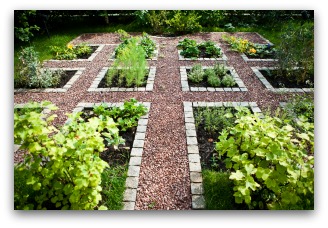
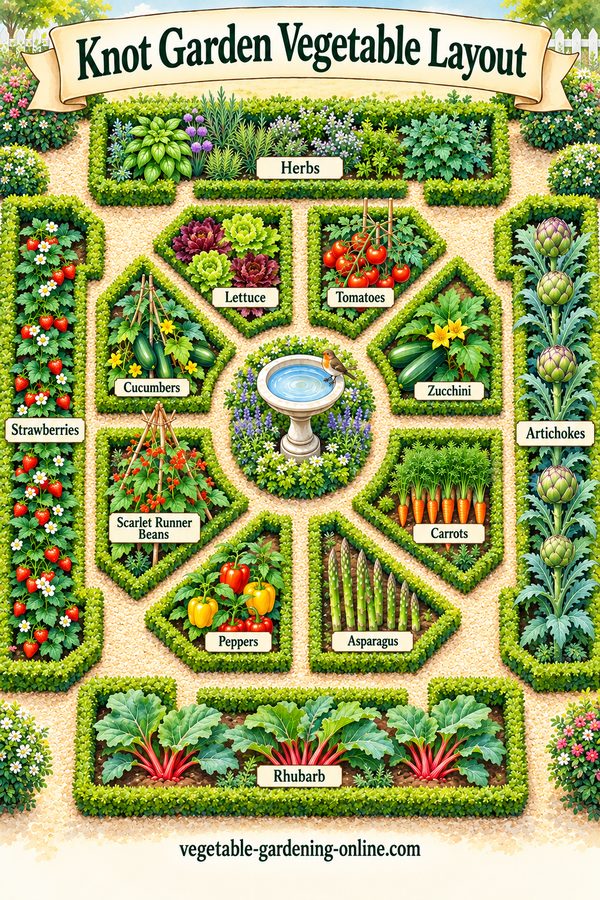
A knot garden is the most decorative of all vegetable garden layout ideas. Instead of long rectangles, it uses small geometric beds divided by gravel paths, often edged with low hedges. The pattern itself is the beauty of the garden, so vegetables can be both useful and ornamental.
 ★ Save
A garden about 38 by 46 feet makes a lovely knot garden. Plant herbs in the top bed, perennials like rhubarb in the bottom beds, and strawberries and artichokes in the side beds. That leaves eight core beds for your main vegetables. A birdbath or small fountain makes a charming centerpiece.
Best vegetables for a knot garden: colorful salad lettuces, zucchini and cucumbers along the borders, tomatoes in the sunniest beds, scarlet runner beans for color, and feathery asparagus. Keep a few replacement seedlings growing in a seed bed or cold frame, so you can fill any gap as soon as a crop is harvested.
| At a glance | |
|---|---|
| Pros | Beautiful all year; small beds are easy to reach; mixes vegetables, herbs, and flowers |
| Cons | Takes more planning and space; hedges and paths need upkeep |
| Best for | Front yards; formal kitchen gardens; gardeners who want a showpiece |
How to Choose the Right Layout for Your Space
With so many vegetable garden layout ideas to choose from, here is a simple guide:
| Your situation | Best layout |
|---|---|
| Complete beginner with a small yard | A single 4x8 raised bed using the square foot layout |
| Patio or balcony only | Container and patio layout with grow bags |
| Large yard, want the most food | Several raised beds, or the traditional row layout |
| Turning lawn into garden | No-dig layout over cardboard |
| Very small space, want the most food | Square foot garden plus a vertical layout |
| Want quick results and easy upkeep | Salad garden layout in a single raised bed |
| Interested in companion planting | Three Sisters layout, or companion-planned raised beds |
| Awkward corner or round space | Keyhole garden layout |
 ★ Save
For ready-made plans you can print, see our free vegetable garden plans and small vegetable garden plans.
Layout Planning Tips from Experienced Gardeners
1. Sketch it out before you dig
Even a rough pencil sketch helps. Draw your space to scale, mark where the sun falls at different times of day, and note shade from trees or buildings. You'll almost certainly rearrange things several times on paper, which is far easier than moving beds after they're built.
2. Start with one bed and do it well
The most common layout mistake is building too many beds the first year. One well-planned 4x8 raised bed will teach you more, and grow more food, than four beds that get away from you.
3. Leave room to expand
Almost everyone wants more garden after their first good season. Leave space to add another bed next year, and you won't have to rearrange everything later.
4. Think about access in all weather
Paths should be wide and firm enough to use when it's wet. Lay bark chips, gravel, or stepping stones on your main paths to keep them usable all year.
5. Group plants by their needs
Put thirsty crops like cucumbers, squash, and celery together where you can water heavily. Put tomatoes, peppers, and herbs, which like less water, in another bed.
6. Plan for succession
Sow a new crop in the same space as soon as the last one is harvested. A 4x8 bed with a succession plan can grow three or four different crops in the same squares in one season.
 ★ Save
Plan Your Layout Before You Dig
Whatever vegetable garden layout ideas appeal to you, the smartest approach is to plan on screen before you build anything. Our free interactive garden planner lets you try different bed sizes and vegetable combinations, check companion planting, and see the spacing for every crop, all before you spend a penny.
Open the Free Garden Planner Free Planning Worksheets
 ★ Save
Frequently Asked Questions About Vegetable Garden Layout Ideas
What is the best vegetable garden layout for a beginner?
A single raised bed using square foot spacing is the best starting point for most beginners. It's manageable and productive, and it teaches you spacing and succession planting in a small space. A 4x4 or 4x8 bed is all you need for a very rewarding first season.
How do I lay out a vegetable garden for the biggest harvest?
Combine square foot gardening with vertical growing. Use every square, train vining crops up trellises to free up ground space, and replant empty squares as soon as a crop finishes.
Which direction should vegetable garden rows run?
In a traditional row garden, rows should run north to south so all plants get equal sunlight through the day. In a raised bed, put your tallest plants at the north end so they don't shade shorter neighbors.
How much space do I need between vegetable garden beds?
Leave at least 18 inches between beds for comfortable walking. If you use a wheelbarrow or garden cart, allow 24 to 30 inches. For main paths between groups of beds, 36 inches is a comfortable working width.
Can I combine different vegetable garden layout ideas?
Yes, and the best gardens often do. A productive garden might use raised beds with square foot spacing, a trellis for cucumbers and beans, containers on the patio for herbs and cherry tomatoes, and a no-dig bed built over lawn for next year.
How do I plan a vegetable garden layout on paper?
Measure your space and draw it to scale on graph paper, with 1 square for each foot. Mark north, note any shady areas, and sketch in your beds. Then fill in what you want to grow in each section, checking the spacing as you go. Or use our free interactive garden planner, which works out the spacing for you.
What vegetables grow in a shady garden layout?
No vegetable grows in full shade, but leafy crops and root crops can manage with 3 to 6 hours of sun a day. Try lettuce, spinach, Swiss chard, kale, radishes, beets, and peas. Save your sunniest spot for tomatoes, peppers, squash, and cucumbers.
 ★ Save
Start Planning Your Vegetable Garden Layout Today
There is no single perfect answer: the best layout is the one that fits your space, your time, and your gardening goals. Whether you start with a single square foot bed or go straight to several beds with vertical growing and companion planting, the most important step is to make a plan before you start digging.
The vegetable garden layout ideas in this guide have all been proven in real gardens over many seasons. Pick the one that fits your situation, sketch it out, then use our free planner to work out the details. A little planning now pays off every week of the growing season.
 ★ Save
My short garden email, Get the Dirt, comes Saturday mornings.
Sign Up for My Free Newsletter