Growing Cucumbers:
Plant, Trellis, Water, and Harvest
 ★ Save
Growing cucumbers is one of the most rewarding summer garden projects. The plants grow fast, and a well-tended vine keeps producing for weeks: slicers for salads, picklers for canning, and little ones for snacking right off the vine.
This guide to growing cucumbers covers it all: choosing a variety, planting time, soil, trellises, watering, pests, and harvest, plus five free cucumber charts.
From My Garden
My grandmother had a simple way to keep her cucumbers from turning bitter. She punched holes all around the bottom of a one-gallon can and buried it in the ground next to her cucumber plants.
Several times a week she filled the can with the hose or a watering can. The water soaked in deep, right where the thirsty roots could reach it, without overwatering the rest of the garden or wetting the leaves.
Charlotte
When should you plant cucumbers?
Enter your zip code in our free personalized planting calendar to get your cucumber seed-starting and planting dates.
Get My Planting DatesOn This Page
Free Cucumber Growing Charts
Click any chart to see it full size, then print it or save it to Pinterest.
Choosing Cucumber Varieties
Cucumber Varieties
 ★ Save
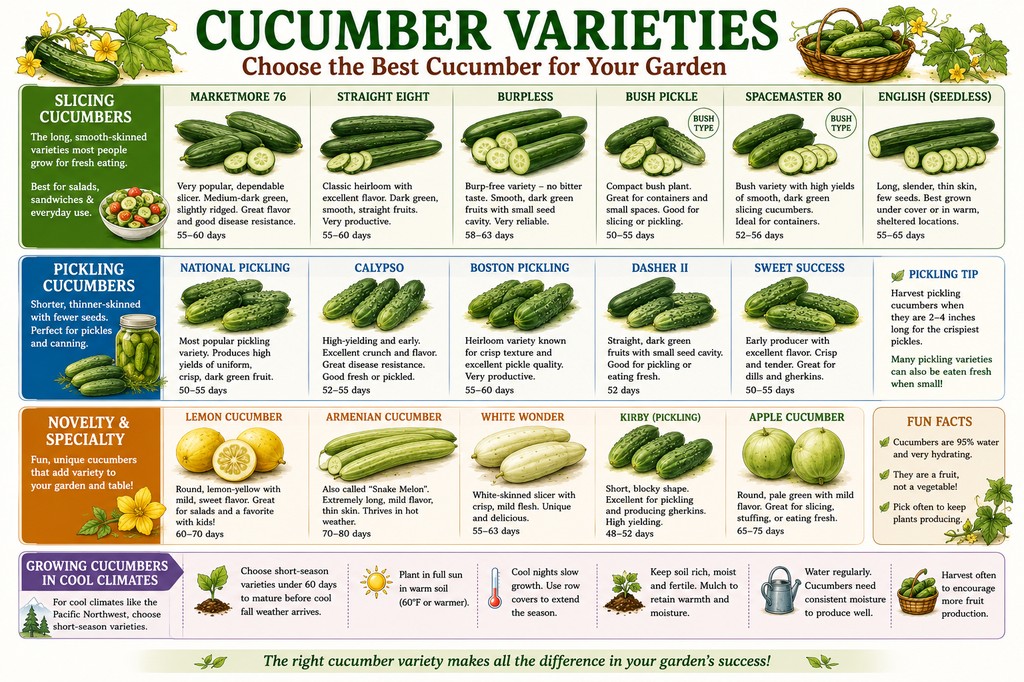
- Slicing cucumbers: Long and smooth-skinned, for fresh eating. Marketmore, Straight Eight, and Burpless are reliable choices.
- Pickling cucumbers: Shorter, with thinner skins and fewer seeds, so they stay crisp in the jar. Try National Pickling, Calypso, or Boston Pickling. Picked young, they're good fresh too.
- Bush cucumbers: Compact plants like Bush Pickle and Spacemaster fit containers and small gardens.
- English (seedless) cucumbers: Best in a greenhouse or under cover, but they can do well outdoors in a warm, sheltered spot.
- Lemon cucumbers: Round, yellow, and mild. Children love them.
- Armenian cucumbers: Very long and mild, and they thrive in heat where other cucumbers struggle. (They're actually a melon.)
In cool climates like the Pacific Northwest, choose short-season varieties, under 60 days, that set fruit before fall weather turns cool. Marketmore 76 is a dependable choice for the Willamette Valley and similar climates.
When to Plant Cucumbers
 ★ Save
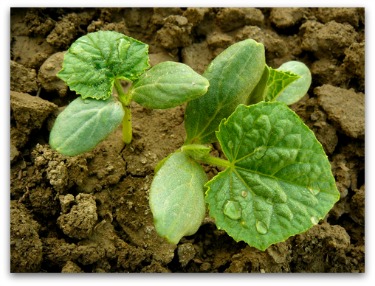
Cucumbers are very frost-tender; one frost kills them. They also sulk in cold soil, so there's no gain in planting early.
- Sow outdoors: one to two weeks after your last spring frost, when the soil is at least 65 degrees F. In 70-degree soil, seeds sprout in five to seven days.
- Start indoors: no more than two to four weeks before planting out, in individual pots you can plant right in the ground. Cucumber roots hate being disturbed, so never start them in a shared seed tray.
- Plant again: A second sowing in early summer gives you fresh plants for late summer, in case the first ones slow down in the heat or are lost to wilt.
From seed to harvest takes about 9 weeks, depending on the variety and the weather. In most areas, cucumbers go in from mid-May to early June. See our vegetable planting calendar for more timing help.

Soil, Sun, and Spacing
Building Healthy Soil for Cucumbers
 ★ Save
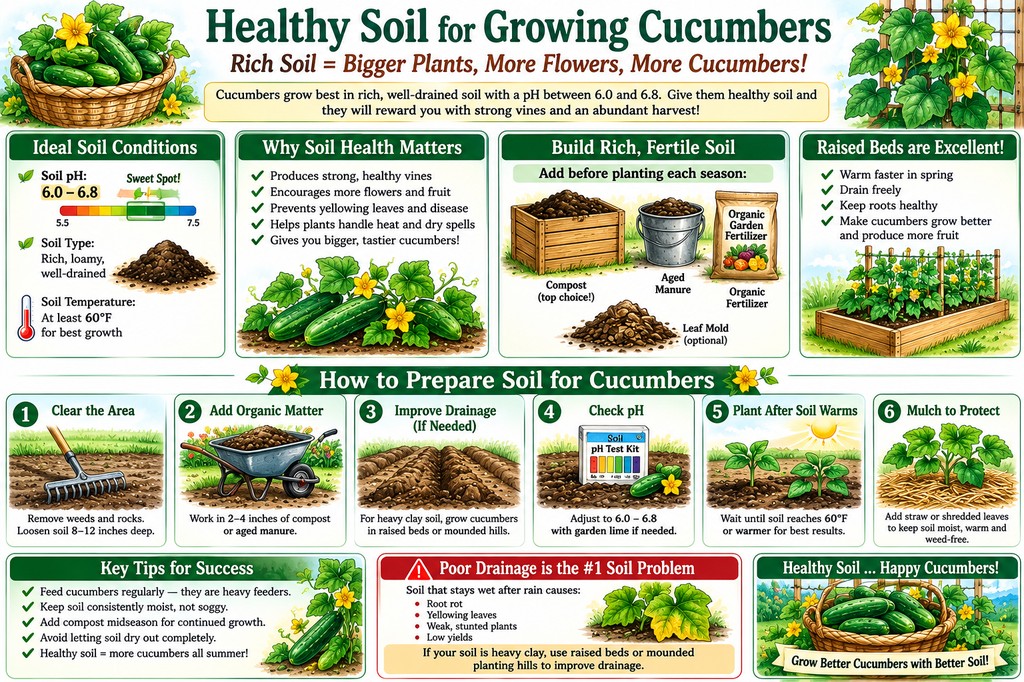
Growing cucumbers takes full sun, six to eight hours a day. In cool climates, a warm, sheltered spot facing south or southwest makes a big difference.
Give them rich, well-drained soil with a pH between 6.0 and 6.8. They're heavy feeders, so work in compost or well-aged manure before planting. Raised beds are ideal, because they warm up fast in spring and drain well.
Poor drainage is the most common soil problem. Soggy soil causes root rot and yellow leaves. In heavy clay, plant in raised beds or mounded hills.
- Hills: Make mounds about 12 inches high and 2 feet wide, 4 to 5 feet apart. Sow four to six seeds per hill and thin to the best two or three plants.
- Rows on a trellis: Space plants 12 to 18 inches apart.
Growing Cucumbers on a Trellis
Cucumber Trellis Ideas
 ★ Save
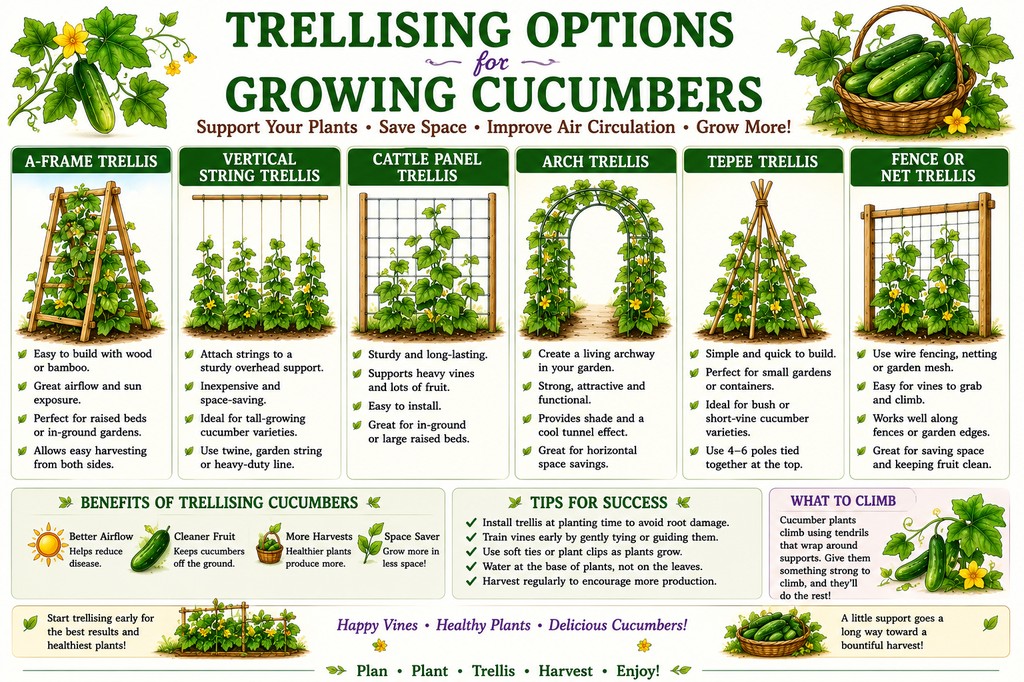
A trellis is the best improvement most gardeners can make when growing cucumbers. Climbing vines grow straighter, cleaner fruit, get better air flow, take up less space, and are much easier to pick.
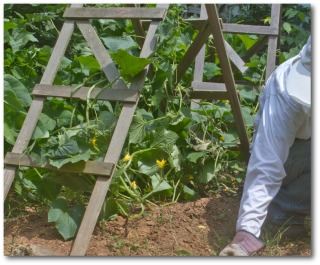
Almost any sturdy support works: a wire fence, a wooden trellis, a livestock panel, or a frame strung with garden twine. Make it 5 to 6 feet tall, and put it up before you plant so you don't disturb the roots later.
Three easy trellis methods
- Single stake: Tie the main stem to a 4- to 6-foot stake every foot as it grows.
- Double arch: Plant four cucumbers in a 2 x 5 foot plot and mulch well. Bend wire mesh into an arch about 2 feet high over the plot, with stakes to lead the vines up. A second arch of plastic pipe hoops over the top can hold a floating row cover.
- Tall trellis: Run a 5-foot wire trellis down the center of a 4- to 5-foot-wide row, plant cucumbers on both sides, and train the stems up the wires.
 ★ Save
Start training the vines two to three weeks after they sprout. Point them toward the trellis, and the tendrils will grab on. For more ideas, see our cucumber trellis page.
Watering and Feeding Cucumbers
How to Water Cucumber Plants
 ★ Save
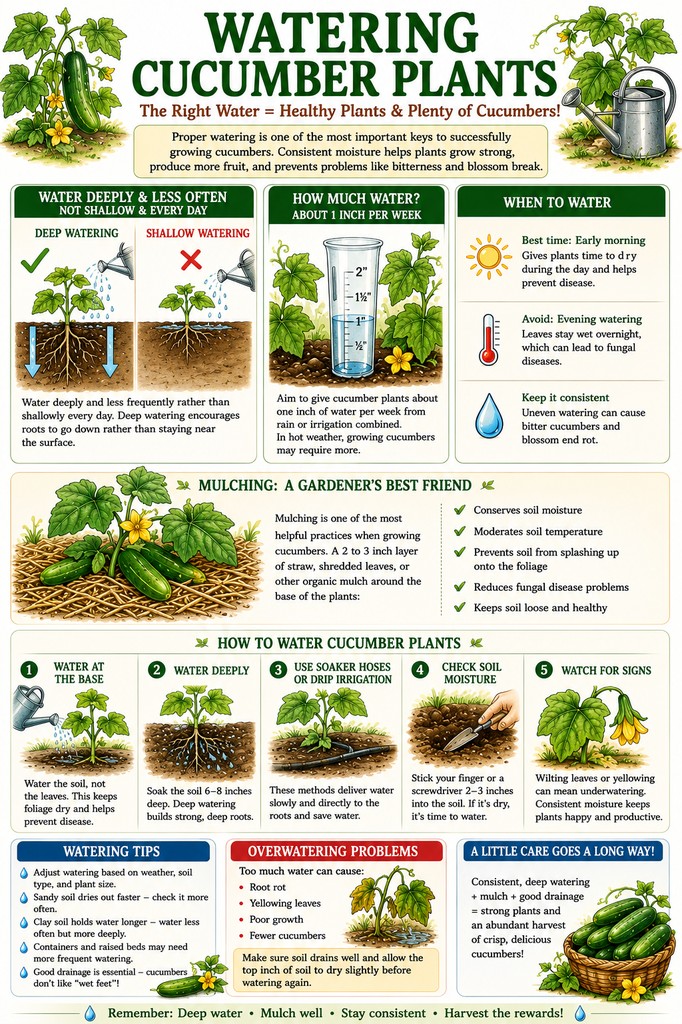
Even watering is the secret to growing cucumbers that are sweet and crisp. Cucumbers are about 95 percent water. Uneven watering causes bitter taste and misshapen fruit.
- Water deeply: about an inch a week from rain and watering together, and more in hot weather. Deep watering sends roots down. Never let the soil dry out.
- Water in the morning: If you water from overhead, morning watering lets the leaves dry before night, which helps prevent powdery mildew.
- Mulch: A 2- to 3-inch layer of straw or shredded leaves holds in moisture, keeps the soil cool, and stops soil from splashing onto the leaves.
- Feed: Start with compost-rich soil, then side-dress with compost or a balanced fertilizer when the plants begin to flower. Go easy on nitrogen after that, or you'll get leaves instead of cucumbers.
Cucumber Pests and Diseases
Common Cucumber Pests
 ★ Save
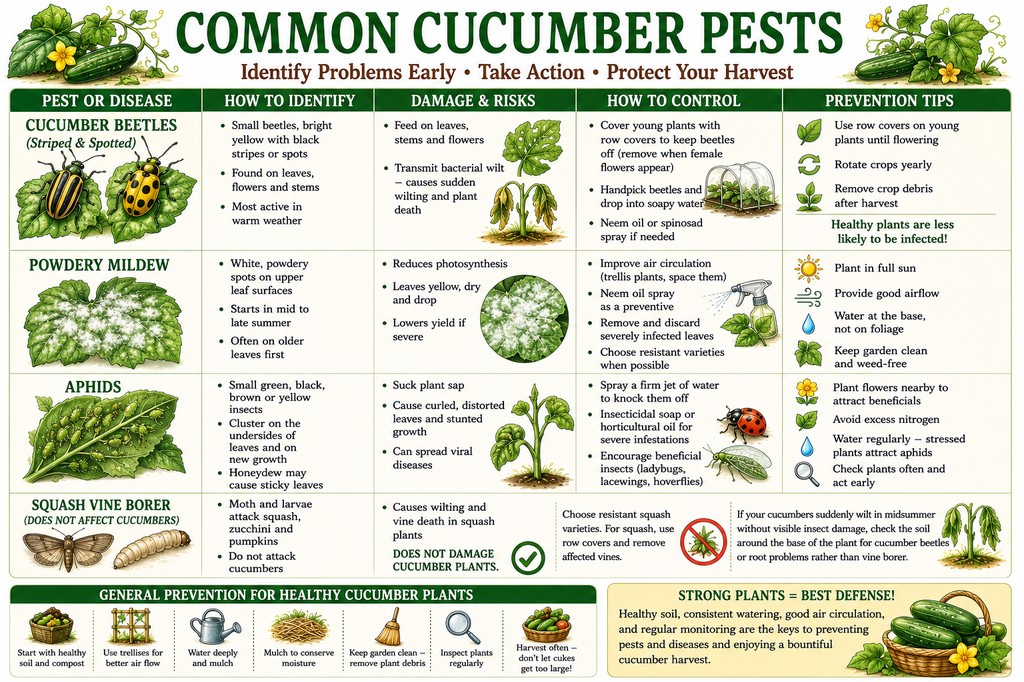
- Cucumber beetles: Striped and spotted cucumber beetles are the worst pest. They chew leaves and flowers and spread bacterial wilt, which makes plants wilt and die quickly. Cover young plants with row covers right after planting, and remove the covers when female flowers appear so bees can pollinate them.
- Powdery mildew: A white powdery coating on the leaves, usually from midsummer on. Trellising for good air flow helps a lot, and some varieties resist it.
- Aphids: They cluster under leaves and on new growth. A strong spray of water knocks most of them off, and insecticidal soap handles the rest. Flowers nearby bring ladybugs and lacewings that eat aphids.
Sudden wilting in midsummer? Squash vine borers don't bother cucumbers, so look for cucumber beetles or root problems instead. If yellow leaves are the problem, see why are my cucumber leaves turning yellow.
Good neighbors help too. Beans, radishes, dill, nasturtiums, and sunflowers are good companions; keep cucumbers away from potatoes and strong herbs like sage. See our companion planting chart.
Harvesting Cucumbers

Pick often, and the plants keep producing. A cucumber left too long turns yellow, seedy, and bitter, and tells the plant to stop making more.
- Slicers: Pick at 6 to 8 inches, before the seeds get large.
- Picklers: Pick at 2 to 4 inches for little gherkins, or 4 to 6 inches for regular pickles.
- Check daily: In warm weather, a cucumber can go from just right to too big overnight.
- Cut, don't pull: Use scissors or a sharp knife so you don't damage the vine.
Back from vacation to giant yellow cucumbers? Pick them all right away, and the plant will start producing again.
Have more than you can eat? Try canning your extra cucumbers as pickles.
Saving Seed and Cross-Pollinating Cucumbers
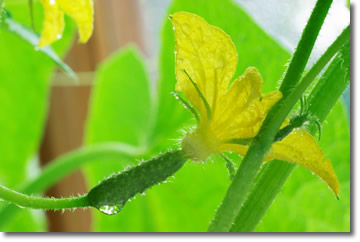
Cucumbers are fun for a first try at plant breeding. Each plant has male flowers and female flowers. The female flower has a tiny cucumber at its base.
- Choose your parents: pick a female flower and a male flower from plants with the traits you want.
- Cover the female flower: before it opens, slip a small paper bag over it and close it gently with a rubber band, so insects can't pollinate it first. Don't use plastic; it gets too hot and damp inside.
- Pollinate by hand: when the female flower opens, brush pollen from the male flower onto the center of the female flower with a small paintbrush.
- Cover it again: put the bag back for a few days, and tie a bit of yarn on the stem so you know which cucumber to save.
- Save the seeds: let that cucumber ripen on the vine until it turns yellow, then scoop out the seeds, rinse them, and dry them well.
Hybrid varieties won't grow true from saved seed, so start with open-pollinated (heirloom) varieties. Learn more about saving and adapting your own seed on our landrace gardening page.
Growing Cucumbers Questions
- Why are my cucumbers bitter?
- Usually from uneven watering or heat stress. Keep the soil evenly moist, mulch the plants, and pick cucumbers before they get too big. Some varieties are less likely to turn bitter.
- How long do cucumbers take to grow?
- About 9 weeks from seed to the first harvest, depending on the variety and the weather. Many varieties are ready in 50 to 65 days.
- Do cucumbers need a trellis?
- No, but they grow better on one. Trellised cucumbers are straighter, cleaner, easier to pick, and get less disease.
- How often should I water cucumbers?
- About an inch a week, and more in hot weather; often once a week, twice in a heat wave. Water deeply and keep the soil from drying out.
- Why are my cucumber flowers falling off without making cucumbers?
- The first flowers are usually male, and they fall off after blooming. Female flowers, with a tiny cucumber at the base, come a week or two later.
- Can I grow cucumbers in a container?
- Yes. Choose a bush variety, use a pot of at least 5 gallons, and give it a small trellis or cage.
For more research-based cucumber advice, see the University of Minnesota Extension.
More Vegetable Growing Guides
My short garden email, Get the Dirt, comes Saturday mornings.
Sign Up for My Free Newsletter