- Home
- Organic Vegetable Gardening
- Ingredients for Organic Fertilizer
Ingredients for Organic Fertilizer Using Compost
Using Compost to Create Organic Fertilizer
The best ingredients for organic fertilizer can be found right in your own kitchen and backyard!
Learn how to turn some of your kitchen and yard waste into rich organic fertilizer.
Creating a compost pile is an easy way to make your own organic fertilizer.
While you may think that making your own compost is difficult, it is in fact an easy way to get the most value from things you would otherwise throw away.
Design Your Own Vegetable Garden Layout Using our Free "Vegetable Garden Planner" Software!
If you are concerned that a compost pile would be unsightly, you'll be surprised to learn you have a lot of options.
Many commercially available compost bins are attractive and actually help speed up the composting process.
Download Free Garden Planning Worksheets, Garden Diary, Zone Chart, Or Planting Guide
Once you've decided where to put your compost pile, it will be time to begin gathering together the ingredients.
You'll be rewarded in several months by rich, dark organic fertilizer for your garden.

Choosing the right ingredients for your organic fertilizer is the first step toward building the rich, productive soil that every organic vegetable garden depends on. This page is part of our Organic Vegetable Garden hub, where you will find complete guides to organic fertilizer recipes, companion planting, organic seeds, and the no-dig gardening method.
Soil, Fertilizer and Composting — complete hub for building rich vegetable garden soil through composting, fertilizing, mulching, and manure
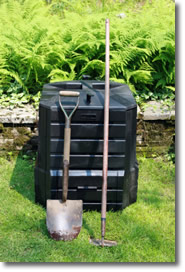
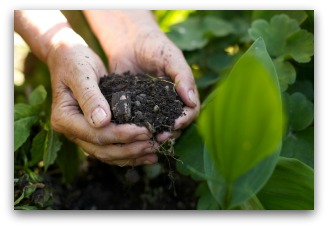
Ingredients for Organic Fertilizer

You may be surprised to learn that many of the components for organic fertilizer can be found in your own home and garden.
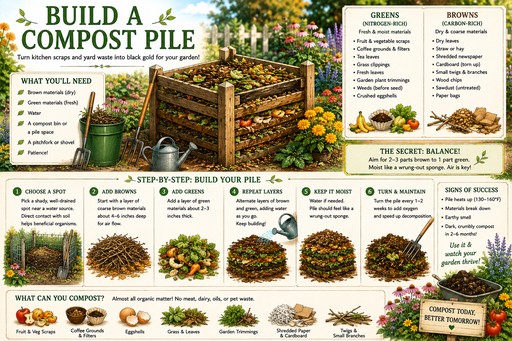
Table scraps, peelings and scraps from fruit and vegetables, coffee grounds, tea leaves, and crushed eggshells can be added to your compost instead of to the garbage.
Lawn clippings, leaves, weeds, prunings and other yard waste can also make vital contributions of nitrogen and carbon to your organic fertilizer.
Adding chicken or rabbit manure can help activate your compost.
Other ingredients you may have handy that can be added to your compost include cardboard, newspaper, sawdust, pine needles, corn cobs and dryer lint.
Be sure to layer ingredients in even layers instead of mounds.
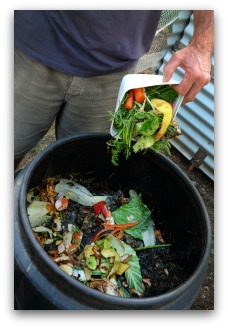 Recycling Food Scraps into Compost
Making Compost to Use as Organic Fertilizer
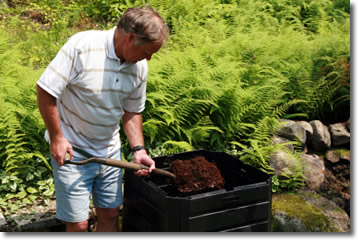
Clear the ground where your pile will go.
This is where you will be adding your ingredients for organic fertilizer.
Lay down some straw or pile some sticks first… this will help add air to the compost.
Begin adding your ingredients in layers. Add a dry layer, then a moist layer and keep repeating this.
- Dry materials include leaves, straw, sawdust and wood ashes.
- Moist materials include food scraps, coffee grounds, weeds and lawn cuttings.
Green manures such as clover or wheatgrass add nitrogen.
If you can add rabbit or chicken manure, this works as well.
Adding well-aged cow, pig, or horse manure will also be helpful.
Moisten your compost pile occasionally, and keep it covered to make the most of moisture and heat.
Turn the pile every few weeks for best results.
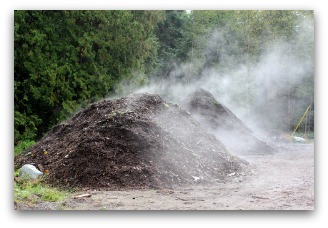
What to Avoid When Making Compost

There are certain things you want to avoid when making compost.
Do not include meat, fish or other similar scraps in your ingredients for organic fertilizer.
These items will attract animals and flies.
Do not add pet (dog or cat) manure to your compost if it will be used to grow food.
Don't let your organic fertilizer get out of balance. A healthy working compost pile should contain more carbon than nitrogen.
Try to follow the advice to add two parts brown materials for every one part of green material added to the compost.
Air will be able to get through the pile and provide nourishment for the little organisms that work their magic turning waste to fertilizer.
If
you have too much nitrogen, your compost will smell rotten. Add more
carbon to eliminate this problem.
The ingredients you choose for your organic fertilizer are the same ingredients that build lasting fertility in your vegetable garden soil.
This page is also part of our Soil, Fertilizer and Composting hub, where you will find complete guides to composting, mulching, manure, compost tea, and the fertilizing principles that help you get the most from every ingredient you add to your garden.
The University of Missouri Extension has a thorough guide to organic vegetable gardening techniques at extension.missouri.edu, covering organic matter, manure, compost, green manures, and the science behind building fertile, sustainable soil — an excellent companion resource to the ingredient guides on this page.
University of Missouri Extension — Organic Vegetable Gardening Techniques — research-based guide to organic matter, manure, compost, and building sustainable soil fertility

Recent Articles


-
Raised Bed Vegetable Garden: Plans, Layouts, and How to Build One
Sep 27, 26 09:37 PM
 A raised bed vegetable garden step by step: where to put it, size and depth, materials, how to build and fill it, a free 4x8 planting plan, and what to grow.
 -
Container Vegetable Gardening: Ideas, Designs, and Growing Tips
Sep 27, 26 05:56 PM
 Container vegetable gardening made easy: best pots and soil, what to grow, pot sizes, watering and feeding, plus container garden designs, ideas, and pictures.
 -
Fall Vegetable Garden Guide: The Complete Guide to Autumn Growing
Sep 26, 26 11:28 AM
 This fall vegetable garden guide covers the best crops, timing, frost protection, and planting charts for a productive autumn harvest.
 -
Garden Story for Children: Free Printable; Ben's Garden Year
Sep 25, 26 12:50 PM
 A free printable garden story for children ages 4-7. Read it online or print the picture book: Ben plants seeds in winter, grows a tomato, and picks radishes.
 -
Basic Vegetable Garden Design: Layouts, Plans, and Ideas for Any Yard
Sep 24, 26 08:10 PM
 Basic vegetable garden design made simple: pick a layout, raised beds or in-ground, paths and water, the four-square rotation, and free plans and a planner.
 -
Child Vegetable Garden--Kids Gardening Hub
Sep 23, 26 08:04 PM
 Everything for kids in the garden; free worksheets, coloring books, preschool activities, scarecrow projects, and tips for planning a child vegetable garden.
 -
Growing Cucumbers — Complete Guide to Planting, Care, and Harvest
Sep 23, 26 01:59 PM
 Complete guide to growing cucumbers: varieties, planting times, soil, spacing, trellising, watering, pests, and harvesting for a big cucumber crop.