Making Sauerkraut at Home:
Easy Old-Fashioned Crock Sauerkraut
Making Sauerkraut Step by Step
 ★ Save
Making sauerkraut at home is one of the oldest and easiest ways to keep a cabbage harvest. All you need is cabbage, salt, a crock, and a few weeks of patience.
Sauerkraut is German for "sour cabbage." Shredded cabbage ferments in its own salty juice until it turns tangy, crunchy, and full of natural probiotics.
On This Page
Why Make Your Own Sauerkraut?
 ★ Save
Homemade sauerkraut tastes nothing like the canned kind from the store. It's brighter, crunchier, and full of the live, helpful bacteria that canning destroys.
If you grow cabbage, making sauerkraut is one of the most rewarding ways to use the harvest, and a batch made in fall keeps well into winter.

Fermenting is a wonderful first step into preserving. Our Preserving Garden Vegetables guide covers canning, freezing, drying, and more, to help you choose the right method for every crop.
What You Need for Making Sauerkraut
 ★ Save
Equipment
- A stoneware crock or food-grade container. A 1-gallon crock holds about 5 pounds of shredded cabbage. A food-grade plastic bucket or large glass jar works too.
- A shredder. A sharp knife, a kraut board, or a food processor, to shred cabbage about as thin as for coleslaw.
- A plate and a weight. A plate that fits just inside the crock, plus a clean weight on top, like a jar filled with water. Or use a heavy food-grade plastic bag filled with brine (see below).
- A cloth cover. Clean cheesecloth or a towel to cover the crock and keep out dust and insects.
Ingredients
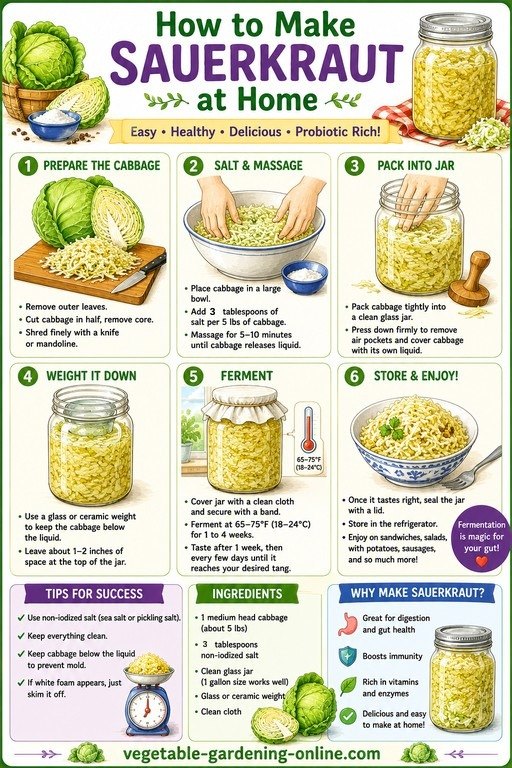
The proportion that matters most: 3 tablespoons of canning or pickling salt for every 5 pounds of shredded cabbage. That's the tested ratio from the National Center for Home Food Preservation.
Use canning or pickling salt, or pure sea salt, with no iodine or anti-caking agents, which can darken the kraut or cloud the brine. Weigh the cabbage after trimming and coring it.
 ★ Save
How to Make Sauerkraut Step by Step
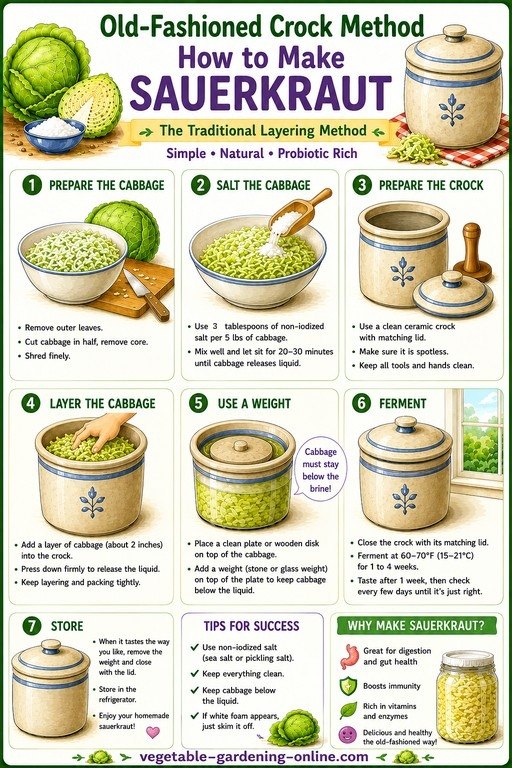
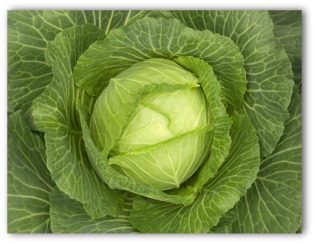
- Prepare the cabbage. Remove the outer leaves, quarter the heads, and cut out the cores. Shred the cabbage thin, about the thickness of a quarter.
- Salt it. In a large bowl, mix 5 pounds of shredded cabbage with 3 tablespoons of salt. Let it stand a few minutes until it starts to wilt.
- Pack it firmly. Pack the salted cabbage into the crock a few handfuls at a time, pressing it down firmly with a potato masher or wooden tamper. Juice will start to form.
- Keep layering. Repeat until the crock is full to within 4 or 5 inches of the rim. The juice should rise up and cover the cabbage.
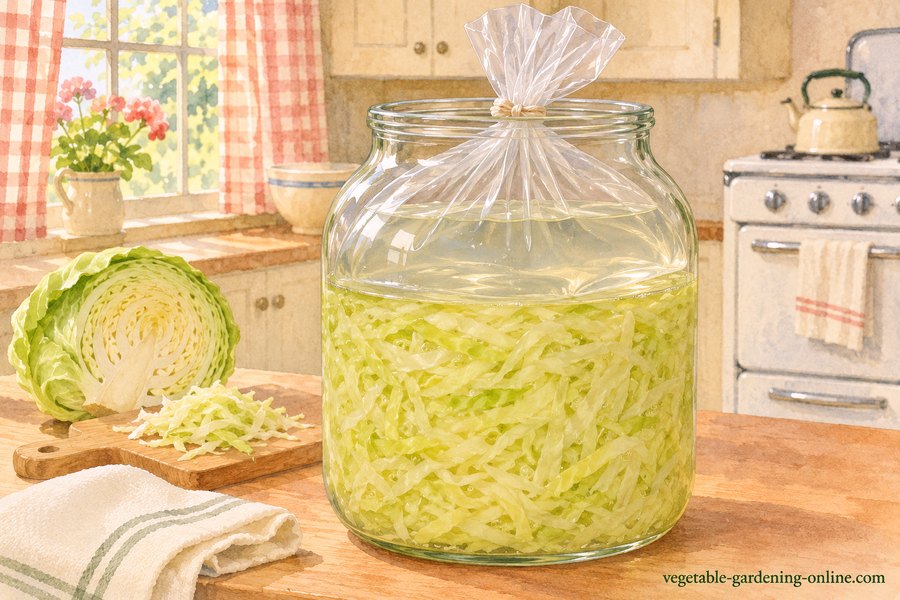
- Weigh it down. Put a clean plate on the cabbage and a weight on the plate, so the cabbage stays 1 to 2 inches under the brine. If there isn't enough juice to cover it, add brine made of 1½ tablespoons of salt in a quart of water.
- Or use a brine bag. Or fill a heavy food-grade plastic bag with that same brine and lay it on top of the cabbage. It seals out air, and you won't need to disturb the crock until it's done.
- Cover and wait. Cover the crock with a clean cloth and set it somewhere at 70 to 75°F.
 ★ Save
How long does sauerkraut take?
| Room temperature | Time to ferment fully |
|---|---|
| 70–75°F | About 3 to 4 weeks |
| 60–65°F | About 5 to 6 weeks |
| Below 60°F | May not ferment |
| Above 75°F | Ferments fast, but the kraut can turn soft |
Check the crock two or three times a week if you use a plate and weight, and skim off any scum on top. A brine bag doesn't need checking until fermentation is done.
It's ready when the bubbling stops. Taste it: the flavor grows stronger the longer it ferments, so stop when you like it.
Throw it out if the kraut turns pink, dark, or slimy, or smells bad instead of pleasantly sour. That means it wasn't salted or covered properly.
Preserving Your Finished Sauerkraut

Refrigerate it
The simplest way. Pack the kraut into clean jars, cover it with its brine, and refrigerate. It keeps for several months and slowly keeps developing flavor.
Freeze it
Easy and quick. Pack it into freezer bags or containers with enough brine to cover, leaving half an inch of headroom. It keeps up to a year, though it loses some crunch.
Can it
Canned sauerkraut keeps on the pantry shelf for a year or more. Use the tested times from the National Center for Home Food Preservation.
Hot pack: bring the kraut and its juice to a simmer (185 to 210°F; don't boil), pack into hot jars, cover with the hot juice, and leave half an inch of headroom.
Raw pack: pack the cold kraut into jars and cover with its juice, leaving half an inch of headroom.
Wipe the rims, put on the lids and bands, and process in a boiling water canner:
| Pack | Jar size | 0–1,000 ft | 1,001–3,000 ft | 3,001–6,000 ft | Above 6,000 ft |
|---|---|---|---|---|---|
| Hot pack | Pints | 10 min | 15 min | 15 min | 20 min |
| Quarts | 15 min | 20 min | 20 min | 25 min | |
| Raw pack | Pints | 20 min | 25 min | 30 min | 35 min |
| Quarts | 25 min | 30 min | 35 min | 40 min |
Let the jars cool completely before storing. Canning cooks away the live bacteria, so for probiotic kraut, refrigerate or freeze it instead. Our canning vegetables guide covers the basics.
Ways to Enjoy Homemade Sauerkraut
 ★ Save
A classic Reuben sandwich: corned beef, Swiss cheese, and a generous mound of tangy sauerkraut on rye bread. Homemade kraut makes it extra special.
Sauerkraut and sausage: layer sauerkraut with frankfurters or bratwurst in a casserole, add caraway seeds and a bay leaf, cover, and bake at 325°F for 30 minutes. Simple, hearty, and delicious.
Sauerkraut with apples and wine: cook a diced onion in butter, add the sauerkraut, a diced apple, a splash of white wine, and enough chicken stock to cover. Simmer uncovered for 30 minutes, add a pinch of sugar and some caraway seeds, then cover and bake at 325°F for another 30 minutes. Wonderful with pork.
Straight from the jar: as a topping for grilled meats, hot dogs, and bratwurst. It's especially good when you grew the cabbage yourself.
Growing Cabbage for Making Sauerkraut
 ★ Save
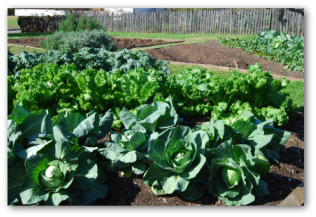
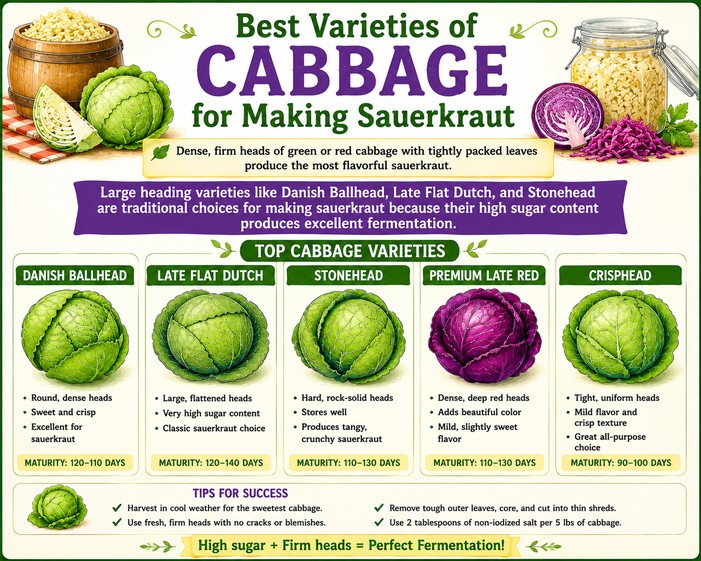
The best sauerkraut starts with the best cabbage, and the best cabbage comes from your own garden. Dense, firm heads with tightly packed leaves make the most flavorful kraut.
Large, late varieties like Danish Ballhead, Late Flat Dutch, and Stonehead are traditional favorites, because their high sugar content ferments so well.
Harvest in fall. Fall cabbage is sweeter than spring cabbage, and a light frost makes it sweeter still. See which crops love the cold in our cold hardy vegetables guide.
How much to grow: about 5 pounds of cabbage fills a 1-gallon crock and makes close to 2 quarts of sauerkraut. Our how to grow cabbage guide covers the rest.
Sauerkraut Questions
- How much salt do I use to make sauerkraut?
- Use 3 tablespoons of canning or pickling salt for every 5 pounds of shredded cabbage. Too little salt lets the cabbage spoil; too much slows fermentation.
- How long does homemade sauerkraut take?
- About 3 to 4 weeks at 70 to 75°F, or 5 to 6 weeks at 60 to 65°F. It's done when it stops bubbling.
- Do I need a crock to make sauerkraut?
- No. A food-grade plastic bucket or a large glass jar works too. Just avoid metal containers other than stainless steel.
- Why did my sauerkraut turn soft or pink?
- Soft kraut usually means it fermented too warm or had too little salt. Pink kraut usually means uneven salting or air reaching the cabbage. Throw out kraut that is pink, slimy, or smells bad.
- Is homemade sauerkraut good for you?
- Raw, unheated sauerkraut is full of live, helpful bacteria (probiotics). Canning kills them, so keep some kraut in the refrigerator or freezer if you want the probiotics.
For research-based guidance on fermenting and canning safely, see the National Center for Home Food Preservation.
More Ways to Preserve the Harvest
My short garden email, Get the Dirt, comes Saturday mornings.
Sign Up for My Free Newsletter